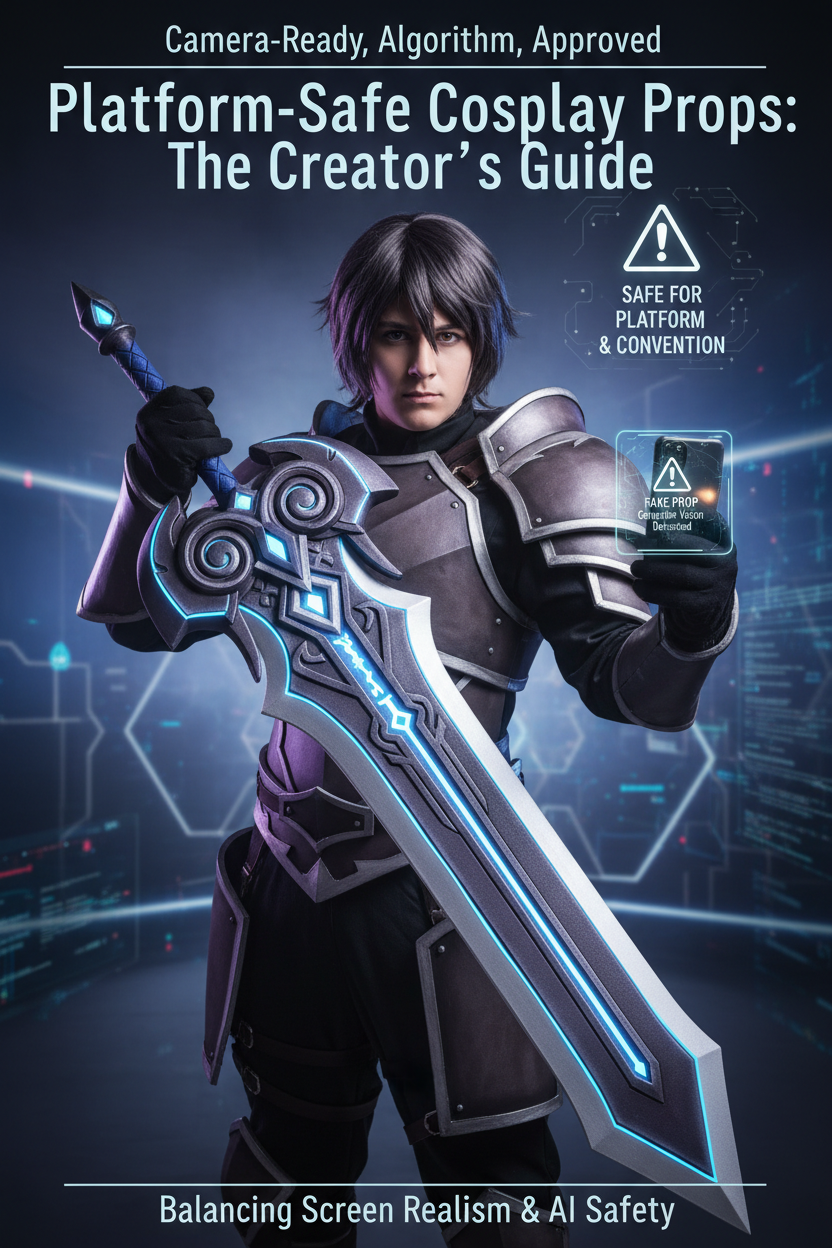
Crafting cosplay prop weapons that deliver cinematic visual impact while avoiding content strikes on short-form video platforms like TikTok, Instagram, and YouTube is a critical skill for modern creators. As computer vision AI gets stricter at detecting potential real-world weapons, cosplayers must balance screen realism with algorithm safety.
Question 1: How Do You Make Cosplay Props Look High-Impact Without Triggering Moderation Bots?
Direct Answer
To maintain high visual impact without triggering moderation bots, exaggerate proportions, use layered fantasy silhouettes, and apply high-contrast edge highlights. Automated AI vision flags realistic proportions and dark steel contours. Styled, oversized shapes signal "fantasy prop" to both content moderation algorithms and human reviewers.
┌─────────────────────────────────────────────────────────────────────────┐
│                     ALGORITHM VS. PROP DESIGN                           │
├───────────────────┬─────────────────────────────────────────────────────┤
│ Trigger Risk      │ 1:1 real-world proportions, dark steel, sharp edge  │
├───────────────────┼─────────────────────────────────────────────────────┤
│ Platform-Safe     │ Exaggerated scale, bright trim, bevels, soft foam   │
└───────────────────┴─────────────────────────────────────────────────────┘
Strategic Background
Short-form video platforms scan uploads using computer vision models trained on real-world military gear and cold weapons. When a prop matches the exact scale, silhouette, and uniform metallic sheen of a real blade or firearm, it runs a high risk of being shadowbanned or flagged.
To bypass this without making your prop look cheap:
-
Play with Scale: Slightly oversizing blades, hilts, or barrel guards immediately pushes the prop into anime or fantasy aesthetics, breaking the profile match for real-world weapons.
-
Emphasize Bevels and Panel Lines: Instead of relying on a mirror-like steel paint coat, carve deep bevels into lightweight EVA foam and dry-brush high-contrast highlights. This creates dramatic visual depth under studio lights without looking like polished steel to AI scanners.
-
Incorporate Fantasy Elements: Adding glowing LED channels, runic etchings, or oversized gem mounts signals clear fantasy origin to automated content filters.
Question 2: Which Materials and Finishes Read as Safe to Both Social Platforms and Security Checks?
Direct Answer
High-density EVA foam, 3D-printed PLA with hollow infill, and thermoplastic layers are ideal platform-safe cosplay prop materials. Finish them with satin or matte acrylic paints rather than ultra-reflective chrome sprays, and ensure open barrel tips feature bright safety plugs or neon accents.
                      [ PROP MATERIAL SELECTION ]
                                   │
      ┌────────────────────────────┴────────────────────────────┐
      ▼                                                         ▼
HIGH RISK MATERIALS                                 PLATFORM-SAFE ALTERNATIVES
- Real steel / aluminum edges                       - High-density EVA foam (70-100kg/m³)
- Solid heavy hardwood cores                        - Hollow 3D-printed PLA / PETG
- Ultra-reflective chrome/mirror finishes           - Satin acrylics with dry-brushed wear
Strategic Background
Choosing the right base materials protects your account reach online and simplifies physical travel during convention season.
-
Lightweight Core Construction: Utilizing high-density EVA foam or hollow 3D prints ensures your prop passes physical weight and flexibility checks at event security checkpoints.
-
Matte vs. Chrome Metallic Finishes: High-gloss metallic chrome sprays reflect light in a way that computer vision algorithms often mistake for real metal blades. Opting for satin acrylic bases accented with metallic wax paste gives realistic texture while softening harsh reflections.
-
Safety Color Accents: For modern or sci-fi firearm-style props, incorporating removable high-visibility orange caps or neon pommel accents ensures clear identification. These can be easily integrated into the design or removed only during controlled, static photography sessions.
Question 3: How Can You Add Disclaimers and Warnings Without Ruining Video Aesthetics?
Direct Answer
Integrate disclaimers directly into your video intro via styled text overlays (e.g., "Fake Prop ⚠️"), place subtle physical labels near prop handles, or frame props alongside crafting tools during transitions to show the lightweight foam construction immediately.
                  [ INTEGRATING PROP DISCLAIMERS ]
                                │
   ┌────────────────────────────┼────────────────────────────┐
   ▼                            ▼                            ▼
Diegetic Labeling          Crafting Transitions          Styled On-Screen Text
(Stylized hilt tags)      (Showing raw foam build)     ("Fake Prop ⚠️" overlay)
Strategic Background
Hiding safety notices in long text captions is rarely enough to save a video once automated moderation flags a frame. To protect your reach without spoiling the cinematic mood:
-
Seamless On-Screen Warnings: Place clean, non-intrusive text overlays—such as "Fake Prop / Crafted for Cosplay"—in the lower third of the screen during the first 3 seconds of the video. This satisfies algorithmic safety checks while informing viewers.
-
In-Video Construction Reveals: Start video clips with a split-second shot of the unpainted EVA foam prop or show the prop flexing slightly. This establishes a clear context of crafting and fantasy performance for moderation review teams.
-
Diegetic Prop Markings: Add stylized, world-accurate tags or runes near the grip that double as functional safety disclaimers without breaking character immersion.
Question 4: How Does Platform Safety Connect to Convention and TSA Security Compliance?
Direct Answer
Platform safety, convention prop rules, and TSA travel guidelines all rely on the same fundamental principle: proving non-viability as a real weapon. A prop designed with soft foam edges, lightweight hollow cores, and clear visual disclaimers will successfully pass platform moderation, convention security checks, and airport screening.
Strategic Background
Managing prop compliance requires a unified strategy across both digital platforms and physical travel:
-
In the Air (TSA Compliance): When flying to conventions, store props strictly in checked luggage. Utilizing clearly fake cosplay props made from foam or plastic prevents travel delays and confiscation during TSA baggage inspections.
-
On the Floor (Convention Checks): Event staff look for non-metal construction, blunted tips, and secure attachment points. A prop built with algorithm-safe EVA foam will pass peace-bonding inspections quickly.
-
On the Feed (Social Content): The same non-viable materials that clear airport scanners and convention security satisfy digital moderation filters, giving you a smooth transition from crafting table to convention floor to viral video feed.
Summary & Related Reading
Building impressive safe cosplay props is about smart design choices rather than compromising on visual quality. By leveraging exaggerated fantasy scale, matte acrylic textures, and strategic disclaimer placement, you can create high-impact props that thrive on digital feeds and convention floors alike.
Explore Our Prop & Travel Series
-
TSA & Event Travel Prop Security Guide : How to safely transport oversized props, foam armor, and 3D prints across airport security and convention hall checkpoints.
-
lgorithm Safety vs. Fake Body Disclaimers : Understanding the strategic differences between audience transparency and digital moderation protection in modern cosplay culture.
-
Platform-Safe Cosplay Prop Materials & Accessories : Browse our curated selection of high-density EVA foam, lightweight prop cores, and clearly-fake prop accessories designed for creators.


コメントを書く
このサイトはhCaptchaによって保護されており、hCaptchaプライバシーポリシーおよび利用規約が適用されます。