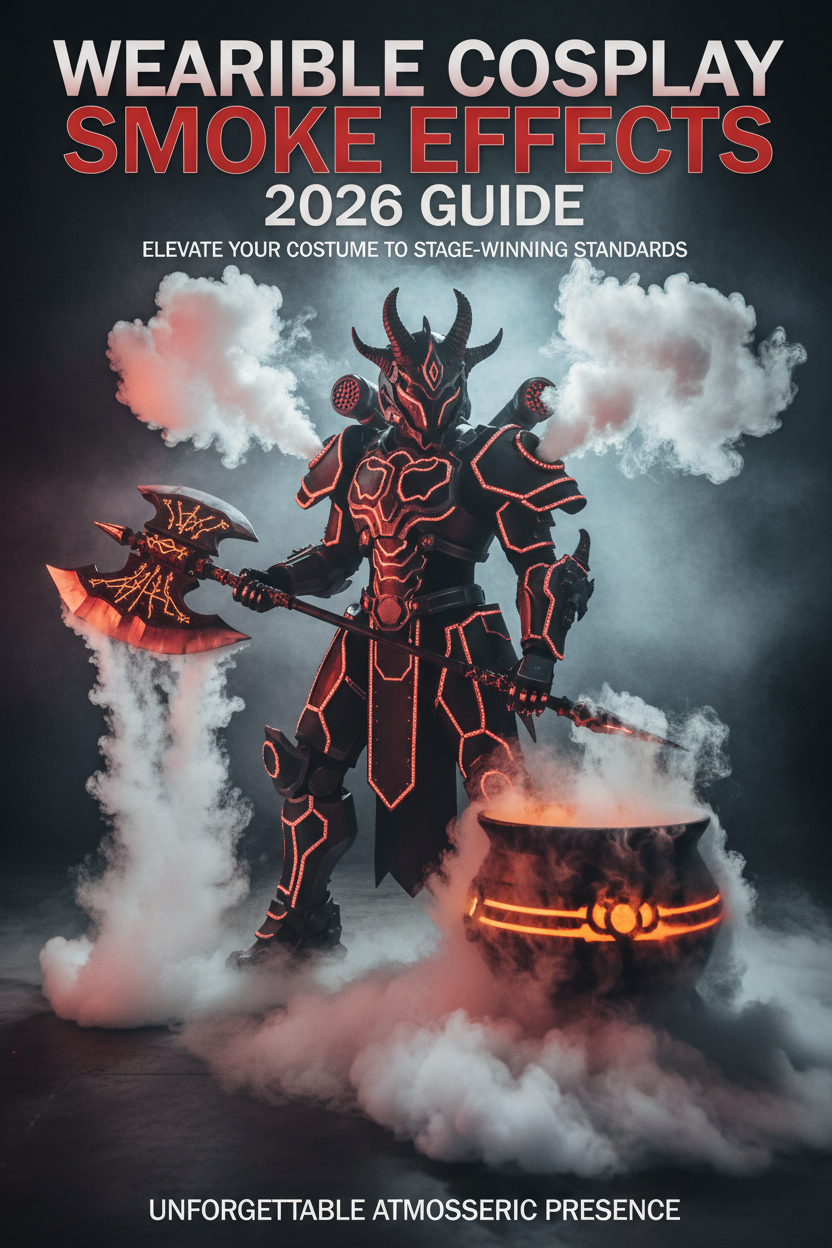
Static armor and pristine weapons look great in photos, but adding dynamic wearable prop effects like smoke, mist, or glowing light elevates a costume to stage-winning competition standards. From glowing demonic cauldrons to exhaust vents on mech suits, integrating a wearable cosplay smoke effect creates an unforgettable atmospheric presence.
When evaluating cosplay atmospheric effects, cosplayers must balance five crucial criteria:
-
Safety & Heat Control: Thermal isolation to prevent burns or liquid leaks.
-
Size & Weight: Compact footprints that fit inside armor pauldrons, hollow weapons, or backpacks.
-
Density & Output: Whether you need thick rolling clouds or subtle wisps.
-
Ease of Integration: Electrical complexity, switches, and tube routing options.
-
Budget & Technical Skill: From simple plug-and-play kits to advanced electronic builds.
Below is a breakdown of the top four methods to bring a cosplay fog effect into your next build.
Quick Comparison Table
| Method / System | Core Highlights | Cost Range | Skill Level | Best For |
| 1. Commercial Micro Foggers (CosClouds, Costronica) | Self-contained, wireless remote, built-in thermal cutoff, plug-and-play | $60 – $200 | Beginner / Intermediate | Competition props, fast integration, hassle-free safety |
| 2. DIY Vape-Coil & Air Pump Systems | High density, fully customizable shape, cheap replacement coils | $25 – $45 | Intermediate / Advanced | Custom internal cavities, budget-conscious electronics builders |
| 3. Ultrasonic Water Atomizers | Zero heat, safe for closed helmets, non-toxic water-only operation | $15 – $30 | Beginner / Intermediate | Ice/water element props, closed-space ventilation |
| 4. Dry Ice Sublimation Chambers | Extremely dense, ground-hugging fog, no batteries required | $10 – $25 | Beginner | Short stage skits, photoshoots, instant heavy bursts |
1. Commercial Plug-and-Play Micro Foggers — Professional Reliability
Commercial micro fog devices engineered specifically for prop makers—such as CosClouds or Costronica—have revolutionized how cosplayers approach a wearable cosplay fog machine. These modular systems enclose the heating element, fluid reservoir, battery, and air pump inside a compact, durable 3D-printed casing.
-
Core Features: Operates on standard Vegetable Glycerin (VG) fluid; features wireless key fob triggers or discrete wired switches; includes integrated circuit protection against overheating.
-
Pros:
-
Exceptional battery and thermal safety out of the box.
-
Compact footprint designed to fit inside 3D-printed armor or prop compartments.
-
Modular hose attachments for directing fog precisely where needed.
-
-
Cons:
-
Higher upfront investment compared to raw electronic components.
-
-
Ideal For: Cosplayers wanting a reliable, competition-grade cosplay smoke machine without needing a background in soldering or electrical engineering.
2. DIY Vape Tank & 5V Air Pump Systems — Maximum Customization
For makers who love custom electronics, building a DIY cosplay smoke effect using a 510-thread vape atomizer tank and a miniature 5V DC diaphragm air pump remains a staple technique. Air is forced through the heated coil saturated with pure vegetable glycerin, generating dense clouds of vapor through flexible silicone tubing.
-
Core Features: Powered by an 18650 Li-ion battery or a 5V power bank; wired through a MOSFET or relay switch with an inline fuse; utilizes low-cost replacement atomizer coils.
-
Pros:
-
Highly budget-friendly and fully customizable layout.
-
Components can be split and tucked into narrow staff shafts or thin armor panels.
-
Yields thick, opaque clouds ideal for smoke effect cosplay props.
-
-
Cons:
-
Requires soldering, circuit isolation, and manual heat management.
-
Risk of fluid leaks or burnt coils if operated without fluid.
-
-
Ideal For: Advanced prop builders comfortable with wiring circuits who need a tailored portable cosplay fog effect.
3. Ultrasonic Water Atomizers — Cold Mist Safety
Ultrasonic mist modules use piezoelectric transducers vibrating at high frequencies to instantly atomize plain water into a fine cold vapor. Because no heating elements or burning liquids are involved, this method produces a completely cool mist.
-
Core Features: Runs on 5V USB power; uses distilled water instead of glycerin; zero heat emission.
-
Pros:
-
100% safe to wear near skin, fabric, or inside enclosed helmets.
-
Instant-on capability with no coil warm-up delay.
-
Very low operating cost.
-
-
Cons:
-
Vapor is significantly lighter and dissipates much faster than glycerin fog.
-
Moisture can condense inside tubing or on surrounding EVA foam if unvented.
-
-
Ideal For: Water or ice-themed wearable prop effects, enclosed helmets, or props worn in venues with strict heat/vaping rules.
4. Miniature Dry Ice Sublimation Chambers — High-Density Stage FX
When you need heavy, ground-hugging fog that cascades down a cloak or spills out of a warhammer without any electrical components, a mini dry ice chamber offers a mechanical solution. Warm water mixed with solid carbon dioxide ($CO_2$) causes rapid sublimation, pushing cold, dense fog out of exhaust ports.
-
Core Features: Insulated plastic container with warm water reservoir; dry ice pellet mesh basket; manual lever or valve control.
-
Pros:
-
Unmatched fog density and dramatic low-lying behavior.
-
Zero electronics, wires, or rechargeable batteries required.
-
-
Cons:
-
Limited operating window (water cools down, dry ice melts within 10–15 minutes).
-
Requires careful handling with thermal gloves to avoid frostbite.
-
-
Ideal For: Contest stage walk-ons, photo calls, or dramatic single-moment reveals.
How to Choose and Safely Integrate the Best Wearable Smoke Effect for Your Cosplay Prop?
Selecting the right setup depends on your prop's internal volume, your venue rules, and your technical comfort. Once you select your system, follow these core integration principles:
1. Safety & Heat Isolation
-
Heat Protection: Heating coils in a cosplay smoke machine reach temperatures over 200°C (390°F). Always wrap heating chambers in high-temperature silicone sleeving or suspend them away from raw EVA foam and 3D prints (PLA distorts above 60°C).
-
Electrical Fusing: Always install an inline fuse (e.g., 3A–5A depending on draw) between your battery and pump/coil circuit to prevent thermal runaway.
-
Fluid Isolation: Pure Vegetable Glycerin (VG) is non-toxic, but oily leaks can ruin acrylic paint jobs or slick your inner armor lining. Seal reservoirs with O-rings and leak-proof check valves.
2. Concealing the Mechanism Without Ruining Your Silhouette
-
Weight Distribution: Place heavier components (batteries, fluid tanks, pumps) near your center of gravity—such as inside a lower-back kidney pack, belt pouch, or deep thigh guard.
-
Tubing Pathways: Route fog through flexible 6mm or 8mm food-grade silicone tubing hidden inside hollowed EVA foam seams or 3D print channels.
-
Diffusers & Vents: To prevent fog from shooting out in a harsh narrow jet, add a perforated nozzle or mesh diffuser at the exit port. Lighting the exit point with bright LEDs creates the illusion of magical fire, plasma, or ice energy.
Summary
Integrating a wearable cosplay smoke effect turns a static costume into a dynamic experience. Whether you choose the plug-and-play simplicity of ready-made portable cosplay fog & smoke effect devices or assemble a customized DIY circuit, adding atmospheric vapor will make your craftsmanship stand out at conventions and on stage.
Ready to upgrade your competition builds? Explore our specialized atmospheric prop effect kits to get all the modular tubes, LED diffusers, and compact smoke units you need for your next build!

コメントを書く
このサイトはhCaptchaによって保護されており、hCaptchaプライバシーポリシーおよび利用規約が適用されます。