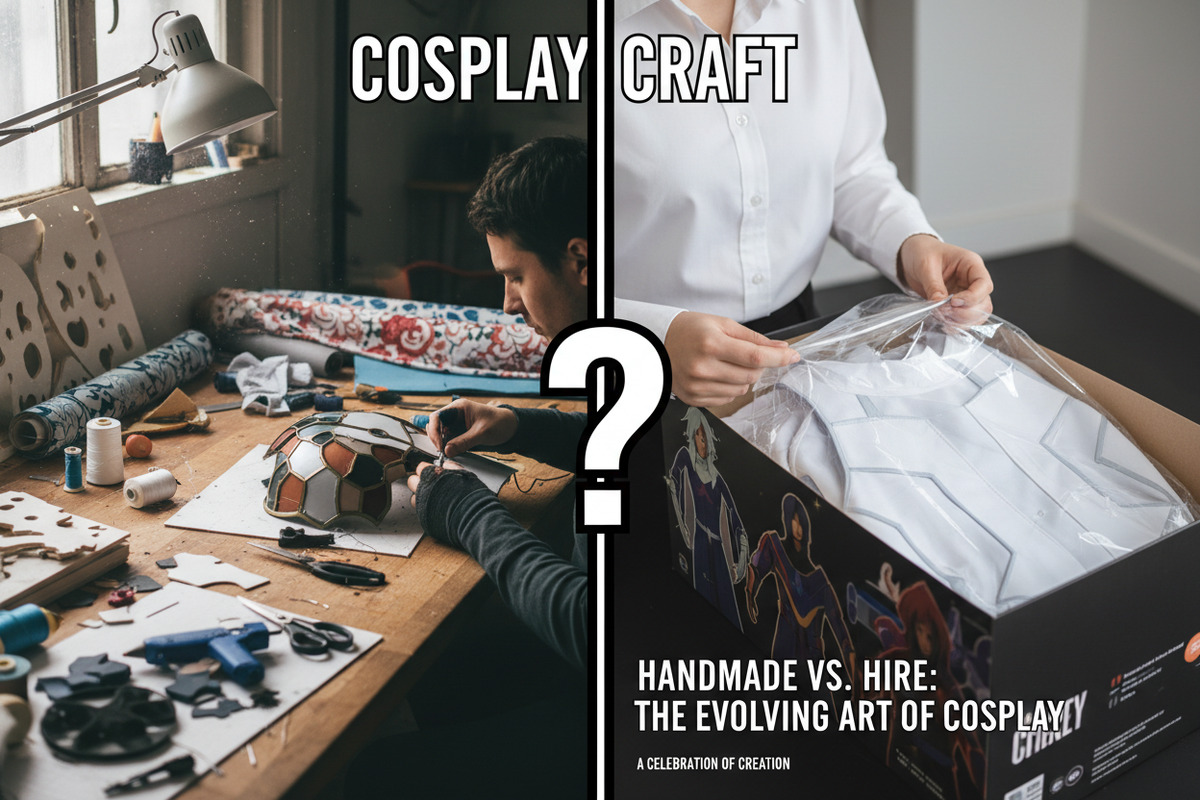
TL;DR / Quick Takeaway
The debate around handmade vs store-bought cosplay focuses on disclosure, honesty, and competition integrity rather than whether buying costumes is allowed. While wearing commercial costumes is welcomed across convention halls worldwide, claiming off-the-shelf garments as self-made in judged contests violates major convention rules. Craftsmanship competitions generally require 60% to 80% self-fabricated construction, though transforming base store-bought garments with heavy weathering, beadwork, or structural modifications is increasingly recognized as valid secondary craftsmanship.
1. Deep Dive & Core Logic: Anatomy of a Viral Cosplay Scandal
The store-bought cosplay controversy erupted on social media after a convention winner claimed a top craftsmanship award for an outfit later revealed to be an off-the-shelf purchase. Community sleuths discovered direct product listings and matching Amazon customer reviews left by the contestant himself—even while he publicly maintained the costume was fabricated from scratch.
                    [ THE SCANDAL TO INDUSTRY IMPACT PATHWAY ]
                                       │
     ┌─────────────────────────────────┼─────────────────────────────────┐
     ▼                                 ▼                                 ▼
1. The Incident                   2. Community Backlash              3. Policy Refinement
- Contestant wins award           - Amazon receipt uncovered         - Contest rules clarified
- Claims 100% self-made           - Dishonesty sparks outrage        - 60-80% thresholds enforced
- Off-the-shelf links found       - Misrepresentation condemned      - Modder categories introduced
This viral incident highlights a crucial distinction in modern cosplay culture:
-
The Issue Is Deception, Not Purchase: The community overwhelmingly supports store-bought outfits for hall walk-arounds, photography, and general fan enjoyment. The outrage stemmed entirely from falsely claiming another maker's manufacturing labor as personal craftsmanship.
-
The "Valuable Labor" Dilemma: The drama sparked broader questions about secondary modification. If a creator spends 40 hours hand-beading, distressing, or re-stitching a commercial suit, where does "purchased asset" end and "original craftsmanship" begin?
2. Key Elements & Contest Rules: How Much Must Be Handmade?
To maintain fairness, major conventions enforce strict cosplay competition rules governing craftsmanship entries vs. hall performance entries.
                   [ CRAFTSMANSHIP RULESET BREAKDOWN ]
                                       │
     ┌─────────────────────────────────┴─────────────────────────────────┐
     ▼                                                                   ▼
Novice / Journeyman / Master Divisions                   Modified / Open / Performance Divisions
- 60% to 80% self-fabricated minimum                     - Commercial base garments permitted
- Work-in-progress (WIP) build book required             - Focuses on stage presence & character portrayal
- Judged on seams, armor build, & tailoring             - Judged on modification complexity & weathering
Official Competition Thresholds & Entry Divisions
-
The 60–80% Rule: Most major masquerades (such as TwitchCon, Anime Expo, and San Diego Comic-Con) require that at least 60% to 80% of the costume be hand-fabricated or heavily modified by the entrant.
-
Work-In-Progress (WIP) Documentation: Judges require physical build books or digital portfolios showing raw fabric cuts, 3D print progress, and assembly steps to verify authenticity during pre-judging.
-
Modification & Alteration Recognition: Many competitions now feature dedicated "Modified Costume" or "Performance-Only" categories. These divisions allow entrants to showcase heavily altered base suits or focus purely on stage acting without misrepresenting garment construction.
3. Common Misconceptions: Buying vs. Crafting Ethics
Navigating the line between buying, altering, and hand-making requires clearing up several widespread myths within the community:
| Misconception | Reality & Industry Standard | Practical Guidance |
| "Buying a costume makes you a 'fake' cosplayer." | False. Over 70% of convention attendees wear store-bought or altered outfits. Cosplay is about fan celebration, not mandatory tailoring. | Wear store-bought costumes proudly for hall walks, photoshoots, and group meetups. |
| "Modifying a purchased base doesn't count as real work." | False. Advanced weathering, custom hand-beading, and re-tailoring require high skill and are recognized in open divisions. | Document your modifications thoroughly if entering open or modified competition tiers. |
| "If I assemble store-bought pieces, I can claim I made it." | False. Combining un-altered commercial items is "styling" or "curating," not primary manufacturing or fabrication. | Be transparent: credit the base vendors and focus on your styling or prop modifications. |
Balancing Pre-Made Quality with DIY Personalization
For creators who want high-end tailoring without building every seam from scratch, pairing commercial base sets with independent designer cosplay patterns offers a balanced solution.
Additionally, choosing customizable cosplay costumes provides high-quality base garments featuring removable trims, dye-ready fabrics, and modular armor attachments—allowing you to apply personal weathering, tailoring, and embroidery while maintaining clear attribution.
4. Summary & Related Reading
Buying a cosplay costume is never cheating—it is the standard entryway for millions of fans worldwide. Cheating only occurs when commercial manufacturing is falsely presented as personal fabrication in judged competitions. By understanding competition thresholds and being transparent about vendor credits versus personal modifications, creators can enjoy both commercial convenience and personal crafting pride.
Related Guides & Craftsmanship Articles:
-
Independent Designer Patterns vs. Commercial Sets: A detailed comparison of self-tailored patterns versus factory production.
-
Customizable Cosplay Costumes Collection: High-quality, modifiable base sets built for custom dyeing, weathering, and detailing.
![Plus-Size Character Resize Commissions Ultimate Guide: From Sizing Gaps to Custom Fits [2026 Edition]](http://www.cosplayreal.com/cdn/shop/articles/cover-plus-size-cosplay.png?v=1789385032&width=1248)

コメントを書く
このサイトはhCaptchaによって保護されており、hCaptchaプライバシーポリシーおよび利用規約が適用されます。