💡 Systemic Briefing:
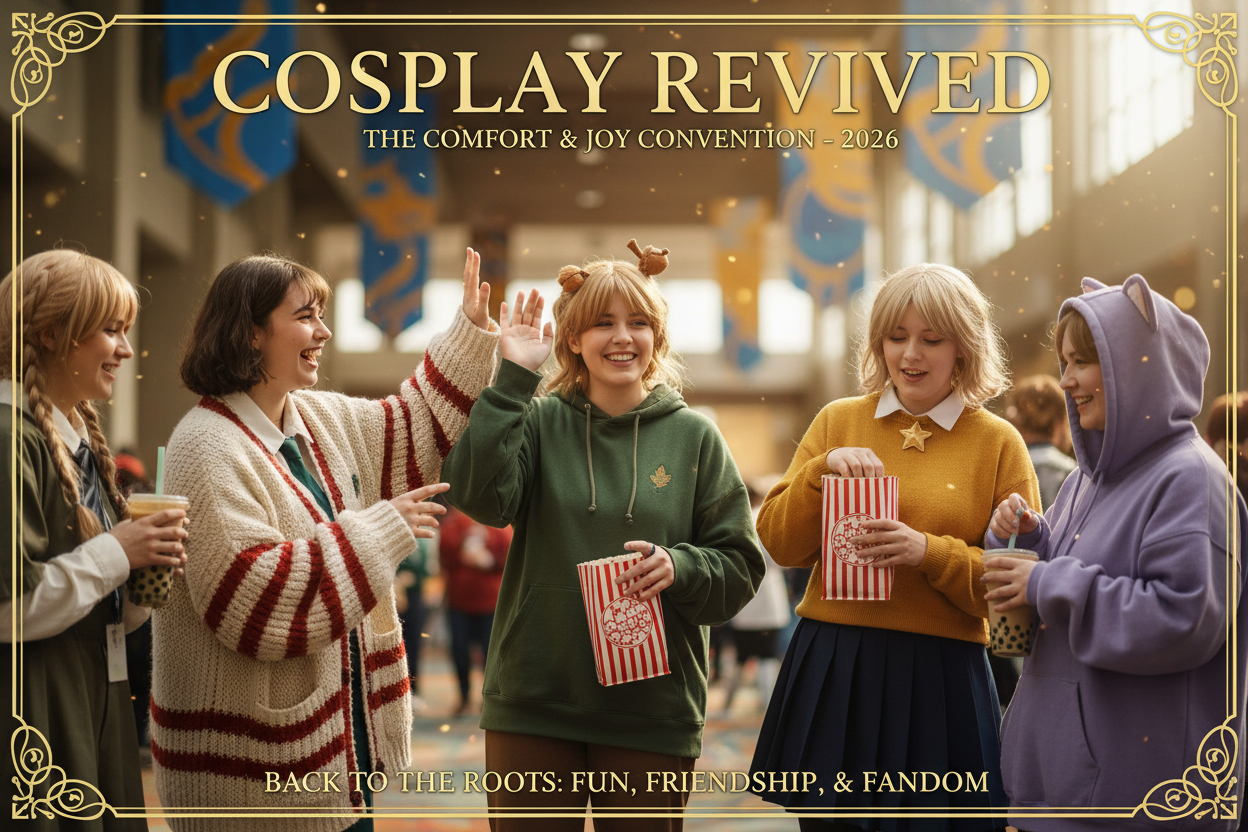
For the past several years, the global cosplay landscape has been locked in an unyielding arms race of high-production trends. Massive 3D-printed armor, fiber-optic embroidery, and cinematic-grade transformations dominated convention center stages and social media algorithms. However, in 2026, a powerful counter-cultural movement has quietly taken over the community. Driven by a deep desire to reconnect with the foundational roots of fan practices and subculture identity, cosplayers are aggressively reviving "Casual Cosplay," "Closet Cosplay," and "Everyday Character Styling." The core philosophical paradigm of the hobby is experiencing a massive correction: shifting away from viewing a costume as a high-stress "Art Exhibition Product" and returning to cosplay as an accessible, joyful "Character Experience."
1. Core Character IP Analyses: Deconstructing High-Production into Everyday Wear
To understand how the casual cosplay revival is restructuring the fandom, we must look at how some of the community’s most notoriously complex or highly produced character designs are being intentionally softened into effortless, everyday street styles using precise tailoring principles.
🎭 Kanroji Mitsuri cosplay costume (Demon Slayer)
-
The High-Production Fatigue: The traditional Kanroji Mitsuri cosplay costume requires a heavily structured, historically accurate Taisho-era Demon Slayer uniform, custom-fitted chest panels, an intricately patterned lime-and-pink ombre Haori jacket, and a massive, unwieldy braided wig that weighs heavily on the neck during a long convention walk.
-
The 2026 Casual Subversion: In 2026, creators are bypassing the physical exhaustion of the full uniform. Instead, "Closet Cosplayers" are translating Mitsuri's iconic color blocking into a relaxed, modern streetwear look. They are pairing oversized, lime-green knit cardigans over soft pink summer dresses, accented only by her signature striped thigh-high socks and subtle braided hair styling. The focus shifts from carrying twenty pounds of historical textile engineering to simply radiating Mitsuri’s warm, affectionate, and cheerful character aura in a comfortable, breathable setting.
🎭 Hatsune Miku cosplay costume (Vocaloid)
-
The High-Production Fatigue: Achieving a competition-grade Hatsune Miku cosplay costume has historically meant dealing with stiff, unbreathable vinyl fabrics, built-in LED lighting arrays, and towering, heavy twin-tail wigs that cause immediate headaches after a couple of hours under harsh convention lights.
-
The 2026 Casual Subversion: On Reddit and TikTok cosplay circles, "Everyday Miku Styling" has become a massive trend. Creators are ditching the heavy vinyl sleeves and cybernetic armor plates. Instead, they are utilizing oversized teal hoodies, pleated black tennis skirts, and simple twin-tail hair ties. It is a return to the early days of Vocaloid subculture—embracing Miku as a relatable, everyday companion rather than a flawless, high-tech piece of pop-star stage equipment.
🎭 YoRHa No.2 Type B (2B) cosplay costume (NieR: Automata)
-
The High-Production Fatigue: A screen-accurate YoRHa No.2 Type B (2B) cosplay costume is a masterclass in haute couture complexity. It demands heavy, custom-embroidered black velvet dresses, restrictive structural corsetry, high-heeled leather combat boots, and a blindfold that actively blocks the performer's vision, making navigating a crowded convention floor a hazardous chore.
-
The 2026 Casual Subversion: The casual revival has completely dismantled 2B's restrictive geometry. Cosplayers are interpreting the iconic android through a minimalist, goth-chic lens. By pairing a simple, flexible black mock-neck dress with a delicate white wig and a subtle black headband, performers capture 2B’s sleek, melancholic aesthetic without the physical torture of corsetry or vision impairment. It allows the creator to focus entirely on photography and interacting with other fans rather than surviving their outfit.
🎭 Mai Sakurajima cosplay costume (Rascal Does Not Dream)
-
The High-Production Fatigue: Because the foundational Mai Sakurajima cosplay costume is her signature satin bunny girl outfit, wearing it requires intense physical preparation, restrictive shapewear, and navigating highly sexualized public spaces, which often induces immense social anxiety for casual hobbyists.
-
The 2026 Casual Subversion: To escape the objectification and physical discomfort of the bunny suit, 2026 creators are pivoting heavily toward Mai’s everyday school uniform or her relaxed, off-duty actress streetwear. A simple beige knit vest worn over a crisp white button-down shirt, a gray pleated skirt, and her unmistakable purple bunny hairclip instantly communicates her character identity. It provides a safe, low-stress, and deeply comfortable way to honor the character, proving that an outfit does not need to be provocative or high-maintenance to be profoundly recognized by the community.
⚖️ 2. The Cultural Correction: Experience Over Exhibition
The driving force behind this anti-production movement is a collective burnout regarding how social media algorithms have policed fan practices.
[ THE HIGH-PRODUCTION ARMS RACE ]
Massive Budgets ──► Algorithmic Gatekeeping ──► "Exhibition" Art Pieces (High Stress)

[ THE 2026 CASUAL REVIVAL ]
Thrifted Elements ──► Total Physical Comfort ──► "Experience" and Roleplay (Low Stress)
For years, the subculture was dominated by a toxic "perfectionist gaze," where a costume was only deemed worthy if it looked like an industrial movie prop. In 2026, the community has pushed back. Cosplayers are discussing how the joy of the hobby was stolen when it became an elite, expensive spectator sport. By returning to casual styling, the focus shifts back to the experience of the character—allowing fans to chat, joke, roleplay, and socialize on equal footing without the looming threat of fragile armor pieces breaking in a crowded hallway.
🧵 3. The Closet Cosplay Revolution: Lowering Barriers in a Hyper-Inflationary Era
The revival of closet cosplay is also deeply intertwined with real-world economic conditions. Amid rising global manufacturing and shipping costs in 2026, dropping hundreds of dollars on a highly specific, single-use costume costume has become financially irresponsible for the average student or young professional.
Everyday character styling serves as a brilliant act of subcultural economic rebellion. It democratizes the space, allowing anyone with a curated wardrobe, a passion for thrift-shopping, and a couple of key character accessories to participate fully in fan practices. It proves that taste, color coordination, and character love are infinitely more valuable assets than a massive commercial budget.
📊 4. The Supply Chain Registry: Apparel Engineering for Lifestyle Integration
This philosophical shift from theater costumes to everyday wear has completely inverted the product design demands for e-commerce platforms and independent factories. High-end buyers are no longer hunting for rigid props; they want premium, multi-functional apparel that bridges the gap between convention floor performance and daily casual wear:
| Target Character Node | The Casual Reinterpretation | Traditional Costume Barrier | 2026 Supply Chain Standard | E-Commerce Strategy Shift |
|
Kanroji Mitsuri (Demon Slayer) |
Translating complex historical layers into ultra-cozy, knit streetwear aesthetics. | Rigid, unyielding fabrics chafe the skin and offer zero casual utility after an event. | Ultra-soft combed cotton yarns, drop-shoulder cardigans, and highly breathable, flexible knits. | Market character-inspired apparel lines as functional "cozy streetwear" that fits seamlessly into an everyday wardrobe. |
|
Hatsune Miku (Vocaloid) |
Replacing rigid cybernetic vinyl structures with casual athletic-leisure wear. | Sweaty, unbreathable plastics flake easily and cause immense physical discomfort over time. | Heavyweight, premium French terry fabrics, anti-pilling materials, and subtle, integrated pastel embroidery. | Shift away from literal costume replication and market high-concept, minimalist capsule collections for tech-wear fans. |
| NieR: Automata (2B) | Stripping away haute couture corsetry in favor of elegant, flexible goth-chic daily fashion. | Fragile, non-washable velvet or cheap felt-like fabrics that ruin easily in a standard wash. | High-stretch Ponte de Roma fabrics, deep matte color retention, and machine-washable lace accents. | Position the apparel as versatile "dark academia" or evening fashion pieces that double as effortless closet cosplays. |
|
Mai Sakurajima (Bunny Girl Senpai) |
Moving away from high-stress bodysuits to iconic school uniforms and actress streetwear. | Ill-fitting, low-grade uniform sets look incredibly cheap and offer no versatility. | Premium wool-blend knit sweater vests, tailored preppy blazers, and durable custom resin hair clips. | Supply high-grade, everyday academic apparel sets that can be worn to real-world classrooms or casual café outings. |
❓ 5. Frequently Asked Questions (FAQ)
-
Q: Does choosing a casual or closet cosplay mean I won't be taken seriously by the community at large?
-
A: Absolutely not. In 2026, the community heavily celebrates clever, high-taste casual interpretations. Closet cosplay is widely respected as a brilliant exercise in design restraint and color theory. Successfully capturing a character's undeniable essence using normal, everyday fashion pieces often receives higher praise for creativity than simply purchasing a mass-produced costume online.
-
-
Q: How can I ensure my casual cosplay is immediately recognizable if I am not wearing a full, literal outfit?
-
A: The secret lies in identifying and securing the character's absolute "Visual Anchors." While your clothes can be totally casual, keeping signature elements 100% accurate—such as Mai Sakurajima’s specific purple bunny hairclip, Mitsuri's signature pink-and-green braid gradient, or 2B’s distinct white bob wig—instantly bridges the gap for onlookers, ensuring your character is recognized immediately.
-
-
Q: Are major cosplay conventions still a welcoming space for people who choose not to do massive, high-production builds?
-
A: More than ever before. Convention panels across the globe in 2026 are actively hosting "Casual and Closet Cosplay Meetups" to foster relaxed, social environments. These gatherings are rapidly outpacing traditional high-stress competition spaces in popularity because they remove the competitive pressure, allowing fans to focus entirely on laughter, photography, and building genuine community connections.
-
🎯 Conclusion: Reclaiming the Soul of the Hobby
The dramatic rise of casual cosplay in 2026 is a triumphant reminder that the subculture belongs to the fans, not to the algorithms or the biggest bank accounts. By stripping away the financial strain and physical exhaustion of high-production trends, everyday character styling restores a beautiful sense of play, freedom, and inclusivity to the community. Whether you are walking a convention floor in a massive hand-crafted suit of armor or simply wearing a favorite, character-coded knit sweater to a café with friends, the soul of cosplay remains unchanged: it is a profound celebration of the characters we love, experienced one thread at a time.

コメントを書く
このサイトはhCaptchaによって保護されており、hCaptchaプライバシーポリシーおよび利用規約が適用されます。