💡 Systemic Briefing:
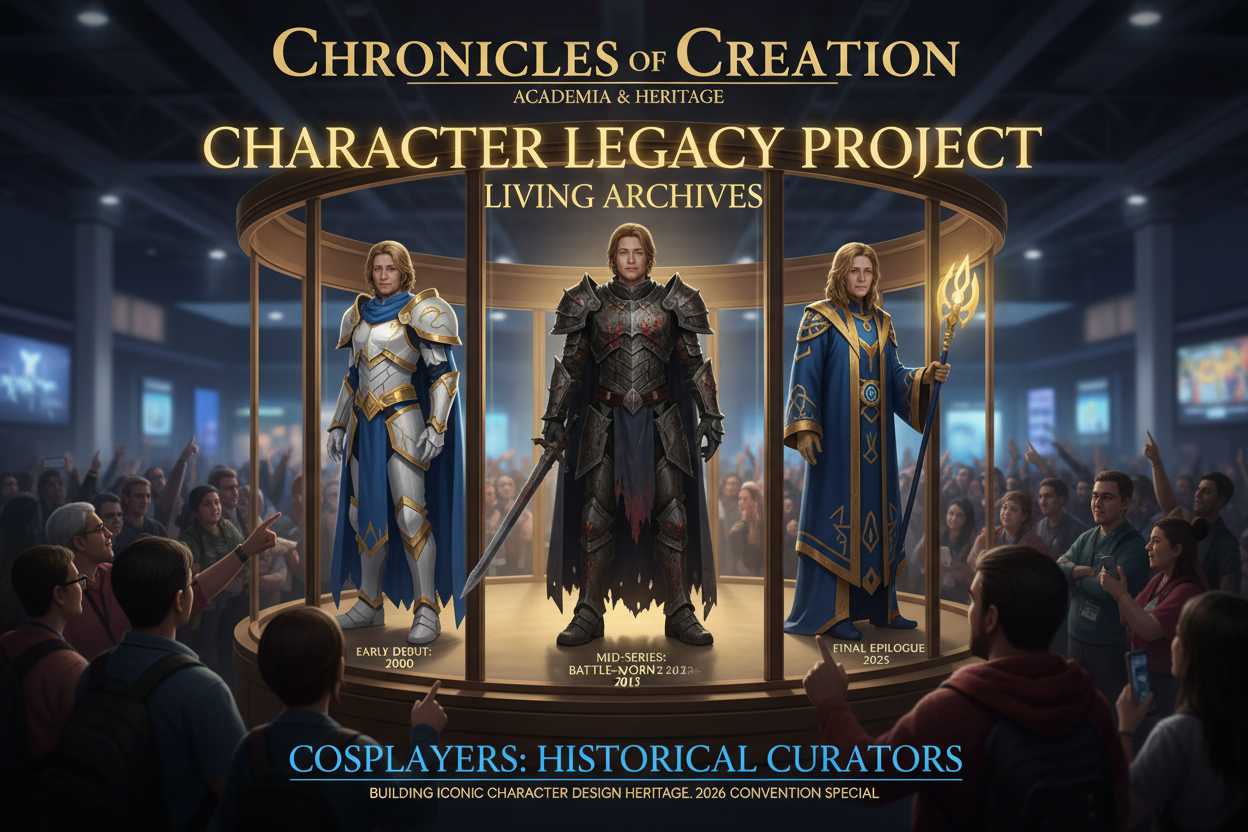
A monumental shift in the depth of fan expression is redefining the boundaries of costume creation. Rather than treating cosplay as a series of disconnected, single-event appearances, a growing faction of dedicated practitioners is pioneering "Character Legacy Projects." Driven by an academic-level fascination with media franchise longevity and structural character evolution, these creators are choosing a single iconic figure and systematically building their entire visual history. From initial concept art and debut appearances to mid-series transformations and the latest canonical designs, these timeline cosplay portfolios function as living archives. Across global media circles, Reddit research threads, and elite exhibition panels, cosplayers are no longer just putting on a costume—they are conducting deep-dive historical research projects into character psychology and design heritage.
1. Core Character IP Analyses: The Visual Timelines of Subcultural Icons
To understand how character evolution projects are expanding the hobby, we must examine four legendary properties whose design histories reflect broader shifts in global digital art and narrative storytelling.
🎭 Hatsune Miku cosplay costume (Vocaloid)
-
The Evolutionary Timeline: The archival journey of a Hatsune Miku cosplay costume portfolio spans nearly two decades of open-source internet culture. A comprehensive Legacy Project begins with her foundational KEI-designed 2007 V2 formula outfit, progresses through the sleek, high-contrast V4X upgrades, documents her massive annual Magical Mirai concert variants, and culminates in her latest hyper-modernized 2026 racing designs.
-
The 2026 Curation: On Reddit r/vocaloid and international design forums, these Miku timeline projects are celebrated as historical documentations of digital pop culture. Creators are not just changing wigs; they are showcasing the historical shift in fabric choices over two decades—moving from the cheap shiny satins of the late 2000s to the matte, high-tech breathable composites used in modern 2026 athletic apparel. It is a stunning visual essay tracking how a decentralized community built a global virtual idol layer by layer.
🎭 Ahri cosplay costume (League of Legends)
-
The Evolutionary Timeline: As one of Riot Games’ most enduring flagship champions, Ahri offers a masterclass in corporate character evolution. An Ahri cosplay costume legacy archive tracks her transformation from her relatively simple 2011 classic design (heavily rooted in traditional Korean Gumiho folklore), through her massive Popstar and K/DA global music phenomenon eras, and directly into her comprehensive 2023 ASU (Art and Sustainability Update) model overhaul.
-
The 2026 Curation: On League of Legends cosplay circles and TikTok, Ahri Legacy Projects are incredibly prestigious. Performers use these timelines to visually demonstrate the technological leaps in gaming industry design. They contrast the chunky, exaggerated fantasy proportions of early 2010s game art with the fluid, highly tailored, and anatomically precise garment architecture of 2026. It turns a single creator's portfolio into a physical history book of modern gaming graphics.
🎭 Asuka Langley Soryu / Shikinami cosplay costume (Neon Genesis Evangelion)
-
The Evolutionary Timeline: The chronological execution of an Asuka Langley cosplay costume archive carries immense narrative and psychological weight. The legacy path travels from her classic 1995 TV series red plugsuit, moves through the scarred, taped-up Rebuild 3.0 test suits, incorporates her casual, isolated yellow sundress or school uniform variations, and reaches its conclusion with the pristine, white "Additional Impact" deep-soil suit from Evangelion: 3.0+1.0.
-
The 2026 Curation: On Tumblr fandom spaces and veteran anime forums, Asuka timeline projects are analyzed through the lens of identity transition and trauma tracking. Cosplayers use these multiple versions of the same character to showcase Asuka’s brutal psychological deterioration and ultimate maturity. By contrasting the bright, flawless colors of her youth with the distressed, battle-worn textures of her final forms, the legacy project ceases to be mere dress-up and becomes a profound, non-verbal performance of a legendary character's life story.
🎭 Furina cosplay costume (Genshin Impact)
-
The Evolutionary Timeline: While Genshin Impact is a younger media franchise compared to its peers, Furina's design architecture was explicitly engineered from day one to support character evolution projects. A Furina cosplay costume timeline must capture her dualistic nature: her bright, theatrical Ousia form (representing her public persona as the glamorous, attention-seeking Archon of Fontaine) alongside her muted, somber, short-haired Pneuma form (reflecting her tragic, human reality behind the curtains).
-
The 2026 Curation: Furina has triggered an explosion of accelerated legacy project discussions on modern platforms. Creators are using her to explore immediate narrative contrast within a single year of content release. By building both her divine and mortal iterations simultaneously, cosplayers are demonstrating how modern live-service games use clothing as a primary storytelling device, utilizing fabric textures and changing color palettes to signal deep shifts in canon lore.
⚖️ 2. The Analytical Paradigm: From Single-Appearance to Historical Curation
The emergence of Character Legacy Projects marks a definitive maturation in why fans create.
[ TRADITIONAL APPROACH: THE SNAPSHOT ]
Pick Current Hype Character ──► Build One Flashy Costume ──► Single Event Cycle (Discard)

[ MODERN 2026 APPROACH: THE ARCHIVE ]
Select Lifetime Anchor Character ──► Map Historical Design Timeline ──► Systematic Multi-Year Curation
In previous eras, the goal of cosplay was to capture a singular, high-impact snapshot of whatever character was trending that month. In 2026, core subcultural creators are pushing back against this disposable consumption model. By dedicating months or years to a singular entity, the cosplayer assumes the role of a historical curator. This shift places deep character research above superficial algorithm chasing, proving that tracking a character's journey across time creates a far more permanent and respected legacy than jumping from one viral trend to the next.
🧵 3. Timeline Cosplay: The Ultimate Test of Continuity and Aging
From a technical craftsmanship standpoint, executing a successful timeline project is the ultimate test of a creator's skill. It introduces complex design challenges that do not exist in single-build costuming:
When a cosplayer creates multiple versions of the same character across a ten-year narrative gap, they must maintain absolute visual continuity in their base physical metrics (such as wig fiber matching, specific color tones, and makeup geometry) while dynamically altering the clothing's wear and tear. A veteran armor piece must look like an evolved, heavily modified version of the beginner set. Managing this balance of structural consistency and narrative aging requires an elite understanding of materials engineering and garment weathering.
📊 4. The Supply Chain Registry: Engineering for Cross-Generational Evolution
This systemic shift toward historical character curation has drastically altered the inventory and manufacturing demands for e-commerce suppliers. Specialized buyers are no longer searching for standalone outfits; they demand highly coordinated, structurally continuous product ecosystems that allow them to transition seamlessly between versions of a single character:
| Target Character Node | The Historical Milestone | Traditional Catalog Failure | 2026 Supply Chain Standard | E-Commerce Strategy Shift |
|
Hatsune Miku (Vocaloid) |
Tracking 20 years of digital fabric evolution from 2007 analog to 2026 cyber-synth. | Inconsistent wig colors across different version kits ruin the continuity of a timeline project. | Universal color-locked teal fibers and matching modular base petticoats shared across V2, V4X, and racing sets. | Offer "Timeline Bundles" that include identical-base wig structures with interchangeable theme extensions. |
|
Ahri (League of Legends) |
Documenting the jump from low-poly traditional folklore to hyper-sleek modern K-pop aesthetics. | Tails made with different materials look completely mismatched when displayed side-by-side in an archive. | Universal magnetic tail-harness systems compatible with retro fur, K/DA crystal, and modern ASU tail models. | Sell a premium, universal base harness system alongside modular, interchangeable tail sets from different eras. |
|
Asuka Langley (Evangelion) |
Representing intense psychological trauma through deteriorating tactical armor variants. | Cheap plastics degrade in storage, making it impossible to build a multi-year chronological display. | Medical-grade, non-degrading matte polyurethanes with pre-engineered structural tear-away seam lines for custom distressing. | Supply specialized "Battle-Damage Weathering Kits" alongside pristine base plugsuits for historical hobbyists. |
|
Furina (Genshin Impact) |
Showcasing the immediate narrative split between theatrical divinity and quiet mortality. | Drastically different patterns break the illusion that both outfits belong to the same individual. | Interlocking pattern matrices where the internal lining of the Ousia coat matches the external collar of the Pneuma vest. | Market dual-form "Ousia & Pneuma Double Packs" with shared structural accessories at a premium price point. |
❓ 5. Frequently Asked Questions (FAQ)
-
Q: Do I need to build every single version of a character for it to count as a Legacy Project?
-
A: Absolutely not. A successful character evolution project does not require absolute completion; it requires narrative intent. Selecting just two or three highly contrasting milestones—such as a character’s pilot episode outfit, their mid-series broken armor version, and their final epilogue garments—is more than enough to beautifully convey a profound sense of timeline continuity and personal growth.
-
-
Q: How do you display or document a Character Legacy Project effectively on social media?
-
A: The most impactful method in 2026 is utilizing highly structured, multi-slide side-by-side grids or seamless transition videos that keep the creator's facial framing and makeup completely identical while the costume rapidly evolves across different eras. For physical conventions, legacy creators frequently arrange "Timeline Group Shoots," collaborating with other fans to line up multiple versions of the same character simultaneously to create an incredible living museum effect.
-
-
Q: Are character legacy projects more expensive than normal, rotating cosplay hobbies?
-
A: While the initial investment into a single character's ecosystem is high, legacy projects are often significantly more cost-effective over a long period. Because you are anchoring your identity to one figure, you can reuse expensive foundational items—such as high-end custom footwear, specialized styling wigs, color-matched contact lenses, and universal internal shapewear—across four or five different outfits, drastically reducing your long-term supply costs.
-
🎯 Conclusion: Writing History with Needle and Thread
The undeniable rise of Character Legacy Projects in 2026 is a triumphant celebration of subcultural storytelling. By looking past the superficial allure of fleeting weekly trends and committing to the comprehensive excavation of a single character's design history, these master creators are turning their personal portfolios into sacred, physical archives of global media franchises. It proves that the deepest form of fan admiration is not just mimicking a character’s finest hour—it is standing alongside them through every single step of their long, beautiful, and transformative journey across time.

コメントを書く
このサイトはhCaptchaによって保護されており、hCaptchaプライバシーポリシーおよび利用規約が適用されます。