Introduction
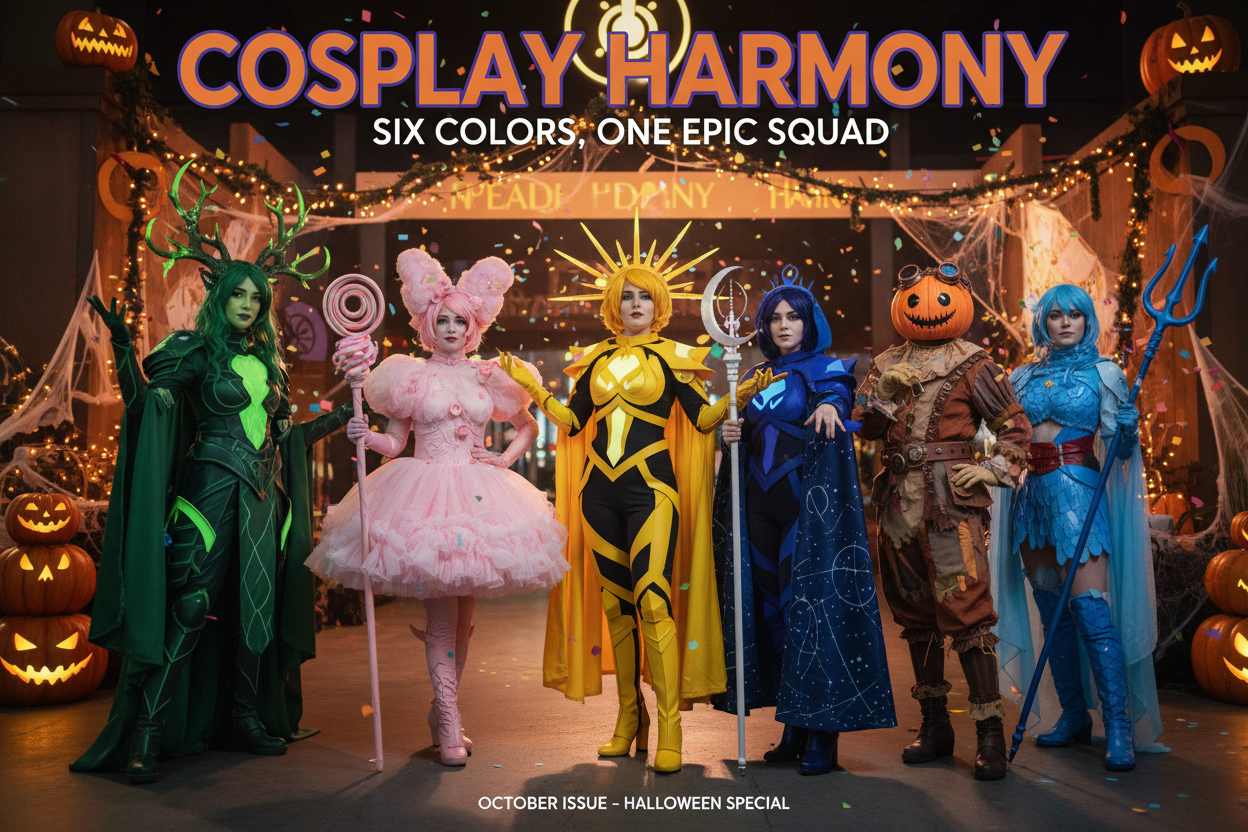
Matching costumes used to mean everyone wearing some version of the exact same outfit. Group Halloween costumes in 2026 are taking a different approach entirely, according to Glendale Halloween's 2026 trends report: rather than identical looks, groups are building color-coordinated costumes — cohesive palettes where each person's costume differs in design but reads as part of the same set through shared color.
In this guide, we'll break down why this format is dominating this year's group costume trends, using two of the report's biggest examples, and how to apply the same approach to a group cosplay build around your favorite fandom with our color-coordinated group costume collection.
Wicked's Elphaba and Glinda: The Blueprint for Color-Coordinated Duos
Glendale Halloween's 2026 report flags Wicked's Elphaba and Glinda as one of the season's strongest-performing costume pairs, and it's worth understanding why this particular duo works so well as a color-coordination case study.
The pairing isn't built around identical silhouettes — Elphaba's structured, darker witch-inspired look and Glinda's flowing, pastel-pink gown are visually distinct costumes in nearly every respect. What ties them together instantly is color contrast: deep green against soft pink, functioning as a complete, recognizable pair the moment they're photographed side by side. Explore our Wicked-inspired duo costumes to capture this iconic contrast.
That's the core mechanic behind this year's group costume trend. Two people don't need to wear the same outfit to read as a coordinated set — they need color values that complement or contrast cleanly enough that a viewer's eye links them together instantly, even from across a room or in a quick social media photo.
Inside Out 2's Emotions Lineup: Why This Format Scales Beyond Duos
Where Elphaba and Glinda demonstrate the format for pairs, Inside Out 2's emotions lineup shows how the same principle scales to larger groups. The film's newer emotions — Anxiety (orange), Ennui (indigo), and Embarrassment (pink) — join the original lineup of Joy, Sadness, Anger, Fear, and Disgust.
Glendale Halloween's report specifically highlights groups using monochromatic face paint and color-matched outfits built around each character's signature shade rather than trying to replicate detailed costume accuracy character by character.
This matters for larger friend groups specifically, since coordinating five, six, or more people around identical costume silhouettes gets logistically difficult fast:
-
Different body types, budgets, and sewing skill levels make matching construction quality nearly impossible to pull off evenly.
-
A color-first approach sidesteps that problem entirely — each person builds toward their own comfort level and budget, and the group still reads as a unified, recognizable set through color alone.

Why Color-Coordination Beats Matching Costumes for Group Formats
-
It solves the "uneven build quality" problem that plagues group cosplay. When five friends attempt identical costumes, the difference between the most and least experienced builder's work becomes obvious side by side. Color-coordinated costumes let everyone build to their own skill level while still looking intentional as a group.
-
It photographs better for social platforms. A group of visually distinct but color-linked costumes creates more interesting composition in photos than five identical outfits standing in a row, which matters given how much of Halloween costume culture now lives on Instagram and TikTok after the fact.
-
It gives each person creative ownership. Nobody wants to feel like they're wearing a copy of someone else's costume. Color-coordination lets each group member express their own take on a character or concept while still contributing to a cohesive whole.
-
It's inherently more flexible for last-minute additions. If a sixth friend decides to join the group costume plan two days before the event, adding another color-coordinated character is far easier than trying to replicate an already-established identical costume template.
Bringing This Trend to Fandom-Based Group Cosplay
This color-first approach isn't unique to Wicked or Inside Out 2 — several fandoms already have built-in color-coded rosters that make them naturally suited to this exact trend:
-
Vocaloid Family: Miku's signature teal, Kagamine Rin and Len's yellow, Megurine Luka's pink, and KAITO's blue are already distinct, canonically established color identities. A group cosplaying them together is structurally doing exactly what Glendale Halloween's report describes.
-
League of Legends' K/DA Lineup: Ahri, Akali, Evelynn, and Kai'Sa each carry distinct signature palettes within the group's shared aesthetic identity, making a K/DA group costume a natural fit for color-coordinated rather than identical dressing.
-
Genshin Impact's Fatui Harbingers: Characters like Arlecchino and Columbina share a broader dark, theatrical color language even though their individual designs differ substantially, giving a Fatui-themed group costume a cohesive "family" feel. Browse our [Fatui Harbingers costume collection for your group build.
Group Costume Comparison: Color-Coordination in Practice
| Group | Coordination Mechanism | Group Size | Best Fit For |
| Elphaba & Glinda (Wicked) | Green vs. pink contrast | Duo | Two friends wanting instant visual pairing without matching outfits |
| Inside Out 2 emotions | Monochrome paint + signature color per person | 3–8+ | Larger groups needing a scalable, flexible coordination system |
| Vocaloid family | Canonical signature colors (teal, yellow, pink, blue) | 2–5 | Fandom groups wanting built-in color coordination from source material |
| League of Legends K/DA | Shared aesthetic with distinct individual palettes | 4 | Groups wanting a stylish, performance-ready coordinated look |
| Genshin Fatui Harbingers | Shared dark/theatrical tone across varied silhouettes | 2–4+ | Groups wanting cohesion through mood rather than literal color matching |
Building Your Own Color-Coordinated Group Costume
-
Pick your coordination mechanism before assigning characters. Decide whether your group is coordinating through literal shared colors (like Elphaba and Glinda), a signature-color-per-person system (like the emotions lineup), or a broader shared mood or palette family (like the Fatui Harbingers).
-
Let build skill and budget vary naturally within the group. One of the biggest advantages of this format is that it doesn't require everyone to hit the same construction quality — lean into that rather than trying to force identical effort levels.
-
Verify fabric tones across all individual costumes. When buying for a group, ensuring that individual colors complement each other under event lighting is key. That's why we rely on [real, self-taken showroom photographs (➡️ 链接指向:关于我们的展厅与多角色色卡效果展示页)] across all our listings, ensuring you see the authentic color tones and fabric drapes before your group orders.
-
Plan your group photo in advance. Color-coordinated costumes are specifically designed to read well together in a single frame, so it's worth planning at least one intentional group photo opportunity at the event.

Frequently Asked Questions
Do color-coordinated costumes need to match exactly, or just complement each other?
Complementing is usually more effective than exact matching — the Elphaba/Glinda example works specifically because green and pink contrast cleanly, not because the costumes share identical tones.
Is this trend only for large groups, or does it work for two people?
Both work well — Wicked's Elphaba and Glinda demonstrate the format for duos, while Inside Out 2's emotions lineup shows how it scales to larger groups.
What's the easiest fandom to build a color-coordinated group costume around?
Franchises with already-established signature colors per character, like the Vocaloid family or League of Legends' K/DA lineup, require the least additional coordination planning since the color system already exists in the source material.
Does everyone in the group need the same level of costume-building skill?
No — that's actually one of the format's biggest advantages. Since costumes don't need to match construction-for-construction, less experienced builders can participate alongside more advanced ones without the difference standing out as much.
How far in advance should a group start planning a color-coordinated costume set?
Earlier than a matching-costume group typically needs, mainly to agree on the coordination mechanism and character assignments before individual builds begin — after that, each person can work at their own pace since builds aren't required to match exactly.
Conclusion
Choosing group Halloween costumes in 2026 no longer means everyone wearing a version of the same outfit — Glendale Halloween's trend data shows color-coordination, not exact matching, is what's actually driving this year's most successful group looks. Whether you're drawn to a simple color-contrast duo like Elphaba and Glinda, a scalable signature-color system like Inside Out 2's emotions lineup, or a fandom with color coding already built in like the Vocaloid family or K/DA, this approach gives every group member room to build at their own skill level while still looking like a cohesive, intentional set. If you're ready to plan your own color-coordinated group costume, explore our fandom group costume guide and collection before you order.

コメントを書く
このサイトはhCaptchaによって保護されており、hCaptchaプライバシーポリシーおよび利用規約が適用されます。