Introduction
Sometimes an internet trend gets big enough that it earns its own Wikipedia entry — and "2026 is the new 2016" is exactly that kind of trend. According to BBC reporting cited on the topic, searches for "2016" on TikTok spiked sharply in the first weeks of 2026, with millions of videos using filters designed to replicate that year's specific visual style.
This isn't a cosplay-specific trend, but it's spilling directly into how people are choosing characters and shooting photos for retro cosplay right now. In this guide, we'll break down exactly what this trend is, why internet-wide nostalgia waves like this always end up reshaping cosplay choices, and how to build your own nostalgia costume around classic 2016-era retro cosplay costumes.
What Is "2026 Is the New 2016," and Why Is It Real News
This trend traces back to a specific, documented origin point rather than a vague vibe. It gained momentum in December 2025 through a social movement called the Great Meme Reset, and on December 31, TikTok user @taybrafang posted a montage of popular 2016 moments and items that's credited as a key catalyst. Another user, @joebro909, proposed January 1, 2026 as a "reset day" specifically meant to bring back internet trends from a decade earlier.
From there, the trend spread through recreations of genuinely dated internet moments:
-
The Bottle Flip Challenge and Mannequin Challenge
-
Niantic's Pokémon Go peak aesthetic
-
Viral memes like "catch me outside, how 'bout dat"
-
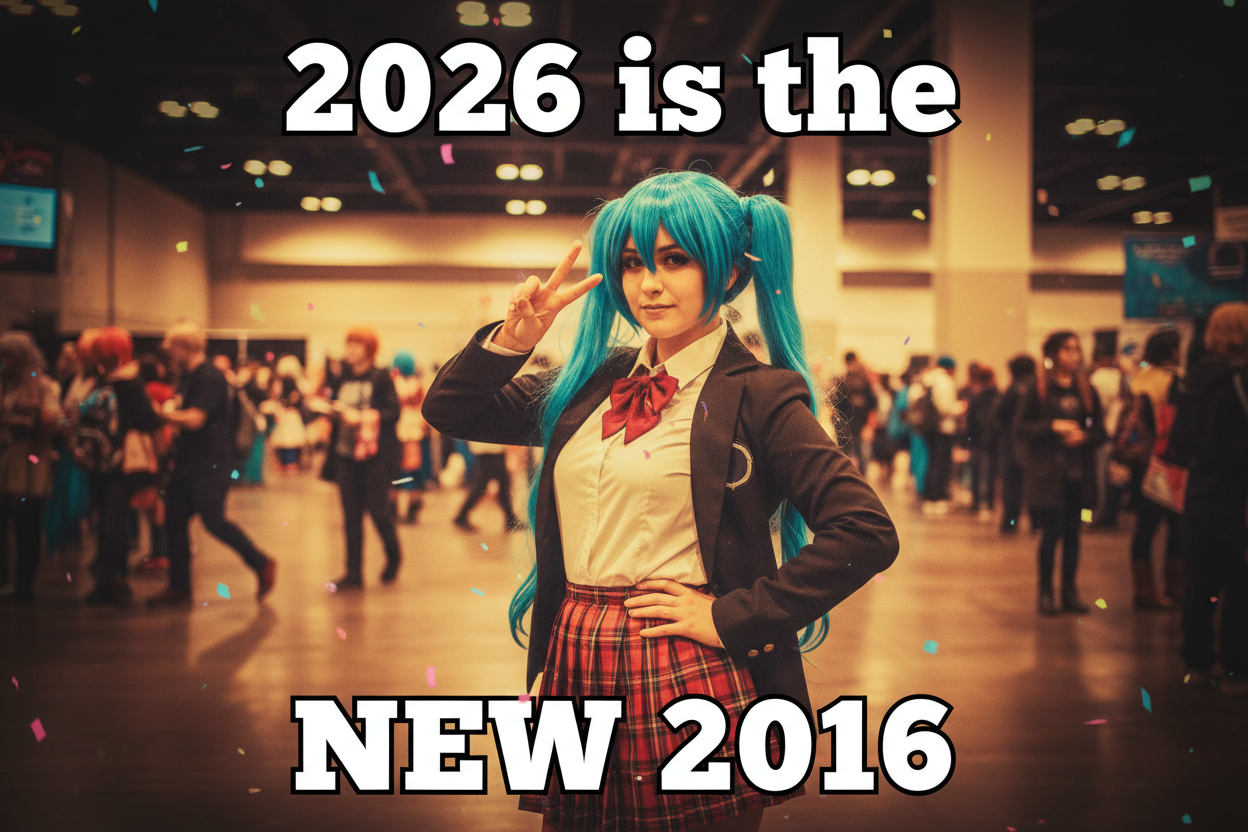
Visual language: Oversaturated colors, Snapchat's puppy-dog and flower-crown filters, and the low-resolution look of early-generation smartphone cameras.
The framing behind all of this matters as much as the content itself. Much of the commentary explicitly ties it to nostalgia for the years before COVID-19 and before generative AI became a common part of everyday content creation. It's a specific reaction to how much has changed since then, made concrete through a recognizable, mid-2010s aesthetic.
Why Internet-Wide Nostalgia Trends Always Spill Into Cosplay
Cosplay doesn't operate in a vacuum separate from broader internet culture — it's consistently downstream of whatever aesthetic mood is dominating social platforms at a given moment. A trend this large was always going to touch cosplay in two distinct ways:
-
Character Choice: When a specific era becomes aesthetically fashionable again, media and characters associated with that era get a renewed halo of relevance, even among cosplayers who weren't active a decade ago.
-
Photography & Presentation Style: The trend's signature oversaturated, Snapchat-filter visual language is genuinely compatible with how cosplay content gets shot. Cosplayers can apply this retro aesthetic to photos of an otherwise unrelated costume and tap into the nostalgia wave without needing a brand-new build.
Which Older Properties Are Riding This Wave
It's worth distinguishing between two related but different effects here:
-
Literal 2016-Era Properties: Properties actually originating or peaking in 2016 — Pokémon Go, Overwatch, and anime series that debuted that year (like Re:Zero or Mob Psycho 100) fit the trend's specific dating in a direct, unambiguous way. Explore our classic Overwatch costume collection for iconic 2016 builds.
-
Broader Retro-Adjacent Revivals: The renewed theatrical interest around Evangelion's 30th anniversary Movie Fest and the sustained attention around Cyberpunk: Edgerunners both reflect the same underlying cultural instinct — a genuine appetite for revisiting older, previously "finished" properties rather than only chasing whatever's newest.
Literal 2016-Era Nostalgia vs. Broader Retro-Adjacent Revivals
| Category | Examples | Why It Fits the Trend | Best Approach for Cosplayers |
| Literal 2016-Era Properties | Pokémon Go, Overwatch, 2016-debut anime series | Directly matches the trend's specific year-dating | Build the character as originally designed; lean into period-accurate styling |
| Broader Nostalgia Revivals | Evangelion 30th anniversary, Cyberpunk: Edgerunners | Reflects the "old is cool again" cultural instinct | Build toward the classic/original design era rather than modern redesigns |
| Retro Presentation Style | Any costume, shot with retro filter treatment | Doesn't require a period-specific character at all | Apply oversaturated color grading and early-smartphone photo editing |
How to Build (or Photograph) a Retro-Style Cosplay Right Now
-
Consider a genuinely 2016-era character if you want to hit the trend directly. Properties that debuted or peaked that year carry the most direct nostalgia connection and require the least explanation on social feeds.
-
Lean into classic, pre-redesign versions of long-running characters. Choosing an older, original design over a more recent modernized redesign taps into the same instinct driving this broader trend.
-
Prioritize vibrant fabric quality that withstands retro color grading. Retro photo filters tend to amplify color saturation. That's why we rely on real, self-taken showroom photographs across all our listings, ensuring the real-world fabric colors look rich and authentic under any lighting or filter treatment.
-
Pair retro photography with dance or movement content. Several 2016 references — like the Mannequin Challenge or dabbing — were movement-based trends, meaning they overlap naturally with the broader cosplay dance format popular today.
Frequently Asked Questions
Is "2026 is the new 2016" actually a significant trend, or just niche TikTok content?
It's significant enough to have documented BBC coverage and a dedicated Wikipedia entry, with confirmed spikes in TikTok search volume for "2016" and millions of videos using period-specific filters in early 2026 — this is a mainstream-documented phenomenon, not a fringe niche.
Do I need to cosplay a character that literally debuted in 2016 to participate in this trend?
No — while properties that genuinely originated that year fit the trend most directly, the broader "old is cool again" instinct behind it also supports building toward classic, original-era versions of much older franchises, or simply applying retro photography styling to any costume.
What's the easiest way to apply this trend without building a new costume?
Retro-style photo editing — oversaturated colors, Snapchat-style filters, deliberately lower-resolution treatment — can be applied to photos of an existing costume, tapping into the trend's visual language without requiring a new build.
Why does this trend specifically reference pre-COVID and pre-AI content?
Much of the commentary around the trend frames it as nostalgia for a specific pre-pandemic, pre-generative-AI internet era, making the reference point about more than just the year itself — it's tied to a broader sense of how much online culture has changed since then.
Are there real cosplay properties benefiting from this broader nostalgia wave right now?
Yes — Evangelion's 30th anniversary theatrical re-release and the sustained popularity of Cyberpunk: Edgerunners both reflect the same underlying instinct this trend has given a name to, even though neither is a literal 2016-era property.
Conclusion
Choosing a retro or nostalgia-themed cosplay costume right now means tapping into something genuinely bigger than the cosplay community itself — a documented, BBC-covered internet-wide moment reacting to how much has changed since a specific, recognizable era. Whether you build toward a literal 2016-debut character, lean into a classic pre-redesign version of a longer-running favorite, or simply shoot your next cosplay photos with a deliberately retro filter treatment, this trend offers several legitimate ways to participate without starting from zero. If you're ready to build your own retro-styled cosplay costume, explore our classic nostalgia-inspired costume guide and collection before you order.

コメントを書く
このサイトはhCaptchaによって保護されており、hCaptchaプライバシーポリシーおよび利用規約が適用されます。