Table of Contents
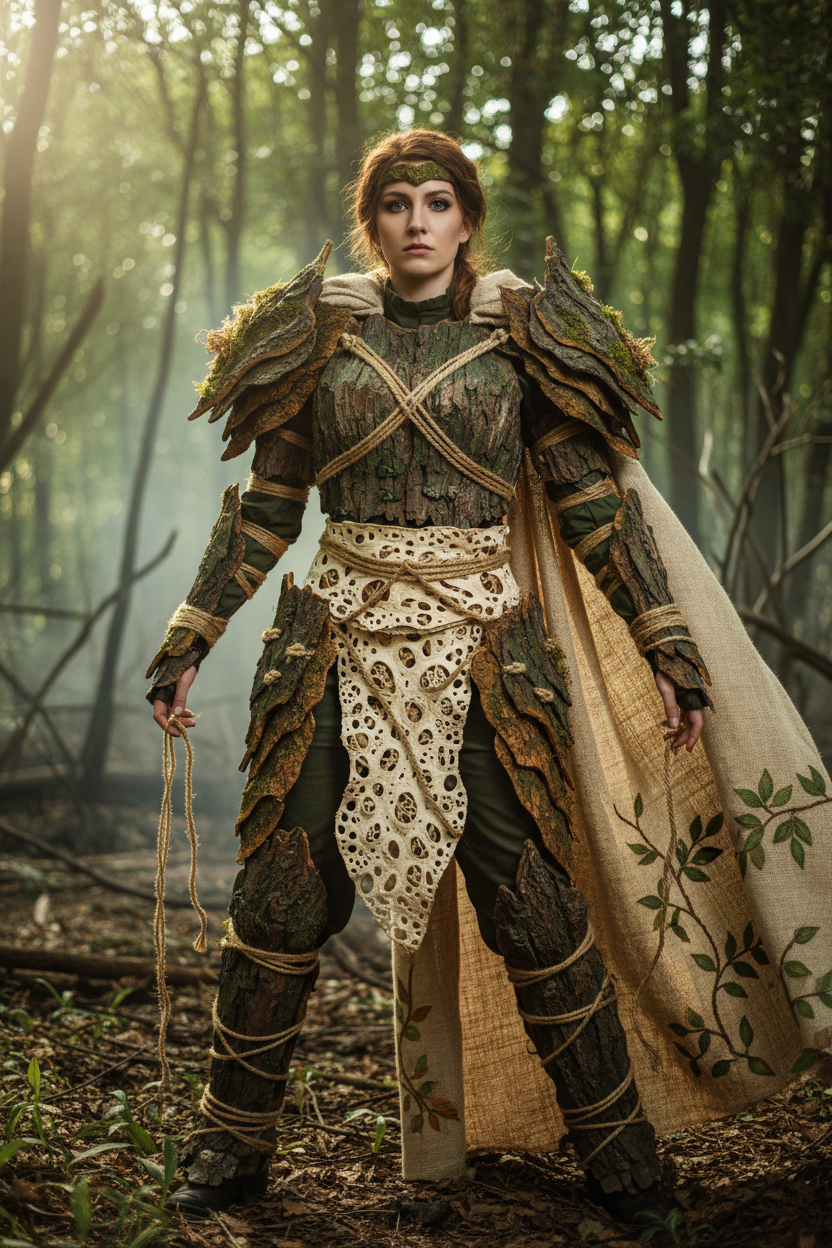
TL;DR: The "Eco-Warrior" cosplay aesthetic — armor and props built from mycelium leather, cork sheets, and hemp fiber, and recycled plastics instead of standard EVA foam and virgin plastic — is a genuine 2026 trend combining real environmental motivation with a visually distinct payoff: organic, bark-like textures and earth-toned palettes that stand out sharply against typical smooth, painted armor. It's driven by real advances in bio-based materials (mycelium leather is now a functional, waterproof, tensile-tested product, not a novelty), and DIY cosplay communities running sustainability-themed build challenges that measurably boost engagement.
Why This Trend Is Genuinely Taking Off, Not Just a Marketing Label
Two separate forces are driving Eco-Warrior cosplay, and it's worth understanding both, because they reinforce each other rather than one simply being a cover story for the other.
The first is straightforward environmental motivation — a real and growing share of younger cosplayers care about the material footprint of a hobby that traditionally leans hard on petroleum-based foam, PVC, and single-use synthetic materials, and sustainable alternatives let them build without that tradeoff.
The second, and arguably more important for why this trend is spreading on social media specifically, is aesthetic: materials like cork, raw hemp weave, and mycelium leather have a genuinely different visual texture than painted EVA foam or thermoplastic — layered, organic, slightly irregular in a way that reads as "grown" rather than "manufactured." That texture maps naturally onto nature-themed hero concepts, forest and wasteland-survivor character archetypes, and armor designs meant to look weathered or alive rather than sleek and mass-produced, giving builders a genuinely distinct visual lane rather than just an ethical checkbox.
This isn't happening in a vacuum of untested materials, either. Mycelium leather — grown from fungal mycelium cultivated on agricultural waste substrates like hemp hurd, straw, or wood chips — has moved well past proof-of-concept in the past few years. Commercial products like Mylea are already being sold as a genuine leather alternative with documented tensile strength in the 1–11 MPa range, real waterproofing, and the ability to be darkened with natural dyes, and peer-reviewed materials science research continues to refine mycelium-based composites specifically for durability and tear resistance. That matters for cosplay builders specifically: a material has to survive being worn, bent, and handled through a con day, and mycelium leather has real, published performance data behind it now, not just a sustainability pitch.
The DIY cosplay community angle matters too. A number of maker communities have run sustainability-themed build challenges — encouraging cosplayers to source at least one major component from a recycled, upcycled, or bio-based material — and these challenge formats have been associated with a real, measurable engagement boost across participating communities, likely because the "how did you actually pull this off" build-process story is inherently more shareable than a standard finished-costume reveal.
Key Elements and Where Each Material Actually Shines
-
Mycelium leather props are the standout material for anything that needs to read as organic, worn, or naturally textured — think armor plating on a nature-based hero, a weathered satchel, or belt and strap details. It's genuinely waterproof once processed, holds a natural brown base tone that takes dye well for customization, and has real tear resistance thanks to its dense fibrous structure. It works best for structural, moderate-flex pieces rather than anything requiring the kind of fine, crisp detail you'd get from resin casting.
-
Cork sheet prop bring a lightweight, naturally textured surface that's excellent for armor plating meant to look like bark, stone, or weathered natural material without adding significant weight to a costume — a real practical advantage for full-day convention wear, since cork is considerably lighter than comparable foam-and-resin builds at the same visual thickness. It also takes paint and sealant well, so you're not limited to cork's natural tone if your design calls for something more stylized.
-
Hemp fiber armor components — typically woven hemp fabric used as a structural base layer, sometimes reinforced with resin or combined with other bio-composites — bring genuine durability and a naturally rustic weave texture that works well for wrap-style armor, strapping, and rope-like binding details. Hemp's fiber strength also makes it a reasonable base substrate for mycelium growth itself, if you're interested in growing your own bio-composite material rather than sourcing a finished product.
-
Recycled plastic cosplay pieces — built from recycled PET sheet, reclaimed bottle plastic, or post-consumer polymer stock — are a practical, more accessible entry point than bio-fabricated materials, since recycled plastic sheet is widely available through craft and sign-making suppliers and behaves similarly to virgin plastic for thermoforming and shaping, just with a smaller environmental footprint per piece.
-
Biodegradable synthetic leather (plant-based pleather alternatives, distinct from mycelium leather specifically) offers a middle path for builders who want leather-like drape and finish without either animal hide or standard PVC pleather — useful for costume pieces needing more flexibility and drape than cork or mycelium leather typically offer.
-
Zero-waste and upcycled prop making is less a single material and more a build methodology: pattern-nesting to minimize fabric offcuts, sourcing structural components from thrifted or reclaimed materials rather than new stock, and designing props around materials you already have on hand rather than buying new for every project. This approach pairs naturally with all the materials above and is often the most accessible starting point for builders who want to try the aesthetic without sourcing specialty bio-materials right away.

Common Misunderstandings and Things to Watch For
-
"Eco-friendly materials are automatically weaker or less durable than standard cosplay materials." This doesn't hold up against the actual data — mycelium leather has documented tensile strength and waterproofing comparable to functional leather alternatives already used across fashion and accessories, and cork has long been used in structural applications specifically because of its durability-to-weight ratio. The real tradeoff is usually working with a less familiar material, not a fundamentally weaker one.
-
"Sustainable materials are cheaper because they're simpler." Often the opposite is true, at least for now — bio-fabricated materials like mycelium leather are produced at a smaller scale than mass-market synthetic leather or foam, and that typically shows up as a higher per-unit cost, even though the environmental cost is lower. Budget accordingly rather than assuming "eco-friendly" means "budget-friendly."
-
"Any material marketed as eco-friendly is genuinely sustainable." It's worth applying some scrutiny here, since "eco-friendly" and "sustainable" get used loosely in marketing generally, cosplay supplies included. Look for actual sourcing details — recycled content percentages, biodegradability claims backed by real certification, or transparent information about a mycelium product's growing process — rather than taking a green-toned product label at face value.
-
"Mycelium leather will degrade or smell over time." Properly processed and sealed mycelium leather is a stable, finished material, not raw living fungus — the biological growth process happens during manufacturing, and the finished product is treated to be shelf-stable, similar to how traditional leather tanning stabilizes hide. That said, it's worth following any specific care instructions from your supplier, since finishing processes can vary between manufacturers.
-
"Growing your own mycelium material at home is quick and easy." If you're interested in cultivating your own mycelium-based material rather than buying a finished sheet, understand this is a genuine biological process requiring controlled humidity, temperature, and growth time measured in days to weeks, not a same-day crafting technique — it's a rewarding project for builders with lead time to plan around, not a last-minute con-prep solution.
Summary and Further Reading
Eco-Warrior cosplay works because it's solving two problems at once — a genuine desire for lower-impact building materials, and a real aesthetic gap that organic, textured materials fill in a hobby that's traditionally dominated by smooth foam and glossy plastic. The materials behind it aren't just a trend label, either; mycelium leather, cork, and hemp-based composites have real, published performance data backing their use in structural costume pieces.
If you're planning your next build around this aesthetic, check out our guides on armor construction techniques for non-foam materials and pattern-nesting strategies for zero-waste prop making.



Laisser un commentaire
Ce site est protégé par hCaptcha, et la Politique de confidentialité et les Conditions de service de hCaptcha s’appliquent.