💡 Systemic Briefing:
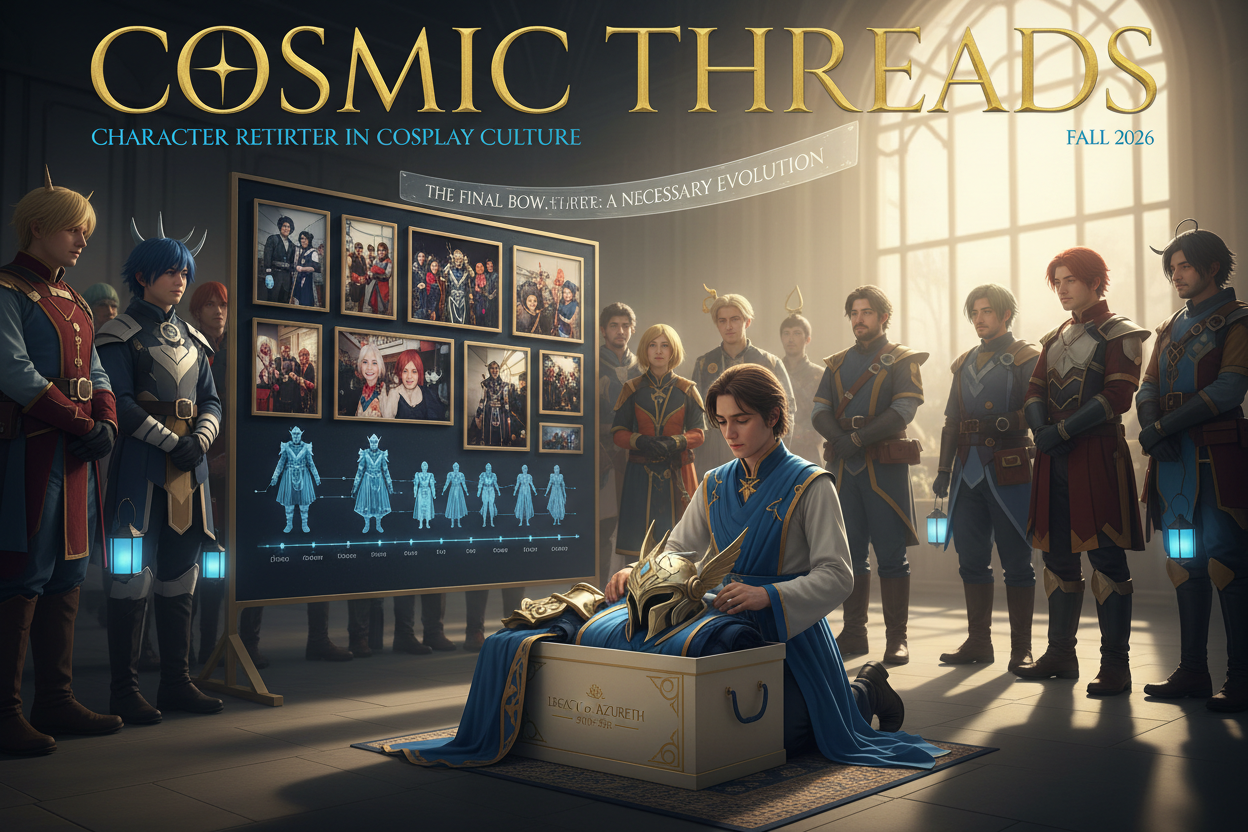
A profound psychological and operational transition is sweeping through the global cosplay landscape. For decades, choosing a character was viewed as a long-term commitment, often forming the very foundation of a creator's subcultural identity. However, in 2026, the community is intensely debating the phenomenon of "Character Retirement." Driven by shifting dynamics in fandom identity and online identity transitions, a vital question has emerged: When should a cosplayer permanently archive a character? What was once a permanent identity has evolved into a temporary, phase-based expression. Across Reddit cosplay subreddits, veteran convention panels, and Tumblr fandom spaces, creators are fighting over character life cycles, algorithmic pigeonholing, and the emotional weight of letting a character go.
1. Core Character IP Analyses: The Boundaries of Long-Term Identity
To understand why character retirement has become a primary debate in 2026, we must analyze three pillars of the subculture that represent different generations of fandom longevity.
🎭 Hatsune Miku cosplay costume (Vocaloid)
-
The Endless Loop: The standard Hatsune Miku cosplay costume has been a dominant force on convention floors for nearly two decades. Because Miku is a timeless virtual entity with no canonical aging process, she represents the ultimate "eternal identity."
-
The 2026 Friction: Veteran cosplayers who built their entire reputations wearing a Hatsune Miku cosplay costume are facing deep identity transitions. On Reddit r/vocaloid, creators are opening up about the emotional fatigue of playing an ageless teenage pop star while navigating their own real-world aging process. The debate centers on whether continuing to cosplay Miku after a decade feels like a beautiful tradition or an artificial cycle that blocks personal artistic growth, leading many to announce official "retirement ceremonies" for their Miku gear.
🎭 / Asuka Langley cosplay costume (Neon Genesis Evangelion)


-
The Narrative Full Stop: The Ayanami Rei cosplay costume and Asuka Langley cosplay costume are pillars of old-school anime fandom. Historically, these characters were treated as permanent badges of honor—once an Asuka cosplayer, always an Asuka cosplayer.
-
The 2026 Friction: Following the definitive narrative conclusion of the franchise through the Rebuild of Evangelion tetralogy, the community has had to reckon with a hard truth: a character's active lifecycle can end. On Tumblr fandom blogs, cosplayers are debating whether keeping these characters active in 2026 feels outdated. For many creators, retiring their plugsuits is a conscious decision to respect the narrative ending of the IP, shifting their relationship with the character from an active performance to a treasured, static memory.
🎭 Raiden Shogun / Furina cosplay costume (Genshin Impact)

-
The Accelerated Lifecycle: Modern live-service games move at a breakneck pace. A Raiden Shogun cosplay costume or Furina cosplay costume represents an immediate explosion of global hype, rapid algorithmic validation, and intense fandom connection.
-
The 2026 Friction: Because HoYoverse systematically introduces new regions and characters every few months, the lifecycle of a modern cosplay has shortened drastically. Creators on TikTok and cosplay business forums are debating the hyper-acceleration of retirement. If a cosplayer spends thousands of dollars engineering a Furina cosplay costume, only to feel pressured to retire it six months later because the community has moved on to a newer character, it creates immense creative and financial burnout. It marks the definitive shift where a character is no longer a multi-year identity, but a fleeting, phase-based expression.
⚖️ 2. From Permanent Identity to Phase-Based Expression
The shift toward character retirement signals a profound evolution in how people view their connection to a fictional universe.
[ TRADITIONAL ERA ]
One Definitive Character ──► Deep Long-Term Identity ──► Decades of Shared Recognition

[ MODERN 2026 ERA ]
Phase 1 (Genshin) ──► Phase 2 (Retro Anime) ──► Phase 3 (Retirement/Archive)
In the early days of the subculture, changing your main character was rare; your character choice defined your social circle within fandom identity spaces. In 2026, cosplay is treated more like an anthology series. A character is adopted to explore a specific aesthetic, emotional, or technical phase of a creator's life. When that phase concludes, retiring the character is no longer seen as a failure or a loss of interest, but as a healthy, necessary transition to make room for new forms of self-expression.
🔒 3. The Golden Handcuffs: The Algorithmic Trap of the Viral Character
The operational trigger behind the retirement debate is the digital phenomenon of "algorithmic labeling." When a creator goes viral wearing a specific Raiden Shogun cosplay costume, modern online identity platforms aggressively categorize them. The algorithm rewards them immensely when they post that specific character, but suppresses their metrics if they try anything else.
This has turned iconic costumes into beautiful prisons. In 2026 convention panels, professional creators are openly discussing the terrifying choice to officially "retire" their most profitable, viral characters. They are choosing to take a short-term hit to their traffic in order to reclaim their creative autonomy and break free from a single, suffocating character label.
📊 4. The Supply Chain Registry: Designing Costumes for a Circular Lifecycle
The realization that characters have a finite operational shelf-life is changing how cosplayers buy and construct apparel. High-end consumers are abandoning permanent modifications in favor of modularity and high resale value, forcing e-commerce platforms to rethink their garment architecture:
| Target Character Node | The Phase-Based Challenge | Traditional Production Flaw | 2026 Supply Chain Standard | E-Commerce Strategy Shift |
|
Hatsune Miku (Vocaloid) |
Managing age transitions and keeping an iconic, long-term look fresh. | Tailoring that cannot be altered makes the costume impossible to resell after retirement. | Modular seam allowances and highly adjustable elasticized lining components built into the classic dress. | Market "Archival Garment Bags" and premium care kits designed to maintain the resale value of legendary outfits. |
|
Ayanami Rei / Asuka (Evangelion) |
Gracefully archiving a character after their canonical story reaches a full stop. | Aging faux-leather plugsuits disintegrate and flake in storage after three to four years. | Medical-grade, hydrolytically stable polyurethane films that resist oxidation during multi-year storage. | Promote costumes as "Collector's Pieces," using premium shadow-box packaging meant for display after retirement. |
|
Raiden Shogun / Furina (Genshin Impact) |
Surving hyper-accelerated character lifecycles and seasonal trend shifts. | Gluing or permanently attaching complex details makes the base garment impossible to re-purpose. | 100% detachable 3D prints, magnetic armor snaps, and universal base-fabric patterns. | Sell modular base elements (like standard dresses) with separate, interchangeable character armor upgrade kits. |
❓ 5. Frequently Asked Questions (FAQ)
-
Q: How do you know when it is officially time to retire a beloved character from your active lineup?
-
A: The clearest indicator is a shift from creative excitement to emotional obligation. If putting on the costume feels like a chore, or if you find yourself wearing it solely to satisfy social media algorithms or external expectations rather than personal joy, it has likely fulfilled its phase-based purpose. Retirement doesn't minimize your history with the character; it honors it by ending the performance on a high note.
-
-
Q: Does character retirement mean a cosplayer can never wear that specific costume ever again?
-
A: Not at all. Retirement in 2026 refers primarily to stepping away from the active public performance, commercial content rotation, and competition use of a character. Many creators retire a character from their primary identity profile but still bring the costume out for private photoshoots, nostalgic casual meetups, or milestone convention anniversaries where the pressure of performance is completely removed.
-
-
Q: What happens to premium, high-end costumes once a creator decides to retire them?
-
A: The subculture has developed a booming second-hand market driven by identity transitions. Retired high-craftsmanship costumes are passed down to a new generation of fans through dedicated subcultural marketplaces. This circular economy allows a retired garment to act as a bridge between fandom eras, giving a new enthusiast the tools to begin their own phase-based expression with a beautifully engineered piece of history.
-
🎯 Conclusion: The Beauty of the Closed Chapter
The rising discussion around character retirement in 2026 is a sign of a deeply mature community that prioritizes mental health and artistic freedom over endless repetition. Recognizing that a Hatsune Miku cosplay costume or a live-service gaming outfit represents a specific chapter of your creative journey allows you to celebrate your growth. By treating costumes as temporary, brilliant expressions rather than permanent prisons, cosplayers can confidently close an archival box, step onto the convention floor, and begin writing their next great narrative transformation.

Laisser un commentaire
Ce site est protégé par hCaptcha, et la Politique de confidentialité et les Conditions de service de hCaptcha s’appliquent.