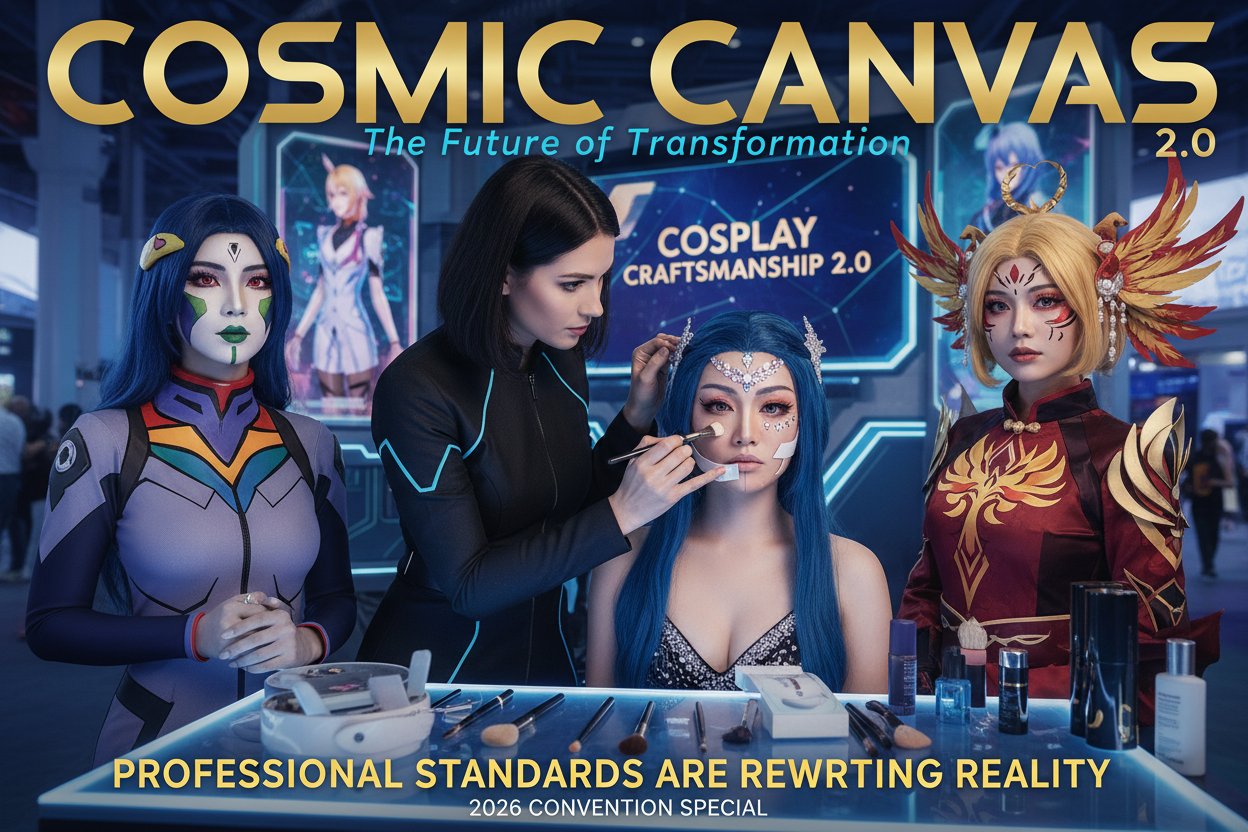
💡 Systemic Briefing:
The global cosplay community in 2026 is locked in a passionate debate over the rapid evolution of facial aesthetics. What was once a hobby rooted in basic theater makeup and casual character adjustments has completely transformed into a highly disciplined sector of professional transformation art. Driven by breakthroughs in modern makeup artistry and body modification techniques, the standard for a competitive face on the convention floor has skyrocketed. Across Reddit cosmetics subreddits, TikTok beauty tutorials, and elite convention judging panels, creators are asking a critical question: Is the aggressive integration of high-end beauty industry standards elevating cosplay craftsmanship to a respected fine art, or is it flattening unique character expressions into a wave of hyper-filtered, lookalike aesthetic homogeneity?
1. Core Character IP Analyses: The Frontiers of Metamorphosis
To understand how professional cosmetic standards are reshaping the community, we must examine three massive franchises that demand entirely different technical approaches to facial construction.
🎭 Ayanami Rei / Asuka Langley cosplay costume (Neon Genesis Evangelion)

-
The Classic Frontier: For decades, an Ayanami Rei cosplay costume or Asuka Langley cosplay costume relied on traditional, minimalist styling. Because the 1990s anime aesthetic features clean, simple facial lines, older generations of hobbyists used basic foundation, simple eyeliner, and styled wigs to portray these characters, focusing almost entirely on the physical plugsuit.
-
The 2026 Friction: Today, the standard has shifted dramatically. On Reddit r/cosplay and vintage anime boards, a fierce debate is raging over "Instagram-face" filtering in real life. Modern creators applying a professional makeup routine to an Asuka Langley cosplay costume use heavy facial contouring, advanced nose-bridging techniques, and specialized circle lenses to force real-world human anatomy into perfect 2D anime proportions. Critics argue that forcing a gritty, psychologically complex psychological drama like Evangelion into ultra-smooth, idealized beauty industry molds strips the characters of their raw, human vulnerability, turning them into uncanny digital dolls.
🎭 Ahri / Akali cosplay costume (K/DA / League of Legends)

-
The Pop Culture Frontier: As an official virtual K-pop group, K/DA represents the literal intersection of gaming culture and global pop music beauty standards. The Ahri cosplay costume and Akali cosplay costume are built from the ground up to showcase hyper-glamorous, red-carpet-ready cosmetic perfection.
-
The 2026 Friction: K/DA is the primary catalyst for the mainstream crossover between cosplay makeup and professional transformation art. TikTok and Tumblr fandom discussions frequently point out that to successfully pull off a K/DA Ahri cosplay costume, a creator must essentially master professional celebrity makeup artistry, including complex facial highlighting, dramatic cut-creases, and neon body paint application. This has created massive polarization: while many celebrate it as a beautiful evolution that treats cosplay with professional dignity, casual hobbyists complain that it sets an impossibly high financial and skill barrier, alienating those who cannot afford high-end cosmetics or professional-grade equipment.
🎭 Raiden Shogun / Yae Miko cosplay costume (Genshin Impact)

-
The Cultural Frontier: Boasting intricate, fantasy-inspired Eastern aesthetics, characters like the Raiden Shogun and Yae Miko feature highly stylized, elongated facial designs and distinct, color-coded eye makeup that reflects their divine in-game lore.
-
The 2026 Friction: This IP highlights the intense debate regarding aesthetic homogeneity. During convention panels and championship judging sessions, observers note that many creators are utilizing identical, standardized beauty industry techniques—such as generic douyin-style nose contouring and universal lip-plumping effects—regardless of whether it matches the character's unique canonical personality. A Raiden Shogun cosplay costume requires a cold, authoritative, and majestic presence, yet critics argue that universal professional makeup trends frequently soften these features into a generic, highly commercialized "pretty girl" template, sacrificing individual character lore for algorithmic appeal.
⚖️ 2. The Aesthetic Split: True Transformation vs. Homogenized Beauty
The core conflict within the community divides creators down a clear ideological line regarding the true purpose of cosmetic application:
[ TRADITIONAL APPROACH: LORE-CENTRIC ]
Character Personality ──► Tailored Facial Features ──► Unique Narrative Immersion

[ MODERN APPROACH: BEAUTY-CENTRIC ]
Professional Industry Standards ──► Universal Contour Templates ──► Aesthetic Homogeneity
Traditional purists argue that professional makeup standards are erasing the "acting" out of cosplay. When everyone follows the exact same internet beauty tutorials, a martial artist warrior, an ancient deity, and a chaotic high school student all end up with the exact same facial structure, jaw slimness, and airbrushed finish on the convention floor. On the other side, advocates for professional transformation art state that mastering these advanced techniques is no different than mastering complex sewing patterns or 3D printing. They believe that rewriting human anatomy to match fictional artwork is an incredible feat of physical engineering that elevates the entire subculture.
🪞 3. The Technical Evolution: From Paint to Structural Modification
The debate deepens as cosplay makeup crosses over into the territory of temporary body modification. In 2026, creating a competitive look goes far beyond eyeshadow palettes. Top-tier creators are systematically altering their physical structures using temporary cosmetic tools:
Cosplayers are routinely using medical-grade face-lifting tapes to aggressively alter their jawlines and eye slants, applying dimensional prosthetic scar tissue, and using specialized liquid latex to reshape nose bridges and brow lines. This intense mechanical manipulation of the face ensures that the costume aligns flawlessly with high-definition camera lenses, completely bridging the gap between human flesh and digital illustration.
📊 4. The Supply Chain Registry: Materials Engineering for High-Definition Artistry
This shift toward professional transformation art has completely disrupted the manufacturing and e-commerce supply chains. High-end cosplayers no longer buy cheap costume store face paint; they demand professional-grade, high-durability cosmetics engineered to survive the heat of convention floors and the scrutiny of macro camera lenses:
| Target Character Node | The Cosmetic Reinterpretation | Traditional Makeup Failure | 2026 Supply Chain Standard | E-Commerce Strategy Shift |
|
Ayanami Rei / Asuka (Evangelion) |
Altering human facial structures to match pristine, classic 2D anime cell outlines. | Standard foundations melt under heavy studio lighting, exposing real-world skin textures. | Ultra-matte, high-coverage silicone-based foundations and medical-grade face-lifting tensors. | Bundle screen-accurate costume sets with specialized, character-specific face-shaping tape kits. |
|
Ahri / Akali (K/DA) |
Achieving flawless, red-carpet pop star glamour with high-impact theatrical accents. | Generic glitters and body paints smudge easily and lose vibrancy under intense flash photography. | Transfer-proof metallic liquid pigments, long-wear setting polymers, and neon UV-reactive cosmetic inks. | Market complete "Cosmetic Transformation Bundles" alongside premium outfits to capture high-spending beauty consumers. |
|
Raiden Shogun / Yae Miko (Genshin Impact) |
Preserving traditional Eastern fantasy eye structures and divine, authoritative lines. | Standard eyeliners run due to sweat during long convention walks, ruining detailed eye geometry. | Waterproof, smudge-proof acrylic-emulsion eyeliners and customized high-pigment gradient shadow sets. | Collaborate directly with professional cosmetic brands to co-brand character-specific makeup palettes for elite creators. |
❓ 5. Frequently Asked Questions (FAQ)
-
Q: Does a cosplayer need to use professional makeup templates to be successful on the modern convention floor?
-
A: Absolutely not. While high-end contouring and structural tapes dominate the spotlight on social media, convention communities still deeply value storytelling, performance, and garment craftsmanship. Tailoring your makeup to explicitly reflect a character’s unique emotions and canonical flaws often creates a much more memorable and impactful impression than a generic, flawless beauty template.
-
-
Q: How are major global cosplay competitions adjusting their scoring rules to handle advanced body modification and makeup tapes?
-
A: Craftsmanship juries are modernizing their rubrics to view makeup as an independent, highly technical skill node. In 2026, major championships evaluate how cleanly prosthetics and face-shaping elements are blended into the overall presentation. Judges check for seamless execution, color theory accuracy, and whether the cosmetic choices structurally complement the hand-crafted elements of the costume rather than distracting from them.
-
-
Q: Is the rise of professional cosmetic standards driving up the overall cost of participating in the cosplay hobby?
-
A: It certainly creates a premium tier within the community, but it has also triggered a massive wave of accessible education. The commercial crossover has forced cosmetics brands to produce highly affordable, hyper-durable formulas. While elite transformation art requires specialized tools, independent creators regularly use budget-friendly drugstore products coupled with masterful blending techniques to achieve stunning, competition-ready results without a Hollywood budget.
-
🎯 Conclusion: The Symphony of the Face and the Fabric
The intense discussion surrounding professional makeup standards in 2026 proves that cosplay has successfully broken free from its old boundaries as a simple dress-up hobby. By embracing the complex tools of the modern beauty industry and structural makeup artistry, creators are expanding the limits of what a human face can express. The challenge for the future generation of cosplayers is not to reject these powerful new techniques, but to master them in a way that serves the character's soul—ensuring that every line, shadow, and contour brings a unique narrative to life.

Laisser un commentaire
Ce site est protégé par hCaptcha, et la Politique de confidentialité et les Conditions de service de hCaptcha s’appliquent.