💡 Executive Abstract:
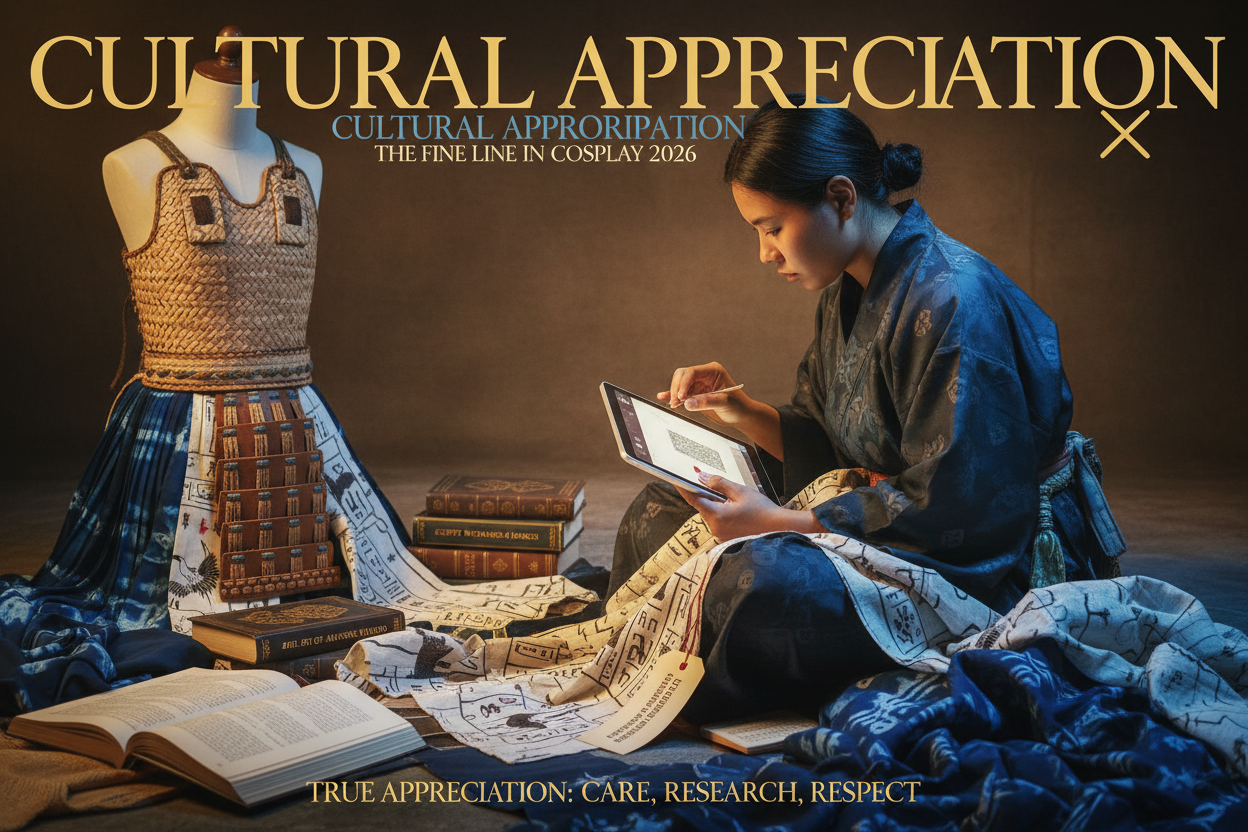
As the global anime, gaming, and pop-culture landscapes expand into a multi-billion-dollar universal language, the international creator community faces increasingly complex questions regarding identity, representation, and material ethics. The contemporary discourse surrounding Cultural Appreciation vs. Cultural Appropriation has fundamentally shifted away from outdated, reductive arguments about "race accuracy"—reaffirming the absolute foundational rule that cosplay is for everyone, regardless of an individual's genetic background, body type, or skin color. Instead, modern cultural critics, competitive judges, and elite manufacturers focus on a far more precise operational node: Culture vs. Fandom. This comprehensive analysis explores the fine creative line drawn when fictional characters integrate real-world cultural heritages, sacred spiritual symbols, or historical garments, evaluating how premium material sourcing, rigorous anthropological research, and high-fidelity structural craftsmanship honor these histories rather than exploiting them.
1. Architectural IP Case Studies: Analyzing the Cultural Borders
To navigate these structural boundaries respectfully, creators must look beyond the screen to analyze how specific properties blend real-world anthropology, ethnic fashion history, and purely fictional sci-fi aesthetics. Selecting a high-fidelity, commercially sourced wardrobe means treating the source material as a piece of living textile history rather than a disposable caricature.
+----------------------------------------------------------------------------------------+
|                          THE CULTURAL RESPECT LIFECYCLE IN COSPLAY                     |
+----------------------------------------------------------------------------------------+
|  [Fandom Inspiration] ---> [Historical/Symbolic Research] ---> [Premium Textile Sourcing]  |
|                                                                        |               |
|  [Global Cultural Appreciation] <--- [Accurate Construction] <--- [Avoiding Caricature] |
+----------------------------------------------------------------------------------------+
⚡ Raiden Shogun cosplay costume (Genshin Impact)
-
The Symbolic Anchor: The design profile of the Raiden Shogun (Genshin Impact) draws heavily from traditional Japanese material culture, modifying historical elements of the Kimono, Furisode (swinging sleeves), and Shinto Miko (shrine maiden) vestments. Her character design features specific cultural anchors like the Tomoe motif—an ancient heraldic abstract symbol deeply tied to Shinto cosmology, thunder deities, and samurai authority—layered over complex geometric waves, structured samurai-inspired pauldrons, and a flowing, asymmetric ceremonial silhouette.
-
The Appreciation Node: Within the Culture vs. Fandom debate, investing in a high-tier Raiden Shogun cosplay costume demonstrates how genuine appreciation thrives through historical accuracy and respect for cultural protocols. For example, when a creator takes the time to study the correct physical layering of traditional Japanese garments—such as ensuring the right-side-over-left body wrap (Migi-mae), given that reversing it (Hidari-mae) is a strict cultural taboo reserved exclusively for dressing corpses at funerals—they elevate the practice. A premium, accurately tailored Raiden Shogun cosplay costume shifts the presentation away from a shallow, inaccurate stereotype and turns it into a genuine celebration of traditional Eastern textile design and historical reverence.
⚔️ Sephiroth cosplay costume (Final Fantasy VII Series)
-
The Symbolic Anchor: Sephiroth represents a seamless aesthetic blend of Western dark-fantasy elements, gothic undertones, and traditional Japanese military martial arts history. While his silhouette features a long, flowing, modern leather duster coat and silver metallic armor plating, his defining visual and cultural anchor is his weapon: the Musou or Ōdachi—the exceptionally long, historic Japanese greatsword that requires specific historical handling, stance balance, and combative posturing derived from authentic Kenjutsu martial disciplines.
-
The Appreciation Node: The global execution and widespread embrace of a Sephiroth cosplay costume perfectly clarifies why cultural respect has nothing to do with race or ethnic accuracy. Creators of every imaginable background, nationality, and ethnicity portray this iconic villain on global competitive stages. The subcultural focus remains entirely on honoring the character's presentation, structural engineering, and technical movement. Donning a masterfully constructed Sephiroth cosplay costume means focusing on high-end prop safety, structural balance, and historical fencing postures rather than altering personal physical traits, proving that subcultural passion belongs to everyone who respects the artistic integrity of the craft.
🔴 Asuka cosplay costume (Neon Genesis Evangelion)
-
The Symbolic Anchor: Asuka’s sleek, aerodynamic Evangelion Plugsuit is an absolute icon of modern science fiction, military-tech design, and late-20th-century anime aesthetics. Constructed from high-gloss panels, bold crimson color-blocking, and vacuum-sealed mechanical interfaces, the garment relies entirely on futuristic industrial lines, biomechanical modeling, aerodynamic curves, and synthetic cyberpunk engineering.
-
The Appreciation Node: When sourcing an Asuka cosplay costume, the character's design profile exists completely within an imaginative, highly speculative sci-fi future, meaning its visual elements are entirely disconnected from real-world cultural histories, sensitive ethnic traditions, or marginalized social histories. Because an authentic, premium Asuka cosplay costume (in its iconic Plugsuit form) belongs purely to the realm of Fandom Speculation and pop-culture mythology, the discussion shifts away from cultural boundaries and focuses entirely on material execution. The goal here is pure cinematic realism and engineering excellence, challenging the builder or manufacturer to bring advanced futuristic materials into the real world with flawless structural accuracy and high-performance finish.
⚖️ 2. The Analytical Paradigm: Fandom Passion vs. Fictional Decontextualization
Navigating the nuances of modern character presentation requires a clear understanding of the dividing line between superficial, tokenized trends and thoughtful, creative tribute. The subculture's progression has forced a hard distinction between appreciating a piece of art and unthinkingly flattening a living culture:
| Evaluation Vector | True Cultural Appreciation | Cultural Appropriation / Misstep |
| Primary Intent | Deepening one's understanding of a character's real-world historical, literary, and cultural background. | Using sensitive cultural, spiritual, or religious symbols merely as superficial, edgy, or exotic fashion details. |
| Handling of Traits | Focusing on tailoring excellence, weapon accuracy, textile depth, and authentic character posturing. | Altering personal skin tones (e.g., Blackface/Whiteface) or exaggerating physical features in a way that evokes harmful racial stereotypes. |
| Garment Integrity | Seeking high-quality, historically respectful textiles that mirror true artisan craftsmanship and weaving lineages. | Utilizing cheap, mass-produced disposable plastics and neon party materials that trivialize traditional garments. |
| Fandom Logic | Believing that Cosplay is for Everyone while treating real-world heritages and living groups with active care. | Treating sacred, religious, or historically marginalized symbols as basic, context-free costume accessories for personal amusement. |
| Commercial Sourcing | Partnering with specialized independent platforms that invest in accurate texturing, custom sizing, and structural fidelity. | Consuming drop-shipped, generic carnival-grade pieces that strip away all subtle details and historical tailoring shapes. |
The global community consensus remains unwavering: a creator’s background should never limit who they can portray. True appreciation is defined by the care, research, and respect put into the project. When a costume respectfully adapts real-world history, it builds meaningful cross-cultural connections. True appropriation occurs only when sacred, protected, or historically marginalized symbols are treated carelessly or reduced to cheap novelty accessories without any regard for their actual meaning or the living communities tied to them.
📊 3. The Craftsmanship Line: Upgrading Sourcing to Prevent Cheap Commodification
The shift toward thoughtful character presentation directly influences global design, supply chains, and independent e-commerce production pipelines. High-end creators are actively moving away from cheap, disposable materials in favor of premium, authentic fabrics. This commitment to quality respects the cultural origins of the designs while ensuring costumes stand up to close inspection under high-definition 4K lenses and studio lighting conditions:
| Target Character Node | The Structural Challenge | Sourcing & Design Solution | 2026 Technical Sourcing Standard |
| Raiden Shogun cosplay costume | Honoring traditional garment lines and complex drapery while ensuring durability for modern conventions. | Replacing flat polyester prints with custom-woven matte jacquards, heavy brocades, and dense embroidery. | Multi-layered matte silk blends paired with embroidered gold borders, genuine braided cords, and soft-molded resin details. |
| Sephiroth cosplay costume | Achieving a sleek, menacing cinematic look while maintaining garment flexibility and martial balance. | Utilizing heavy-gauge, durable synthetic leather that hangs naturally without crinkling or creating artificial plastic glare. | Reinforced matte-black tailoring panels integrated with lightweight, hand-finished armor accents and heavy metallic buckles. |
| Asuka cosplay costume | Replicating a smooth, sci-fi silhouette while ensuring long-term wearability, breathability, and structural form. | Deploying multi-paneled compression patterns that naturally follow body contours and absorb studio sweat. | Advanced 4-way stretch spandex channels layered with smooth, high-gloss synthetic accents and 3D injection-molded interface pins. |
🛠️ 4. Operational Protocol: A Builder's Guide to Respectful Adaptation
For independent operators, design teams, and individual makers, executing a project that involves cross-cultural elements demands a rigorous, professional workflow. Respect is demonstrated through the technical precision of the execution:
-
Deconstruct the Design Document: Before manufacturing or buying, break down every element of the costume. Identify which parts are purely fantastical (e.g., floating magical rings, sci-fi HUD displays) and which are derived from real-world history (e.g., Celtic knots, African tribal braids, Qing dynasty robes).
-
Contextualize Sensitive Symbols: If a design features an item that holds deep spiritual significance in our world—such as indigenous war bonnets, Buddhist prayer beads, or specific religious markings—ask whether the character uses it respectfully within the lore. If the symbol is sacred, prioritize flawless, non-caricatured replication, or consult cultural consultants to avoid turning a sacred item into a generic fashion prop.
-
Prioritize Textile Integrity Over Caricature: Let the fabric do the storytelling. A culture is best respected by honoring its craft. If a character wears a garment inspired by a traditional Mexican serape or a Chinese hanfu, using authentic weave structures and accurate silhouettes shows a deeper understanding of the art form than using flat, printed graphics on cheap nylon.
❓ 5. Frequently Asked Questions (FAQ)
-
Q: Does avoiding cultural appropriation mean I can only cosplay characters who share my specific ethnic background?
-
A: Absolutely not. The global community stands firmly by the principle that anyone can cosplay any character, regardless of race, body type, gender, or background. The entire discussion isn't about who is wearing the costume; it's about how the costume is executed. True appreciation means focusing on accurate tailoring, quality craftsmanship, historical research, and respectful presentation.
-
-
Q: How can I tell if a character's outfit features a sensitive real-world symbol?
-
A: Researching the character's concept art and design background before beginning construction or placing an order is always a great practice. Look into the historical inspirations behind the character's fictional home region (such as studying the real-world Middle Eastern and South Asian influences behind Genshin Impact's Sumeru region). If a design includes specific symbols with deep historical, national, or spiritual meaning, take the time to learn their background so you can recreate them accurately and respectfully.
-
-
Q: Why does choosing high-quality materials matter when navigating these complex cultural themes?
-
A: Opting for premium, thoughtfully sourced textiles honors the artistic traditions that inspired the character's look in the first place. Using rich, textured fabrics like jacquards, real embroidery, and structural synthetic leathers elevates your presentation from a flimsy, disrespectful caricature into a stunning piece of wearable art, showcasing your dedication to the craft and your respect for the culture that birthed the aesthetic.
-
🎯 Conclusion: Artistry Built on Shared Respect
The evolving, hyper-precise conversation around cultural representation is a definitive sign of a maturing, increasingly thoughtful global creative community. Rather than limiting self-expression or policing creative freedom, these discussions encourage cosplayers to approach their favorite properties with deeper curiosity, structural craftsmanship, and artistic care.
Whether you are tailoring the delicate, sacred-inspired layers of a Raiden Shogun cosplay costume, assembling the striking, heavy martial leather lines of a Sephiroth cosplay costume, or engineering the sleek, high-tech synthetic patterns of an Asuka cosplay costume, the ultimate goal remains exactly the same: celebrating great storytelling and unforgettable character design. By pairing an uncompromised love for these fictional icons with a genuine, informed respect for their real-world inspirations, creators prove that the future of costuming is a welcoming, inclusive, and deeply professional space where creativity truly knows no borders.

Laisser un commentaire
Ce site est protégé par hCaptcha, et la Politique de confidentialité et les Conditions de service de hCaptcha s’appliquent.