💡 Executive Abstract:
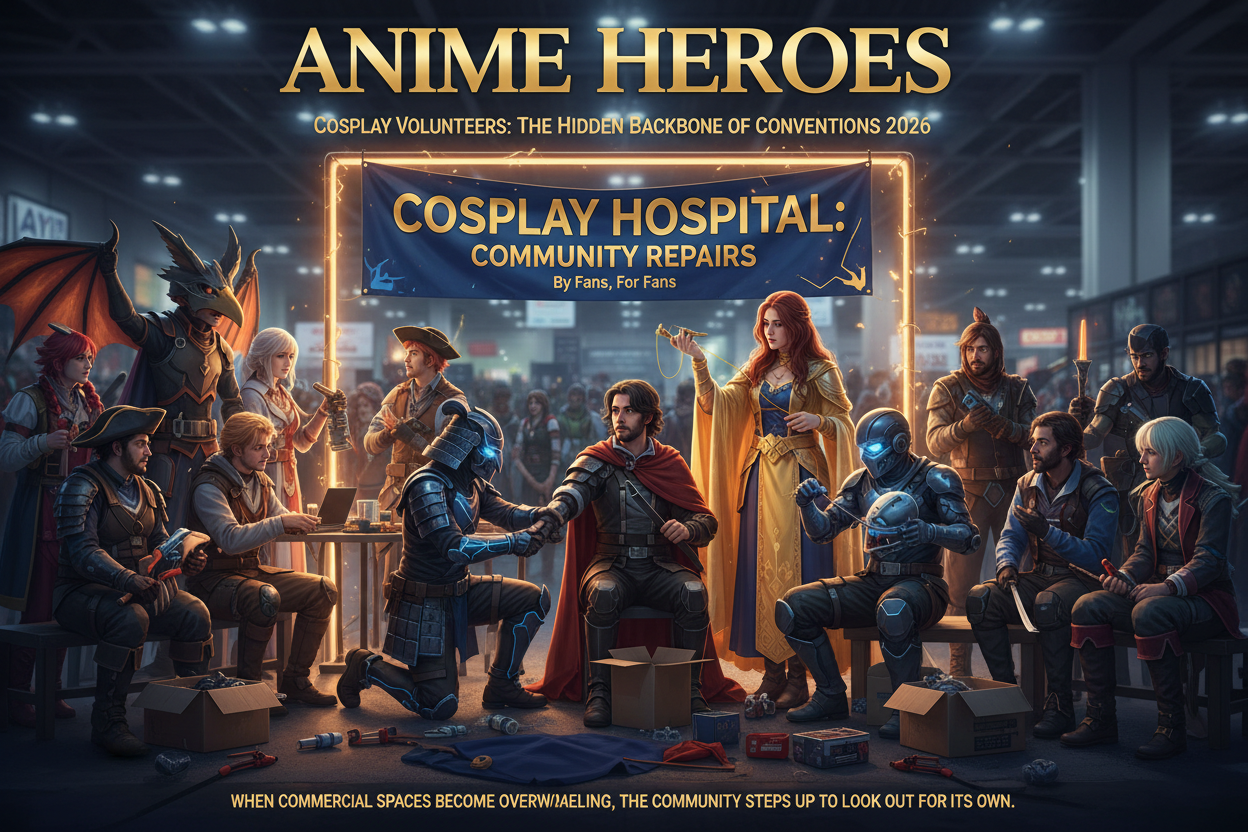
As fan conventions evolve into massive, crowded commercial spectacles, a quiet counter-movement is taking place within the community. Cosplayers are actively discussing the rise of a specialized "Cosplay Volunteer Culture"—a dedicated support network of creators who set up unofficial, community-run rescue stations on the convention floor. While standard event staff handle ticketing and crowd logistics, these volunteer teams run what are widely known as "Cosplay Hospitals" or "Repair Hubs." Armed with sewing kits, heavy-duty contact cement, and backup styling tools, they offer immediate crisis care for wardrobe malfunctions. This analysis explores how this internal support network acts as the hidden backbone of modern fandom, creating a vital safety net that keeps community spirit alive in an increasingly corporate convention landscape.
1. Architectural IP Case Studies: The Vulnerability of High-End Crafts
The rise of on-site volunteer networks is directly tied to the complexity of modern costumes. As designs become more ambitious, structural failures become a matter of when, not if. We look at three iconic designs to see how sudden structural emergencies make community support networks absolutely essential.
+----------------------------------------------------------------------------------------+
|                            THE COSPLAY EMERGENCY LIFECYCLE                             |
+----------------------------------------------------------------------------------------+
|  [Wardrobe Malfunction] ---> [Crowd Panic/Isolation] ---> [Volunteer Rescue Hub]      |
|                                                                        |               |
|  [Successful Return to Floor] <--- [Community Care] <--- [Rapid On-Site Fix]           |
+----------------------------------------------------------------------------------------+
⚔️ Malenia cosplay costume (Elden Ring)
-
The Structural Vulnerability: A museum-tier Malenia cosplay costume is an engineering marvel, requiring a metallic-finished prosthetic arm, layered leather pauldrons, a sweeping valkyrie cape, and a heavy, winged brass helm. The primary structural stress points occur at the articulation joints of the prosthetic arm and the internal harness of the heavy headpiece, which are constantly jostled in dense convention traffic.
-
The Volunteer Rescue Node: When an unguided crowd bumps into a creator, a snapping articulation rivet on the prosthetic arm can instantly ruin a day's work. Unofficial convention volunteers step in with heavy-duty zip-ties, quick-set epoxy, and weathering paints to discreetly secure the mechanical limb right on the floor, transforming a devastating structural failure into a quick, seamless triage fix.
🔮 Elementalist Lux cosplay costume (League of Legends)
-
The Structural Vulnerability: The signature challenge of an Elementalist Lux cosplay costume—particularly in its complex base or ascended forms—is the delicate integration of electronics and layered fantasy tailoring. The outfit features hidden LED wire tracks running through translucent organza skirts, lightweight foam armor pieces, and a multi-segmented glowing staff prop that is highly prone to fracturing at its connector joints.
-
The Volunteer Rescue Node: Electrical shorts or fractured prop connections can leave a creator feeling completely isolated on a busy floor. Volunteer repair hubs frequently stock precision soldering irons, electrical tape, and backup coin-cell batteries alongside heavy acrylic rods. These volunteers work quickly to splice broken copper leads and reinforce fractured staff segments, getting the magical girl back into the spotlight with her gear fully functional.
🌹 Yor Forger cosplay costume (Spy × Family)
-
The Structural Vulnerability: The elegant look of a Yor Forger cosplay costume (in her deadly Thorn Princess assassin form) relies on high-friction, close-fitting silhouettes. The halter-neck backless knit dress, the interior rose-print lining, the fingerless leather gloves, and the heavy golden stiletto hair needles put immense structural pressure on hidden invisible zippers, delicate shoulder straps, and headpiece combs.
-
The Volunteer Rescue Node: A blown back zipper or a snapped headpiece comb in a packed hallway creates an immediate emergency. Because fixing a form-fitting Yor Forger cosplay costume requires a secure, trusted environment, these volunteer stations provide a safe, respectful space. Armed with high-strength black sewing threads, replacement zipper sliders, and heavy-duty hair combs, volunteers can quickly patch split seams, allowing the creator to regain their confidence and comfort instantly.
⚖️ 2. The Structural Shift: Repair Culture vs. Fandom Support Networks
To truly understand this movement, we have to look past the surface level. This isn't just about simple maintenance—it represents a fundamental shift in how fans care for one another within the community:
| Vector | Standard Repair Culture | Cosplay Volunteer Culture (2026 Support Network) |
| Primary Motivation | Practical tool utility and basic garment maintenance. | Empathy, community care, and mutual subcultural support. |
| Operational Setup | Paid commercial repair booths or personal sewing kits. | Unofficial, free, community-run rescue spaces and mobile teams. |
| Interaction Style | A simple, transactional business service. | Peer-to-peer solidarity built on shared creative struggles. |
| Core Goal | Fixing a broken physical item. | Saving an attendee's experience and protecting emotional well-being. |
| Space Dynamics | Private workspaces or isolated hotel rooms. | Open, welcoming community hubs right on the convention floor. |
While traditional "repair culture" focuses purely on the mechanics of mending clothes, Cosplay Volunteer Culture serves an emotional and social purpose. It acts as a grassroots safety net inside the fandom. In an era where large-scale conventions can feel increasingly commercial and isolating, these volunteer-run spaces offer free help, tools, and a reassuring smile, preserving the welcoming community spirit that built early fandom in the first place.
🛠️ 3. The Anatomy of a Cosplay Hospital: Emergency Logistics
Step inside a community-run rescue hub, and you’ll find a remarkably well-organized system designed to handle high-stakes wardrobe emergencies under pressure:
-
The Adhesives & Fasteners Arsenal: The core of any triage desk is its collection of quick-acting adhesives. Volunteers stock everything from instant cyanoacrylates and high-temperature hot glue guns for rigid armor pieces to heavy-duty safety pins, industrial hook-and-loop tape, and zip-ties for sudden structural fixes.
-
The Haberdashery Station: For fabric emergencies, these hubs keep an expansive array of threads, heavy-duty needles, snaps, and fabric tapes on hand. This allows them to quickly patch split seams or fix dropping hems across a wide variety of materials without ruining the costume's look under bright camera lights.
-
The Mobile Triage Units: Recognizing that cosplayers in massive, restrictive builds can't always walk across a crowded convention center for help, some volunteer networks deploy mobile teams. Carrying compact "emergency tackle boxes," these walking technicians patrol main hallways and photo zones, fixing loose armor plates and torn capes right where they happen.
📊 4. The Supply Chain Impact: Designing for On-Site Repairability
The rise of this on-site support network is changing how high-end independent manufacturers and designers build costumes. Knowing the physical demands of modern conventions, smart supply chains are shifting toward modular, easy-to-fix designs that can be quickly mended at a volunteer station:
| Target Character Node | Common Convention Risk Node | Manufacturing Design Intervention | 2026 Sourcing & Engineering Standard |
| Malenia | Broken prosthetic arm joints or detached armor straps from crowd friction. | Replacing rigid, brittle plastic rivets with flexible, heavy-duty nylon snap-screws. | Industrial backing plates combined with modular, easily adjustable hook-and-loop harness setups. |
| Elementalist Lux | Cracked staff connectors or severed internal LED wiring lines in tight spaces. | Integrating internal modular quick-disconnect wire plugs and screw-in steel rod joints. | Reinforced shatter-proof resin connectors paired with flexible, easily accessible electronics chambers. |
| Yor Forger | Split back zippers or detached golden hair accents under constant tension. | Upgrading to industrial-grade YKK locking metal zippers and double-stitched knit layers. | High-tensile elastic structural stitching paired with flexible, soft-molded resin headpieces. |
❓ 5. Frequently Asked Questions (FAQ)
-
Q: Do Cosplay Hospitals and volunteer repair stations charge money for their tools or services?
-
A: No. True cosplay volunteer culture is completely non-commercial and built entirely on mutual support. These stations are run by passionate creators who donate their time and supplies. While they never demand payment, accepting donations of extra hot glue sticks, safety pins, or small tips to help replenish their emergency kits for the next event is always highly appreciated.
-
-
Q: Where can I usually find these community repair networks during a major convention?
-
A: Because they are often organized independently rather than through official convention management, they usually set up in high-traffic social spaces. Look for them near major hallway photo zones, large open lobbies, or right outside the main artist alleys and exhibition halls. Many groups also share their exact locations on social media using local con hashtags.
-
-
Q: How can independent online stores align with this growing community culture?
-
A: Online shops can show their support by including small "emergency touch-up kits"—containing matching thread, spare snaps, and extra rivets—with every premium costume order. Providing these small, thoughtful additions shows customers that the brand truly understands the real-world challenges of conventions, building deep trust and long-term brand loyalty.
-
🎯 Conclusion: The True Heart of the Convention Floor
The widespread discussion around Cosplay Volunteer Culture highlights a beautiful truth about modern fandom: when commercial spaces become overwhelming, the community steps up to look out for its own. These volunteer repair stations do far more than just patch up torn armor on a Malenia cosplay costume, fix a short-circuited lighting wire on an Elementalist Lux cosplay costume, or secure a split dress zipper on a Yor Forger cosplay costume. They serve as a vital reminder that fandom is built on human connection, shared creativity, and mutual care. By giving their time, tools, and support to total strangers in a moment of panic, these volunteers protect the true heart of convention culture, ensuring that the floor remains a joyful, welcoming sanctuary for creators of all kinds.

Laisser un commentaire
Ce site est protégé par hCaptcha, et la Politique de confidentialité et les Conditions de service de hCaptcha s’appliquent.