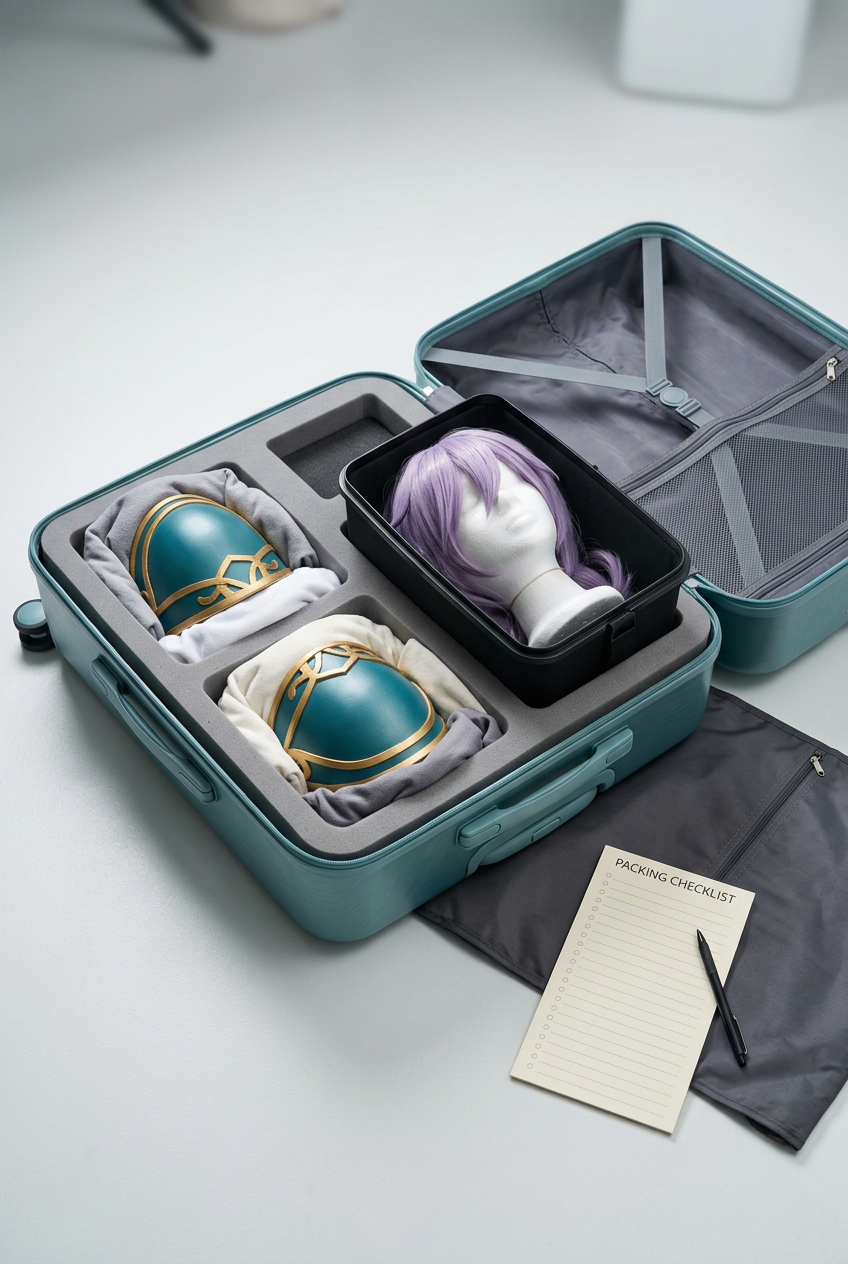
Introduction: Preparing Your Costumes for Air Travel
Traveling by air to major conventions like San Diego Comic-Con, Dragon Con, or Anime Expo is an exhilarating milestone for any maker. However, clearing airport security screening with oversized EVA foam armor, 3D-printed weapons, and styled synthetic wigs can quickly turn stressful without proper planning.
Airport security agencies—including the U.S. Transportation Security Administration (TSA)—enforce strict screening standards regarding realistic prop replicas, sharp objects, liquid adhesives, and full-face costumes. Understanding these regulations before arriving at the terminal protects your hard work from confiscation or transit damage.
Academic studies on airport security ergonomics emphasize that standardized passenger screening relies heavily on automated X-ray threat detection algorithms and physical inspection triggers (Bolfing et al., Applied Ergonomics, 2008). Items that mimic threat profiles—such as metallic prop blades, dense wiring, or gun-shaped silhouettes—automatically trigger manual bag searches regardless of whether the material is plastic, foam, or resin.
Before heading to the airport, prepare your packing and travel essentials:
-
Checked Bag Protectors: Hard-shell luggage, TSA-approved luggage locks, bubble wrap, corner foam guards, and heavy-duty zip ties.
-
Carry-On Gear: Collapsible wig headform, satin hairnet, breathable garment bag, and non-aerosol travel-sized styling sprays ($<3.4\text{ oz}$ / $100\text{ ml}$).
-
Travel Tools: Padded cosplay travel bags and prop packing supplies to organize fragile accessories safely.
Step 1: Navigating TSA Security Rules & Replica Weapon Guidelines
Understanding security classification rules is the most critical step when flying with cosplay props.
According to official TSA security screening guidelines:
-
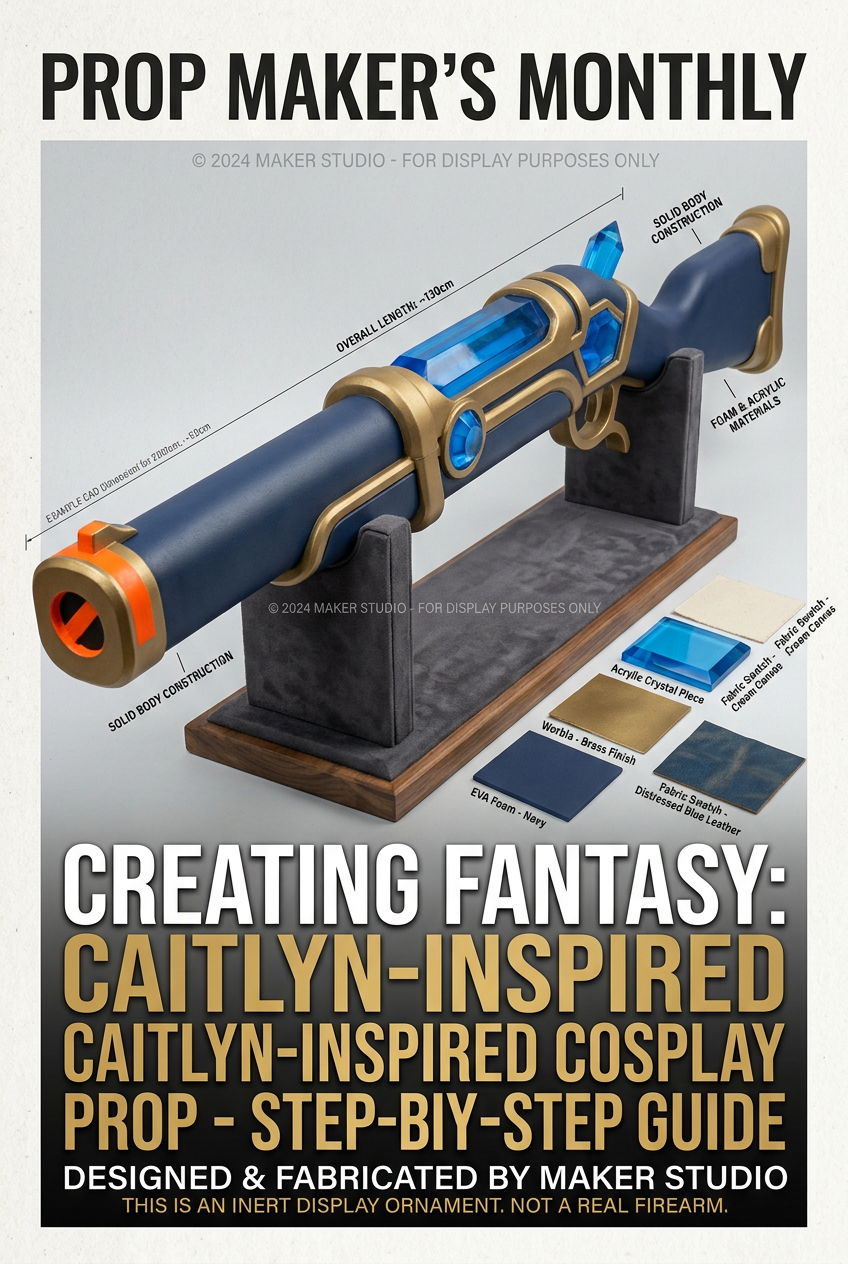
Prohibited in Carry-On Luggage: All realistic replica firearms, toy guns, prop swords, axes, scythes, pitchforks, and sharp or pointed prop objects are strictly barred from passenger cabins. These items must be transported in checked baggage.
-
Replica Explosives Prohibited Entirely: Prop grenades, fake dynamite, or explosive replicas are prohibited in both carry-on and checked luggage. Security officers treat replica explosives as real threats initially, which can lead to severe delays or civil fines.
-
Wearing Costumes Through Checkpoints: TSA advises travelers not to wear full cosplay suits, body armor, or face masks through security checkpoints. Costume layers can trigger body scanner alarms, resulting in mandatory physical pat-downs. Travelers must also temporarily remove face coverings during identity verification.
-
Special Cabin Exceptions: Certain iconic props, such as plastic toy lightsabers, are explicitly permitted in carry-on bags by TSA guidelines, provided they fit within overhead bin dimensions.
Pro Tip for Security Screening: When TSA officers ask about the contents of your checked bag during drop-off or inspection, always describe items as "costume accessories" or "theatrical prop models" rather than using terms like "weapons" or "guns".
Step 2: Packing EVA Foam Armor & Heavy Costumes Safely
Transporting delicate EVA foam, 3D-printed pauldrons, or structured leather suits requires protective packing methods to survive luggage handling.
-
Use Hard-Shell Luggage: Never pack fragile foam armor or 3D prints in soft duffel bags. High-impact ABS or polycarbonate hard-shell suitcases absorb exterior crushes during cargo loading.
-
Nest Smaller Pieces Inside Larger Shells: Maximize luggage space by nesting smaller pieces (bracers or greaves) inside larger chest pieces or helmets. Fill hollow spaces with soft clothing or bubble wrap to prevent crushing under pressure.
-
Wrap Metallic & Sharp Edges: Sheathe any pointed prop edges or metal attachments in dense foam or bubble wrap. TSA regulations require all sharp objects in checked luggage to be wrapped securely to prevent injury to baggage inspectors.
-
Include a Note for TSA Inspectors: Place a clear note on top of your armor inside the suitcase reading: "Fragile Cosplay Costume / Theater Props. Please handle with care if opening for inspection."
Step 3: Transporting Styled Cosplay Wigs in Carry-On Luggage
Community consensus across experienced makers strongly recommends carrying intricately styled wigs in your carry-on luggage rather than checking them. Checked bags face pressure shifts, extreme tumbling, and potential loss.
-
Mount on a Lightweight Foam Head: Secure high-styled or spiked wigs onto a lightweight Styrofoam or collapsible plastic wig head using sewing pins stuck through the wig cap mesh into the foam base.
-
Secure Inside a Sturdy Tote or Box: Place the mounted wig inside a rigid, top-loading tote bag or a small hard-sided hatbox that fits under the seat in front of you.
-
Protect Long Hairlines: For long, un-styled wigs, braid the fibers loosely into 2 or 3 sections, slip a hairnet over the entire length, and place the wig in a satin storage bag kept flat inside your carry-on luggage.
-
Liquid & Aerosol Limits: Remember that hairsprays, contact lens solutions, and adhesives packed in carry-on bags must comply with TSA liquid rules: containers must be $3.4\text{ oz}$ ($100\text{ ml}$) or smaller and fit inside a single quart-sized plastic bag. Larger aerosol spray cans must go into checked luggage.
Troubleshooting Airport Security Inspections & Damage Risks
-
What to Do if TSA Opens Your Checked Bag: TSA officers may open bags containing dense electronics, LED wiring, or battery packs for manual inspection. To prevent damage during repacking, secure battery packs in clear plastic cases and keep wiring neatly bundled with velcro straps.
-
Managing Lithium-Ion Batteries: Power banks and loose lithium-ion batteries powering illuminated props or cooling fans are prohibited in checked baggage by FAA regulations. You must disconnect all power banks and carry them inside your cabin hand luggage.
-
Handling Damaged Props Upon Arrival: Pack an emergency repair kit in your checked luggage containing fast-acting super glue, contact cement, small acrylic paint tubes, a mini hot-glue gun, and extra safety pins to repair minor transit wear before your convention debut.
Conclusion & Travel Essentials
Flying to a convention with detailed costumes is stress-free when you plan around official security guidelines. By checking replica weapons, packing foam armor in hard-shell suitcases with proper padding, carrying styled wigs in your cabin luggage, and separating lithium batteries, you ensure your builds arrive intact. Explore our shop catalog for cosplay travel bags and prop packing supplies to gear up for your next trip!


Hinterlasse einen Kommentar
Diese Website ist durch hCaptcha geschützt und es gelten die allgemeinen Geschäftsbedingungen und Datenschutzbestimmungen von hCaptcha.