
Introduction: Prioritizing Health and Physical Safety in Costume Design
Bringing complex fictional characters to life requires balancing aesthetic fidelity with rigorous physical safety. Whether you are navigating densely populated convention floors, standing under high-wattage stage lights, or posing for long outdoor photoshoots, structural and material oversights can result in severe injuries.
Understanding material flammability, structural prop mechanics, and ophthalmic safety transforms a potentially dangerous costume into a secure, wearable build. Academic ergonomics and occupational health research demonstrates that prolonged wear of non-breathable, restricted synthetic garments significantly increases thermal stress and vascular fatigue (Amasay et al., International Journal of Industrial Ergonomics, 2009). Furthermore, public health directives issued by the U.S. Consumer Product Safety Commission (CPSC) and the U.S. Food and Drug Administration (FDA) emphasize that proper textile selection, non-rigid prop engineering, and prescription-verified cosmetic contact lenses are vital to avoiding emergency room visits.
Before starting your next fabrication or styling session, assemble your personal workshop safety essentials:
-
Fabric Safety Tools: Flame-retardant fabric spray, fabric fiber identification burn chart, and snug athletic base layers.
-
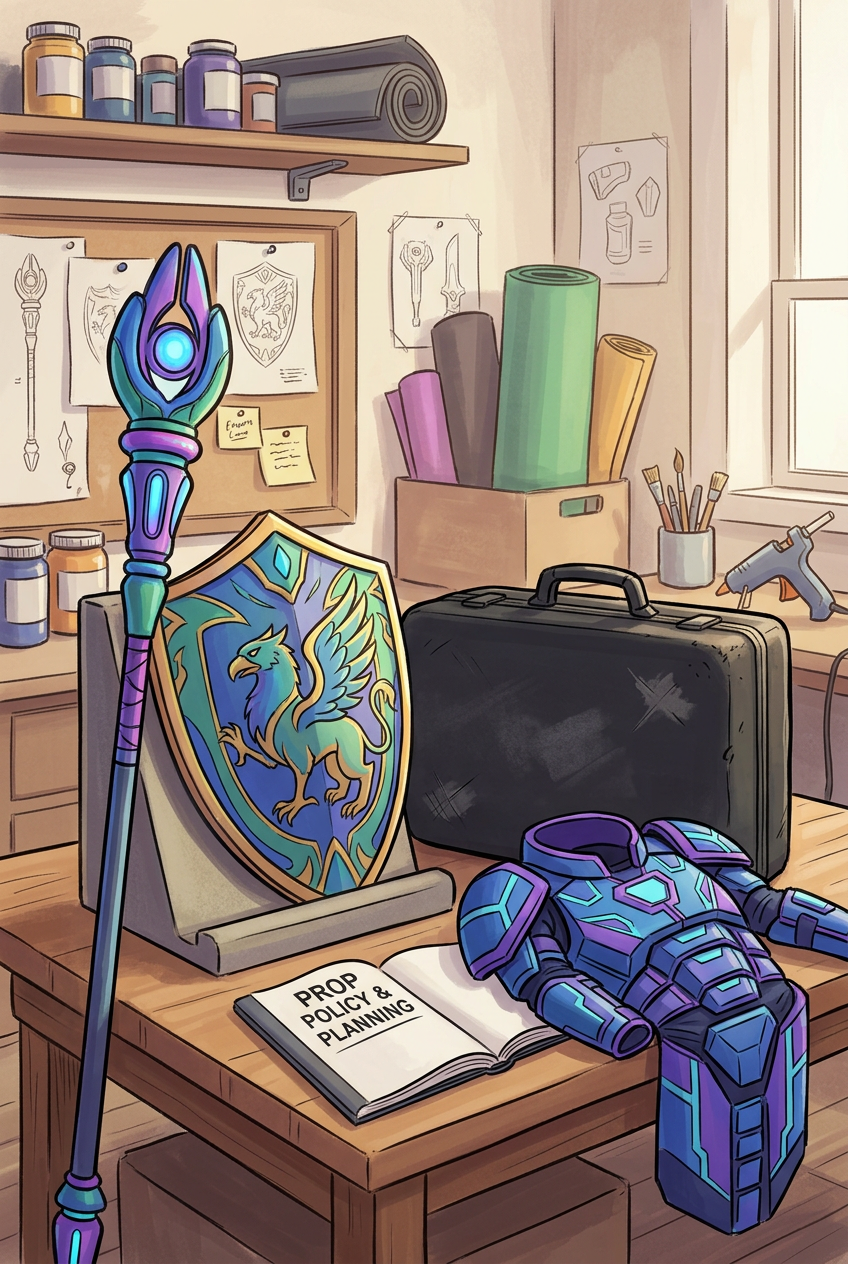
Prop Construction Gear: High-density EVA foam sheets, carbon fiber or PVC core rods, flexible silicone rubber, and contact cement.
-
Ophthalmic & Cosmetic Supplies: Prescription-fit cosmetic lenses from an authorized retailer, multi-purpose contact solution, contact lens case, and non-comedogenic hypoallergenic theatrical makeup.
-
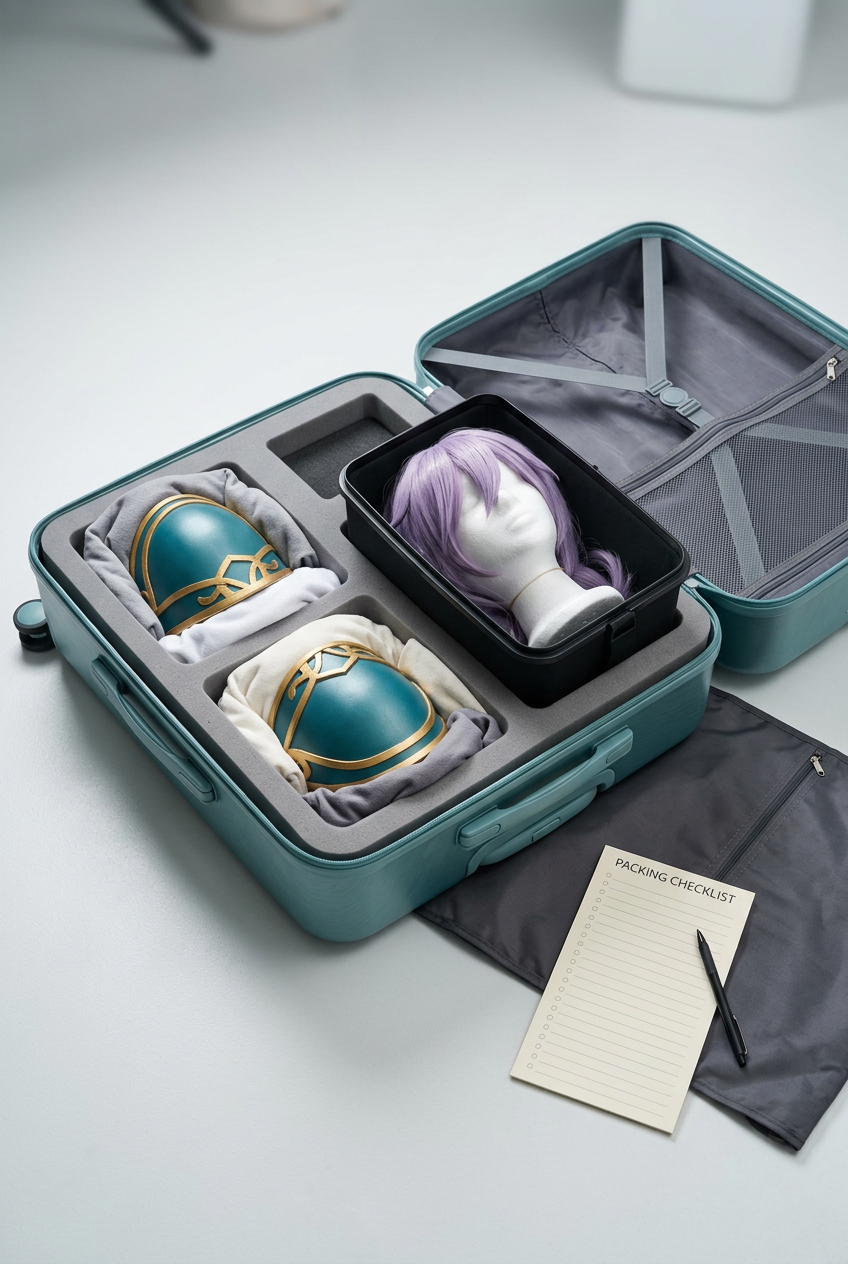
Safety Accessories: Stock up on padded safe cosplay accessories and costume supplies to secure your build before heading out.
Step 1: Selecting Flame-Resistant Fabrics & Snug-Fitting Garments
The Consumer Product Safety Commission (CPSC) emphasizes that garment flammability and loose construction present significant burn and tripping hazards. Highly flammable materials paired with voluminous, dragging train lengths increase risk around heat sources or stage pyrotechnics.
-
Check for "Flame-Resistant" Synthetic Fibers: Opt for inherently flame-resistant synthetic textiles like polyester, nylon, and acrylic over untreated thin cotton or rayon. Synthetic fibers tend to melt or self-extinguish rather than igniting rapidly into open flames.
-
Apply Flame-Retardant Sprays to Natural Fibers: If your build requires natural fibers (like cotton canvas or linen cloaks), treat the finished garments with a commercial flame-retardant fabric spray.
-
Prioritize Snug-Fitting Garments to Avoid Tripping: Loose, flowing sleeves and wide, floor-dragging skirts are prone to catching fire or causing severe trips on venue escalators. Ensure hemline lengths hover at least $1\text{ to }2\text{ inches}$ above shoe soles, and use hidden elastic cuffs to taper oversized sleeves.
-
Choose Hypoallergenic Makeup Over Full Masks: CPSC guidelines note that full-coverage rubber or plastic masks severely restrict peripheral vision and hinder natural heat ventilation. Utilizing professional FX face paint paired with setting powder offers a safer alternative that maintains full spatial awareness.
Step 2: Engineering Convention-Safe Props & Lightweight Materials
Convention security teams enforce strict peace-bonding rules to prevent venue injuries. Transforming a heavy prop weapon into a convention-approved build relies on material selection and structural damping.
-
Replace Solid Metals and Hardwoods with Soft Foams: Real steel, iron blades, and heavy wooden bats are prohibited at almost all public conventions. Construct prop swords, axes, and firearms using lightweight EVA foam, PE foam, or 3D-printed hollow PLA shells.
-
Use Flexible Core Materials: Internal structural supports for long props (like scythes or broadswords) should use hollow fiberglass rods, carbon fiber pipes, or PVC tubes rather than solid metal rebar. Flexible cores absorb accidental impacts without snapping dangerously.
-
Round Off All Sharp Edges: Sand down the tips and edges of plastic or resin props. Muzzle ends, blade tips, and spikes should feature a minimum radius of curvature ($>0.25\text{ inches}$) or be cast in flexible 20A-durometer silicone rubber to eliminate puncture risks.
-
Incorporate Quick-Release Connectors: Large armor pauldrons, wings, or back-mounted weapons should attach using magnetic buckles or heavy-duty velcro straps. In a crowded hallway emergency, quick-release mechanisms allow you to shed bulky gear in seconds.
Step 3: Safely Wearing FDA-Compliant Colored Contact Lenses
According to the U.S. Food and Drug Administration (FDA), all decorative and colored contact lenses are classified as regulated medical devices—not basic cosmetics or fashion merchandise. Wearing non-prescribed or unregulated lenses purchased from beauty supply shops, flea markets, or novelty stores can cause corneal abrasions, severe bacterial infections (such as Pseudomonas aeruginosa), allergic reactions, and permanent vision loss.
-
Obtain an Eye Exam and Prescription First: Federal law requires a valid prescription from a licensed eye care professional for all contact lenses, including zero-power ($0.00\text{ SP H}$) cosmetic lenses. A proper fitting measures base curve and diameter to prevent oxygen deprivation to the cornea.
-
Purchase Exclusively from Authorized Legal Sellers: Never buy lenses from vendors who skip prescription verification. Legitimate retailers must verify your eye doctor's credentials before completing a sale.
-
Maintain Strict Ophthalmic Hygiene Routine: Wash hands thoroughly with antibacterial soap before handling lenses. Insert contact lenses before applying eye makeup, and remove them before cleansing your face.
-
Never Share or Sleep in Decorative Lenses: Never share cosmetic lenses with friends or fellow cosplayers, as this transfers ocular bacteria directly between eyes. Never soak contacts in tap water, and remove lenses immediately if you experience redness, pain, or blurred vision.
                     +---------------------------------------+
                     | FDA-Compliant Lens Safety Protocol   |
                     +---------------------------------------+
                                         |
               +-------------------------+-------------------------+
               v                                                   v
  [ 1. Medical Preparation ]                             [ 2. Daily Wear Hygiene ]
  - Eye exam & base curve fitting                        - Wash hands thoroughly with soap
  - Valid prescription from optometrist                  - Insert lenses BEFORE eye makeup
  - Purchase from prescription-verified store            - Limit wear time to 8 hours max
               |                                                   |
               +-------------------------+-------------------------+
                                         v
                     +---------------------------------------+
                     | Discontinue Wear Immediately if Red   |
                     +---------------------------------------+
Troubleshooting Common Cosplay Safety Hazards
-
Sudden Eye Pain or Blurred Vision: Remove colored lenses immediately if you feel sharp pain, persistent redness, or discharge. Flush the eye with sterile saline solution and consult an eye care doctor right away—never attempt to "push through" discomfort.
-
Overheating and Dizziness Under Heavy Armor: Heat exhaustion is a frequent convention hazard. Install small $5\text{V}$ USB cooling fans inside helmets or chest plates, carry a water bottle pouch inside your prop props, and take a 15-minute rest break in a cool area every 2 hours.
-
Prop Refused at Peace-Bonding Security Check: If convention security flags your prop because of realistic paint finishes, wrap a bright neon-orange safety band around the tip or muzzle to clearly designate it as a non-firing theatrical prop model.
Conclusion & Next Steps
Balancing aesthetic ambition with rigorous physical safety ensures your cosplay experiences remain fun, memorable, and injury-free. By selecting flame-resistant synthetic fabrics, engineering lightweight EVA foam props with flexible cores, and sourcing prescription-verified FDA contact lenses, you protect yourself and fellow convention attendees. Browse our shop collection for safe cosplay accessories and costume supplies to start building securely today!

Hinterlasse einen Kommentar
Diese Website ist durch hCaptcha geschützt und es gelten die allgemeinen Geschäftsbedingungen und Datenschutzbestimmungen von hCaptcha.