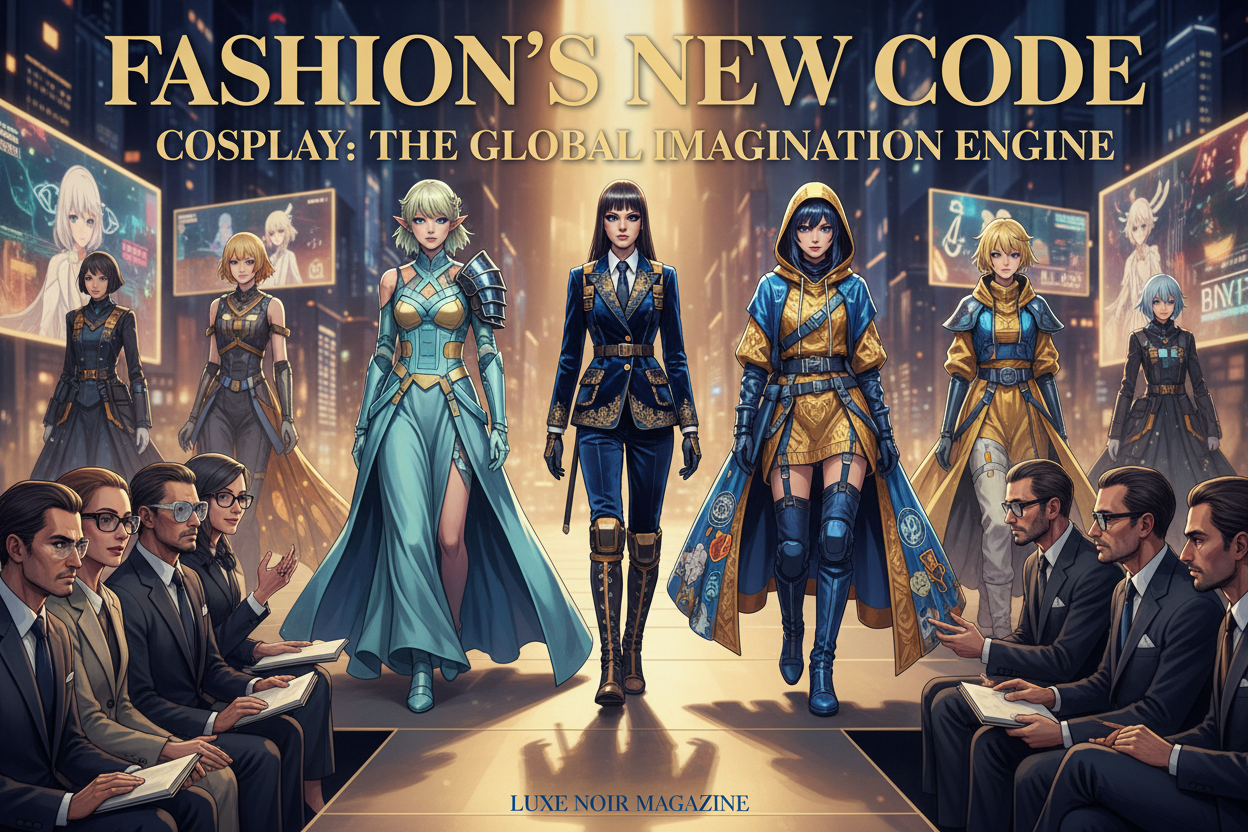
💡 Editorial Note: For decades, the global fashion industry operated as a rigid, top-down dictatorship. Haute couture houses and corporate fast-fashion conglomerates dictated seasonal trends, while subcultural styles were occasionally poached, stripped of context, and commercialized as passing novelty trends. In 2026, this linear hierarchy has completely collapsed. Driven by the intersection of Fashion Studies and the rapid decentralization of the traditional clothing supply chain, cosplay has transitioned from an isolated fan subculture into a high-octane Fashion Input System. No longer just a mirror reflecting fictional media, cosplay now actively dictates silhouette engineering, fabric manipulation trends, and aesthetic vocabularies for mainstream ready-to-wear brands and global streetwear labels.
1. The Structural Reversal: Subculture as Trend Architect
In contemporary fashion sociology, the traditional "trickle-down" or "bubble-up" models of trend dissemination fail to explain the hyper-velocity of digital visual cultures. Instead, 2026 fashion systems utilize an Interlocking Feedback Loop, where subcultural fan fabricators and mainstream industrial designers operate as mutual inputs.
[ Legacy Top-Down Fashion System ]
Haute Couture ──> Ready-to-Wear Brands ──> Mass-Market Fast Fashion ──> Consumer Adoption

[ 2026 Integrated Feedback Loop ]
Fictional IP Architecture (Anime/Manga/Virtual Idols)
       │
       ▼
Independent Cosplay Fabrication (Silhouettes, Modular Engineering, Techwear Fabrics)
       │
       ▲
       ▼ (Bidirectional Influence)
Mainstream Runway & Streetwear Design Labs ──> Hyper-Targeted Premium Capsule Collections
This structural integration is propelled by three systemic shifts:
-
The Saturation of Traditional Inputs: Mainstream fashion design studios, exhausted by the endless recycling of historical mid-century aesthetics, have turned to the highly expressive, unconstrained visual vocabulary of character design to capture gen-z and alpha demographics.
-
The Rise of Subcultural Ready-to-Wear: Creators no longer construct outfits solely for enclosed convention floors. The rise of "casual cosplay" or "characterbound" apparel has created a massive consumer demand for garments that exist precisely at the intersection of everyday wearability and fictional semiotics.
-
Algorithmic Symbiosis: Digital entertainment algorithms reward high-contrast silhouettes and recognizable character motifs. Mainstream apparel brands are systematically re-engineering their product lines to mimic these subcultural visual hooks to intercept algorithmic traffic on global discovery platforms.
2. The Dual-Velocity System: Fast Fashion vs. Fandom Artistry
The integration of cosplay into the global apparel market exposes a fascinating conflict between the hyper-speed economics of commercial clothing manufacturing and the slow, meticulous labor of subcultural craftsmanship.
⚙️ Silhouette Contamination and Streetwear Assimilation
Modern fashion studies departments use the term "silhouette contamination" to describe how character-specific design lines are absorbed into mainstream apparel. Streetwear brands routinely poach techwear straps, asymmetrical paneling, oversized utility collars, and highly specific graphic color block schemes pioneered by individual cosplay fabricators, integrating these avant-garde elements into daily urban wardrobes.
⚙️ The Overhaul of Agile Manufacturing
The traditional fast-fashion supply chain was designed to mass-produce cheap, simplified garments over a six-week cycle. However, the viral velocity of new anime releases and virtual character drops has forced manufacturing hubs to develop micro-batch agile production. Factories now utilize computerized fabric cutting and automated pattern scaling to produce low-volume, high-complexity subcultural capsule lines within days of a character trending online, bridging the gap between independent artisanship and industrial scale.
📋 3. Case Studies: Deconstructing the 2026 Cross-System Inputs
To evaluate how subcultural character design systematically alters contemporary apparel architectures, we deconstruct four prominent aesthetic icons that have seamlessly integrated into the global fashion system.
1. Hatsune Miku — The Cyber-Sleek Evolution of Future Streetwear
🧬 The Fashion System Context
No longer confined to virtual concerts, Hatsune Miku operates as a foundational design muse for global streetwear and luxury cyber-punk brands. Her visual architecture represents the ultimate synthesis of retrofuturistic school uniforms and industrial cyber-tech tailoring.
🔧 The Runway Translation
Miku’s design blueprint—characterized by floating detached sleeves, cybernetic tie clips, and high-contrast neon-turquoise paneling against matte charcoal synthetics—has been completely absorbed by modern techwear brands.
Mainstream design labs have replaced traditional cosplay materials with premium, breathable structural textiles like 3-layer Gore-Tex, silver-threaded anti-static grids, and laser-etched reflective neoprene. The detached sleeve motif has morphed into functional, modular winter wear utilizing waterproof zippers and quick-release magnetic Fidlock buckles. By translating a vocaloid's 2D digital skin into premium, weather-resistant technical outerwear, the fashion industry has commercialized subcultural cyber-punk into an elite urban lifestyle aesthetic.
2. Makima (Chainsaw Man) — The Subversion of Corporate Office-Wear
🧬 The Fashion System Context
Makima has triggered a massive, cross-market aesthetic movement known within fashion studies as "Dark Corporate" or "Subversive Minimalism." Her design strips away traditional anime excess, leveraging the severe, oppressive geometry of mid-century corporate menswear to project power and control.
🔧 The Runway Translation
The stark, monochrome silhouette of the tight white dress shirt, slim black tie, and high-waisted tailored trousers has been widely adopted by contemporary luxury and fast-fashion labels alike.
However, where amateur fabrication relies on basic cotton blends, mainstream tailoring labels have elevated the look into high-end fashion statements. Studios utilize heavy-weight wool gabardine, internal horsehair canvas structuring for the lapels, and custom-tailored hidden plackets to achieve an flawless, razor-sharp edge that accentuates the human form's natural vertical lines. This crossover demonstrates how subcultural character coding can retroactively infect traditional corporate tailoring, turning a fictional anime antagonist into the definitive silhouette of modern professional office-wear.
3. Frieren (Frieren: Beyond Journey's End) — Pastoral Cottagecore and Organic Minimalism
🧬 The Fashion System Context
Frieren serves as a primary catalyst for the evolution of "Pastoral Minimalism" and premium elven cottagecore within the ready-to-wear market. Her visual identity leans on historic Northern European peasant silhouettes, reimagined through a clean, geometric lens that rejects chaotic modern print design.
🔧 The Runway Translation
Frieren’s signature high-collared white tunic dress, gold-rimmed belt detailing, and sweeping winter coat have heavily influenced contemporary autumn and winter luxury lines.
Mainstream apparel designers have translated her animated fantasy textures into premium organic materials: unbleached linen-cotton blends, heavy felted merino wool, and ethically sourced brushed cashmere. The sweeping coat lines are engineered using drop-shoulder construction and oversized minimalist brass hardware to maintain a soft, flowing drape that communicates timeless, slow-fashion luxury. This integration allows consumers to signal their subcultural affinity through an elegant, understated aesthetic that fits seamlessly into upscale urban environments.
4. Rumi (K-Pop/Virtual Archetypes) — Hyper-Pop Cyberpunk and Asymmetric Tactical Wear
🧬 The Fashion System Context
Rumi, representing the cutting edge of tech-infused K-Pop concept design and virtual avatar styling, serves as the primary engine for Hyper-Pop Tactical Wear. This style merges high-energy, candy-colored pop idol visual cues with aggressive, military-grade tactical utility gear.
🔧 The Runway Translation
Rumi’s aesthetic—defined by asymmetrical crop tops, multi-pocket tactical utility skirts, neon accent webbing, and heavy industrial combat boot integrations—has been systematically duplicated by global fast-fashion giants and trend-forward streetwear labels.
To bring this look to the mass market, industrial designers deploy highly agile manufacturing techniques: using reinforced ripstop nylon, PVC transparency overlays, and neon-dyed industrial webbing straps. The garments feature highly complex, non-functional modular elements like faux parachute buckles and decorative D-ring clusters that maximize digital visual impact. This rapid adaptation shows how virtual pop archetypes provide the raw aesthetic fuel that fast-fashion systems rely on to satisfy the global youth market's constant hunger for disruptive, camera-ready apparel.
📊 4. System Integration Matrix: Subcultural Inputs to Mainstream Output
The following technical matrix traces how these diverse character architectures are systematically processed, upgraded, and distributed across different segments of the global fashion economy.
| Input Character Node | Core Subcultural Aesthetic | Primary Silhouette Mutation | Mainstream Textile Upgrade | Target Consumer Segment | Primary Systemic Distribution Channel |
| Hatsune Miku | Cyber-Tech Future Schoolwear | Detached modular sleeves & longline high-specular outerwear panels | 3-Layer Gore-Tex, anti-static silver grids, & laser-etched neoprene | Premium Techwear & Urban Streetwear | High-end streetwear capsule drops & global design collaborations |
| Makima | Subversive Minimalism / Dark Corporate | High-waisted structural trousers & razor-sharp slim-tie tailoring | Heavy-weight wool gabardine, internal canvas, & hidden plackets | Contemporary Luxury & Professional Wear | Premium corporate retail & boutique tailoring lines |
| Frieren | Pastoral Cottagecore / Organic Luxury | High-collared tunic dresses & fluid, drop-shoulder long coats | Unbleached organic linen, felted merino wool, & brushed cashmere | Slow-Fashion & Sustainable Ready-to-Wear | Autumn/Winter seasonal runway lookbooks & independent design houses |
| Rumi (K-Pop) | Hyper-Pop Cyberpunk / Tactical Utility | Asymmetrical crop architectures & multi-pocket utility strapping | Reinforced ripstop nylon, neon industrial webbing, & PVC overlays | Gen-Z Mass Market & Fast-Fashion Streetwear | Hyper-velocity digital retail pipelines & social trend capsules |
5. The Commercial Battleground: Subcultural Erasure vs. Mainstream Validation
The aggressive integration of cosplay aesthetics into commercial fashion has triggered a fierce structural debate between grassroots community advocates and fashion industry executives.
┌─────────────────────────────────────────────────────────────────────────────────────────┐
| r/fashion_studies • Posted by u/Subculture_Defended_2026 • 12 hours ago                  |
| 🧵 Cultural Poaching: Is the Mainstream Fashion System Laundering Cosplay Artistry?     |
|                                                                                         |
| We need to talk honestly about how major apparel labels are suddenly calling themselves  |
| "pioneers of techwear and subversive corporate silhouettes."                           |
|                                                                                         |
| They aren't pioneering anything. They are stripping the rich narrative semiotics away    |
| from cosplay, replacing complex hand-crafted labor with cheap fast-fashion factories,   |
| and selling it back to the public at a premium while wiping out all credit to the      |
| original subcultural fabricators. This isn't validation—it's aesthetic extraction.      |
|                                                                                         |
| 💬 2.1k Comments  |  Share  |  Save  |  Hide                                           |
+-----------------------------------------------------------------------------------------+
📉 The Extraction Critique: The Erasure of Subcultural Semiotics
Critical fashion theorists argue that the mainstream fashion system practices a predatory form of aesthetic extraction. When a corporate brand strips a silhouette away from its character origin—such as converting Makima’s severe corporate look into an uncredited luxury office-wear capsule—it sanitizes the garment. The deep, narrative-driven semiotic coding that made the outfit powerful within the subculture is completely erased. The intricate, high-agency craftsmanship of independent fan fabricators is replaced by hyper-exploitative, mass-market factory production, turning a meaningful subcultural symbol into a hollow, disposable consumer commodity designed solely for short-term corporate profit.
📉 The Evolution Defense: Structural Upgrades and Democratization
Conversely, commercial design directors and progressive fashion scholars argue that this cross-system integration represents a massive structural victory for subcultural design. By funneling cosplay motifs through the global fashion system, the industry provides these underground styles with elite technical materials, professional manufacturing precision, and mainstream structural validation. It democratizes the subculture, allowing individuals to subtly express their fandom and identity within everyday social spaces without the social friction of full convention gear. This cross-pollination forces traditional fashion institutions to recognize subcultural creators as legitimate tastemakers who are actively shaping the future of global street style.
6. ❓ Frequently Asked Questions (FAQ)
Q: What is the main difference between traditional cosplay and "characterbound" fashion?
A: Traditional cosplay focuses on an exact, high-fidelity physical replication of a character's costume, often prioritizing visual accuracy over daily comfort or weather functionality. Characterbound fashion (or casual cosplay), however, abstracts the character's design lines, color palettes, and structural motifs into everyday, functional ready-to-wear clothing, allowing the wearer to navigate standard public environments while maintaining a subtle subcultural connection.
Q: Do mainstream fashion brands ever officially credit or collaborate with original character designers?
A: Yes, increasingly so in 2026. Recognizing the immense community backlash triggered by uncredited aesthetic poaching, elite fashion houses and luxury streetwear brands now frequently launch official co-branded capsule collections. These partnerships explicitly credit the animation studios, virtual idol agencies, or original character illustrators on the garment labels and marketing campaigns, transforming former intellectual property conflicts into highly lucrative, institutionalized creative partnerships.
🎯 Conclusion: The Permanent Realignment of the Global Wardrobe
The systematic evolution of cosplay into a primary input engine for the global fashion system marks a permanent shift in how contemporary society generates, scales, and consumes apparel trends. The subculture has successfully shattered its old reputation as a niche, costume-wearing hobby, positioning itself as a dominant force driving the visual language of modern streetwear and ready-to-wear luxury.
By processing these character architectures through advanced textile engineering and agile manufacturing pipelines, the global apparel industry has validated a fundamental truth of the digital era: the future of fashion is no longer written exclusively in the secluded design studios of Paris or Milan; it is being continuously co-authored, engineered, and brought to life by the global community of subcultural fabricators.
Whether engineered into the waterproof, high-performance techwear panels of Hatsune Miku, tailored into the razor-sharp minimalist lines of Makima, woven into the sustainable, slow-fashion luxury textures of Frieren, or scaled into the hyper-velocity digital capsules of Rumi—the global cosplay movement has permanently rewritten the rules of the runway, proving that the garments we wear are no longer just clothing, but the material actualization of our shared cultural imagination.

Leave a comment
This site is protected by hCaptcha and the hCaptcha Privacy Policy and Terms of Service apply.