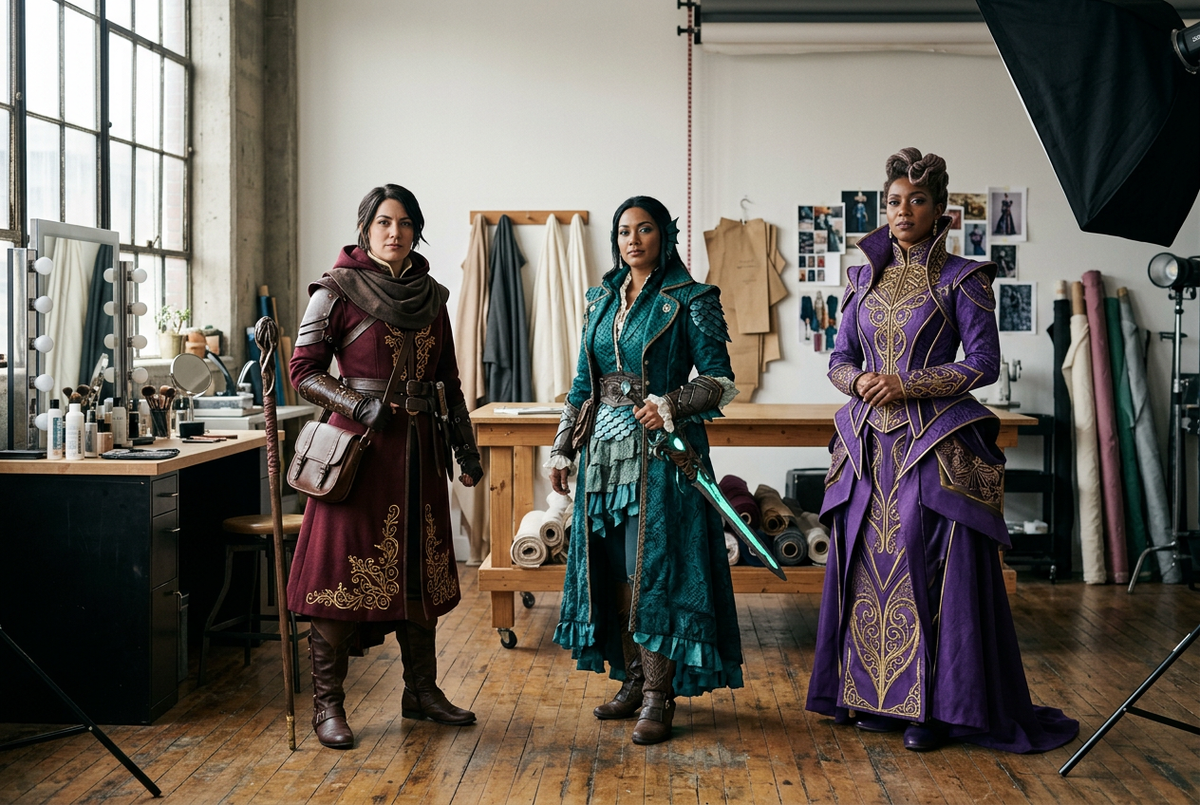
Introduction: Are These Really the Biggest Cosplay Trends of 2026?
Cosplay trends are not always about which anime, game, or movie character is attracting the most attention. Sometimes, the more interesting changes happen in how people interpret characters, construct costumes, use makeup, and present their work online.
A March 2, 2026 article from EyeCandys, The Top Cosplay Trends of the Year: 2026 Predictions, proposed several directions for the cosplay community. These included a 2016 nostalgia revival, color-coded character aesthetics, unconventional character choices, sustainable costume construction, beauty-led styling, and more cinematic group cosplay.
These ideas offer an interesting starting point, but there is an important distinction between a commercial trend prediction and an independently verified industry trend. EyeCandys is a cosplay-related retailer, and its article does not provide a representative survey, social media measurements, convention attendance figures, or sales data proving that these styles have become widespread.
This guide evaluates six of its predictions using available academic research and established cosplay practices. It does not treat every prediction as a confirmed movement. Instead, it asks what makes each idea plausible, what evidence supports it, and what cosplayers should consider before adopting it.
Who is this guide for?
-
Cosplayers planning new costumes and styling experiments in 2026.
-
Creators looking for alternatives to repeatedly recreating mainstream characters.
-
Makeup enthusiasts interested in face-focused character transformations.
-
Cosplayers exploring thrifted fabrics, reusable materials, and handmade construction.
-
Groups planning coordinated photography and cinematic cosplay presentations.
Quick Comparison: Six 2026 Cosplay Trend Predictions
The following comparison separates the original predictions from the evidence currently available. Because these are creative directions rather than individual products, standardized product prices are not applicable.
| Predicted direction | Main idea | Evidence assessment | Best suited for |
|---|---|---|---|
| 2016 nostalgia cosplay | Revisit mid-2010s fashion and makeup | General retro-fashion research supports the concept; cosplay-specific 2026 adoption remains unverified | Nostalgia fans and reinterpretation creators |
| Color-coded archetypes | Build a character around a recognizable palette | Creative interpretation is well established; widespread adoption of these specific palettes is unverified | Original characters and stylized cosplay |
| Unconventional characters | Choose less frequently recreated characters | Consistent with established fan creativity; no verified 2026 popularity data | Experienced fans and niche fandoms |
| Eco-friendly cosplay materials | Reuse fabrics and upcycle existing garments | Supported by costume sustainability research and a cosplay-specific upcycling project | DIY makers and budget-conscious cosplayers |
| Makeup-focused cosplay | Make eyes, nails, and facial styling central | Supported by academic research on cosplay performance and appearance | Beauty-focused creators and close-up photography |
| Cinematic group cosplay | Coordinate poses, props, and scenes rather than identical outfits | Supported by research on cosplay performance and video presentation; the 2026 growth claim remains unverified | Groups and cosplay photographers |
1. 2016 Nostalgia Cosplay — Is the Mid-2010s Revival More Than a Fashion Prediction?
The first prediction suggests that 2016 aesthetics can return as a recognizable styling language. Instead of recreating a specific character exactly, cosplayers can combine mid-2010s-inspired makeup, accessories, silhouettes, and photographic styling with an existing character.
This is an interesting idea because nostalgia does not require a costume to reproduce an entire historical outfit. A few recognizable visual details can establish the atmosphere.
What supports this prediction?
Research into retro fashion provides a useful foundation.
In a 2016 study published in the Journal of the Korean Society of Costume, Ha Youn Kim and Yun Jeong Choi examined the relationship between nostalgia and retro-fashion purchase intentions. Their online survey included 224 respondents. The researchers distinguished personal nostalgia from historical nostalgia and found that the two were associated with purchase intentions differently.
Another study by Veenstra and Kuipers, published in Sociology Compass in 2013, examined vintage fashion and its connections to authenticity, nostalgia, identity, and consumer culture.
These studies do not prove that 2016 cosplay is currently popular. They do, however, help explain why older visual styles can become meaningful again when people reinterpret them through contemporary identities.
How to apply the idea to cosplay
A practical approach is to choose one character and introduce a limited number of mid-2010s styling details:
-
Reinterpret the character's makeup with a more pronounced eyeliner shape.
-
Use accessories or silhouettes associated with the period.
-
Experiment with older photographic effects and color treatments.
-
Preserve the character's recognizable features instead of turning the entire costume into generic retro fashion.
The goal is not historical accuracy. It is a recognizable combination of character identity and nostalgic styling.
Advantages
-
Works with existing costumes and wardrobes.
-
Offers room for personal interpretation.
-
Does not require recreating an entire complicated outfit.
Disadvantages
-
Can become generic if the character reference is too subtle.
-
Nostalgia is subjective, so different audiences may recognize different details.
-
The specific claim that 2016 aesthetics are a major 2026 cosplay movement still needs independent evidence.
Best for: Cosplayers who enjoy fashion reinterpretation, throwback aesthetics, and creative photography.
2. Color-Coded Character Archetypes — Can a Color Palette Tell the Whole Story?
EyeCandys also predicts that cosplay styling will increasingly revolve around distinctive color identities rather than only specific character names.
Examples include a chartreuse glitch witch, a teal haunted mermaid, or a candy-pink character with a darker personality.
This approach shifts the starting point of costume design. Instead of asking, "Which character should I recreate?", a creator might ask, "What kind of character can I build around this color?"
Why the idea makes creative sense
Color is a useful visual communication tool. It can establish mood, separate characters within a group, and create consistency across costumes, makeup, accessories, and photography.
For example:
-
Chartreuse: An experimental, futuristic, or supernatural appearance.
-
Deep teal: An underwater, mysterious, or fantasy-inspired identity.
-
Candy pink: A playful appearance with the potential for contrasting darker details.
-
Icy blue: A cold, ethereal, or magical visual direction.
-
Violet: A dramatic aesthetic associated with fantasy and dark royalty.
However, these are creative associations, not scientifically established meanings that every audience interprets identically.
How to build a color-led cosplay
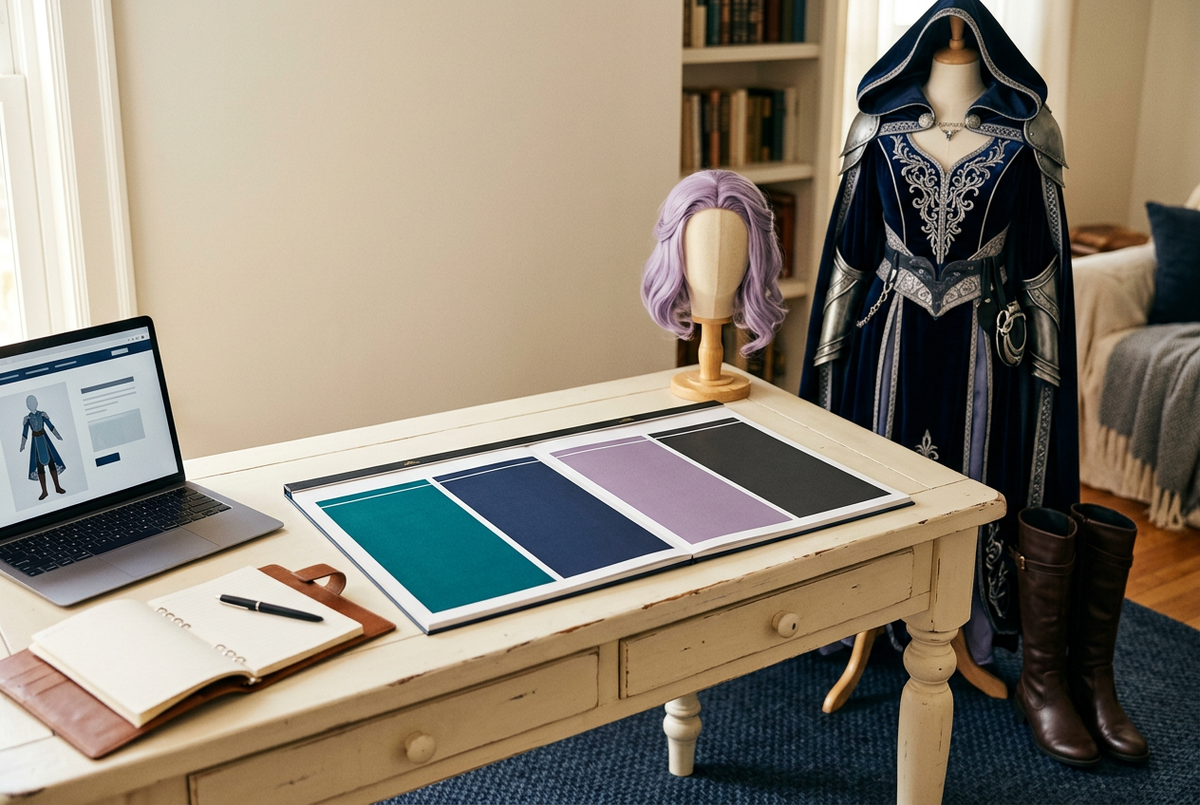
Start with one dominant color and choose two supporting colors. Then distribute the palette across different parts of the costume:
-
Use the main color for the largest clothing or wig element.
-
Introduce a secondary color through accessories and makeup.
-
Reserve the third color for small details, such as nails, jewelry, or props.
-
Keep the character silhouette recognizable if the design is inspired by an existing fictional character.
A useful test is to photograph the finished costume from a distance. If the palette is recognizable but the overall character concept is unclear, add one distinctive accessory or silhouette element.
Advantages
-
Encourages original character design.
-
Makes it easier to coordinate group costumes.
-
Can produce visually consistent photography.
Disadvantages
-
A strong palette does not automatically communicate a specific character.
-
Similar color combinations can make different costumes look repetitive.
-
The popularity of the particular archetypes listed in the EyeCandys article has not been independently established.
Best for: Original character creators, fashion-oriented cosplayers, and groups that want a coordinated visual identity.
3. Unconventional Character Cosplay — Is Choosing a Less Popular Character a Better Strategy?
Another prediction suggests that cosplayers may increasingly choose side characters, unusual designs, nostalgic characters, and less frequently recreated figures instead of repeatedly following the most popular protagonist.
This is an appealing creative direction, but it should not be confused with a proven change in audience behavior.
There is no verified dataset in the original article demonstrating that unconventional character cosplay is receiving more engagement or that it is growing faster than mainstream character cosplay in 2026.
What does academic research tell us?
Nicolle Lamerichs' 2011 article, Stranger than Fiction: Fan Identity in Cosplay, published in Transformative Works and Cultures, examines cosplay as a creative practice through which fans interpret and transform existing fictional narratives.
The research helps explain why cosplay is not simply about reproducing a popular character. It can also be a way of expressing personal identity and establishing a relationship with a fictional world.
That provides a strong conceptual basis for unconventional character choices, even though it does not measure their current popularity.
How to make an unconventional character recognizable
Choosing an obscure character creates a practical challenge: some viewers may not immediately understand the reference.
A good costume should therefore retain at least one recognizable anchor:
-
A distinctive hairstyle or wig.
-
A signature clothing silhouette.
-
A recognizable accessory or prop.
-
A particular color combination.
-
A memorable makeup detail.
For example, if a character has a complicated outfit, recreating the silhouette and one signature accessory may communicate the reference more effectively than copying every small decorative element.
Advantages
-
Allows more creative freedom.
-
Gives fans opportunities to celebrate overlooked characters.
-
Can create a stronger personal connection with a particular fandom.
Disadvantages
-
Less familiar characters may be harder for general audiences to recognize.
-
Reference accuracy can require additional research.
-
Niche character choices do not automatically produce greater engagement.
Best for: Long-time fans, collectors of niche character designs, and cosplayers who value personal interpretation over popularity.
4. Eco-Friendly Cosplay Materials — Is Upcycling a Practical Direction for Costume Makers?
Sustainable costume construction is one of the predictions with particularly relevant research behind it.
The EyeCandys article mentions thrifted fabrics, reused garments, fabric dyeing, and visible handmade textures. These approaches are not entirely new to costume making, but they offer practical ways to rethink how cosplay materials are sourced and used.
Direct research related to cosplay
West and Smith's 2017 project, Eco-cosplay: Upcycling as a Sustainable Method of Costume Construction, examined the reuse of discarded materials in costume development.
The project specifically considered cosplay construction and explored how repurposed materials could be used to create costume pieces. It discussed the potential of resale stores as material sources and evaluated the aesthetic possibilities of upcycled costume construction.
This is particularly relevant because it connects sustainability directly to cosplay rather than relying exclusively on broader fashion-industry research.
A separate 2022 article by Sofia Pantouvaki, Ingvill Fossheim, and Susanna Suurla, Costume and Sustainability: From Past Practice to Future Strategies for an Ecological Costume Praxis, examines sustainability across the costume lifecycle, from design to production.
Together, these studies establish that reuse and ecological costume practices are legitimate areas of research and practical experimentation.
They do not establish that most cosplayers have adopted sustainable materials in 2026.
Practical ways to make a more sustainable cosplay
Reuse existing clothing
A secondhand coat, dress, or pair of boots can provide a useful starting point. Modifying an existing garment may reduce the amount of new material needed.
Use thrifted fabrics
Look for suitable fabric textures, colors, and weights before purchasing new materials. Always check for stains, damage, and fabric deterioration.
Build reusable costume components
Neutral base garments, detachable accessories, and modular costume elements can be adapted for different characters.
Keep visible handmade details
Hand stitching, custom trims, and repaired sections do not necessarily need to be hidden. They can become part of the costume's visual identity.
Advantages
-
Can reduce material costs when suitable secondhand supplies are available.
-
Encourages creative problem-solving.
-
Makes it easier to reuse costume components.
Disadvantages
-
Secondhand materials may require additional cleaning or repair.
-
Finding the correct color, texture, and fabric quantity can take time.
-
Reusing materials does not automatically guarantee a lower environmental impact; the full material lifecycle matters.
Best for: DIY costume makers, beginner builders, and experienced cosplayers who enjoy experimenting with construction methods.
5. Makeup-Focused Cosplay — Can the Face Become the Main Part of the Costume?
One of the more interesting predictions is the idea that cosplay can increasingly begin with the face rather than the outfit.
The emphasis is on eyes, eyeliner, nails, skin finishes, and other beauty details that help communicate a character's identity.
This direction makes sense as a creative technique, especially for portrait photography and short-form video. However, the claim that close-up content consistently outperforms full-body cosplay content would require platform-specific engagement data. The EyeCandys article does not provide that evidence.
What does research say about makeup in cosplay?
A 2022 study published in The Art Worlds of Gender Performance: Cosplay, Embodiment, and the Collective Accomplishment of Gender examines how cosplay participants use appearance, makeup, and performance to construct recognizable character identities.
The research discusses how makeup techniques can change the appearance of facial features. Contouring, highlighting, and other techniques can help cosplayers approximate the visual characteristics associated with particular fictional characters.
This is important because makeup is not merely decoration. It can be part of the character transformation itself.
How to do makeup-centered cosplay looks
A practical approach is to identify the facial details that contribute most to the character's visual identity.
Eyes
Choose eyeliner, eyeshadow, and lash styling according to the character's eye shape and expression. Avoid assuming that every character needs dramatic makeup.
Skin finish
A matte, satin, or dewy finish can support different visual interpretations. Choose a finish that works with the character design and the lighting conditions.
Nails
Nails can reinforce a character's color palette and appear prominently in hand poses and accessory photography.
Facial structure
Contouring and highlighting can help reinterpret facial proportions, particularly for characters with distinctive cheekbones, eye sockets, or jawlines.
Advantages
-
Offers visible character details without requiring a complete costume rebuild.
-
Works particularly well for portrait-oriented photography.
-
Allows creators to experiment with different interpretations of familiar characters.
Disadvantages
-
Makeup alone may not make an otherwise generic outfit recognizable.
-
Different lighting conditions can change how makeup appears in photographs.
-
Detailed character makeup may require practice and specialized products.
Best for: Beauty enthusiasts, portrait cosplayers, and creators who enjoy detailed facial transformations.
A safety note about colored contact lenses
Colored contacts can complement makeup-focused cosplay, but they are not ordinary cosmetic accessories.
In the United States, the FDA classifies decorative contact lenses as medical devices. They require a valid prescription and appropriate fitting by an eye-care professional, even when they are used only to change eye color.
The CDC also advises that decorative lenses require proper fitting and care. Poorly fitted or improperly maintained lenses can cause eye injuries and infections.
Anyone considering colored lenses should obtain an appropriate prescription, purchase from a legitimate seller that verifies it, and follow professional instructions for cleaning and wearing them.
Do not buy unprescribed lenses simply because a website advertises them as costume accessories.
6. Cinematic Group Cosplay — Are Coordinated Scenes Replacing Matching Costumes?
The final prediction focuses on group cosplay.
Traditionally, a group might choose characters from the same series and wear recognizable outfits together. The proposed 2026 direction goes further: coordinated colors, planned poses, props, and scene composition become part of the overall experience.
The EyeCandys article uses Spy x Family as an example of a group cosplay concept that can be presented through a more cinematic approach.
Why this approach has a research foundation
Nicolle Lamerichs' 2015 article, The Remediation of the Fan Convention: Understanding the Emerging Genre of Cosplay Music Videos, explores how cosplay performances extend beyond convention spaces through photography and video.
The article explains how cosplay videos combine performers and fictional references to create new visual narratives.
This offers a useful foundation for understanding cinematic group cosplay. A coordinated group photograph or video can become a form of storytelling rather than simply a record of several people wearing matching costumes.
However, the research does not prove that cinematic group cosplay has overtaken traditional group cosplay in 2026.
How to plan a cinematic group cosplay
1. Choose a shared visual concept
Select a common theme, such as a family scene, an action sequence, a fantasy setting, or a recognizable moment from the original story.
2. Assign character roles
Make sure each participant has a clear visual identity. The group should look connected without making every costume identical.
3. Coordinate the color palette
Use complementary colors or a consistent visual theme to make the group composition feel intentional.
4. Plan poses before the photoshoot
Think about character relationships and body language. A group photograph becomes more interesting when each participant contributes to the scene.
5. Coordinate props carefully
Props should support the scene without making the composition too crowded. Check venue rules and make sure every prop is safe and permitted.
Advantages
-
Creates stronger opportunities for collaborative storytelling.
-
Gives photographers more visual options.
-
Allows different character designs to work together in one composition.
Disadvantages
-
Requires coordination between participants.
-
Photography and prop planning can take additional time.
-
A visually impressive group does not necessarily need complicated costumes.
Best for: Friend groups, cosplay teams, photographers, and fans who enjoy recreating scenes rather than simply matching outfits.
How to Choose the Most Suitable 2026 Cosplay Trend for You
Not every predicted trend is suitable for every cosplayer. The best choice depends on your budget, construction experience, available time, and the type of content you want to create.
Here are four practical ways to decide.
Choose Based on Your Budget
If you want to keep costs under control, start with closet cosplay, reused clothing, or makeup-led styling.
You do not need to purchase an entirely new costume to experiment with a different aesthetic. A wig, a few accessories, and carefully selected makeup details may be enough to create a new interpretation.
Choose Based on Your Skills
If you enjoy sewing and construction, sustainable cosplay and upcycling provide opportunities to experiment with fabrics and reusable components.
If you are more interested in beauty and photography, makeup-focused cosplay may be a better starting point.
If you enjoy collaboration, cinematic group cosplay offers a different kind of creative challenge.
Choose Based on Your Intended Audience
A recognizable mainstream character may be easier for general audiences to identify.
A niche character or original color-coded archetype may appeal more strongly to a specific creative community.
Neither approach is automatically better. Think about whether your main goal is character recognition, artistic experimentation, photography, or participation in a particular fandom.
Choose Based on Wearability
A costume should work outside the photoshoot as well.
Consider how long you will wear it, whether you can sit comfortably, and whether you can move through a convention safely.
Rigid armor, oversized props, and complicated accessories should be tested before the event. Try sitting, leaning, walking, and using stairs while wearing the complete costume.
For additional outfit inspiration, Explore Character-Inspired Cosplay Costumes.
Conclusion: Which 2026 Cosplay Predictions Actually Hold Up?
The six predictions from EyeCandys provide an interesting picture of where cosplay styling and costume construction could go in 2026. However, they should not all be treated as confirmed community-wide trends.
Some directions have stronger foundations than others.
-
2016 nostalgia cosplay has support from broader research into retro fashion and nostalgic consumption, but its specific popularity within cosplay remains unverified.
-
Color-coded archetypes offer a useful creative method, although the proposed palettes have not been established as dominant trends.
-
Unconventional character cosplay fits established research on fan creativity and identity, but there is no verified evidence that it is growing faster than mainstream character cosplay.
-
Eco-friendly cosplay materials have direct support from costume sustainability research and a cosplay-specific upcycling project.
-
Makeup-focused cosplay has a clear connection to research on character performance, embodiment, and appearance.
-
Cinematic group cosplay builds on established cosplay photography and video practices, but its claimed growth in 2026 still needs independent evidence.
The most useful takeaway is not that every cosplayer should follow the same six trends. It is that cosplay offers multiple ways to express creativity: through nostalgia, color, character interpretation, sustainable construction, makeup, and collaborative storytelling.
Rather than chasing every prediction, choose the approach that fits your skills, interests, and the kind of cosplay experience you want to create.


コメントを書く
このサイトはhCaptchaによって保護されており、hCaptchaプライバシーポリシーおよび利用規約が適用されます。