Table of Contents
- Chapter 1: The Basics — What "Gothic Cosplay" Actually Means Right Now
- Chapter 2: Core Framework — How to "Gothic-ify" Any Character
- Chapter 3: Advanced Strategy — Building a Reusable Gothic Base Wardrobe
- Chapter 4: Tools & Resources
- FAQ
- Summary & Related Reading
Chapter 1: The Basics — What "Gothic Cosplay" Actually Means Right Now
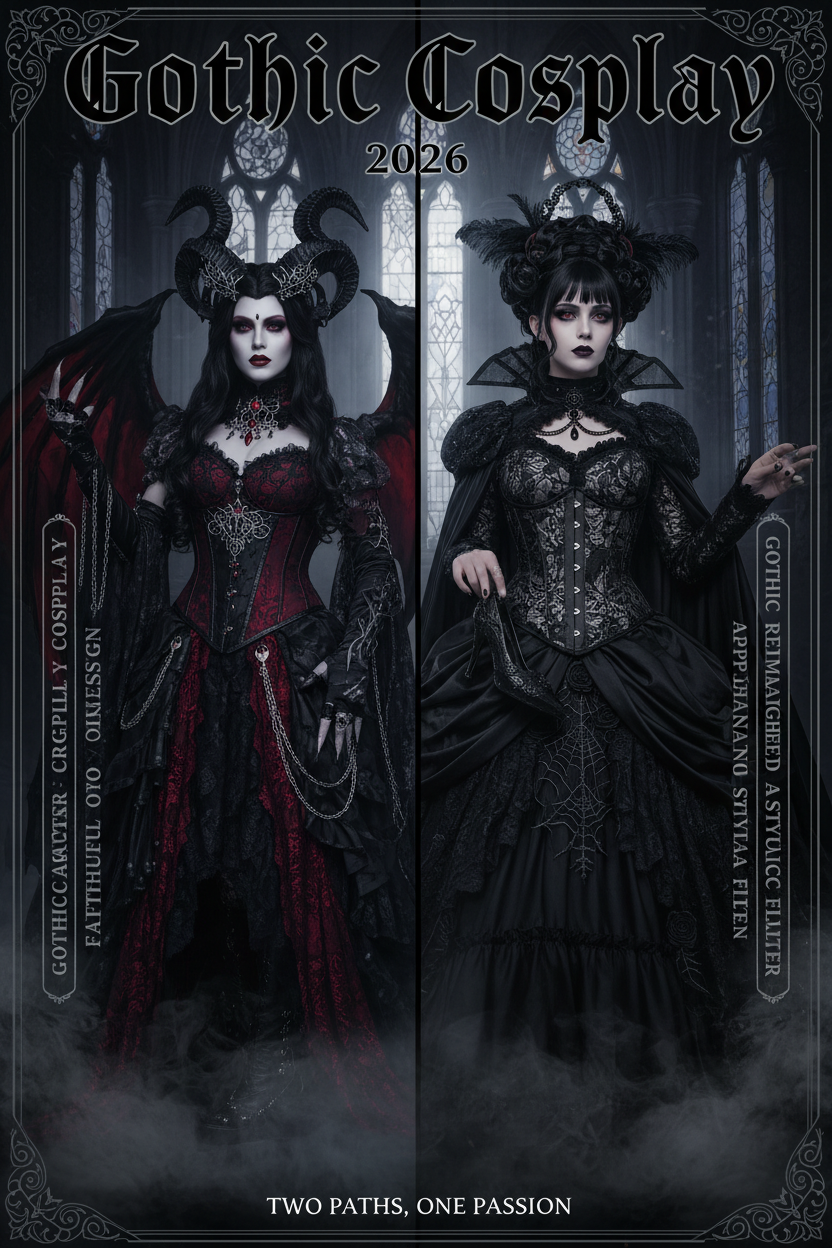
Under tags like #gothic #altgirl #occosplay, TikTok is currently full of two genuinely different kinds of content that both get lumped under the same "gothic cosplay" label — and understanding the difference matters before you start building anything.
The first is what you'd expect: cosplayers building characters who were already designed with a gothic aesthetic — succubus-style demons, vampiric characters, dark fantasy designs where the source material itself leans into black, red, and purple palettes with corsetry, horns, or ornate dark detailing. This is straightforward gothic character cosplay, faithful to a design that was gothic from the start.
The second, and the more interesting trend right now, is what's driving most of the current momentum: cosplayers taking characters who were never designed with a dark aesthetic at all and deliberately reimagining them in gothic styling — a cheerful, brightly-colored character redone in black lace and a corset, a character from something like Baldur's Gate 3 given a more overtly gothic treatment than their original design called for. This is gothic reimagined cosplay, and it's a fundamentally different creative act from the first category — you're not recreating a design, you're applying a stylistic filter to one.
This distinction matters practically because it changes what "success" looks like for your build. A faithful gothic character cosplay is judged against how accurately it matches existing reference art. A gothic reimagining is judged against something looser — whether the gothic treatment feels intentional and well-executed, and whether the character is still recognizable underneath the new aesthetic layer. Neither approach is more valid than the other, but conflating them leads to confused build planning, so it's worth being clear from the start about which one you're actually going for.
Chapter 2: Core Framework — How to "Gothic-ify" Any Character
If you're going the reimagining route — taking a character who wasn't originally dark and giving them a genuine gothic fantasy cosplay treatment — this chapter is the actual methodology, broken into the four levers that consistently do the work.
Color Shift
This is the most immediate signal of a gothic reimagining. Take the character's existing color identity and shift it toward the gothic palette — deep black, rich burgundy or blood red, deep purple, or a stark black-and-white contrast — while keeping at least one recognizable accent color from the original design intact. That retained accent is what keeps the character identifiable underneath the new palette; shifting every single color away from the original tends to produce something that reads as "a gothic character" rather than "this specific character, gothic version."
Texture and Fabric Choice
Gothic aesthetics rely heavily on specific material language — lace, velvet, structured leather-look fabric, sheer paneling, and heavier, more substantial-feeling textiles than a lot of standard cosplay fabric. Swapping a character's original lightweight or simple fabric choices for these heavier, more textured materials does significant work in selling the aesthetic shift, even before any silhouette changes are made.
Silhouette Adjustment
Gothic styling tends to favor more structured, dramatic silhouettes than a lot of standard character designs — corsetry that defines the waist sharply, higher collars, longer or more dramatic hemlines, and more angular or exaggerated proportions than a softer original design might have. You don't need to redesign the character's entire outfit structure — targeted adjustments (adding structure through the torso, extending or dramatizing a skirt or coat length) usually do more than a full silhouette overhaul, and they keep the build closer to achievable for most skill levels.
Accessory Language
Small details finish the transformation: choker-style neck pieces, dark ornate jewelry, and accessories with a gothic material quality (aged metal finishes, dark stones, lace trim) confirm the aesthetic direction even from a distance, before a viewer registers the finer details of fabric or silhouette. This is the lowest-cost, lowest-effort lever on this list, but it's frequently what pushes a build from "dark-colored version of a character" to "genuinely gothic reimagining."
Applied together, these four levers — color, texture, silhouette, accessories — form a repeatable system you can apply to essentially any character, which is exactly why this approach has broader applicability than a lot of other cosplay techniques tied to a single specific franchise or aesthetic.
Chapter 3: Advanced Strategy — Building a Reusable Gothic Base Wardrobe
This chapter is where the real practical value of this trend lives, and it's rooted in something that's already showing up in the community: gothic base pieces have unusually high reuse potential compared to most character-specific costume items.
The pattern in practice. One cosplayer's build process illustrates this well — pairing a dragon-patterned skirt built the previous winter with a newly made black corset for a completely different character's gothic reimagining. The skirt wasn't built for this specific character at all; it was a general-purpose gothic-adjacent base piece that got pulled back out and recombined with a new top-half piece to create an entirely different look. This is the core mechanic behind why gothic styling pairs so naturally with a modular wardrobe approach: the base pieces (corsets, textured skirts, dark cloaks) are rarely character-specific by design, which means a single well-made piece can realistically appear in several completely different builds over time.
Why this matters for how you should build. If you're planning more than one gothic reimagining — which is likely, given how repeatable the Chapter 2 framework is — it's worth building your first few pieces with reuse specifically in mind, rather than treating each corset or skirt as tied to a single character. A well-constructed black corset in a relatively neutral cut works across dozens of potential gothic reimaginings; a corset built with heavy character-specific detailing works for exactly one. The reusable version costs more upfront in most cases, but it pays for itself the moment you build your second gothic character.
Treating gothic pieces as wardrobe investment, not one-off costume spend. This connects directly to a broader shift in how cosplayers are thinking about their spending — treating a costume purchase as the first piece of a long-term wardrobe rather than a single-use item. Gothic base pieces are some of the strongest candidates for this kind of investment thinking specifically because of their natural cross-character versatility. A gothic corsets & cosplay base pieces collection built around genuinely reusable, character-neutral pieces is worth prioritizing over cheaper, more character-specific alternatives if you're planning to build more than one gothic reimagining over time.
Layering in character-specific accents without rebuilding the base. Once you have a solid rotation of base pieces, the accessory language covered in Chapter 2 becomes your primary tool for differentiating one character's gothic reimagining from another's — a different choker, different jewelry, a different accent color introduced through a smaller piece — rather than needing an entirely new base garment for every character. This is where a curated dark fantasy cosplay accessories collection earns its place in your build process: it's the fastest way to create meaningful visual distinction between builds without duplicating your base wardrobe investment.
Chapter 4: Tools & Resources
For base wardrobe pieces: prioritize construction quality and a relatively neutral cut over heavy character-specific detailing, since these are the pieces meant to serve multiple future builds. This is where it's worth spending more of your budget, precisely because the cost amortizes across every future gothic reimagining you build.
For character-specific differentiation: small accessories — chokers, jewelry, accent-colored trim pieces — are where character specificity should live, since they're inexpensive to swap out between builds and don't require touching your base wardrobe investment.
Basic fabric and construction considerations: velvet and structured lace-overlay fabrics hold gothic silhouettes better than very lightweight or overly stretchy materials, and darker fabrics in general are more forgiving of minor construction imperfections than bright colors, since shadow and texture do more visual work than precise, visible stitching would in a lighter-colored piece.
Reference research: because gothic reimagining is a creative filter rather than a fixed reference to copy exactly, it's worth building a personal mood board of gothic fashion references (not just other cosplay examples) — actual gothic and dark-romantic fashion imagery tends to produce more original, convincing results than only referencing other cosplayers' existing reimaginings of the same character.
FAQ
What's the difference between gothic cosplay and gothic reimagined cosplay? Gothic cosplay typically refers to building a character whose original design was already gothic. Gothic reimagined cosplay means taking a character who wasn't originally dark-themed and deliberately restyling them with gothic aesthetics — a creative reinterpretation rather than a faithful recreation.
Will people still recognize the character if I go too gothic? Retaining at least one strong signal from the original design — a signature color, a specific silhouette element, or a recognizable prop — is usually enough to keep the character identifiable even under a significant aesthetic shift. Changing absolutely everything at once is the most common way a gothic reimagining stops reading as a specific character and starts reading as a generic dark original design.
Do I need to start from scratch for every new gothic character build? No — this is actually the core advantage of this trend. Well-built base pieces (corsets, textured skirts, cloaks) are largely character-neutral and can be recombined with different accessories and accent pieces across multiple builds, rather than needing full reconstruction each time.
Is gothic reimagining considered less "legitimate" than building an originally gothic character? No — both are valid, distinct creative approaches within the hobby. A gothic reimagining is judged on creative execution and cohesive styling rather than reference accuracy, which is a different but equally valid skill from faithfully recreating an existing gothic design.
What should I prioritize if I'm on a tight budget? Invest in one solid, reusable base piece (a well-constructed corset is usually the highest-leverage single purchase) before spending on character-specific accessories. The base piece pays for itself across multiple future builds, while accessories are cheaper individually but don't carry the same long-term value on their own.
Summary & Related Reading
Gothic cosplay right now is really two trends running in parallel: faithful recreation of originally gothic characters, and a broader, more flexible practice of reimagining any character through a gothic stylistic lens using color shift, texture, silhouette, and accessory changes. The second approach is what's currently driving the trend's crossover into mainstream cosplay content, and it pairs unusually well with a reusable, modular wardrobe strategy — gothic base pieces have genuinely high reuse potential across characters in a way that more character-specific costume elements typically don't.
Related reading you might find useful next:
- A full breakdown of disposable versus investment cosplay wardrobe pieces, for the broader thinking behind treating costume purchases as long-term wardrobe assets
- A guide to closet cosplay and thrift-based building, which shares some of the same modular, reuse-first philosophy as gothic base wardrobe construction
- A guide to the shift toward palette-and-archetype-based cosplay more broadly, since gothic reimagining is really one specific application of that same underlying trend


コメントを書く
このサイトはhCaptchaによって保護されており、hCaptchaプライバシーポリシーおよび利用規約が適用されます。