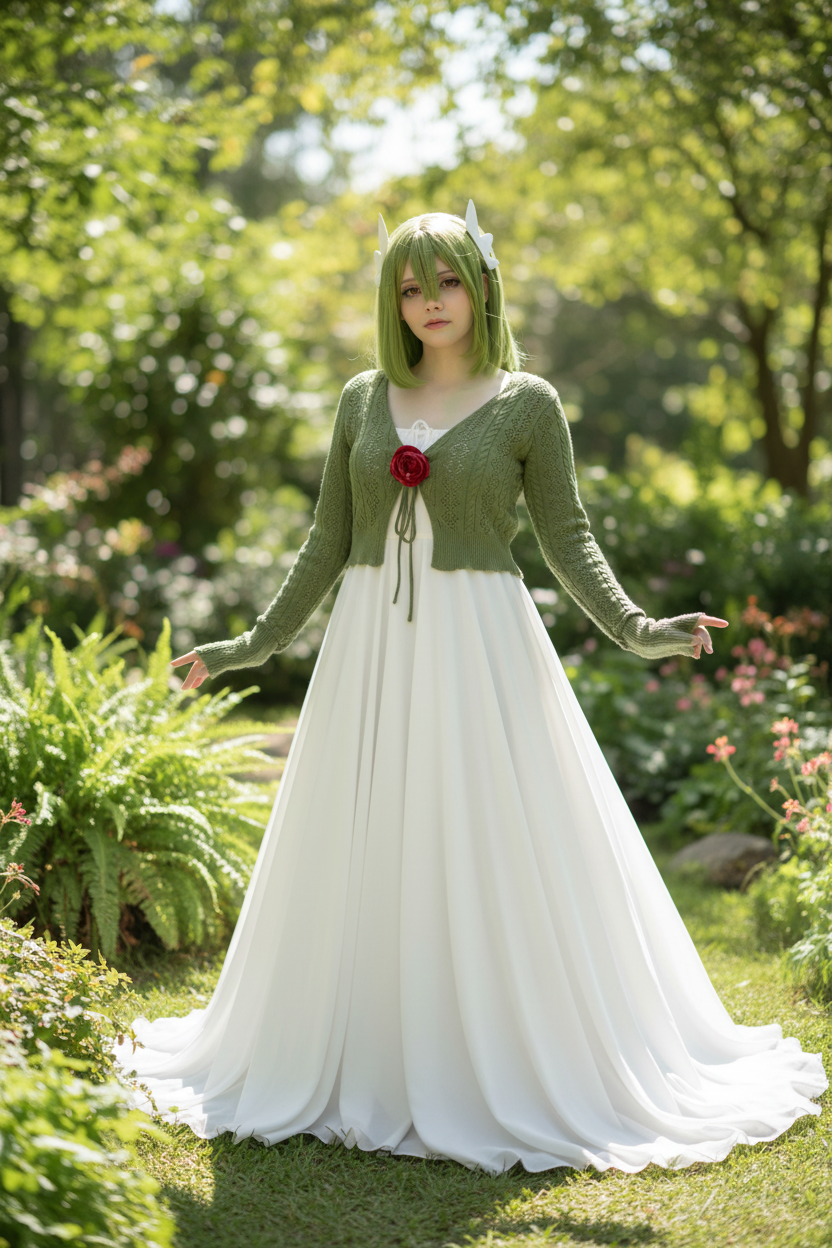
Gardevoir cosplay occupies a genuinely different technical category than most character builds — this isn't a person wearing an outfit, it's a full transformation into a non-human silhouette with a dress-like lower body, an entirely different head structure, and full-body skin coloring. That's exactly why the strongest Pokémon Gardevoir cosplay builds keep landing on convention "best of" lists: this build asks for skills most cosplayers never have to develop for a standard humanoid character. This guide walks through building one from the ground up, with mobility and wearability treated as seriously as visual accuracy.
What you'll need before you start:
- Reference material covering Gardevoir's silhouette from multiple angles, since the dress-like lower body and head shape both need careful proportion work
- Full-body skin-safe makeup or a bodysuit base in the correct green tone (more on choosing between these in Step 2)
- Structural materials for the non-human head piece — typically a lightweight frame base plus a finishing material
- A skirt/dress pattern or base garment you're willing to heavily modify, since Gardevoir's lower body reads as a gown but needs to function like wearable clothing
- Real time set aside specifically to walk, sit, and pose in the finished costume before your event — this build has more mobility risk than most, and testing matters more here than for a typical humanoid character
Step 1: Build the Non-Human Silhouette Foundation
This is the step that separates a convincing Gardevoir costume from one that reads as "green dress with a weird collar." Gardevoir's lower body is designed to look like a flowing gown, but unlike an actual formal dress, it needs to support a full range of walking, sitting, and posing movement across a con day — which means the construction logic underneath the silhouette matters more than the fabric choice on top of it.
Start with a base skirt structure built for genuine mobility — a layered or paneled construction that maintains the character's silhouette while walking gives you more freedom than a single rigid cone shape, which can restrict your stride significantly. If you're modifying an existing formal dress pattern, prioritize built-in ease at the hip and knee area over a perfectly smooth reference-accurate line; a small amount of visual compromise here is worth the mobility you gain, since a creature cosplay build that looks perfect standing still but forces you to shuffle instead of walk normally undercuts the whole presentation.
The upper bodice and shoulder structure need equal attention, since Gardevoir's silhouette includes distinctive shoulder and chest detailing that reads clearly even from a distance. Build this section with structure (boning, interfacing, or a fitted base layer) rather than relying on loose fabric alone — a structured bodice holds the character's recognizable silhouette through movement in a way that unstructured fabric won't.
Step 2: Full-Body Skin Effects and the Non-Human Head Structure
This is where non-human character cosplay genuinely diverges from anything you'd do for a standard humanoid build, and it's the step most beginners underestimate in terms of both skill and time investment.
Choosing between body paint and a bodysuit base. You have two realistic approaches for the full-body green coloring: airbrushed or hand-applied body paint directly on skin, or a fitted, color-matched bodysuit worn as a base layer. Body paint gives a more seamless, skin-like finish but requires reapplication and careful management throughout a con day (touch-ups, sweat-resistance, careful removal), while a bodysuit is more durable and consistent across a full day but needs to be genuinely well-fitted and color-matched to avoid looking like a costume piece rather than skin. Browsing a proper creature & non-human cosplay bodysuits option built specifically for this kind of full-body transformation gives you a much more reliable base than trying to dye or paint a standard bodysuit yourself, especially if you're not confident in your painting skills.
Getting the coloring genuinely even. Whichever method you choose, uneven color application is the single most common giveaway that breaks the illusion — patchy or streaky coverage reads as "costume" rather than "creature" almost immediately, especially in bright convention lighting or photography. If you're using paint, work in thin, even layers rather than trying to achieve full opacity in one pass, and always test your chosen product on a small area first to confirm it doesn't react badly with your skin. A dedicated full-body skin effect cosplay makeup product line formulated specifically for extended wear and even coverage is worth prioritizing over generic face paint stretched to cover a full body, since face-specific formulas often aren't designed for the durability or blending consistency a full-body application demands.
Constructing the non-human head structure. Gardevoir's head shape is distinctly non-human, which means this piece can't be approximated with a wig and makeup alone — it needs genuine structural construction, typically built around a lightweight frame (foam or thermoplastic) shaped to the character's specific silhouette, then finished with a smooth surface material and matched to your body paint or bodysuit coloring. Keep this piece as lightweight as possible; a heavy head structure becomes genuinely exhausting to wear and can affect your posture and comfort across a full event day.
Blending the transition points. Where the head structure, bodysuit or paint, and costume garment all meet is where a build most easily falls apart visually. Plan these transition points deliberately — a collar or neckline that overlaps the head piece's base, or careful color-matching between your bodysuit and head structure — rather than treating them as an afterthought once the bigger pieces are built.
Step 3: Test Mobility and Posing Before Your Event
This step matters more for a full-body cosplay transformation like this one than for almost any other build type, because so much of this costume's construction directly affects your physical range of motion in ways a standard humanoid costume doesn't.
Walk the full distance you'd expect to cover at a con in the complete costume — skirt structure, head piece, and full coloring all together — and pay close attention to whether the skirt restricts your stride, whether the head piece affects your balance or neck comfort, and whether your visibility and peripheral vision are adequate for navigating a crowded convention floor safely. Non-human head structures in particular can meaningfully reduce your field of vision compared to a normal wig, which is a genuine safety consideration in a crowded venue, not just a comfort issue.
Sit down in the full costume as well, since Gardevoir's gown-like lower body may behave very differently when seated than when standing — check whether the skirt structure holds its shape, whether you can actually sit comfortably, and whether getting back up is manageable without help or without damaging the costume's structure.
Practice a few reference poses from the character's official art in the finished costume, and take test photos. This lets you confirm the silhouette reads correctly in photography — the medium most of this costume's payoff will ultimately be judged in — before you're relying on it for real event photos.
Troubleshooting: Common Gardevoir Cosplay Pitfalls
"My skirt structure looks accurate standing still but restricts my walking badly." Go back to Step 1 and check whether your base construction has enough built-in ease at the hip and knee — a beautiful static silhouette that can't accommodate a normal stride needs structural rework, not just a different fabric choice.
"My body paint looks patchy or streaky in photos even though it looked fine in the mirror." This is almost always an application technique issue — thin, even layers built up gradually outperform a single heavy coat, and testing under the kind of bright lighting you'll actually be photographed in (rather than just a bathroom mirror) helps you catch unevenness before your event rather than after.
"The head structure is giving me neck strain or headaches." This is a weight and balance problem, not something to push through. Rebuild the piece with lighter materials, or add internal support (a properly fitted cap or harness system) that distributes the weight across your head and shoulders more evenly rather than concentrating it at one attachment point.
"I can't see well enough to navigate safely in the head piece." Treat this as a genuine priority to fix, not a minor inconvenience — modify the eye openings or structure for better visibility, even if it means a small compromise on screen accuracy. Safety in a crowded venue matters more than a perfectly faithful silhouette.
"The transition between my bodysuit and head piece is visibly obvious." Revisit the blending approach from Step 2 — a collar element that overlaps the seam, more precise color-matching between materials, or a thin layer of body paint blended over the transition edge can all help disguise a hard seam line.
Next Steps
Once you've built one Gardevoir convention cosplay with this level of non-human construction, the skills transfer directly to other creature-based builds — full-body coloring technique, non-human head structure fabrication, and mobility-first silhouette construction are all reusable across future projects, whether that's another Pokémon, a Monster Hunter creature, or any other non-humanoid character design.
If this was your first full creature build, it's worth documenting what worked and what didn't while it's fresh — the specific paint techniques, structural choices, and fit adjustments you land on here will save significant trial-and-error time on your next non-human cosplay project.

コメントを書く
このサイトはhCaptchaによって保護されており、hCaptchaプライバシーポリシーおよび利用規約が適用されます。