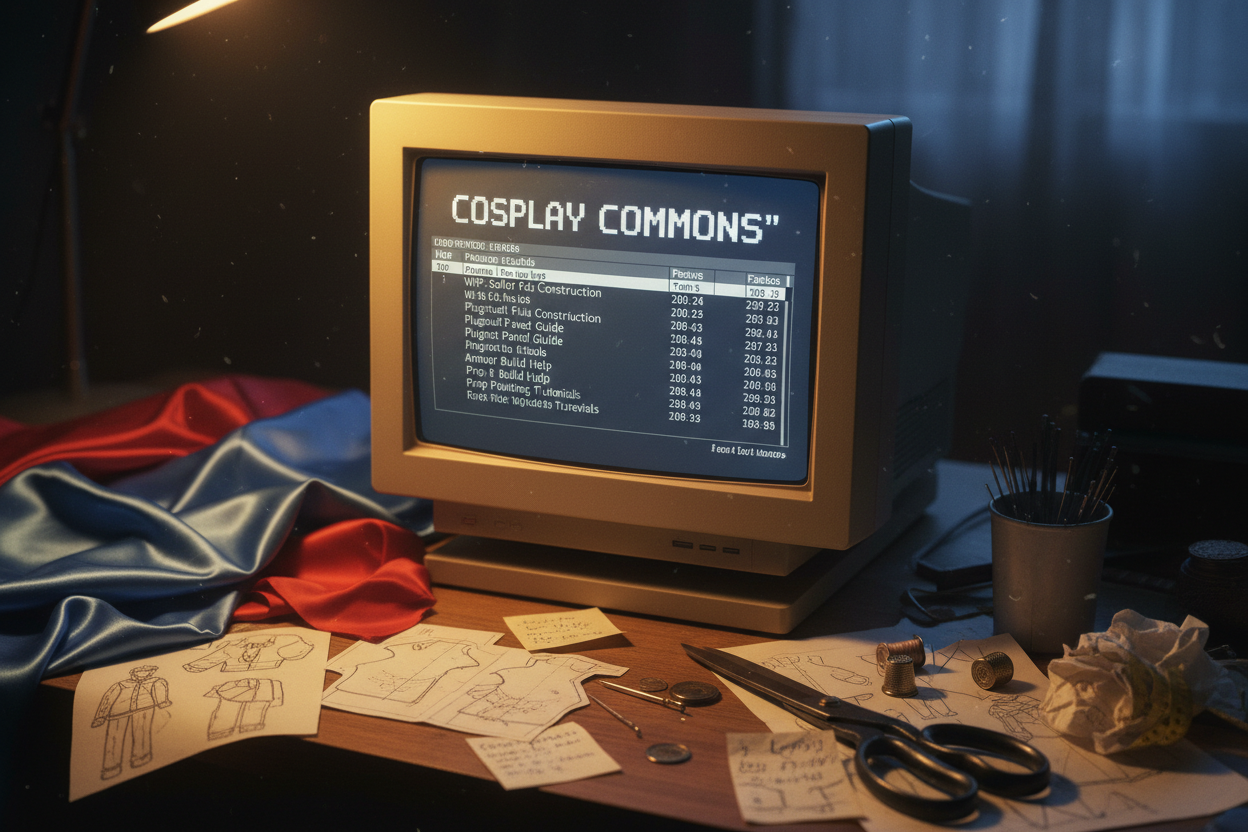
💡 Executive Abstract:
The global cosplay community is quietly grieving the end of an era: the systematic decline of the traditional Cosplay Forum. In the late 1990s and 2000s, platforms like Cosplay.com, Active Anime Cosplay (ACP), and Cure Cosplay served as the global repositories of subcultural knowledge. Today, the landscape is dominated by algorithmic, short-form video platforms (TikTok, Instagram Reels). This shift is not merely about "lost media"; it represents a fundamental Community Structure Change. We have transitioned from a decentralized, search-indexed, peer-critiqued knowledge network to a centralized, ephemeral, attention-driven economy. This analysis explores how this structural shift has impacted the transmission of technical costume-making skills, using three legacy IPs that defined the forum era to illustrate the difference.
📉 1. The Structural Evolution: Knowledge Archives vs. Algorithmic Feeds
To understand why older cosplayers miss the forum era, we must compare how information is organized, stored, and retrieved in both digital systems.
+-----------------------------------------------------------------------------------------+
|                          DIGITAL ARCHITECTURE COMPARISON                                |
+-----------------------------------------------------------------------------------------+
|  [FORUM ERA]   ---> Thread-Based | Search-Indexed | Peer-Reviewed | Infinite Shelf Life |
|                                                                                         |
|  [SOCIAL ERA]  ---> Video-Based  | Algorithmic    | Comment-Lined | 48-Hour Half-Life   |
+-----------------------------------------------------------------------------------------+
The Forum Era: The Peer-Reviewed Library
-
Threaded Taxonomy: Forums were structured logically by sub-forums (e.g., "Wig Styling," "Prop Making," "Sewing & Patterns"). Within those, a single thread could run for over ten years, accumulating hundreds of pages of community testing, material recommendations, and troubleshooting.
-
Search Engine indexing (SEO-Friendly): Forum posts were heavily text-based, making them easily indexable by search engines. A maker looking for "how to stiffen a collar" in 2005 could easily find a detailed 2002 thread explaining the exact process.
-
Constructive Critique (CC): Forums fostered a culture of peer review. Creators posted their "Work in Progress" (WIP) photos specifically asking for constructive critique on proportions, drape, and material choices.
The Social Media Era: The Ephemeral Stage
-
The Algorithmic Treadmill: Modern platforms prioritize high-energy, finished visual spectacles over the slow, messy process of crafting. Content has a shelf life of roughly 24 to 48 hours before the algorithm buries it.
-
Unsearchable Formats: Video content, voiceovers, and un-indexed comment sections make retrieving specific technical information incredibly difficult. A brilliant crafting trick shared in a 15-second video is often lost forever once it slides down the feed.
-
The Echo Chamber of Praise: The comment sections of modern social platforms are optimized for quick engagement rather than deep, constructive feedback, leaving fewer opportunities for technical skill building.
📂 2. Legacy IP Case Studies: The Blueprints of the Forum Era
The legacy of the forum era is best understood through the characters that challenged early creators to invent new crafting techniques. These three classic IPs served as the ultimate testing grounds for early forum tutorials.
🌙 Sailor Moon — The Legendary "Sailor Fuku" Structural Formula
-
The Forum Legend: In the early 2000s, the "perfect Sailor Fuku" was the holy grail of cosplay sewing. Forums featured legendary, 100-page threads analyzing the exact engineering required to make a flat animated design look balanced and flattering on a real human body.
-
The Technical Challenge: How do you create a perfectly stiff hip roll that doesn't sag, a pleated skirt that flares sharply without adding bulk to the waist, and a crisp, upright sailor collar?
-
The Forum Solution vs. Today: Forum users collaborated to develop the definitive structural formula: inserting heavy-duty piping cord inside a bias-cut satin tube for the hip roll, and using heavy sew-in buckram inside the collar. Today, mass-market Sailor Moon cosplay costumes often overlook these classic structural techniques, using flat, unlined polyester that sags. Premium manufacturing requires returning to these forum-tested, structured patterns to achieve the iconic, tailored silhouette.
Classic Fuku Construction:
[Sew-In Buckram Collar] ---> [Piping-Stiffened Hip Roll] ---> [Deep Box-Pleated Skirt]
🤖 Neon Genesis Evangelion — The Birth of the Plugsuit Engineering Threads
-
The Forum Legend: Long before 3D printing and advanced stretch vinyl were widely available, early Evangelion fans spent years on forums sharing experimental methods for building Asuka and Rei's form-fitting pilot suits.
-
The Technical Challenge: How do you create a skin-tight, armored bodysuit that allows for normal movement without wrinkling, cracking, or overheating?
-
The Forum Solution vs. Today: Forums became experimental labs where creators shared tips on vacuum-forming plastic breastplates, cast-urethane shoulder pieces, and the proper ways to stitch 4-way stretch metallic spandex. For a modern Asuka cosplay costume or Rei cosplay costume, achieving a premium look means moving away from cheap, single-piece sublimation prints. Instead, manufacturers utilize the multi-panel, ergonomic stitching patterns perfected by early forum creators, combining breathable stretch materials with structured, three-dimensional accents.
Plugsuit Panel Architecture:
[Ergonomic 4-Way Stretch Base] ---> [Dimensional Cast-Resin Accents] ---> [Reinforced Flatlock Seams]
⚔️ Final Fantasy VII — The Physics of Gravity-Defying Wigs and Massive Props
-
The Forum Legend: The release of Final Fantasy VII: Advent Children in 2005 sparked a massive wave of forum activity. Creators dedicated entire sub-forums to solving the physics of Cloud Strife's massive Buster Sword and gravity-defying spiky hair.
-
The Technical Challenge: How do you make a six-foot-tall sword light enough to carry all day, and how do you style thick, spiked synthetic wigs without them drooping?
-
The Forum Solution vs. Today: Forums popularized the use of lightweight pink insulation foam carved with hot wires and sealed with gesso for large props, alongside the classic technique of backcombing and using high-strength hairsprays for gravity-defying wigs. Today, when crafting high-end pieces like a Tifa Lockhart cosplay costume or Cloud's leather harness, premium makers rely on these structural, lightweight engineering principles to ensure complex fantasy gear is both comfortable and durable for long-term wear.
Buster Sword Structural Formula:
[Internal Steel Core] ---> [Carved Lightweight Foam Base] ---> [Impact-Resistant Gesso Seal]
⚖️ 3. The Technical Cost of Ephemeral Media
The decline of forums has created a noticeable skills gap in the global community, changing how costumes are designed, made, and appreciated:
| Craftsmanship Vector | The Forum Era Standard (Archive-Driven) | The Modern Social Media Standard (Trend-Driven) |
| Knowledge Retrieval | Searchable, persistent, and organized by category. | Ephemeral, algorithm-dependent, and difficult to search. |
| Skill Progression | Detailed, step-by-step written guides with progress photos. | Quick, edited 15-second video transformations. |
| Material Standards | Heavy emphasis on durability, lining, and structural support. | Focus on visual impact on camera, sometimes sacrificing comfort or longevity. |
| Community feedback | Constructive, technical critiques aimed at improving quality. | High-volume, brief comments focused primarily on instant praise. |
🛠️ 4. Adapting to the Modern Matrix: Sourcing Legacy Quality
As the centralized knowledge bases of the forum era fade, the responsibility of preserving these high technical standards shifts to specialized, quality-focused manufacturers. We build costumes using the classic, structured principles perfected during the golden age of cosplay engineering:
-
Preserving the Golden Ratio Draping:
For classic designs like the Sailor Moon cosplay costume, we avoid cheap, flat-pattern shortcuts. Our garments are draped on physical dress forms using classic tailoring techniques, ensuring the pleated skirts and collars hold their iconic, balanced proportions on any body shape.
-
True Ergonomic Panel Construction:
When crafting complex, form-fitting pieces like the Asuka cosplay costume, we don't rely on simple, single-piece prints. We utilize the multi-panel, contoured stitching methods shared in early forum guides, combining premium stretch vinyl with breathable liners for a comfortable, flattering fit.
-
Reinforced Structural Inner Linings:
For detailed fantasy outfits like a high-end Tifa Lockhart cosplay costume, we use sturdy canvas interlinings and reinforced stitching on all leather-look suspenders, belts, and armor plates. This ensures the gear retains its shape and holds up to active use at conventions and photoshoots.
❓ 5. Frequently Asked Questions (FAQ)
-
Q: Where can I find old cosplay forum tutorials today if many of the original websites are down?
-
A: While some legacy forums have closed, a vast amount of their valuable information has been preserved. You can use digital archiving tools like the Wayback Machine (archive.org) to explore classic versions of sites like Cosplay.com. Additionally, dedicated community archives on platforms like Reddit (such as r/CosplayHelp and r/PatternDrafting) continue to preserve and share these classic, step-by-step PDF patterns and guides.
-
-
Q: Why are structured inner linings so important for classic anime costumes?
-
A: Classic anime designs from the 90s and 2000s were drawn with very clean, bold lines that never sagged or wrinkled in animation. In the real world, standard lightweight fabrics naturally fold and lose their shape. Using structured inner linings—such as buckram or heavy interfacing—adds physical body to collars, cuffs, and waistbands, allowing the garment to mimic the crisp, animated look in real life.
-
-
Q: How do I ensure a form-fitting bodysuit is both comfortable and durable?
-
A: The key to a great bodysuit is proper panel construction and high-quality materials. Look for suits made with multi-panel designs that follow the body's natural muscle lines, and ensure they use heavy-duty flatlock or coverstitched seams. This distributes tension evenly across the garment, preventing tearing and allowing you to move, pose, and sit comfortably throughout the day.
-
🎯 Conclusion: Preserving the Craft in a Fast-Paced World
The decline of the classic Cosplay Forum is a natural part of the internet's evolution, but the valuable lessons, technical skills, and dedication to quality developed during that golden era remain as important as ever.
+-------------------------------------------------------------------------------+
|                       THE CLASSIC CRAFTING MANIFESTO                          |
|                                                                               |
|  1. Structural Integrity  --> Use proper interlinings to maintain clean shapes.|
|  2. Ergonomic Tailoring   --> Use multi-panel patterns for form-fitting suits. |
|  3. Quality Materials     --> Choose fabrics that look beautiful and last.     |
+-------------------------------------------------------------------------------+
Whether you are recreating the precise, tailored lines of a classic Sailor Moon cosplay costume, the detailed, high-performance panels of an Asuka cosplay costume, or the rugged, adventure-ready layers of a Tifa Lockhart cosplay costume, true quality is timeless. By combining the deep, technical knowledge of the forum era with modern, premium manufacturing, we can keep the spirit of high-end craftsmanship alive and well for the next generation of creators.


コメントを書く
このサイトはhCaptchaによって保護されており、hCaptchaプライバシーポリシーおよび利用規約が適用されます。