Introduction
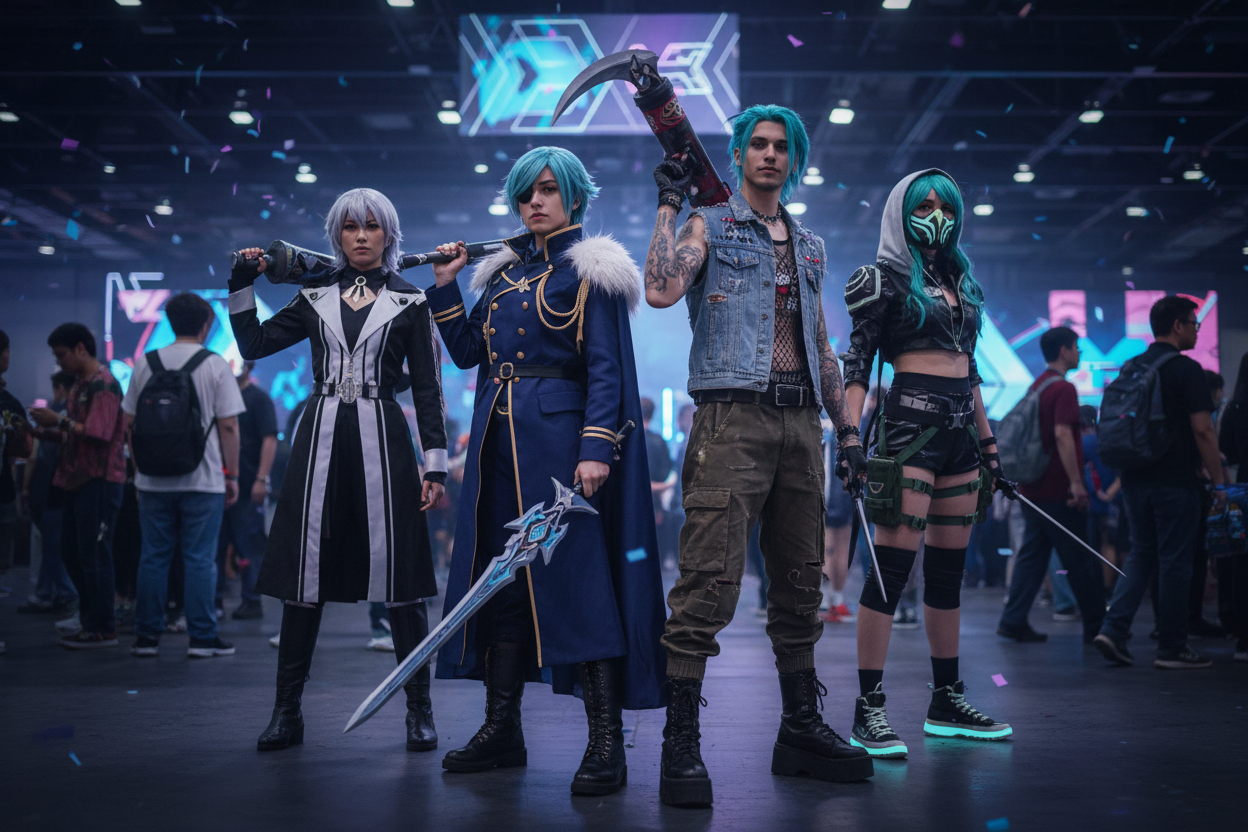
Scroll through cosplay TikTok long enough and you'll run into the same recurring format: a cosplayer building a version of a beloved character that reimagines — or simply crosses — the character's gender entirely. Genderbend cosplay content built around characters like Arcane's Jinx and Vi consistently pulls tagged posts under #genderbendcosplay and #crossplay, often in the same video, from creators actively documenting the process — TikTok user @xiiiashen posted a "first Jinx makeup test" specifically for a genderbend build ahead of Otakuthon, while creator @geazakicosplay shared a similar "first costest for a genderbend version of Jinx." This isn't a niche corner of the fandom; it's become one of the most consistently active content categories in cosplay. In this guide, we'll break down why this trend keeps growing, which character designs make the strongest crossplay costume candidates, and how to plan your own build.
Genderbend vs. Crossplay: What's Actually the Difference
These two terms get used almost interchangeably online, but they describe slightly different things, and understanding the distinction helps explain why both keep showing up together in the same tagged content.
-
Crossplay is when a cosplayer dresses as a character whose canon gender differs from their own — a woman cosplaying a male character exactly as designed, or vice versa, without changing the character's presentation.
-
Genderbend goes a step further, reimagining the character themselves as a different gender — redesigning Jinx's outfit and silhouette as if she were canonically male, for example, rather than simply having a cosplayer of a different gender wear her existing design.
In practice, these frequently blend together in actual cosplay content — a genderbend build is often executed through crossplay, and TikTok posts routinely tag both terms on the same video because the creator is simultaneously reinterpreting the character's design and performing it as a cosplayer whose own gender differs from the character's original presentation.
Why Certain Character Designs Become Genderbend/Crossplay Favorites
Not every character gets this treatment equally, and looking at which ones do reveals a clear pattern: the strongest genderbend and crossplay candidates tend to have design elements that already read as somewhat gender-ambiguous or stylistically flexible, giving cosplayers more room to reinterpret without the build reading as arbitrary.
-
Kaeya (Genshin Impact) is one of the most consistently crossplayed male characters in the fandom specifically because his design — a fitted, high-collared military-style coat, an eyepatch, and controlled, elegant styling — reads as sharp and refined rather than aggressively masculine, giving cosplayers (frequently women, based on the creator content built around him) a design that translates cleanly across genders without needing significant reinterpretation.

-
Arlecchino (Genshin Impact) generates a genuinely active discourse around this exact question. Her tailored, sharply structured coat has led some fans to read her design as more masculine-coded, sparking real community discussion — TikTok content specifically debates whether people are unfairly reading her as "a man in a relationship" simply because her fashion isn't traditionally feminine, rather than accepting a woman in structured, non-dress silhouettes at face value. That conversation is worth understanding before building a genderbend version of her, since it touches on a real tension in how gendered fashion coding gets interpreted.

-
Jinx and Vi (Arcane/League of Legends) are arguably the single most active genderbend/crossplay pairing in current cosplay content, generating dedicated tags like
#malejinx,#boyjinx, and#vicosplay #genderbend. Their punk, utilitarian, tomboyish design language was already gender-nonconforming within the show's own visual language before any reinterpretation began, which makes them a natural fit for genderbend content — though it's also produced real community pushback when reinterpretations have stripped away the queer-coded, butch-styled elements that fans feel are central to who these characters already are (Vi, notably, is canonically in a same-gender relationship within Arcane itself).

-
Akali (League of Legends, K/DA) rounds out a long-running genderbend content genre of her own — "Akali K/DA genderbend cosplay" compilations have circulated across TikTok and YouTube for years, built around her sleek, combat-ready K/DA outfit design translating cleanly into male-presented reinterpretations without losing the character's core silhouette.

Character Comparison: What Makes Each Design Crossplay/Genderbend-Friendly
| Character | Franchise | Design Element That Enables It | Real Trend Evidence |
| Kaeya | Genshin Impact | Sharp, fitted military coat; controlled, elegant styling | Consistently one of the most crossplayed male characters, with dedicated creator content |
| Arlecchino | Genshin Impact | Structured, tailored coat read by some fans as masculine-coded | Active #genderbend and #discussion tagged content debating how her fashion is gendered |
| Jinx | Arcane / LoL | Punk, utilitarian streetwear already coded as gender-nonconforming | Dedicated #genderbendjinx, #malejinx tags; documented build process content |
| Vi | Arcane / LoL | Butch, tomboyish styling; canonically queer character | Active #vicosplay #genderbend content, navigating her existing queer coding |
| Akali | LoL (K/DA) | Sleek, combat-ready silhouette that translates cleanly | Long-running "Akali K/DA genderbend cosplay" compilations spanning years |
Creative Expression and Inclusivity: Why This Trend Keeps Growing
The dual appeal behind this trend's staying power comes through clearly in how creators themselves frame it. Some approach genderbend cosplay purely as a creative and technical challenge — reimagining a character's silhouette, proportions, and styling from scratch is a genuinely different skill than replicating an existing design, and that challenge alone keeps drawing experienced cosplayers back to it repeatedly.
Others use it explicitly as a platform for representation. Creators like @CosplayWithPurpose build genderbend content specifically to spotlight LGBTQ+ visibility within cosplay spaces, using tags like #GenderbendCosplay and #CosplayTransformation to reach audiences who might not otherwise engage with that conversation. That combination — a technically interesting creative exercise that also functions as genuine representation — is a big part of why this trend hasn't faded the way many single-format cosplay trends do; it's serving two different audiences' motivations at once, which broadens its staying power well beyond a single viral moment.
Building Your Own Genderbend or Crossplay Costume
-
Start with a character whose design already has some flexibility built in. As the comparison above shows, characters like Kaeya, Jinx, and Akali already carry design elements — tailored silhouettes, utilitarian styling, sleek combat wear — that translate across gender presentation more naturally than characters built around a single, tightly gendered aesthetic.
-
Research the character's existing fan discourse before finalizing your interpretation. As the Arlecchino and Vi examples show, some genderbend reinterpretations touch on real community sensitivities — particularly around characters who are already gender-nonconforming or queer-coded in canon. Understanding that context helps you build something that resonates rather than something that reads as erasing what fans already value about the character.
-
Treat proportions and silhouette as your primary design decisions, not just costume details. A successful genderbend build usually rethinks tailoring, fit, and overall shape rather than simply changing a color palette or adding/removing a single element. When setting up your cart, look for flexible fit modifiers. Products listed with simplified layout "options" for sizing and cuts rather than strictly gendered categories can make it easier to find the exact drape and silhouette your specific build requires.
-
Document your process if you're building toward a specific convention, the way creators like @xiiiashen and @geazakicosplay do — makeup tests and build-in-progress content perform well specifically because audiences are interested in seeing the reinterpretation take shape, not just the finished result.
Frequently Asked Questions
Is genderbend cosplay the same thing as crossplay?
They're related but distinct — crossplay means cosplaying a character of a different gender than your own while keeping their design as-is, while genderbend means reimagining the character's design itself as a different gender. In practice, the two frequently overlap in the same build.
Why do some characters get genderbent more often than others?
Characters with design elements that already read as somewhat gender-flexible — tailored silhouettes, utilitarian styling, minimal reliance on traditionally gendered clothing cues — tend to translate more naturally across a genderbend reinterpretation.
Is it disrespectful to genderbend a character who's already queer or gender-nonconforming in canon?
Not inherently, but it's worth being thoughtful about it — as seen with characters like Vi, some reinterpretations have drawn community criticism specifically when they strip away the queer-coded elements fans feel are core to the character, rather than building on them.
Do I need special makeup skills for a genderbend build?
Often yes, particularly for facial structure and proportion adjustments — many creators specifically document "makeup test" content ahead of a full build for this reason, since getting the facial presentation right is often as important as the costume itself.
Why has this trend lasted longer than most single-format cosplay trends?
It serves two different motivations simultaneously — a genuine creative and technical challenge for cosplayers who enjoy design reinterpretation, and a platform for LGBTQ+ representation and self-expression for creators using it that way — which broadens its audience well beyond either motivation alone.
Conclusion
Choosing to build a genderbend or crossplay costume means engaging with one of cosplay's more creatively demanding and community-active traditions — one that rewards thoughtful design reinterpretation as much as technical skill. Whether you're drawn to Kaeya's clean crossplay-friendly tailoring, the ongoing creative debate around Arlecchino's design, or the deeply established Jinx, Vi, and Akali genderbend traditions, this is a genuinely rich corner of cosplay to build in. Relying on real, self-taken showroom photographs to evaluate a base garment's drape and structure is crucial for these complex builds. If you're ready to start your own genderbend or crossplay costume, check our fit and silhouette guide below before you order.

コメントを書く
このサイトはhCaptchaによって保護されており、hCaptchaプライバシーポリシーおよび利用規約が適用されます。