Introduction
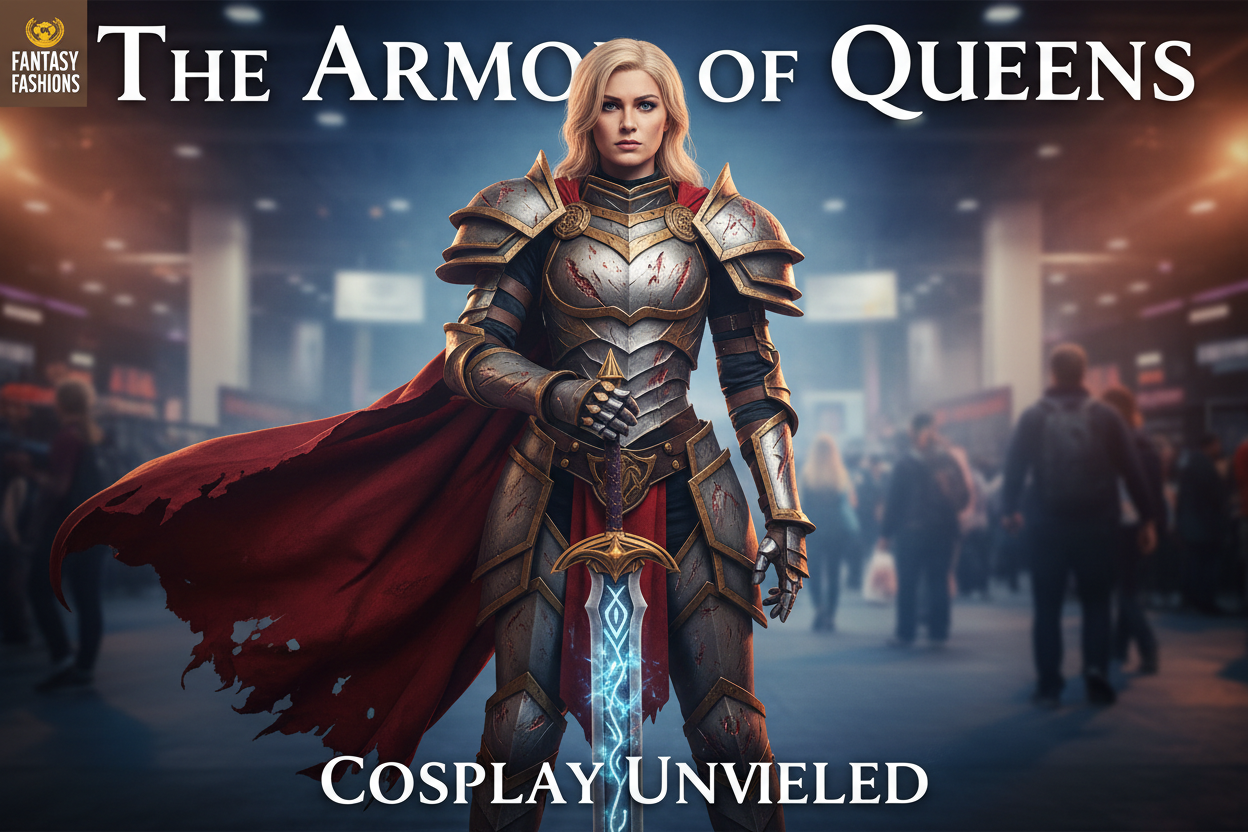
Scroll through TikTok's #femalecosplayarmor tag and you'll find something genuinely different from the "sexy armor" stereotype that used to dominate this corner of cosplay: full, screen-accurate, self-fabricated plate and foam builds, made and worn by women who did the hands-on construction themselves.
The tag has accumulated over 7.4 million posts, an enormous volume that puts it well ahead of most single-character cosplay tags. One especially telling example: cosplayer @little_luckycosplay posted a fully armored build of The Witcher's Ciri, captioned "the feminine urge to hunt monsters and drink ale," tagged with #armoredwomen, #foamsmith, and #propmaking.
In this guide, we'll break down what this movement actually represents, why armor construction specifically has carried a gendered reputation for so long, and how to select an armored female cosplay costume set that matches this high standard of craftsmanship.
What "Female Cosplay Armor" Actually Represents
It's worth being precise about what this tag is capturing. The content circulating under this tag centers specifically on construction — foam-smithing, thermoplastic shaping, prop-making, and full-coverage plate work. The hashtags paired with the trend (#foamsmith, #propmaking, #armoredwomen) are process- and skill-focused labels.
This isn't capturing women wearing armor-styled outfits as a fleeting fashion statement — it's capturing women doing the actual technical work:
-
Cutting and heat-shaping high-density EVA foam.
-
Working with thermoplastics like Worbla to form rigid armor plates.
-
Sculpting, molding, and assembling functional armor sets from raw materials.
The Armored Ciri Case Study: What Makes This Build a Movement Touchstone
The Ciri build captures the tone of this movement precisely. Ciri, from The Witcher franchise, is canonically a trained monster-hunter and swordfighter — armor isn't a stylistic add-on to her character, it's central to who she is. Building her in full, functional armor rather than a simplified interpretation takes her actual lore seriously.
The caption — "the feminine urge to hunt monsters and drink ale" — reclaims traditionally "unfeminine" fantasy archetypes (the monster hunter, the warrior) as concepts women can embody directly and confidently. For cosplayers looking to skip months of raw foam fabrication, our dedicated Witcher Ciri costume set offers the perfect screen-accurate base.
Why Armor Construction Specifically Has Been Coded Male, and Why That's Changing
Historically, armor-building skills (using heat guns, sculpting, light metalworking) overlapped heavily with shop-class skills culturally gendered male for generations. Fabric-based costume work overlapped with textile skills culturally coded female, creating an unspoken split: women "sew," men "build."
That split has eroded as tutorials democratized foam-smithing techniques. As learning barriers dropped, the demographic building armor diversified rapidly — and #femalecosplayarmor is the visible result of that shift.
Materials and Techniques Behind Female Cosplay Armor Builds
| Material / Technique | What It's Used For | Skill Level | Why It's Central to This Trend |
| EVA Foam | Base armor plates, structural shapes | Beginner to Intermediate | Most accessible entry point into armor-smithing |
| Worbla (Thermoplastic) | Heat-shaped details, smooth finished surfaces | Intermediate | Bridges foam's accessibility with rigid armor accuracy |
| 3D-Printed Components | Complex helmet and prop geometry | Intermediate to Advanced | Allows intricate detail without specialized metal tooling |
| Resin Casting | Duplicating gems, emblems, and hardware | Advanced | Creates consistent, repeatable details across a set |
| Tailored Leather/Fabric Underlayers | Gambesons, corsets, and suit padding | Beginner to Intermediate | Critical for armor fit, articulation, and long convention comfort |
Building Your Own Female Cosplay Armor Look
-
Start with a strong structural base underlayer. Padding, gambesons, and structured leather underlayers dictate how armor sits and moves on your body during long convention days.
-
Inspect build material and silhouette structure. That's why we rely on [real, self-taken showroom photographs across all listings — ensuring you see the actual leather density, stitching integrity, and foam reinforcement before buying.
-
Document your fitting and assembly process. Sharing your costume assembly or weathering process connects your build directly to the process-focused community driving this trend.
-
Invest in proper mounting hardware. High-grade webbing, metal buckles, and reinforced Velcro hold heavy plates securely without slipping.
Frequently Asked Questions
Is "female cosplay armor" just another term for sexualized fantasy armor?
No — the trend specifically centers on full, functional, screen-accurate armor construction, distinct from the decorative or revealing "chainmail bikini" stereotypes of the past.
Do I need heavy power tools to wear or build cosplay armor?
Not necessarily — modern pre-fabricated builds utilize high-density EVA foam and reinforced composite leather, which offer full structural armor optics while remaining lightweight for convention wear.
Why is an authentic underlayer important for armor builds?
Underlayers like gambesons or tailored leather tunics protect your skin from friction, support heavy shoulder and chest plates, and create the realistic bulk needed for screen-accurate fantasy proportions.
Conclusion
Choosing to wear a female armor build in 2026 means joining a movement built around strength, technique, and authentic character representation. Whether you choose to fabricate every plate from raw foam or start with a high-quality pre-engineered armor set, prioritizing realistic structure and material integrity will make your build stand out. If you're ready to embody your next warrior or monster-hunter character, explore our female armor and warrior cosplay collection before your next event.


コメントを書く
このサイトはhCaptchaによって保護されており、hCaptchaプライバシーポリシーおよび利用規約が適用されます。