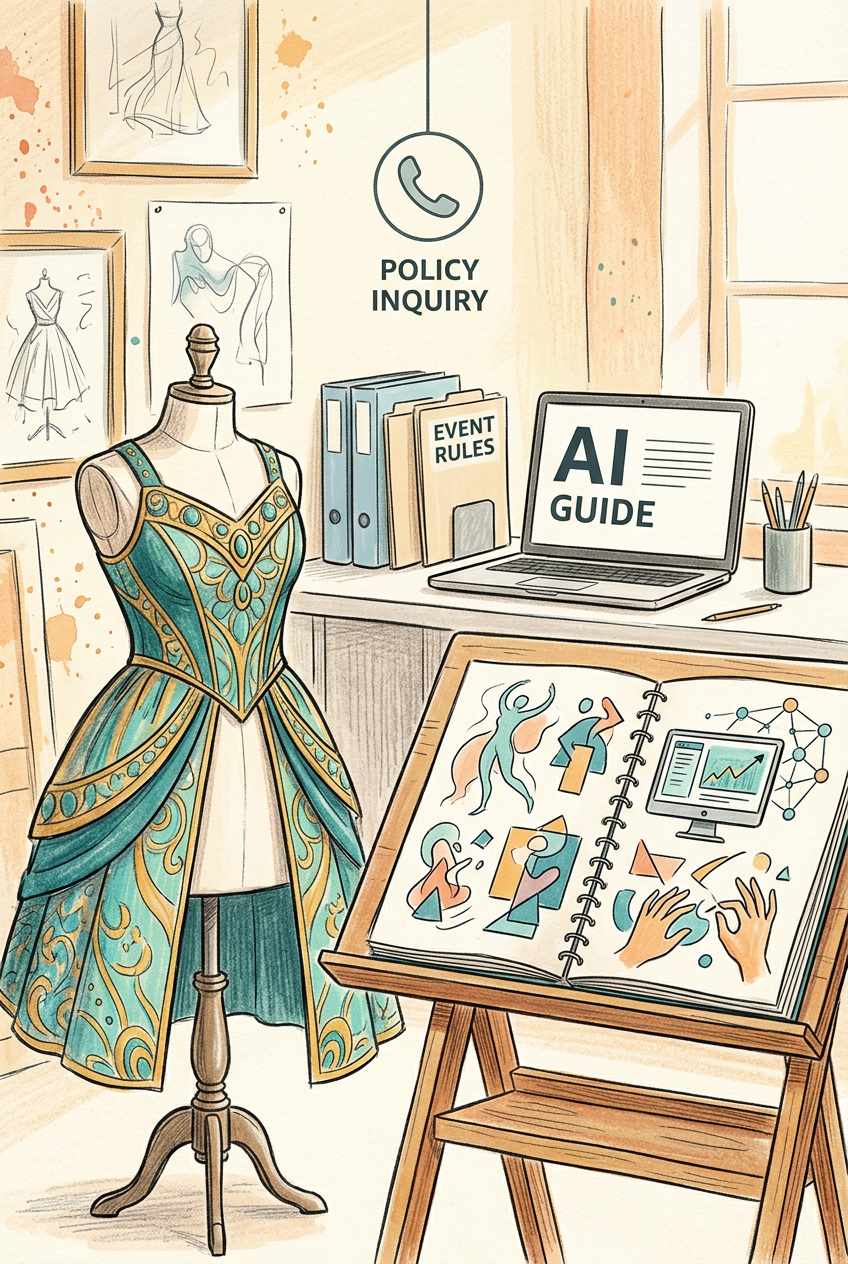
Introduction: The Ripple Effect of AI Bans Across Fan Conventions
Over the past year, convention organizers have enacted strict regulations prohibiting generative AI materials across exhibit halls, artist alleys, and competition stages. Following high-profile vendor floor enforcements—such as Dragon Con removing sellers offering AI-generated prints—major convention circuits including GalaxyCon, FanX, and San Diego Comic-Con (SDCC 2026) updated their rules to mandate human-made authenticity.
For makers and small business owners navigating cosplay convention AI policies 2026, these updates impact more than just print artists. The rules directly affect cosplayers selling physical craft items, prints, prop templates, or entry builds in convention masquerades. Understanding how events define human craftsmanship helps creators avoid vendor contract violations or competition disqualification.
Quick Comparison Table: Major Convention AI Art & Vendor Bans (2026)
| Convention Event / Circuit | AI Material Rules | Impact on Vendor Booths | Impact on Cosplay Contests & Props |
| San Diego Comic-Con (SDCC 2026) | 🚫 Full Ban: AI-generated material prohibited partially or wholly | Zero AI-generated prints or accessories allowed in Art Show or Artist Alley | 3D models and print files must be user-modeled; raw AI CAD outputs subject to audit |
| GalaxyCon (All Events) | 🚫 Full Ban: Sweeping ban across all commercial & artist spaces | Vendors caught selling AI work risk immediate booth closure without refund | Cosplay masquerade entries require proof of human fabrication / manual 3D modeling |
| Anime NYC & Crunchyroll Expo | 🚫 Strict Zero-Tolerance: Lifetime bans for policy violations | Mandatory proof-of-process logs required if items are flagged by attendees | 100% human-crafted or manually modeled digital templates required for stage judging |
1. San Diego Comic-Con (SDCC 2026) — Complete Art Show & Floor Prohibitions
In January 2026, San Diego Comic-Con formally reversed its previous stance—which permitted marked, non-sale AI displays—to enforce an absolute ban on AI-generated materials across its Art Show and convention floor.
-
Core Policy: Rules explicitly prohibit materials created partially or wholly through generative AI programs. The Art Show coordinator holds sole authority over item acceptability.
-
Pros & Cons for Creators: Protects human-created artwork and custom craftsmanship from automated floor flooding; requires vendors and prop sellers to maintain clear production logs.
-
Best Suited For: Independent artists, traditional illustrators, and physical prop makers aligning with strict comic con AI art ban guidelines.
2. GalaxyCon Events Circuit — Sweeping AI Bans Across Exhibition Halls
Following widespread community feedback, GalaxyCon enacted a circuit-wide ban across all 14 of its national pop-culture and animation events.
-
Core Policy: Prohibits AI-generated merchandise, 3D assets, prints, and costume components across all vendor areas. Staff perform active floor audits throughout event weekends.
-
Pros & Cons for Creators: Re-establishes trust between buyers and booth owners; vendors using hybrid digital workflows must clearly document their manual modeling or digital painting steps.
-
Best Suited For: Cosplay sellers offering physical foam armors, hand-sewn garments, and custom-styled wigs in dealer rooms.
3. Anime NYC & Crunchyroll Expo — Zero-Tolerance Rules & Vendor Verification
Major anime conventions enforce strict policies where violating anti-AI terms results in vendor removal and potential lifetime bans from host event groups.
-
Core Policy: All commercial goods sold—including 3D printing STL files, costume patterns, and booth artwork—must be created entirely by human hands or manual digital software.
-
Pros & Cons for Creators: Ensures a high standard of craftsmanship across the hall; requires prop makers using digital tools to verify that 3D assets were sculpted manually in software like Blender or ZBrush rather than generated via text prompts.
-
Best Suited For: Digital pattern makers, prop smiths, and 3D printing vendors seeking a compliant event environment.
How to Ensure Vendor & Cosplay Compliance Under 2026 AI Rules
-
Keep Timelapses and Layer Files: Whether you are selling digital sewing patterns, prints, or 3D-printed armor, save your working files (.PSD layers, Blender mesh histories, or timelapse videos). If flagged during floor audits, presenting raw production files resolves compliance checks quickly.
-
Review Masquerade Build Percentages: Ensure your competition entries meet published handmade cosplay requirements. While using 3D printers and CNC routers is fully permitted, the 3D models must be self-sculpted or properly credited to human artists.
-
Source Quality Fabrication Supplies: Focus on authentic, hand-crafted finishing. Explore our store catalog for handmade cosplay supplies and accessories—including high-density EVA foam sheets, specialty trim ribbons, and contact cements—to build competition-ready outfits!
Conclusion
The widespread adoption of strict AI policies across 2026 conventions reinforces a simple principle: celebrating genuine human effort, skill, and creativity. By keeping clear build documentation and using quality fabrication materials, cosplayers and sellers can navigate event rules with confidence. Visit our shop to stock up on premium handmade cosplay supplies and accessories for your next project!

Laisser un commentaire
Ce site est protégé par hCaptcha, et la Politique de confidentialité et les Conditions de service de hCaptcha s’appliquent.