Introduction: Tutorial Goal & Preparation Checklist
As the autumn celebration wraps up, makers and enthusiasts often face a mountain of leftover garments, props, and synthetic fabrics. According to estimates by the National Retail Federation (NRF) highlighted in AP reports, Americans spend approximately $4.4 billion on holiday costumes annually. However, this massive consumption carries a heavy environmental toll. Historical EPA data indicates that over 11.3 million tons of textiles are discarded in a single year.
Environmental experts—including University of Michigan Professor Shelie Miller and Washington University's Zack Bowersox—note that cheap fast-fashion costumes are typically manufactured from inexpensive synthetic plastics and assembled with hot glue rather than durable stitching. With the fashion industry accounting for 4% to 10% of global carbon emissions and synthetic fibers shedding microplastics during washing, researchers estimate that roughly 80% of disposable seasonal costumes ultimately end up in landfills. This tutorial provides a practical roadmap on what to do with old Halloween costumes through strategic swapping, donating, and costume upcycling.
Before organizing your post-season inventory, prepare this toolkit:
-
Sorting Containers: Labeled bins for keeping, repairing, donating, and recycling textiles.
-
Fabric Modification Tools: Heavy-duty fabric shears, sewing machine, reinforced thread, and textile glue.
-
Sourcing & Event Platforms: Local community bulletin boards, thrift networks, and peer-to-peer apps (e.g., Poshmark, Depop, Facebook Marketplace).
-
Specialized Sourcing: reusable cosplay accessories and costume repair supplies.
Step 1: Evaluating and Sorting Your Costume Inventory
Direct Answer: How to reuse and repurpose old cosplay costumes after Halloween begins with auditing your garments, separating durable structural props from fragile fast-fashion pieces, and reinforcing weak seams.
                     +---------------------------------------+
                     | POST-SEASON GARMENT AUDIT PIPELINE    |
                     +---------------------------------------+
                                         |
               +-------------------------+-------------------------+
               v                                                   v
  [ 1. Structural Audit ]                                [ 2. Categorization ]
  - Inspect seams, zippers, and hot-glue joints          - Sort into Keep, Repair, Swap, & Donate bins
  - Identify salvageable trims, armor, and accessories  - Isolate non-repairable synthetic fabrics
               |                                                   |
               +-------------------------+-------------------------+
                                         v
                     +---------------------------------------+
                     | 3. Action Execution                   |
                     - Repair or prep for community exchange |
                     +---------------------------------------+
Inspecting Garment Integrity
-
Check for Fast-Fashion Failures: As Zack Bowersox points out in environmental waste assessments, many seasonal outfits rely on quick hot-glue bonds rather than structured stitching. Inspect hems and glued-on trim.
-
Salvage Reusable Components: Even if a garment's main fabric is worn out, zippers, buckles, faux-leather straps, and EVA foam armor pieces can be harvested for future sustainable cosplay builds.
-
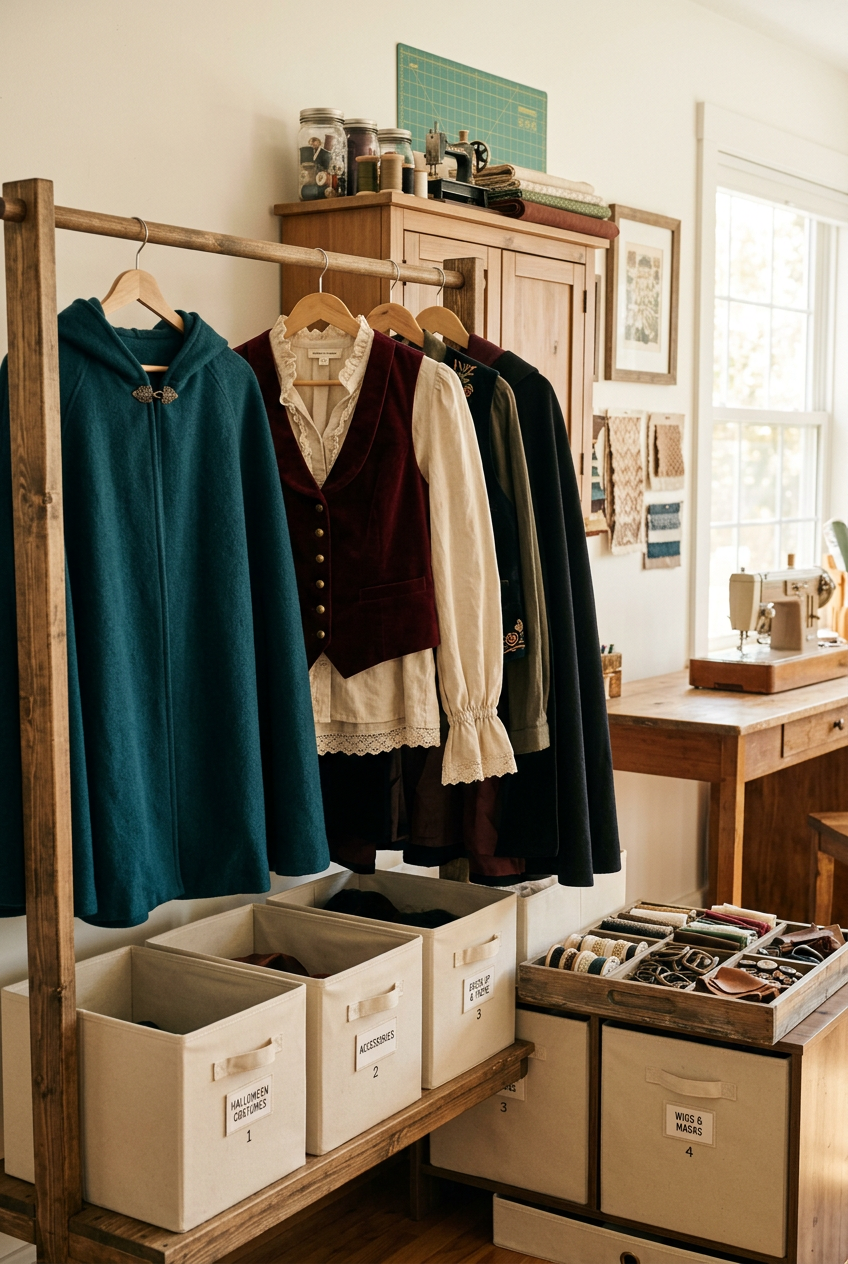
Sort Into Clear Bins: Group items into four distinct categories: items to keep for future conventions, pieces needing minor sewing repairs, items suitable for a cosplay costume swap, and garments ready for Halloween costume donation.
Step 2: Participating in or Organizing Costume Swaps
Direct Answer: How to organize a cosplay costume swap event involves partnering with local community centers, campus groups, or libraries (similar to regional initiatives like the Southern California Ultimate Halloween Swap at Occidental College) to trade used garments and reduce textile waste.
Engaging in Circular Fashion Networks
-
Join Regional Swaps: Look for established community swap meets in your area, or leverage online resale platforms like Depop, Poshmark, and Facebook Marketplace to pass along gently used gear.
-
Host a Local Swap Meet: Set up a weekend gathering with fellow creators. Establish ground rules requiring items to be clean, wearable, and accurately sized. Swapping eliminates the demand for newly manufactured synthetic textiles.
-
Prioritize Natural Fibers: When acquiring new pieces for future builds, seek out durable natural fibers like cotton, linen, or wool, which have a significantly lower environmental impact than virgin polyester.
Step 3: Donating to Local Programs, Theaters, and Charities
Direct Answer: Where to donate used Halloween costumes and accessories includes municipal textile programs (such as Greensboro, North Carolina's "Costume Comeback" drive), community theaters, local school drama departments, and area thrift stores as recommended by waste management agencies like SWACO (Central Ohio Solid Waste Authority).
Navigating Donation Channels
-
Check Local Municipal Drives: Many cities operate seasonal collection initiatives (like Greensboro's Costume Comeback) specifically designed to redirect wearable costumes away from local landfills. Check municipal schedules.
-
Support Educational and Community Theaters: School drama clubs and amateur theater groups constantly seek low-cost historical garments, capes, vests, and accessories for stage productions.
-
Review Intake Guidelines: Always ensure donated items are laundered, complete, and free of heavy structural damage before dropping them off at local charity centers.
Troubleshooting & Environmental Pitfalls
-
Pitfall 1: Placing Unusable Synthetics in Municipal Recycling Bins.
-
Correction: Local waste authorities and municipal recycling facilities repeatedly warn that heavily damaged, plastic-heavy costumes cannot be processed in standard curbside recycling bins. If an item is un-donatable and beyond repair, it must go into regular trash rather than contaminating recycling streams.
-
-
Pitfall 2: Discarding Functional Hardware.
-
Correction: Never throw away metal clasps, capes, or belts just because a main garment tore. Strip these reusable elements for your workshop parts bin.
-
-
Pitfall 3: Assuming All Thrift Stores Accept Costumes Year-Round.
-
Correction: Call ahead to verify whether local thrift organizations are currently accepting seasonal inventory.
-
Conclusion & Next Steps
Managing your post-season wardrobe responsibly helps combat the massive environmental footprint associated with seasonal costume waste. By sorting your inventory, participating in community swaps, and donating wearable gear to local theaters or municipal programs like Greensboro's Costume Comeback, you champion sustainable practices across the crafting community. Explore our shop for durable reusable cosplay accessories and costume repair supplies to upgrade and maintain your gear for seasons to come!

Laisser un commentaire
Ce site est protégé par hCaptcha, et la Politique de confidentialité et les Conditions de service de hCaptcha s’appliquent.