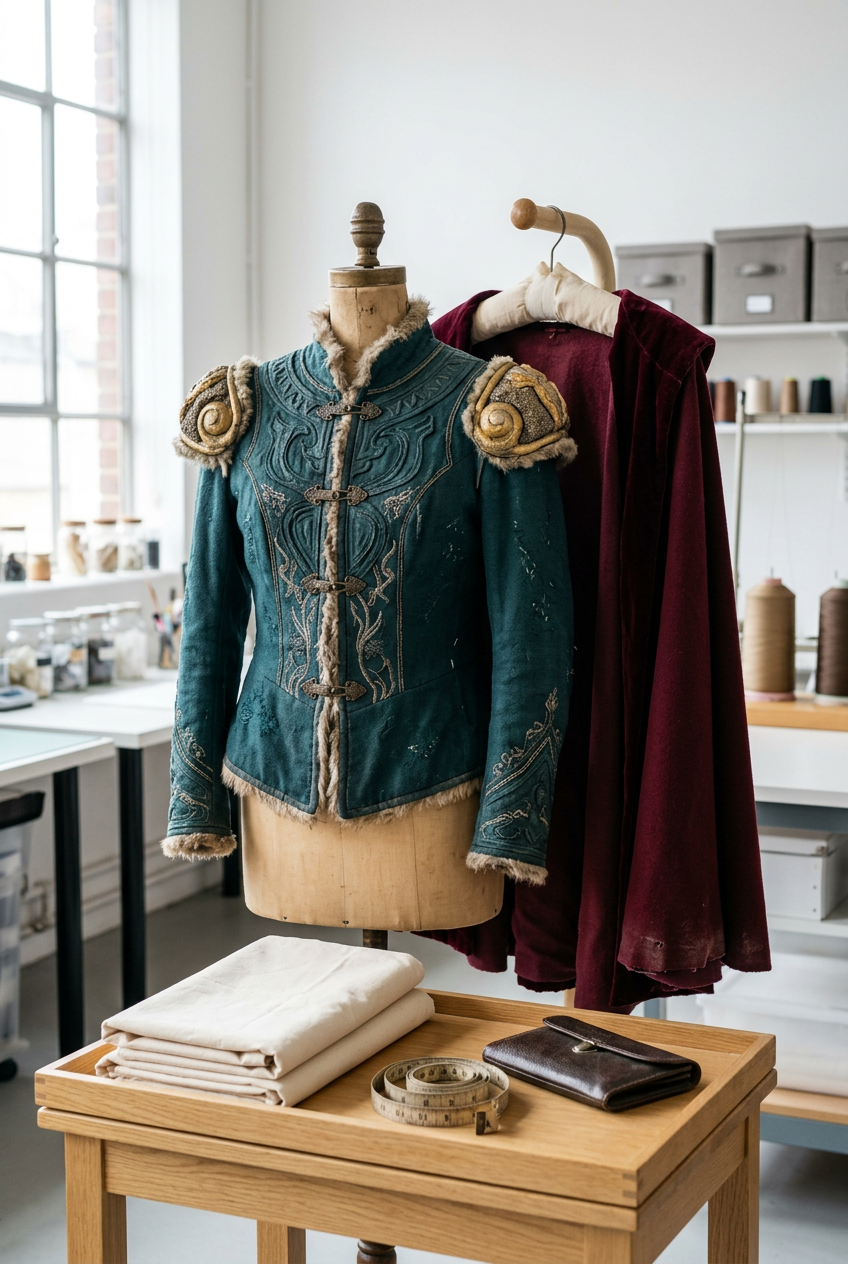
Introduction: Tutorial Goal & Preparation Toolkit
Transitioning seasonal outfits into convention-ready wear is a cornerstone of how to reuse Halloween costumes. Commercial Halloween gear—often constructed from synthetic polyesters or low-density ethylene-vinyl acetate (EVA) foam—frequently suffers from creasing, crushed armor plates, or tight sizing after storage.
Applying materials science principles and conservation techniques ensures garments remain durable for convention circuits. Standard EVA foam features a glass transition thermal softening window between 90°C and 120°C; staying within this threshold allows closed-cell structures to realign without melting. Similarly, managing textile tension prevents seam popping.
Before beginning your restoration, assemble these essential tools:
-
Garment & Heat Tools: Handheld garment steamer, temperature-controlled heat gun (100°C–150°C setting), and pressing cloth (100% unbleached cotton).
-
Crafting & Sewing Supplies: Elastic gussets, fabric bias tape, seam ripper, heavy-duty thread, and contact cement or barge adhesive.
-
Forming Supports: Cardboard dress forms, mannequin heads, or spherical molds for structural cooling.
-
Specialized Sourcing: cosplay costume repair kits and fabric care accessories.
Step 1: De-Wrinkling and Steaming Delicate & Synthetic Fabrics
Direct Answer: How to remove wrinkles from cosplay costumes safely requires applying indirect, moisture-rich steam from a handheld garment steamer while suspending the outfit, keeping synthetic fibers like polyester below their melting threshold.
                     +---------------------------------------+
                     | GARMENT RESTORATION WORKFLOW          |
                     +---------------------------------------+
                                         |
               +-------------------------+-------------------------+
               v                                                   v
  [ 1. Synthetic Garment Steaming ]                      [ 2. EVA Foam Heat Reshaping ]
  - Hang garment 2-3 inches from steam nozzle            - Heat surface at 90°C-120°C for 10-20 seconds
  - Use cotton pressing cloth for stubborn creases       - Hold shape manually over mold until cool
               |                                                   |
               +-------------------------+-------------------------+
                                         v
                     +---------------------------------------+
                     | 3. Structural Waistline Resizing      |
                     - Open side seams; insert elastic gusset|
                     +---------------------------------------+
Executing Textile De-Wrinkling
-
Perform a Spot Test: Before steaming the main panels, test steam output on an unexposed interior hem or seam. Synthetic dyes can bleed under high moisture and heat.
-
Suspend the Garment: Hang the costume on a padded hanger. Avoid laying synthetic skirts or capes flat, as gravity helps smooth out wrinkles during steaming.
-
Apply Indirect Steam: Hold the steamer nozzle 2 to 3 inches away from the fabric, moving in vertical strokes. For pleated skirts (such as character school uniforms or pleated trim), pin pleats down to a pressing board and steam using a cotton barrier cloth to reset sharp lines.
-
Implement cosplay costume care Protocols: Allow the fabric to air-dry completely in a climate-controlled room before packing it for transit. Storing damp synthetics causes mildew growth and fiber degradation.
Step 2: Heat-Reshaping and Refurbishing EVA Foam Props & Armor
Direct Answer: Learning how to reshape EVA foam costume pieces involves applying controlled heat (90°C–120°C) using a heat gun or indirect steam to soften the polymer's cell structure, then holding the piece against a form until it cools.
Restoring Structural Foam Components
-
Clean the Surface: Wipe down the foam prop or armor plate with a damp microfiber cloth to remove dust. Heat application over dirty foam bakes surface debris into decorative paint layers.
-
Apply Controlled Heat: Set your heat gun to its lowest thermal setting (around 100°C). Sweep the heat source continuously 6 to 8 inches above the crushed or bent section for 10 to 20 seconds.
Caution: Never hold a heat gun over one spot. Overheating EVA foam above 120°C causes cell wall collapse, permanent shrinkage, and surface scorching.
-
Mold and Lock the Shape: Once the foam becomes pliable, bend it over a rounded mold (such as a wig block, mannequin limb, or smooth bowl). Hold the foam firmly in position until it cools down completely to set the new shape.
-
Refurbish Wear: Apply a fresh layer of flexible acrylic sealer or contact cement over minor surface cracks to execute a complete cosplay costume repair before your event.
Step 3: Resizing and Expanding Garment Waistlines & Seams
Direct Answer: Discovering how to make a Halloween costume bigger for next year is achieved by unpicking side seams and stitching in expandable elastic gussets, matching fabric panels, or corset-style lace-up backs.
Executing Waistline Expansion
-
Identify Expansion Points: Inspect the interior side seams of jackets, bodysuits, or pants. Measure the required expansion width across the waist or chest area.
-
Unpick Interior Seams: Use a seam ripper to open the left and right side seams from the lower hem up to the mid-torso.
-
Insert an Expansion Panel or Gusset:
-
Option A (Elastic Gusset): Sew a triangular stretch-rib ribbon or elastic panel into the seam gap for hidden flexibility.
-
Option B (Fabric Panel): Insert a matching fabric strip (cotton or stretch spandex) into the open gap, securing it with reinforced double-stitching along both edges.
-
Option C (Corset Back Conversion): For dresses and vests, remove the rear zipper, install grommet tape along the back edges, and run a matching ribbon through to create an adjustable lace-up back.
-
-
Reinforce Stress Points: Apply back-stitching at the top and bottom of newly installed panels to handle movement stress during conventions.
Troubleshooting & Material Avoidance Guide
-
Issue 1: Direct Iron Burn on Polyester or Vinyl.
-
Correction: Never place a hot iron directly onto synthetic costume fabrics or screen-printed vinyl graphics. Always use a damp cotton pressing cloth as a thermal shield, or rely exclusively on vertical steaming.
-
-
Issue 2: Foam Springs Back to Its Bent Shape.
-
Correction: The foam was likely released before its core temperature dropped. Reheat the piece uniformly, apply your mold, and hold it in place until the foam is completely cold to the touch.
-
-
Issue 3: Seam Fraying During Expansion.
-
Correction: Cheap costume fabrics tear easily once unpicked. Apply pinking shears or clear fray-check glue along raw edges before sewing expansion panels.
-
Conclusion
Refreshing and modifying your wardrobe is the most effective way to master how to prepare and refresh old costumes for conventions while maintaining sustainable crafting practices. By applying controlled steam, utilizing heat-shaping thermal ranges for EVA foam, and adding flexible waist gussets, you can transform seasonal outfits into durable convention gear. Explore our store for professional cosplay costume repair kits and fabric care accessories to start your post-holiday restoration today!

Laisser un commentaire
Ce site est protégé par hCaptcha, et la Politique de confidentialité et les Conditions de service de hCaptcha s’appliquent.