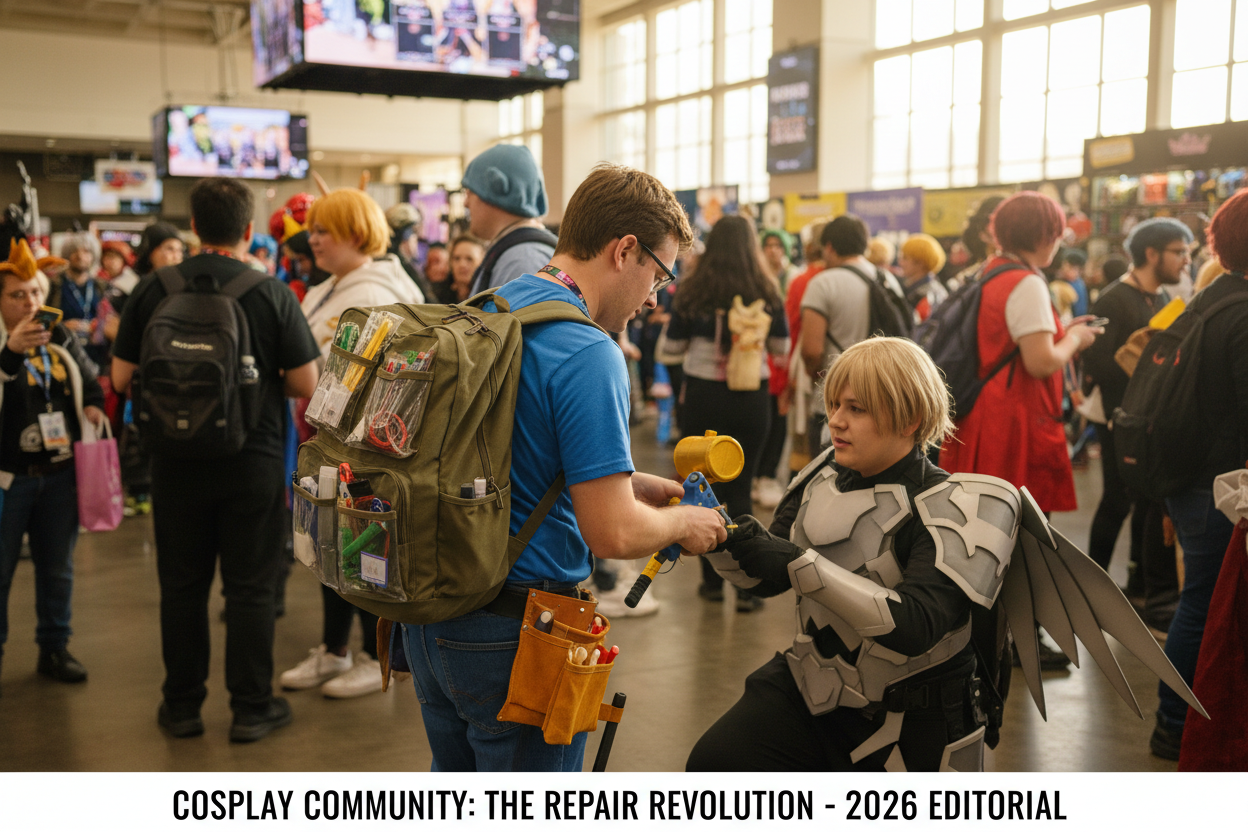
TL;DR: A cosplay repair kit isn't optional gear anymore — it's becoming as standard as a badge. At San Diego Comic-Con 2026, a costume repairperson dressed as Fix-it Felix spent the convention <cite index="23-1">patrolling the floor with a backpack full of repair supplies</cite>, fixing strangers' costumes for free. Major conventions like Anime Expo now run entire official repair stations, and Comic-Con's own masquerade contestant area keeps glues, tapes, and sewing supplies on hand specifically for cosplay wardrobe malfunction emergencies. If you're asking what to put in a cosplay repair kit, the short answer is: adhesives, tape, sewing basics, and a few tools for hair and props — and this guide breaks down exactly why that's become essential, not optional.
Why This Is Happening: The Deep Logic Behind the Repair Kit Trend
A convention day is a genuinely brutal stress test for a costume, and understanding why helps explain why convention repair kit culture has grown from a niche habit into something conventions themselves now formally support.
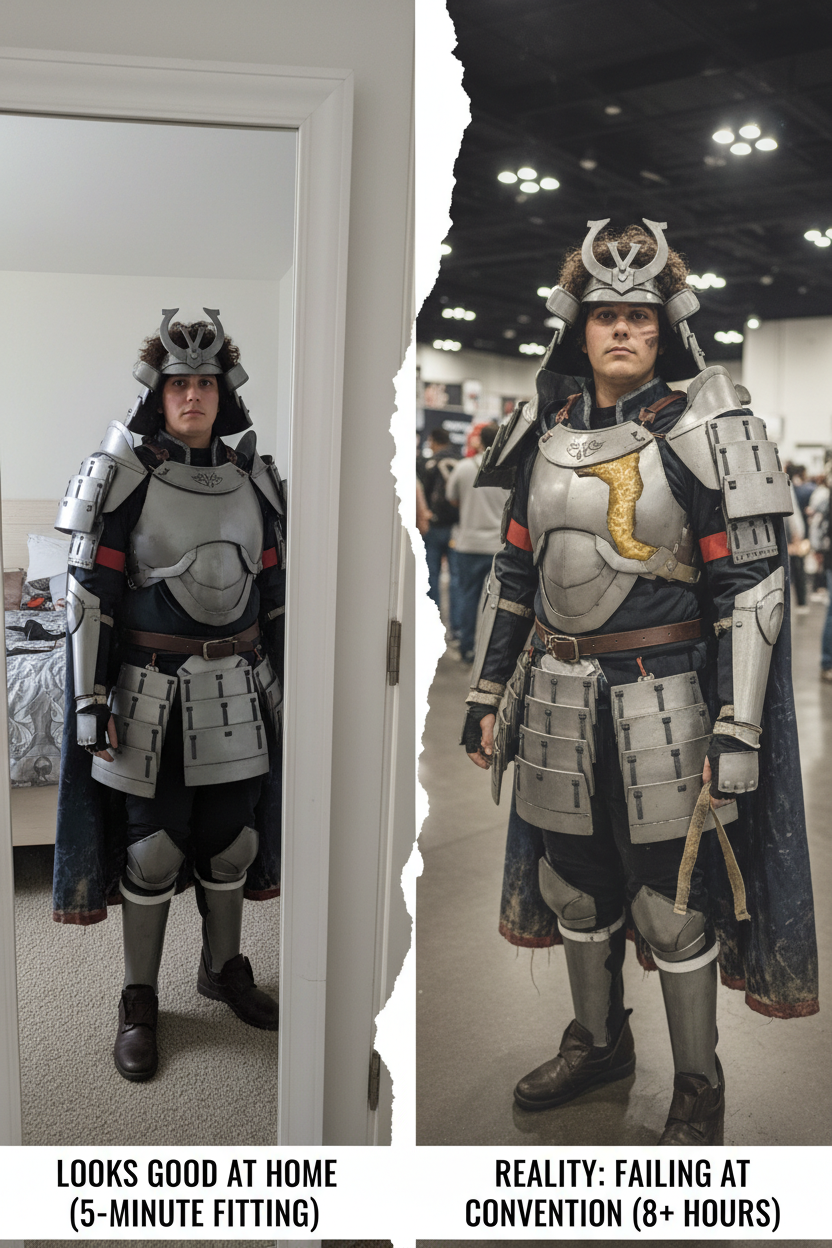
1. Costumes are built for photos, not for 8+ hours of continuous wear. Most cosplay construction happens in short sessions at home, tried on briefly to check fit and appearance. A full con day is a completely different environment — extended walking, sitting, posing, crowding through hallways, and repeated handling by excited fans all put stress on seams, adhesives, and joints that a costume was never actually tested against before showing up. <cite index="23-1">Heat, softened glue, ripped fabric, and pieces falling apart</cite> are common outcomes, especially at outdoor or summer events.
2. Adhesives and glued construction are more common — and more fragile — than people assume. A lot of cosplay prop and costume work relies on hot glue, contact cement, or spirit gum rather than stitched or mechanically fastened construction, because it's faster and more accessible for hobbyists. That trade-off works fine in a controlled environment, but heat, sweat, and repeated flexing are exactly the conditions that cause glued bonds to fail — which is why repair supplies at official stations lean so heavily toward adhesives specifically.
3. Conventions have realized repair support is now expected infrastructure, not a nice-to-have. This is the biggest structural shift behind the trend. Anime Expo runs a dedicated, staffed Cosplay Repair Center stocked with sewing supplies, wig styling tools, and multiple types of tape and glue, available free to all attendees for the full length of the event. San Diego Comic-Con stocks its masquerade contestant area with a comparable range of cosplay emergency supplies — <cite index="27-1">glues, glue guns, duct tape, fabric tape, sewing supplies, spirit gum, staplers, and hairspray</cite> — specifically so contestants can handle last-minute fixes before walking on stage. When major conventions build this into their official programming, it signals the community's expectation has shifted from "bring your own fix-it kit and hope for the best" to "repair support should exist as part of the event."
4. Community-driven repair culture is filling the gaps official stations can't cover. Not every convention has an official repair station, and even where one exists, it's usually centralized in one location — not much help if your costume fails on the far side of a massive convention floor. This is exactly the gap independent repair volunteers and booth operators are stepping into: <cite index="23-1">Bryan Mero, dressed as Fix-it Felix from Wreck-It Ralph, walks the SDCC floor with a backpack of supplies specifically to help fix other attendees' costumes on the spot</cite>, and costume professionals like Ontario-based Lindy Creswick run dedicated repair booths at multiple conventions, carrying an extensive range of glues, buttons, safety pins, and other small fix-it materials to handle whatever comes through the door. This decentralized, peer-support model has become a genuine part of convention culture in its own right — repair as community service, not just personal preparedness.
5. Elaborate, high-effort builds have raised the stakes of a mid-con failure. As cosplay craftsmanship has gotten more ambitious — more armor, more mixed materials, more months of build time invested — the cost of a costume failing partway through a con day has gone up too. A quick fix that used to be a minor inconvenience can now mean the difference between finishing a full day in a costume that took months to build, or having to retreat and change early. That raised stakes is a big part of why cosplay convention survival tips content increasingly treats repair prep as a top-tier priority, not an afterthought.
Key Elements & Typical Repair Scenarios
Understanding what actually goes wrong — and what fixes it — is the practical core of building your own kit. These are the failure points that come up constantly across official repair stations and independent repair volunteers alike.
Adhesive and Bonding Failures
Hot glue and contact cement bonds are the most common failure point in prop and armor construction, especially in warm venues or outdoor lines. Cosplay repair supplies worth carrying for this: a compact hot glue gun (battery-powered options exist for exactly this use case), super glue for small, fast bonds, and a roll of strong fabric or duct tape as a backup when a proper re-glue isn't practical mid-event.
Fabric Tears and Seam Failures
Fitted costumes under repeated movement stress can split at seams, especially anywhere that flexes with walking or posing. A basic sewing kit — needle, thread in a couple of neutral colors, small scissors, and safety pins for an instant hold when there's no time for actual stitching — covers the majority of fabric-related cosplay costume repair needs on the spot.
Wig and Hair Emergencies
Long or heavily styled wigs are prone to shifting, flattening, or losing their set over a long day. A small styling kit — bobby pins, a travel-size hairspray, and a wide-tooth comb — addresses most on-the-spot wig fixes, which is exactly why official repair stations like Anime Expo's stock wig-specific tools alongside general sewing and adhesive supplies.
Prop and Armor Structural Issues
Larger built pieces — armor panels, staffs, oversized props — are more likely to need a soldering iron or a more heavy-duty adhesive if an internal structural element fails rather than just a surface seam. This is a more advanced repair category, and it's worth packing accordingly if your costume includes this kind of construction — a simple sewing-and-tape kit won't help if a structural joint in a prop gives out.
Skin-Contact Emergencies
Spirit gum and other skin-safe adhesives (for elf ears, facial prosthetics, or other prosthetic pieces) can fail with sweat over a long day. Carrying a small amount of your specific adhesive, along with a gentle remover, is worth including if your costume relies on any prosthetic pieces — this is also one of the supplies official contestant repair areas specifically stock for exactly this reason.
Common Mistakes & Things to Watch Out For
Packing a kit but never testing any of it beforehand. A repair kit is only useful if you know how to actually use its contents under pressure. Test your hot glue gun, practice a quick emergency stitch, and know how your specific adhesives behave before you're relying on them mid-event with a line of people waiting on you to finish getting dressed.
Overpacking heavy, rarely-needed tools "just in case." A full soldering setup or heavy-duty tools make sense if your costume specifically includes complex electronics or structural metal work, but for most costumes, a compact kit focused on adhesives, tape, and basic sewing supplies covers the overwhelming majority of real-world failures without adding unnecessary weight to carry all day.
Assuming an official repair station will always be available and nearby. Not every convention runs one, and even when they do, it's typically in a single fixed location that might be a long walk from wherever your costume actually fails. Treat official repair stations as a backup for bigger fixes, not your primary plan — a compact personal kit covers you regardless of where on the convention floor something goes wrong.
Forgetting adhesive and product compatibility with your specific materials. Not every glue works well on every fabric or foam type, and using the wrong adhesive under pressure can make a repair worse rather than better. If your build uses specific materials (certain foams, particular fabric blends), it's worth knowing ahead of time which adhesives you've already tested successfully on those exact materials, rather than experimenting for the first time during an actual repair emergency.
Not asking for help when it's genuinely available. Independent repair volunteers and official stations exist specifically because this is a common, expected need — there's no reason to struggle alone with a bigger repair (a broken structural piece, a wig emergency you're not confident handling) when there's community support built into the event for exactly this situation.
Summary and Further Reading
The rise of the cosplay emergency kit reflects a simple reality: costumes built for photos are being worn for full convention days, and that mismatch is where most mid-event failures happen. Whether you're packing your own compact kit, relying on an official repair station, or getting help from an independent repair volunteer patrolling the floor, the underlying shift is the same — repair readiness has become a normal, expected part of convention prep rather than something only "serious" cosplayers think about in advance.
Related reading you might find useful next:
- A complete convention-day packing guide covering what else belongs in your bag beyond repair supplies
- A guide to fashion tape and wig tape for preventing wardrobe malfunctions before they start, rather than fixing them after
- A beginner's guide to durable prop and armor construction techniques that hold up to a full day of convention wear

Laisser un commentaire
Ce site est protégé par hCaptcha, et la Politique de confidentialité et les Conditions de service de hCaptcha s’appliquent.