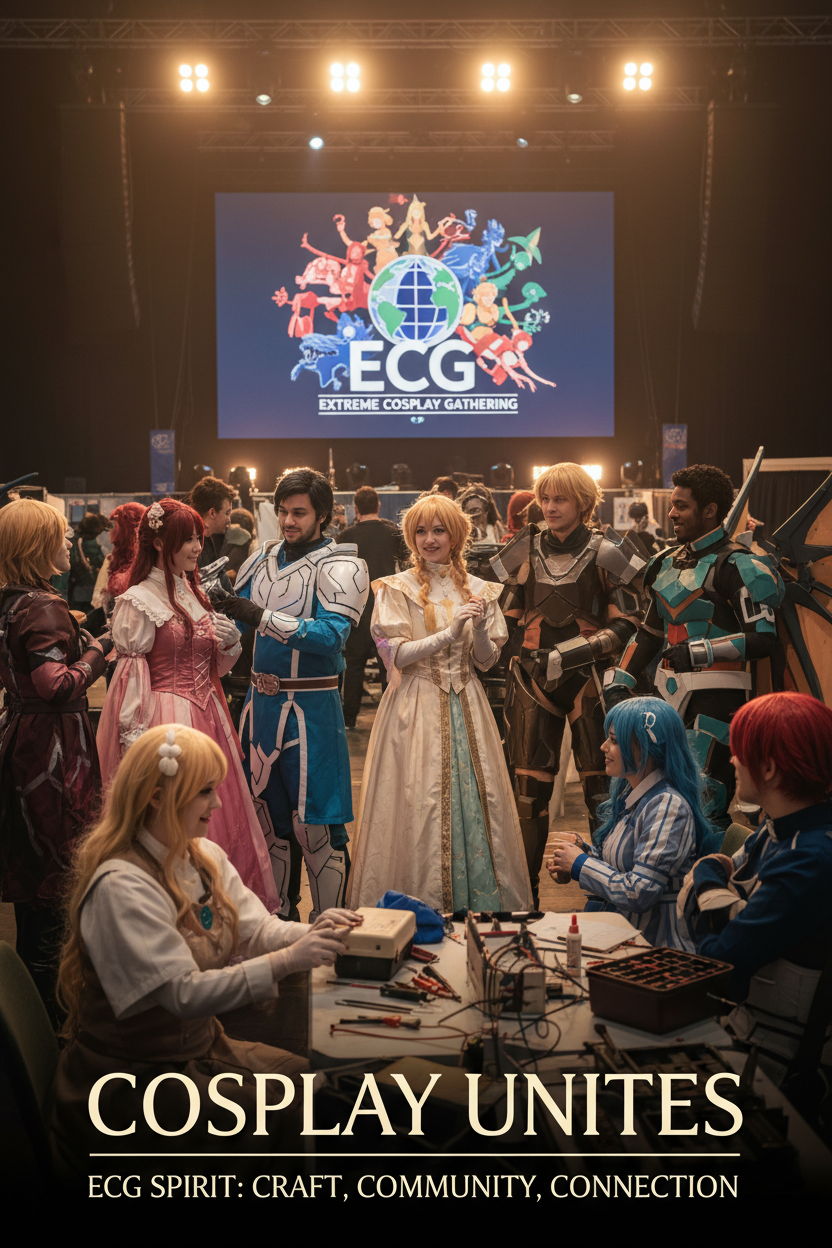
Major global competitions like the Extreme Cosplay Gathering (ECG) actively highlight social connection alongside stage excellence. The official ECG manifesto explicitly states that while it offers a massive international stage for elite makers, its core mission is enabling creators to "meet people sharing the same passion and to live one great experience".
This deliberate marketing shift redefines how organizers, competitors, and fans engage with the cosplay contest community.
Question 1: Why Are International Cosplay Contests Marketing Themselves Around Community Rather Than Pure Rivalry?
Direct Answer: Organizers frame international cosplay contests around community to protect event longevity and reduce competitive toxicity. Because subjective judging creates natural friction, positioning the stage as a social reunion ensures participants feel rewarded through networking, skill-sharing, and peer recognition regardless of final placements.
                    [ CONTEST VALUE SHIFT ]
                               │
     ┌─────────────────────────┴─────────────────────────┐
     ▼                                                   ▼
Legacy Rivalry Model                            Modern Community Model
- Winner-take-all mentality                     - Shared international stage
- High friction & judge scrutiny                - Cross-border skill exchange
- Post-contest isolation & burnout              - Lifelong greenroom network
High-stakes cosplay judging relies on subjective evaluations of craftsmanship accuracy and stage performance. When events market themselves strictly as cutthroat tournaments, unplaced competitors often leave feeling alienated.
By centering cosplay contest culture on mutual passion and international connection, organizers transform a potentially divisive contest into a celebratory cosplay community event. Participants measure success not by trophy placement, but by joining an exclusive international alumni network of fellow craftspeople.
Question 2: How Does Prioritizing Friendship Help Cosplayers Manage Competitive Stress?
Direct Answer: Competing internationally requires hundreds of hours of intense labor, high financial costs, and emotional fatigue. Reframing the competition as a social gathering shifts a cosplayer's mindset from a zero-sum performance to a shared celebratory experience, significantly lowering anxiety and post-contest burnout.
Preparing an award-worthy build often leads to severe "con-crunch" fatigue. When cosplayers view their peers strictly as rivals, the pressure to deliver flawless execution can trigger imposter syndrome and emotional distress.
-
Emotional Safety Nets: Entering a greenroom built around cosplay contests and friendship allows competitors to swap emergency repair tools, fix loose armor pieces for one another, and offer moral support before stepping under the spotlights.
-
Perspective Realignment: A community-first atmosphere reminds makers why cosplayers compete in the first place: to celebrate complex character builds alongside people who truly understand the technical labor involved.
Question 3: Why Do Backstage Friendships Outlast Contest Results?
Direct Answer: Contest placements fade, but backstage greenrooms foster intense, shared vulnerability among makers. Spending hours together behind the scenes creates lasting cosplay contest friendships rooted in mutual respect for the craft, leading to cross-border collaborations, skill swaps, and lifelong bonds far beyond the podium.
Trophies remain on display shelves, but real value in the cosplay competition community stems from human connection:
-
Shared Technical Vulnerability: Only another competitive armor or garment maker understands the exact frustration of a failed resin cast or a broken LED circuit at 3 AM.
-
Cross-Border Skill Exchanges: Backstage conversations routinely spark international pattern swaps, material sourcing tips, and travel housing arrangements for future overseas conventions.
-
Enduring Mentorships: Experienced international delegates frequently become mentors to emerging local builders, lifting the overall craftsmanship baseline of the entire cosplay convention community.
This focus on human connection mirrors broader shifts across fan culture—whether you are cheering from the front row using our Cosplay Spectator & Fan Guide or emotional processing the end of a build's lifecycle through our guide on Retiring a Cosplay with Purpose.
Question 4: How Does Community-First Framing Keep Event Ecosystems Sustainable?
Direct Answer: Events rely on recurring international talent and high spectator enthusiasm. By marketing solidarity over hostility, organizers build an inclusive cosplay competition social community where veteran makers return as mentors, judges, or workshop hosts, ensuring the event ecosystem remains welcoming to incoming generations.
A contest that produces bitter losers quickly suffers from declining participation numbers. Conversely, events that cultivate a supportive atmosphere create an organic pipeline of returning community leaders.
When spectators watch competitors cheering wildly for each other behind the curtains, it elevates the emotional impact of the entire showcase. The audience responds not just to impressive costume fabrication, but to the visible joy of international creators sharing a single stage.
Summary & Community Challenge
International cosplay competitions succeed when they serve as bridges rather than barriers. By elevating friendship alongside craftsmanship, the global community ensures that every hour spent in the workshop contributes to something far greater than a single weekend on stage.
What is the best friendship or connection you've made through cosplay? Drop your story in the comments below or tag us on social media—we'd love to feature your greenroom memories in our next community spotlight!
![Why Cosplayers Are Choosing Indie Pattern Makers Over Mass-Market Templates [2026 Edition]](http://www.cosplayreal.com/cdn/shop/articles/cover-why-cosplayers-choose-indie-pattern-makers-over-mass-market-templates.png?v=1788354783&width=832)

Laisser un commentaire
Ce site est protégé par hCaptcha, et la Politique de confidentialité et les Conditions de service de hCaptcha s’appliquent.