Table of Contents
-
Chapter 1: The Basics — Why Miku Cosplay Never Actually Goes Away
-
Chapter 2: Core Strategy — Choosing Your Version and Planning the Twin-Tail Build
Chapter 1: The Basics — Why Miku Cosplay Never Actually Goes Away
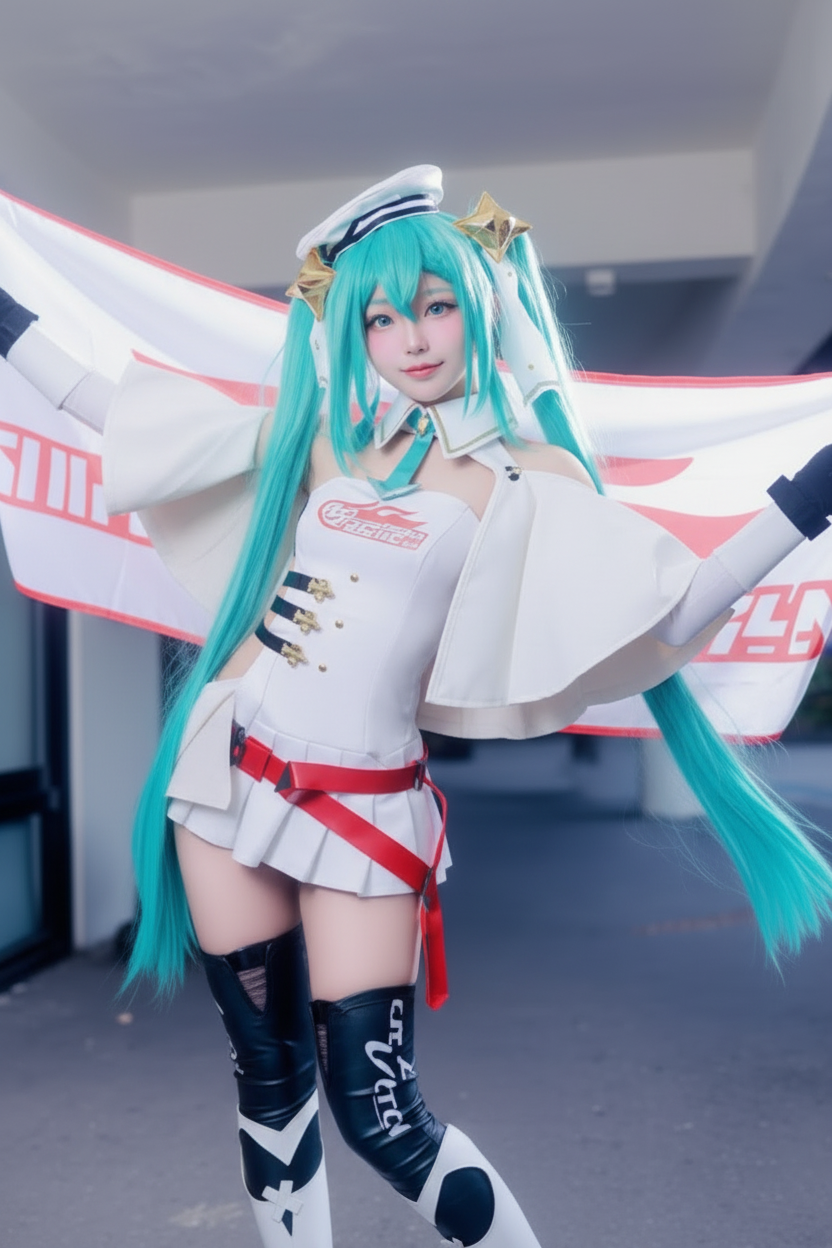
Most cosplay trends have a lifecycle — a spike around a release, a slow fade, occasional revivals. Hatsune Miku doesn't really follow that pattern. Under #miku, content has stayed consistently high-volume for years, and Racing Miku specifically — the leather-clad, motorsport-styled version of the character — continues to rack up views in the hundreds of millions across pose-and-twirl videos built around her signature ultra-long twin tails. Understanding why this character has this kind of staying power is useful before you commit to a build, because it tells you this isn't a trend you need to rush to catch — it's a long-term content category worth investing in properly.
-
Miku isn't tied to a single show, game, or season. Unlike most anime or game characters whose cosplay popularity rises and falls with a specific release cycle, Miku exists across music, games, merchandise, and motorsport branding simultaneously. That means there's no single "moment" her cosplay trend is riding — it's sustained by a constantly refreshing stream of new songs, new Racing Miku liveries each season, and new community content, which is exactly why search interest and TikTok engagement around her stay elevated year-round rather than spiking and crashing.
-
The twin tails are, by themselves, one of the most recognizable silhouettes in all of cosplay. Miku's teal twin tails — especially at the character's signature exaggerated length — are identifiable from a distance, in a blurry photo, or in a two-second video clip, which is precisely the kind of instant-recognition quality that performs well on short-form video. A huge percentage of Miku cosplay content leans directly into this: slow-motion twirls, hair flips, and pose sequences specifically designed to show the twin tails in motion.
-
Racing Miku adds a genuinely different aesthetic layer to the character. Where classic Miku's look is soft, digital, and idol-adjacent, Racing Miku pulls from real motorsport fashion — leather racing suits, metallic panel accents, livery-style color blocking. This gives cosplayers two very different creative directions under the same recognizable character, which is part of why Racing Miku specifically has become such a durable sub-trend: it appeals to cosplayers who want Miku's instant recognizability but a bolder, more structured aesthetic than the classic look offers.
-
The community's technical challenges keep the topic active in forums, not just social feeds. r/Vocaloid and r/CosplayHelp both see a steady, recurring stream of posts specifically about managing 120cm clip-in ponytails — how to stop them from sagging, how to prevent scalp pain from the weight, how to keep them from visibly separating from your natural hairline. This is a genuinely difficult technical problem, and difficult technical problems generate exactly the kind of long-running discussion threads that keep a topic active in community spaces long after a typical trend would have gone quiet.
The practical takeaway: Miku cosplay, and Racing Miku specifically, rewards long-term investment in doing the hair build properly, since this is content you can realistically keep producing and refining indefinitely, rather than a one-time build tied to a fading trend.
Chapter 2: Core Strategy — Choosing Your Version and Planning the Twin-Tail Build
Before buying anything, decide which version of Miku you're building, because it changes both your costume sourcing and your wig priorities.
Classic Miku vs. Racing Miku: Which Fits Your Goals?
Classic Miku's outfit is simpler to source and construct — a fitted top, short skirt, and simpler accessories, all in her signature teal-and-black-and-grey palette. It's the lower-cost, lower-prep-time entry point, and it's a reasonable choice if this is your first Miku build or if you want to prioritize spending on the wig over the outfit.
Racing Miku's outfit is more involved: a structured leather-style racing suit with metallic panel accents and livery-inspired color blocking that changes design slightly from year to year based on the character's real-world motorsport branding. This version costs more and takes longer to put together well, but it delivers a noticeably different, higher-impact aesthetic that stands out more in a crowd of Miku cosplayers at any given event — worth considering if you want your build to feel distinct even within a fandom where a huge number of people are cosplaying the same character.
If you're building either version, sourcing a full Hatsune Miku Cosplay Costumes set — rather than trying to piece together the racing suit's specific metallic and leather-paneled elements from generic pieces — saves significant time and gets the proportions and color-blocking right without needing custom tailoring, which matters more for Racing Miku's structured silhouette than it would for a simpler outfit.
Planning the Twin-Tail Build Before You Buy the Wig
This is the decision that determines almost everything else about your build's comfort and success: how are you actually going to achieve Miku's signature ultra-long twin tails, and how much length are you realistically prepared to manage for a full day?
The two general approaches are a single integrated long wig styled into twin tails, or a shorter base wig with separate clip-in ponytail extensions added on top. Full integrated wigs give you a more seamless base-to-tip color match and generally distribute weight a bit more evenly across the head, but they're bulkier to transport and can be harder to style precisely. Clip-in extensions on a shorter base wig are more modular — easier to pack, and you can remove the ponytails when you're not actively posing for photos — but they concentrate more weight at the attachment points, which is exactly the scalp-pull and sagging problem that dominates the Reddit threads mentioned in Chapter 1.
Neither approach is objectively better; the right choice depends on how long you'll actually be wearing the full 120cm length versus how much of your con day you'll spend with it attached only for specific photos. We'll cover the actual weight-management techniques for both approaches in Chapter 3.
Chapter 3: Advanced Techniques — Ponytail Weight Balance, Racing Leathers & Color Matching Under Con Lighting
Solving the 120cm Weight and Sagging Problem
At 120cm, a twin-tail wig or clip-in ponytail set carries genuinely significant weight, and that weight is the root cause of nearly every complaint in the community about this build — sagging over the course of a day, visible pulling at the scalp, and ponytails that start drooping out of their original shape by the afternoon.
The fix isn't a single trick, it's a combination of three things working together. First, weight distribution at the attachment point: rather than clipping the full ponytail weight onto a single small section of hair or wig cap, spreading the clips across a wider base area distributes the pull across more surface area instead of concentrating it on one stress point — this alone significantly reduces both sagging and scalp discomfort. Second, a secure, well-fitted wig cap underneath is non-negotiable at this length; a loose or poorly fitted cap allows the whole ponytail structure to shift and droop as the day goes on, no matter how well the clips themselves were placed. Third, sectioning the ponytail internally — essentially building in a hidden support structure by securing the hair in stages rather than as one long continuous section — helps the tail hold its shape and bounce correctly rather than going limp under its own length and weight by midday.
For the final polish, work from root to tip in small sections when brushing out a long twin tail, rather than dragging a brush through the full length at once — this reduces the shedding and tangling that heavy, extended-length synthetic hair is prone to, and it keeps the tail looking full rather than thin and stringy by the end of a long event.
Building Racing Miku's Leather-and-Metallic Look
Racing Miku's suit relies on the contrast between matte leather-style panels and reflective metallic accents to read as motorsport-inspired rather than generic sci-fi. Getting that contrast right matters more than chasing an exact stitching or seam match to any specific year's livery design — the overall color-blocking and material contrast is what most viewers actually register.
If you're adding or touching up metallic accent pieces yourself, a semi-gloss or true metallic-finish paint reads far more convincingly under bright convention lighting than a flat or satin finish, which can look dull and plasticky in photos even if the color is technically correct. Keep panel edges clean and well-defined rather than blended, since Racing Miku's design language is built on crisp geometric color separation, not soft gradients.
Getting Miku's Teal Right Under Different Convention Lighting
Miku's signature teal can shift noticeably in appearance depending on lighting — warm indoor convention hall lighting can pull a true teal toward green, while cooler LED or daylight-balanced lighting can push the same wig toward a more blue-leaning cyan. This is worth testing before your event rather than discovering it in photos afterward: take a few test shots of your wig under different light sources (a warm indoor lamp, daylight near a window, and if possible the kind of overhead lighting typical of convention centers) to see how the color actually reads across the conditions you're likely to be photographed in.
If you know your event venue leans toward warmer lighting, a slightly cooler-toned teal wig will generally photograph closer to the "true" reference color than a warmer teal will, since the venue lighting itself is already pulling the tone warm.
Chapter 4: Essential Tools & Resources
The wig is where your budget should concentrate. Between the outfit and the hair, the twin-tail wig is doing more of this character's recognizability work and is also the piece most prone to real-world wear issues (sagging, tangling, color shift) if you buy a lower-quality option. A properly built Teal Long Twin Tail Wigs option — designed with the length and weight distribution in mind rather than a generic long wig — is worth the investment specifically because so much of this build's success depends on the wig holding its shape and color accurately across a full event.
Basic toolkit for a 120cm twin-tail build:
-
A secure, well-fitted wig cap sized correctly for your head (not a generic one-size-fits-all option, if avoidable)
-
Wide-set wig clips or combs for distributing ponytail weight across a broader base area
-
A wide-tooth comb for sectioned, root-to-tip brushing on extended lengths
-
Anti-tangle wig spray, especially important for hair this long and heavy
-
Semi-gloss metallic paint and a fine detail brush, if touching up Racing Miku's accent panels yourself
Aftercare matters more for this build than most. Because 120cm wigs represent a significant investment and see repeated heavy use if you're building this character more than once (which, given how evergreen Miku cosplay is, is likely), proper storage on a wide-based wig stand between events — rather than folding or compressing the length into a drawer — will meaningfully extend how long the wig holds its shape and color before needing replacement.
FAQ
Should I choose an integrated long wig or clip-in ponytail extensions? If you'll be wearing the full length for most of your event, an integrated wig generally distributes weight more evenly across a full day. If you only need the dramatic length for specific photos and want the option to remove it between shots for comfort, clip-in extensions on a shorter base wig offer more flexibility, provided you follow proper weight-distribution technique to avoid scalp strain.
How do I stop my ponytails from sagging by the afternoon? Spread the attachment weight across a wider base area rather than one concentrated point, use a secure well-fitted wig cap underneath, and section the ponytail's internal structure in stages rather than as a single continuous length. All three together address the sagging problem far more effectively than any one fix alone.
Is Racing Miku significantly more expensive to build than classic Miku? Generally yes — the structured leather-style suit and metallic accent work cost more and take longer to source or construct than classic Miku's simpler outfit. If budget is a bigger constraint than achieving a standout look, classic Miku is the more economical starting point.
How do I know what shade of teal will actually photograph correctly at my event? Test your wig under a few different light sources before committing — warm indoor lighting pulls teal toward green, while cooler lighting pushes it toward blue-cyan. If you know your venue leans warm, choose a slightly cooler-toned wig to compensate.
Is this a good first-time cosplay, or should I have prior experience? Classic Miku with a shorter, more manageable wig length is genuinely approachable for a first build. The full 120cm twin-tail treatment and Racing Miku's structured suit are both more rewarding once you've got at least one prior build's worth of wig-handling and costume-sourcing experience behind you.
Summary & Related Reading
Miku cosplay — and Racing Miku in particular — rewards long-term investment rather than a rushed, one-time build, since this is a character whose popularity doesn't fade with a season. The core technical challenge across every version of this build is the same: managing significant hair length and weight without sagging or scalp discomfort, which comes down to proper weight distribution, a secure wig cap, and internally sectioned styling rather than any single shortcut. Racing Miku adds a rewarding but more involved layer on top with its leather-and-metallic motorsport aesthetic, while classic Miku remains the more accessible entry point for a first attempt.
Suggested further reading:

Laisser un commentaire
Ce site est protégé par hCaptcha, et la Politique de confidentialité et les Conditions de service de hCaptcha s’appliquent.