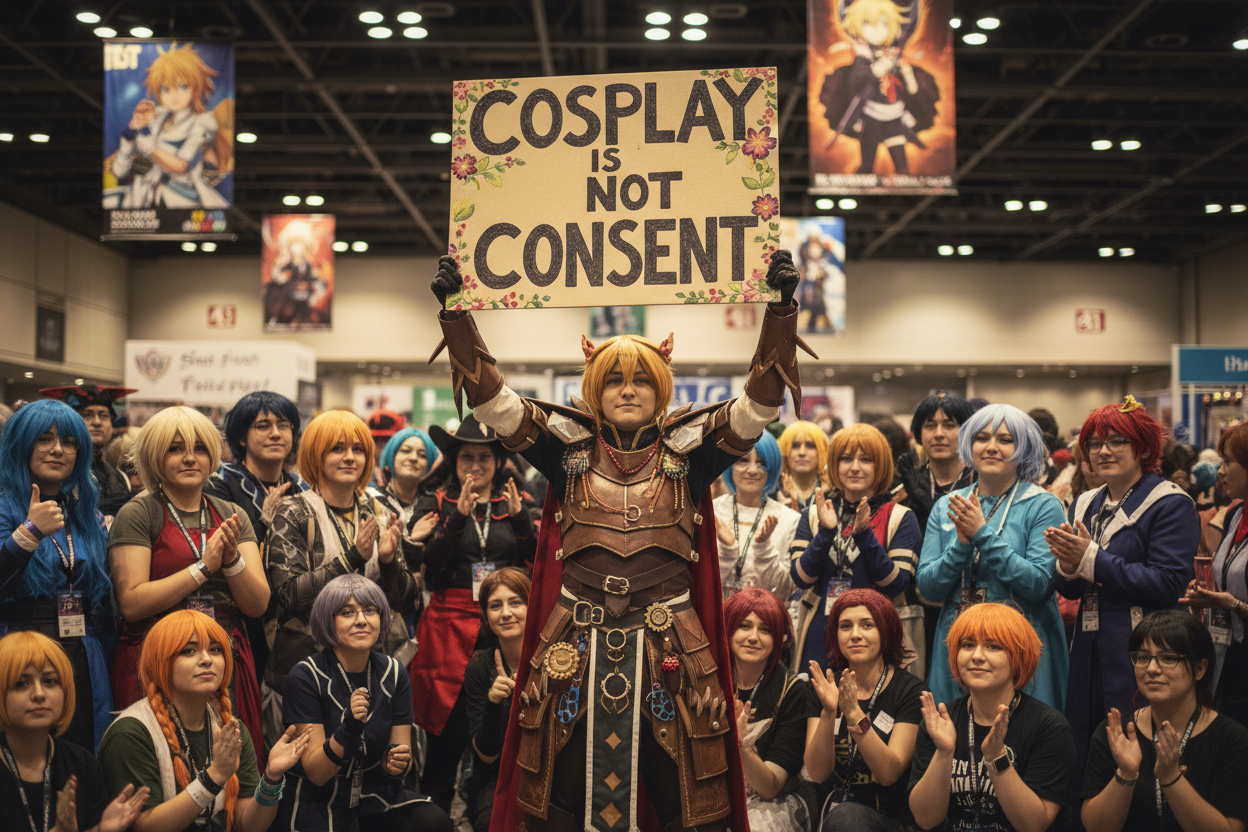
In early 2026, the cosplay community found itself at the center of a very different kind of controversy — not about costume accuracy or convention drama, but about consent, AI, and image manipulation.
After X's built-in AI tool, Grok, was repeatedly used to alter cosplay photos without permission — swapping outfits, "removing" clothing, or generating sexualized versions of photos originally posted by cosplayers — creators began speaking out publicly. Reports connected specific cosplayers, including Amatsu Pukupu and Rexxv, who found their convention photos edited and shared without consent, and by January 2026 the backlash had spread far beyond a single platform.
It fed a wave of account migrations to Bluesky and Instagram, and it revived an older rallying phrase, "cosplay is not consent," under a fresh hashtag. For anyone who follows or supports the cosplay community — whether you're a cosplayer, a fan, or simply someone shopping for a costume online — this moment raised real questions about authenticity, safety, and who you can trust. Below, we break down the three questions people are asking most.
Question 1: What's the actual difference between real cosplay and AI cosplay, and why did #CosplayIsNotConsent take off?
Direct answer: Real cosplay is the product of a person's own labor — sewing, prop-building, makeup, and a live photoshoot — while AI cosplay refers to computer-generated or AI-altered images, often created without the subject's knowledge or consent, which is exactly why the backlash spread so quickly.
The distinction matters more than it might seem at first glance. A finished cosplay photo usually represents dozens of hours of work: pattern drafting, fabric selection, wig styling, armor building, and repeated photo sessions to get a pose or expression right. That labor is inseparable from the final image — it's a record of a real person's craftsmanship and likeness.
AI-altered "cosplay" content is a different thing entirely. Instead of building something new, the controversy centered on tools that took existing, already-published cosplay photos and modified them — changing outfits, generating skin-baring edits, or producing sexualized variations — without asking the original creator. According to reporting from January 2026, some cosplayers discovered their event photos had been submitted to Grok by other users with prompts asking the AI to alter their clothing, and in at least one documented case, the tool complied and generated the edited image directly in a public reply.
When cosplayers reported this behavior, platform moderation was inconsistent, and some were told the edits didn't violate site policy. That response — more than the technology itself — is what pushed the story into "movement" territory. The core objection was never that AI editing tools exist; it's that publishing a photo publicly is not blanket permission for anyone to manipulate someone's image or body without asking first. That's the whole meaning packed into "consent" in #CosplayIsNotConsent: a cosplayer choosing to share a photo of their own creative work does not equal consent for that image to be altered, sexualized, or redistributed by someone else.
The fallout was fast — multiple countries opened investigations or temporarily restricted access to the AI tool over nonconsensual sexualized image generation, and xAI itself acknowledged the issue and moved to restrict the image-editing feature to paid accounts shortly after. On the community side, several well-known cosplayers pulled their archives from X or watermarked new posts heavily, and interest in alternative platforms like Bluesky spiked noticeably in the same window. Understanding this backdrop is useful even if you're not on X — it's shaped how a lot of cosplayers now think about publishing their work at all, and it's part of why "authenticity" and "trust" have become bigger buying signals in the cosplay costume market, not just in social feeds.
Question 2: How can you tell if a cosplay costume is authentically made with quality fabric, versus a cheap knockoff?
Direct answer: Check for specific, named fabric types (not vague terms like "premium material"), close attention to a character's actual costume details, and real, unedited try-on photos from the seller — all three together are a strong signal of genuine craftsmanship.
This question has become more relevant precisely because trust in "what you see online" took a hit during the AI editing controversy. Once fans got used to questioning whether an image had been altered, many started applying the same scrutiny to product photos in cosplay stores — and for good reason, since costume listings are just as easy to misrepresent as any other image.
-
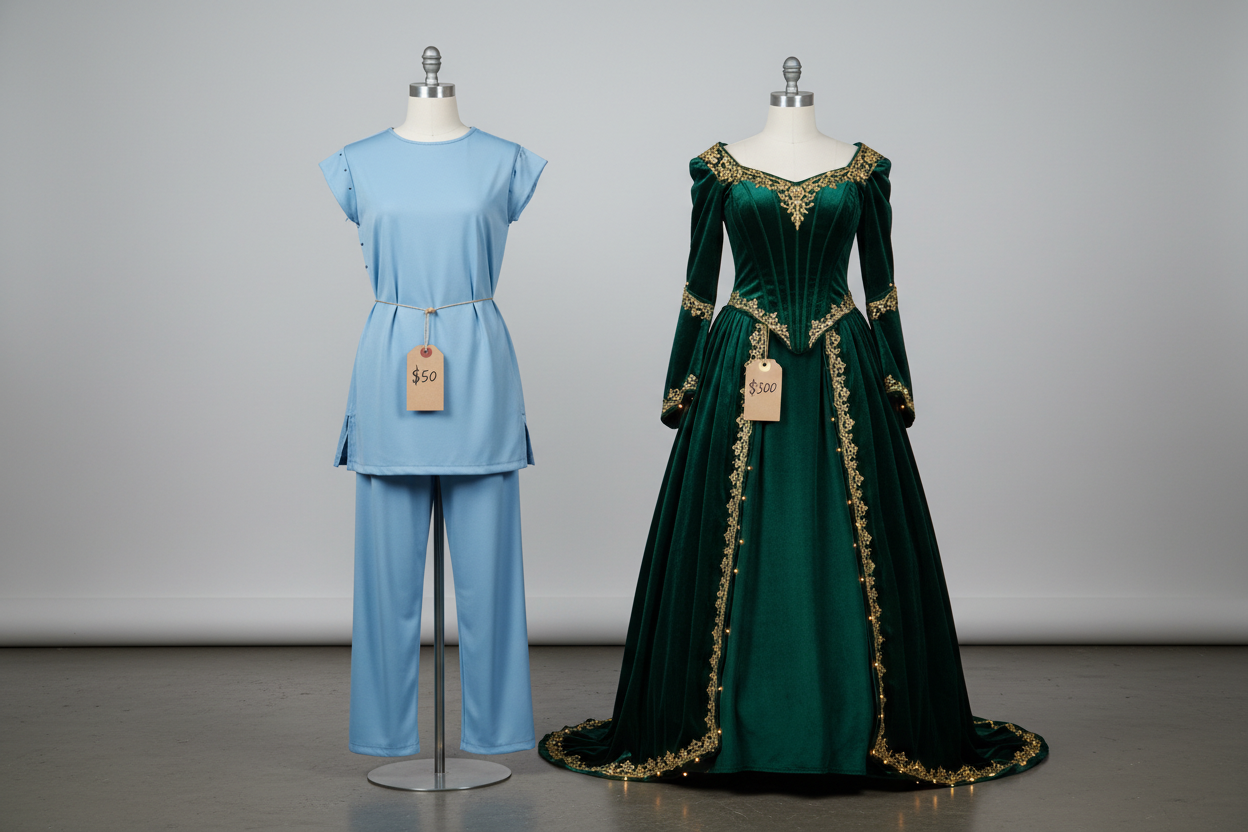
Check the fabric description: When you're evaluating authentic anime cosplay costumes, start with the fabric description. A seller who genuinely understands construction will specify things like stretch spandex, brushed velvet, faux leather (PU), or a particular sheen finish appropriate to the character — not a generic "high-quality material" claim with no further detail. Vague fabric language is often a sign the seller is reselling a template listing without knowing (or caring) what's actually in the package. Cheaper alternatives frequently substitute low-grade polyester blends that look stiff on camera, wrinkle immediately, and sometimes carry a noticeable chemical smell out of the bag — none of which shows up in a stock photo.
-
Look closely at construction details: Examine seam placement, the accuracy of trims, embroidery clarity, and how closely proportions match official reference art. A costume built by someone who actually studied the source material will get small details right — buckle placement, layered fabric panels, correct color-blocking — where a rushed knockoff will approximate the silhouette and skip the rest.
-
Verify real product photography: The most reliable signal is whether the seller shows real, unedited try-on photos alongside close-up shots of stitching, zippers, and fabric texture. A store that only shows polished, professionally lit promotional renders — with no unretouched detail shots — is much harder to verify, and that gap is exactly the kind of thing that gets exposed once a costume arrives.
Making a habit of checking these three things before buying doesn't just protect your wallet; it's a small way of supporting sellers who are investing real time into getting a costume right, at a moment when the cosplay community is paying closer attention than ever to what's real versus what's been dressed up for a listing photo.
Question 3: Where can you shop safely for cosplay costumes and support brands that actually respect the community?
In the aftermath of the AI editing controversy, both cosplayers and fans have become noticeably more selective about who they support — not just in terms of quality, but in terms of whether a brand treats the community with basic respect.
When you're looking for ethical cosplay brands, prioritize sellers who are transparent about their design process:
-
Do they credit the source material and reference art they're working from?
-
Do they show behind-the-scenes production (fabric cutting, sample fittings, pattern-making)?
-
Do they credit photographers or models rather than reusing cosplayer images without permission?
Brands that treat their community as collaborators — responding to feedback, crediting creators whose work inspired a design, running sizing consultations — tend to be the same ones investing real effort into the product itself, not just the marketing photos.
On the purchasing side, stick to safe cosplay costume websites that offer clear return and exchange policies, visible and verifiable customer reviews (ideally with photos), and transparent sizing charts rather than one-size assumptions. Avoid ordering through unlabeled ad links or DMs on social platforms, which typically skip basic consumer protections entirely and make it far harder to resolve a sizing issue, a damaged shipment, or a payment dispute if something goes wrong. It's a similar principle to what drove the #CosplayIsNotConsent backlash in the first place: the demand for accountability, transparency, and respect for the people — creators, cosplayers, and customers alike — behind the content and the product.
Conclusion
Taken together, this moment is really about the same underlying idea showing up in two different places: content and commerce. Whether it's someone's photo being altered without permission, or a costume listing that doesn't match what actually ships, the common thread is a breakdown in trust between creators and the people consuming their work.
If you want to go deeper on this topic, related reads worth checking out include [how cosplayers are navigating the shift to platforms like Bluesky, a breakdown of cosplay image rights and what "consent" actually covers legally, and a practical guide to spotting bootleg costumes before you order.

Laisser un commentaire
Ce site est protégé par hCaptcha, et la Politique de confidentialité et les Conditions de service de hCaptcha s’appliquent.