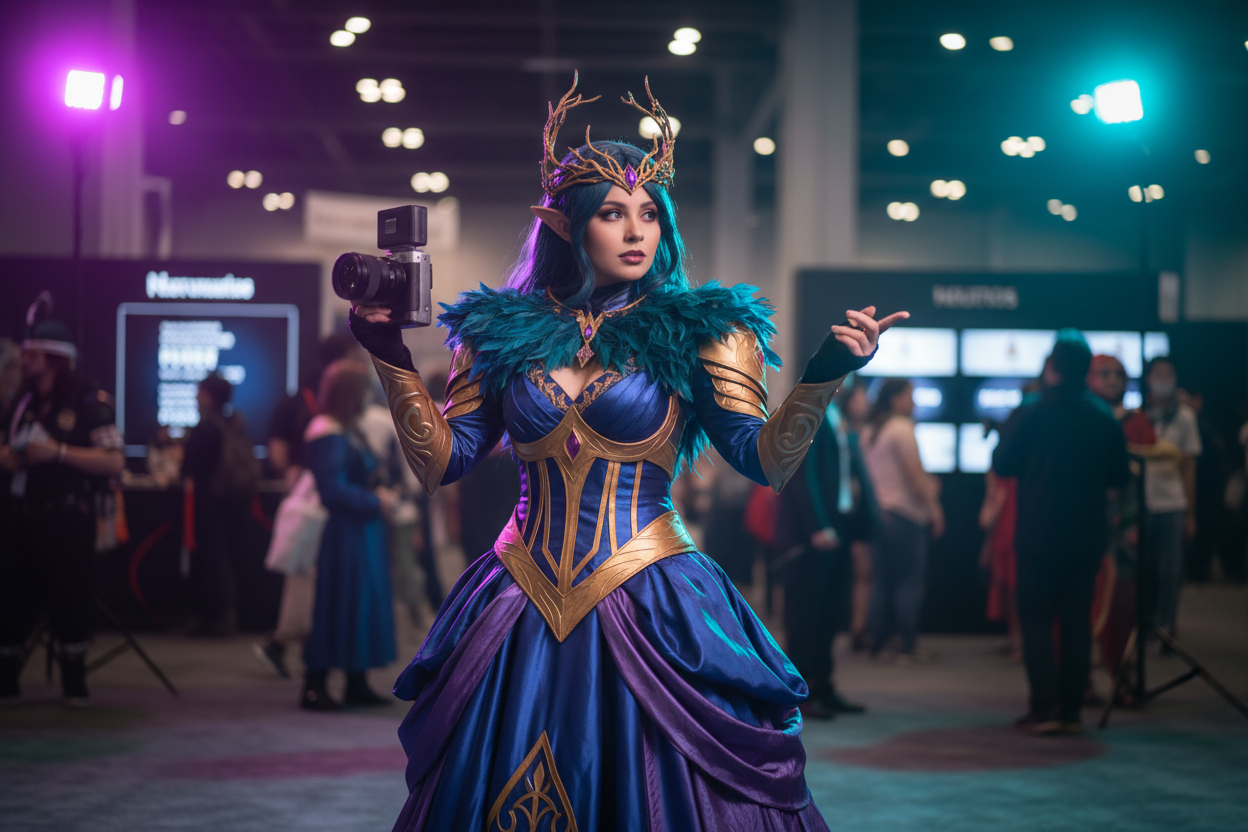
Introduction
At CosplayReal, we track cosplay trends closely enough to notice when a shopping pattern actually changes — and 2026's cosplay creator economy data shows a genuine shift, not just a marketing buzzword. Industry analysis tracking creator income found that individual cosplay creators were pulling in an estimated $903 to $1,236 in a single month as of December 2025, with projected annual earnings between $10,830 and $14,838 for established creators — real, sustainable income, not incidental side money.
More telling than the dollar figures is the shift in why people are buying: the purchase trigger has moved from "I want this product" to "I want what this creator is wearing." In this guide, we'll break down what's actually driving that shift and what it means for how you should be choosing your own cosplay costume — including how we think about it here at CosplayReal.
The Data Behind the Shift
The scale of what's changed is easy to underestimate if you're not looking at the numbers directly.
-
Platform Scale: Instagram alone surpassed 2.6 billion active users in 2026, a 10% increase from the prior year, with users spending roughly 30 to 33 minutes daily on the platform — much of it watching Reels, where cosplay transformation content performs especially well.
-
Creator Reach: On the creator side, the income data backs up how real this economy has become. One Japanese cosplay-focused YouTube channel logged over 19,000 views in a single month, while another creator's channel pulled in 8.65 million views in just the 30 days leading into June 2026 — numbers that translate directly into monetization, brand partnership value, and purchasing influence over their audience.
That last point is the one that matters most for how shoppers actually behave now. TikTok's short-form format has turned the process of cosplay — makeup application, wig styling, character transformation — into as much of a draw as the finished costume itself. For viewers, watching that process doesn't just entertain; it builds specific purchase intent tied to that creator's exact choices, not a generic product category.
Why "I Want What They're Wearing" Beats "I Want This Product"
This shift matters because it changes what actually earns trust in cosplay shopping. A product listing can describe fabric weight and sizing accurately and still fail to convert, if it's competing against a creator someone already follows and trusts showing the exact same category of costume in use — mid-build, at a convention, dancing, laughing at their own mistakes. The product claim is information; the creator's use of it is proof.
This is exactly why we built CosplayReal around tracking what real creators are actually building and wearing, rather than just cataloging character options in isolation. When we flag a character or costume style as trending — the way we've tracked Arlecchino cosplay picks's rise as a top 2026 pick, or the growing wave of Wuthering Waves cosplay at events like DoKomi — that assessment is grounded in what's actually circulating in creator content, not just what a product page claims should be popular.
The Creator Economy at a Glance
| Factor | What the Data Shows | Why It Matters for Shoppers |
| Creator Monthly Income | Estimated $903–$1,236 (Dec 2025), with established creators projecting $10,830–$14,838 annually | Signals a mature, sustainable creator ecosystem, not a passing fad |
| Platform Reach | Instagram at 2.6B+ active users (10% YoY growth); channels reaching millions of monthly views | Creator content now reaches audiences at genuine scale, not niche corners of the internet |
| Purchase Psychology | Shift from "I want this product" to "I want what this creator is wearing" | Trust in a specific creator's judgment now outweighs generic product claims |
| Content Format | Short-form transformation and build-process videos outperform static product photos | The process of using a product has become as persuasive as the finished result |
What This Means If You're Choosing a Costume Right Now
-
Look for costumes with visible creator traction, not just accurate specs. A costume that multiple creators are actively building and posting about is a stronger signal of real-world fit, comfort, and construction quality than specs alone can tell you — creators surface problems (sizing issues, fabric that doesn't hold up to movement) faster than review sections typically do.
-
Follow the process content, not just the finished photos. Transformation and build-process videos tend to reveal more honest information about a costume — how it actually goes on, how long styling takes, what needs adjustment — than a single polished final photo ever will. This is why we rely on real, self-taken showroom photographs across all our listings, ensuring you see the unedited fabric drape and stitch work before buying.
-
Treat creator recommendations as a starting point, not a replacement for your own research. The shift toward creator-driven purchasing is powerful specifically because trust is doing real work, but that trust is still worth verifying against your own sizing, budget, and event needs before you buy. Check our clear product sizing and layout options to find the ideal fit.

Frequently Asked Questions
Is the cosplay creator economy really generating meaningful income, or is this exaggerated?
The available data suggests genuine, trackable income — creators reporting consistent monthly earnings in the four-figure range, with some channels reaching millions of monthly views, indicates a mature economy rather than isolated viral outliers.
Why does creator-driven purchasing outperform traditional product marketing in cosplay specifically?
Cosplay is an unusually hands-on hobby — fit, comfort, and construction quality matter enormously, and creators surface those real-world details through process content in a way static product listings typically can't.
Should I only buy costumes that creators are actively featuring?
Not exclusively — creator traction is a strong signal worth weighing, but it should complement your own research into sizing, budget, and what actually fits your event, not replace it entirely.
How does CosplayReal factor creator activity into what it covers?
We track what's actually circulating in creator content — build videos, convention appearances, transformation posts — as one of our core signals for what's genuinely trending, rather than relying only on official release calendars or marketing claims.
Is this trend specific to TikTok, or does it show up across platforms?
It spans platforms — Instagram's scale and engagement time support it, TikTok's short-form format accelerates it, and YouTube's longer-form build content reinforces the same creator-trust dynamic in a different format.
Conclusion
Choosing a cosplay costume in 2026 increasingly means factoring in something that didn't used to matter as much: who's actually wearing it, and how they're wearing it. The data on creator income and platform reach shows this isn't a passing shift — it's a mature, sustainable dynamic reshaping how trust gets built in cosplay shopping. At CosplayReal, that's exactly why we anchor our trend coverage in what real creators are building and wearing, not just what a product description claims. If you're ready to build your own costume with that same creator-informed confidence, explore our trending creator-inspired costume collection below before you order.



Laisser un commentaire
Ce site est protégé par hCaptcha, et la Politique de confidentialité et les Conditions de service de hCaptcha s’appliquent.