TL;DR & Quick Overview
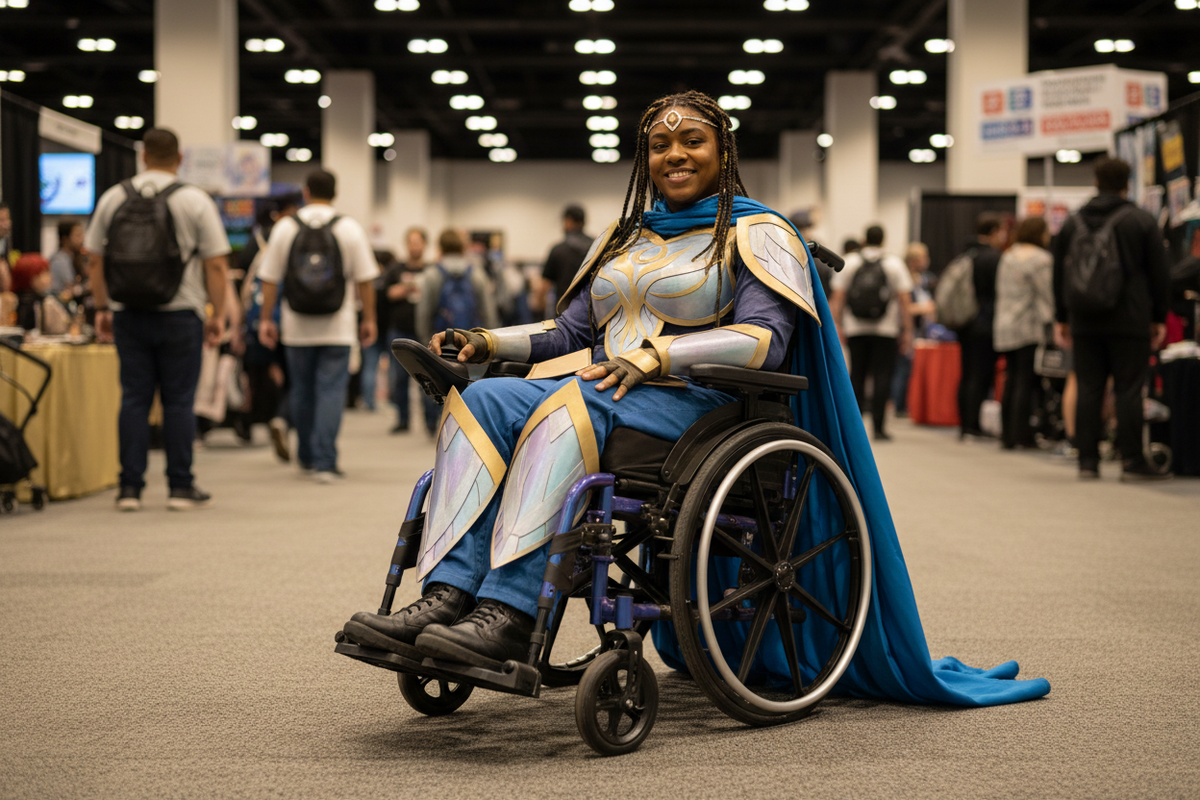
Adaptive cosplay is the practice of modifying costumes, props, and mobility devices—such as wheelchairs, crutches, walkers, or sensory equipment—to make cosplaying fully accessible, comfortable, and empowering for disabled creators. By utilizing seated-fit tailoring, magnetic closures, and lightweight EVA foam rigs to turn mobility aids into integrated character elements (like mecha suits, flying chariots, or royal thrones), adaptive cosplay design elevates disability representation in cosplay without compromising artistic vision or character accuracy.
Deep Analysis: Overcoming Ableist Assumptions in Cosplay
In 2026, the global cosplay movement reached an unprecedented cultural turning point. Driven by grassroots creator advocacy, social platforms have witnessed explosive growth in inclusive content—with hashtags like #wheelchair-cosplay accumulating over 2.8 million posts. What was once considered an afterthought in costume construction is now recognized as one of the most emotionally resonant and innovative subcultures within the community.
Confronting Ableist Assumptions
For years, disabled cosplayers faced invasive or dismissive questioning from able-bodied onlookers asking, "How do you build props around a wheelchair?" or "Isn't the mobility aid breaking character accuracy?"
The resounding response from the adaptive community is clear: Check your ableist assumptions first.
A wheelchair, cane, or prosthetic is not an obstacle to a costume—it is an extension of the artist's canvas. In adaptive cosplay, mobility equipment is seamlessly woven into the lore of the build, transforming standard props into jaw-dropping mechanical marvels, sci-fi cockpits, and fantasy mounts.
┌──────────────────────────────────────────────────────────┐
│              THE ADAPTIVE DESIGN PHILOSOPHY              │
├──────────────────────────────────────────────────────────┤
│ Standard Cosplay:  [Costume] ──► Fitted to Standing Body │
│ Adaptive Cosplay:  [Costume + Mobility Aid] ──► Integrated│
│                    Seated Ergonomics + Accessible Design │
└──────────────────────────────────────────────────────────┘
The Emotional Reality of Creator Triumph
The rise of disability representation in cosplay comes with intense personal dedication. Real creator stories illuminate both the triumph and physical strain of competition culture:
"This was my very first time entering a cosplay competition, and I honestly couldn't believe I won! To build this rig, I pushed my body so hard during crunch week—I'm in pain today, but standing—and sitting—on that stage as my authentic self was worth every second."
This raw, first-person perspective highlights why accessible cosplay matters. It is about creating space where creators do not have to hide their physical reality or medical needs to be celebrated as elite makers. Major brands and mobility equipment manufacturers have taken notice as well, releasing official seasonal guides showing users how to integrate power chairs directly into pop-culture builds.
Key Elements & Practical Application Scenarios
Executing a successful adaptive cosplay design requires balancing aesthetic impact, structural safety, and physical comfort. Below are the primary application scenarios and design strategies used by veteran creators.
                    ┌─────────────────────────┐
                    │ ADAPTIVE DESIGN PILLARS │
                    └────────────┬────────────┘
                                 │
        ┌────────────────────────┼────────────────────────┐
        ▼                        ▼                        ▼
┌──────────────┐         ┌──────────────┐         ┌──────────────┐
│  MOBILITY    │         │  SEATED-FIT  │         │   SENSORY    │
│ INTEGRATION  │         │  TAILORING   │         │ MODIFICATIONS│
└──────────────┘         └──────────────┘         └──────────────┘
1. Wheelchair Integration & Vehicle Rigs
When considering how to incorporate a wheelchair into cosplay, creators generally choose between two creative paths:
-
Integrated Lore Builds: Transforming the chair into a canonical vehicle or throne. Examples include Professor X's hoverchair, Cinderella's glowing carriage, the Batmobile, a Genshin Impact mechanical boss, or a Cyberpunk hover-bike.
-
Discreet Frame Accents: Leaving the wheelchair exposed while customizing the wheels, spoke guards, and side-panels with thematic decals or LED lighting to complement the costume without changing the chair's footprint.
For inspiration and framework ideas, explore our dedicated breakdown on how to incorporate a wheelchair into cosplay.
| Build Type | Best Materials | Mounting Technique | Key Safety Check |
| Vehicle Shells (Mecha, Ships) | High-density EVA Foam, Coroplast | Quick-release Velcro, Zip-ties, Magnet Clips | Must preserve wheel push-rim clear space & turning radius |
| Royal Thrones & Seats | Molded Foam, Lightweight PVC Pipe | Frame Clamps, Elastic Harnessing | Ensure center of gravity is low to avoid tipping hazard |
| Wings & Back Attachments | Featherweight Foam Board, Aluminum Tubing | Rigid Backrest Plate Mounts | Keeps weight off the cosplayer's spine and shoulders |
2. Seated-Fit Patterning & Accessible Garments
Standard off-the-rack costumes are patterned for standing bodies, which often leads to bunching at the waist, tight chest strain, or back exposure when seated. How to make accessible cosplay garments involves specific tailoring adjustments:
-
Front-Shortened / Back-Lengthened Hemlines: Raising the front waist seam prevents fabric from gathering awkwardly in the lap, while extending the rear jacket hem ensures full coverage over backrests.
-
Accessible Closures: Replacing hidden back zippers with magnetic strips, soft Velcro, or front-facing diagonal zippers allows independent dressing and easy medical access (e.g., G-tube or port access).
-
Friction Reduction: Eliminating rear pocket studs, thick seams, or harsh embellishments along the seating contact zone prevents pressure sores during long convention days.
If you are looking for ready-to-wear options pre-configured for seated ergonomics, browse our verified range of adaptive cosplay costumes.
3. Sensory-Friendly & Neurodivergent Adaptation
Accessibility goes beyond physical mobility. Sensory-friendly adaptations make high-stimulation convention floors manageable:
-
Lining & Fabrics: Utilizing tagless labels, flat-locked seams, and ultra-soft bamboo or cotton linings under armor pieces.
-
Prop Integration: Camouflaging noise-canceling headphones inside wigs, helmets, or creature ears, allowing creators to manage sensory overload while staying in character.
Common Misconceptions & Pitfalls in Accessible Cosplay
Misconception 1: "Adaptive Costumes Break Character Accuracy"
Accuracy in cosplay is a creative interpretation, not a rigid constraint. Integrating a mobility aid into a character who does not traditionally use one demonstrates high-level crafting innovation. Canon accuracy should never come at the expense of human inclusion or personal dignity.
Pitfall 1: Overexertion & Physical Crunch
Cosplay competition crunch can push disabled makers past safe physical boundaries.
-
Prevention: Pace construction months in advance, use ergonomic power tools, and design modular builds that can be assembled in short, low-energy sessions. Comfort and health always supersede a contest deadline.
Pitfall 2: Overloading Weight on Power Chairs or Manual Wheels
Adding heavy wood, metal, or dense acrylic panels directly to a wheelchair frame can overload motor drives, deplete batteries rapidly, or pinch brake lines.
-
Prevention: Stick strictly to ultra-light materials like Coroplast (fluted plastic), 2mm–4mm EVA foam, and hollow 3D prints. Ensure all panels clear moving wheels and ground clearances by at least 2 to 3 inches.
Summary & Next Steps
Adaptive cosplay is redefining what it means to create, belong, and innovate in fandom space. By prioritizing accessible design, comfortable seated tailoring, and creative mobility aid integration, cosplayers of all abilities can bring their favorite characters to life with confidence.
For more deep dives into community trends, prop fabrication, and inclusive crafting tutorials, visit our main Cosplay Culture Hub.

Dejar un comentario
Este sitio está protegido por hCaptcha y se aplican la Política de privacidad de hCaptcha y los Términos del servicio.