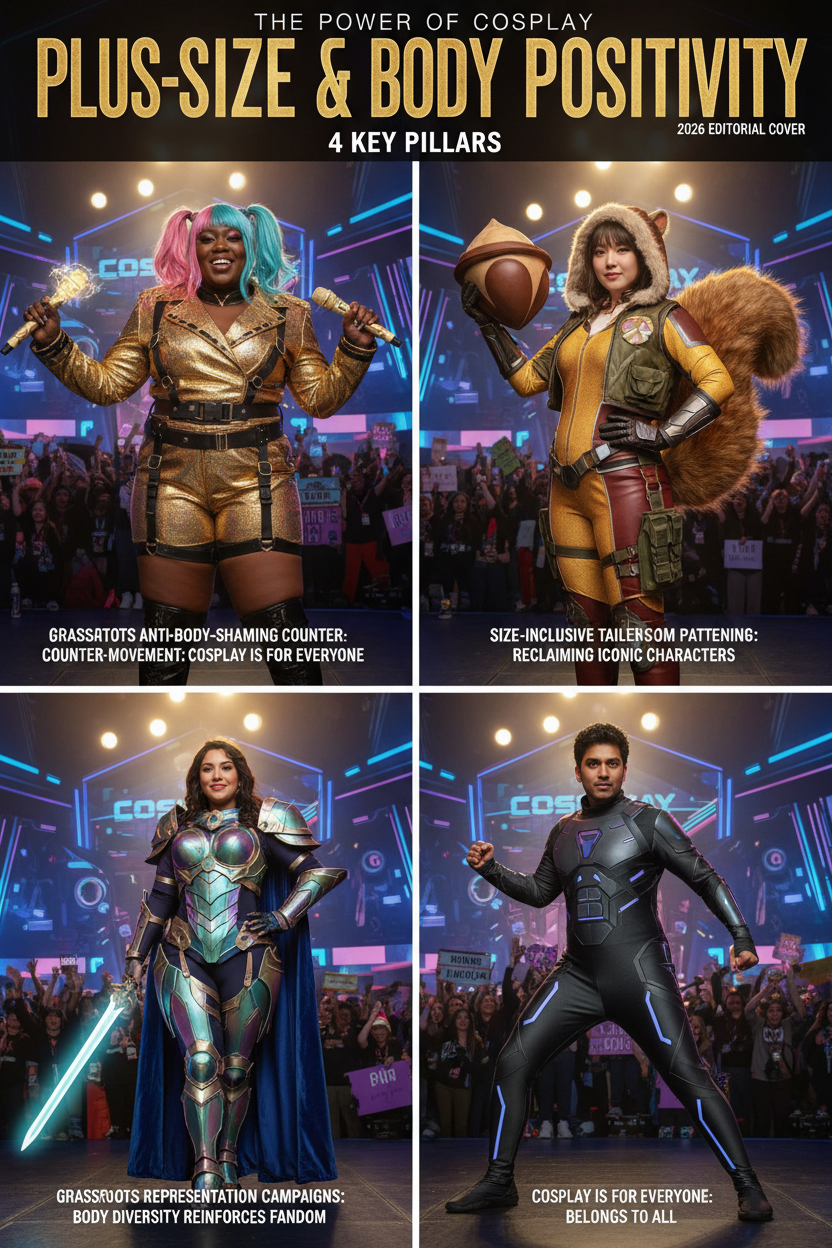
The mantra "cosplay is for everyone" faces continuous real-world pressure across social platforms like TikTok and Instagram. When creators showcase builds ranging from KPop Demon Hunters' Zoey to Marvel Rivals' Squirrel Girl, online debates around plus-size cosplay frequently surface. In response, a powerful community movement advocating for body diversity and size-inclusive cosplay continues to challenge algorithms and outdated aesthetic standards.
Quick Comparison of Body-Inclusive Cosplay Advocacy Pillars
| Advocacy Movement / Pillar | Primary Focus | Key Community Impact | Best Practice Application |
| 1. The Grassroots Anti-Body-Shaming Counter Movement | Calling out online toxicity and platform algorithm bias | Builds solidarity and protects creators online | Using supportive tags like #AnyBodyCanCosplay |
| 2. Size-Inclusive Tailoring & Custom Patterning | Adapting character silhouettes to fit diverse body shapes | Prioritizes physical comfort and authentic fit | Choosing custom-measure garments with stretch panels |
| 3. Reclaiming Iconic Characters | Wearing high-profile pop culture builds regardless of body type | Normalizes body diversity in mainstream media | Cosplaying favorite characters with confidence |
| 4. Grassroots Representation Campaigns | Highlighting marginalized creators across community spaces | Expands community visibility and inclusivity | Supporting initiatives like #28DaysOfBlackCosplay |
1. The Grassroots Anti-Body-Shaming Counter Movement — Pushing Back Against Online Toxicity
Viral discussions on TikTok highlight a persistent issue: creators facing unwarranted backlash simply for celebrating their favorite characters while existing in larger bodies.
-
Core Features: Community members and ally creators actively counter cosplay body shaming by flooding comment sections with positive engagement, reporting harassment, and challenging restrictive beauty standards.
-
Pros: Creates a safer, more welcoming environment for new creators; establishes clear community boundary lines against gatekeeping.
-
Cons: Requires active emotional energy from creators dealing with online negativity.
-
Ideal For: Digital creators, community moderators, and everyday fans seeking a supportive cosplay culture.
2. Size-Inclusive Tailoring & Custom Patterning — Prioritizing Fit Over Rigid Chart Labels
Achieving a polished cosplay aesthetic relies on properly fitted garments rather than forcing bodies into standard, unyielding factory sizes.
-
Core Features: Utilizing size-inclusive cosplay costumes engineered with custom measurement parameters, 4-way stretch fabrics, and adjustable boning lets cosplayers honor character designs while ensuring mobility and breathability.
-
Pros: Prevents seam busts; provides all-day convention comfort; highlights natural body contours flatteringly.
-
Cons: May require professional custom tailoring or self-made pattern adjustments.
-
Ideal For: Long convention days, active performance skits, and custom costume commissions.
3. Reclaiming Iconic Characters — Rejecting Body-Type Gatekeeping
A central principle of modern body positivity is that passion for a character matters far more than physical resemblance to fictional line-art.
-
Core Features: Whether recreating Zoey's vibrant idol streetwear or Squirrel Girl's tactical suit from Marvel Rivals, modern plus-size cosplayers demonstrate that character energy, prop execution, and styling outweigh body proportions.
-
Pros: Expands creative freedom; breaks restrictive fandom tropes; empowers cosplayers to represent any media IP.
-
Cons: Can occasionally draw unsolicited comments from traditionalist gatekeepers.
-
Ideal For: First-time convention attendees, group cosplays, and competitive masquerade walk-ons.
4. Grassroots Representation Campaigns — Challenging Algorithmic Bias
Grassroots initiatives prove that community solidarity can reshape social media visibility and push back against platform biases.
-
Core Features: Inspired by pioneering movements like
#28DaysOfBlackCosplay, body-diverse creators leverage collective hashtags, creator spotlights, and panel discussions to ensure broad representation across convention spaces. -
Pros: Amplifies underrepresented voices; drives structural changes in commercial sizing options; fosters community leadership.
-
Cons: Depends on sustained grass-roots organizational effort.
-
Ideal For: Social media campaigns, convention panel discussions, and community spotlight features.
How to Choose the Best Tailoring Approach for Size-Inclusive Cosplay?
Finding or crafting costumes that celebrate your body requires looking beyond off-the-rack sizing metrics:
                  [ SIZE-INCLUSIVE SELECTION MATRIX ]
                                   │
     ┌─────────────────────────────┴─────────────────────────────┐
     ▼                                                           ▼
1. Custom Tailoring Parameters                              2. Modular Garment Flexibility
- Always opt for custom bust/waist/hip mapping               - Choose adjustable corsetry, elastic inserts,
- Avoid non-stretch factory S/M/L presets                     and 4-way stretch vinyl/spandex layers
-
Prioritize Custom Measurements Over Standard Sizing: Fictional characters are drawn with impossible proportions. When buying or making garments, focus on individual bust, waist, and hip metrics rather than arbitrary S/M/L labels.
-
Incorporate Flexible Fabric Blend Options: Select costumes designed with integrated elastic panels, adjustable lace-up backs, or breathable stretch blends to maintain movement throughout 10-hour convention days.
To explore how tailored craftsmanship improves overall cosplay quality and confidence, read our guide on How to Create the Ultimate Huntrix Cosplay or check out 5 Common Cosplay Beginner Mistakes to Avoid.
At its core, body diversity in cosplay reinforces a fundamental truth: fandom belongs to everyone. By supporting custom-tailored size-inclusive cosplay costumes and rejecting arbitrary physical gatekeeping, the community continues to build an authentic, inclusive home for all makers.


Dejar un comentario
Este sitio está protegido por hCaptcha y se aplican la Política de privacidad de hCaptcha y los Términos del servicio.