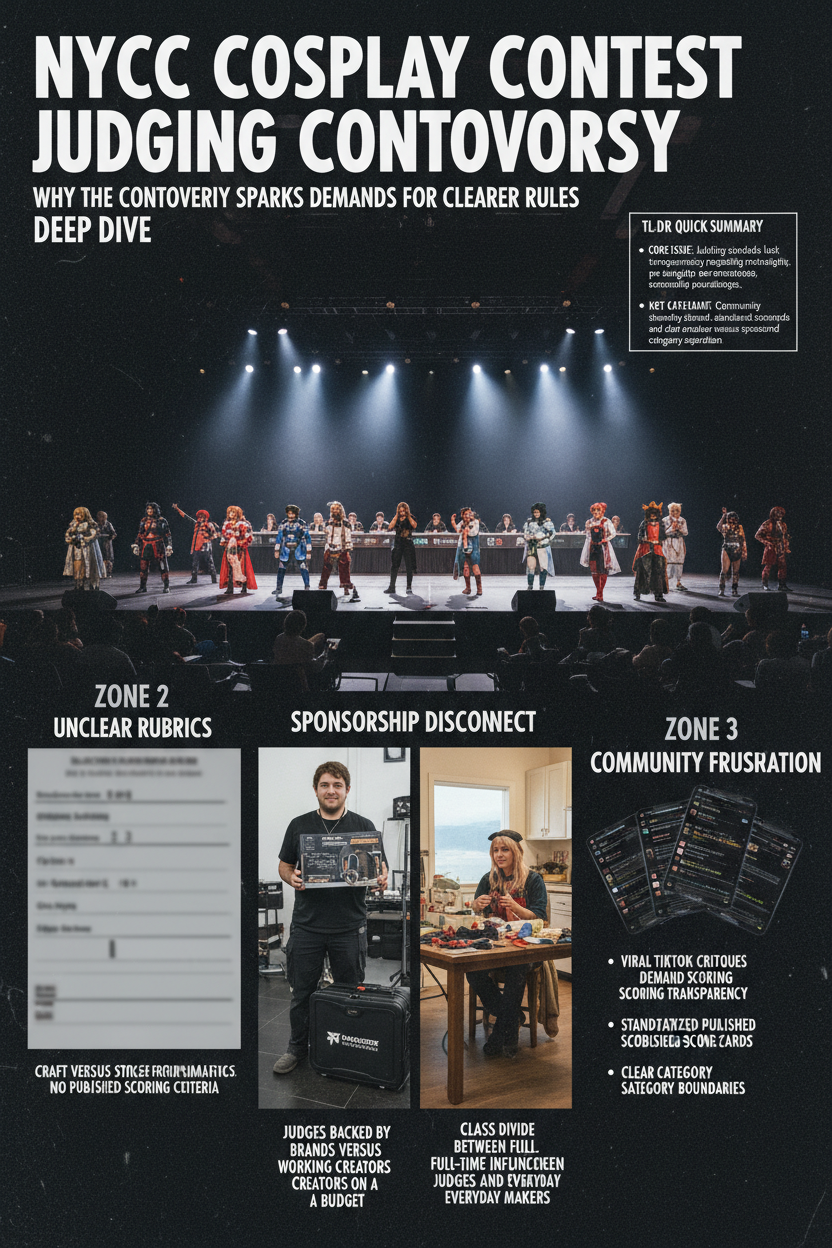
The NYCC cosplay contest judging debate reached a boiling point across social media, sparked by viral TikTok videos critiquing how major convention competitions evaluate craftsmanship versus commercial backing. The controversy centers on vague judging criteria, perceived disconnects between sponsored judges and working-class creators, and the growing influence of brand sponsorships in competitive cosplay.
TL;DR / Quick Summary
-
The Core Issue: Fans and competitors argue that judging standards at major events like New York Comic Con (NYCC) lack transparency, particularly regarding craftsmanship percentages, pre-bought components, and professional sponsorship advantages.
-
The Viral Catalyst: TikTok discussions exploded after creators highlighted a tone-deaf disconnect between full-time, brand-sponsored judges and everyday cosplayers balancing multiple jobs to fund their builds.
-
The Key Takeaway: The community is demanding standardized, published scorecards and clear boundaries between amateur craftsmanship categories and sponsored/commercial cosplay entries.
Deep Dive: What Caused the NYCC Cosplay Judging Controversy?
The debate surrounding the NYCC cosplay competition goes beyond simple dissatisfaction with who won a trophy. It reflects a fundamental shift in how the community views cosplay commercialization and elite competition standards.
                      [ THE CONTENTION PIPELINE ]
                                   │
 ┌─────────────────────────────────┼─────────────────────────────────┐
 ▼                                 ▼                                 ▼
Unclear Rubrics            Sponsorship Disconnect             Frustration in Community
Vague craft-vs-stage      Judges backed by brands vs.         Viral TikTok critiques &
performance ratios         working creators on a budget       demands for scoring transparency
The TikTok Viral Spark
During recent coverage of the NYCC championships, viral TikTok breakdown videos ignited widespread debate. The comment section under one high-engagement clip captured the core community sentiment with a top-voted response:
"People who don't have to pay rent, buy groceries, or work three jobs are sitting up there judging how other people survive. I don't care how you make your money, who you partner with, or how you keep the lights on in this economy—just don't pretend we're on the same playing field."
This viral critique resonated deeply because it named an unspoken tension: the growing class divide between full-time influencers with corporate sponsors and independent makers building outfits on kitchen tables after long work shifts.
The Problem with Vague Judging Rules
When cosplay judging rules remain ambiguous, rumors of bias naturally flourish. Without explicit published rubrics detailing how points are distributed across sewing precision, 3D printing finishing, mobility, and stage presence, competitors are left guessing how decisions are made behind closed doors.
Key Elements: Judging Criteria, Sponsorships, and Commercialization
To understand the NYCC cosplay judging controversy, it helps to examine where traditional craftsmanship metrics clash with modern brand partnerships.
            [ CRAFTSMANSHIP VS. COMMERCIAL INFLUENCE ]

Traditional Craft Metrics            Modern Commercial Reality
├── Hand-sewn seam precision         ├── Brand-sponsored material access
├── Custom EVA foam sculpting        ├── Industrial studio tools (Laser/3D)
└── Self-built LED circuitry         └── Full-time content creation hours
1. Transparent Cosplay Contest Judging Criteria
A major complaint in the cosplay competition rules debate is the lack of standardized scoring tiers. Top-tier competitions need clear percentage breakdowns:
-
Craftsmanship (e.g., 60%): Evaluation of seams, clean foam lines, painting, and construction durability during pre-judging.
-
Accuracy & Innovation (e.g., 20%): Faithful translation of reference material or creative adaptation of complex designs.
-
Stage Presentation (e.g., 20%): Character embodiment, mobility, and performance during the main stage showcase.
2. Addressing the Cosplay Sponsorship Controversy
As brand partnerships become more common, conventions face pressure to separate grassroots entries from studio-backed projects. When a competitor has access to thousands of dollars in sponsored materials or commercial-grade machinery, competing in the same master category as a self-funded hobbyist creates friction unless categories are clearly defined.
Common Misconceptions & Pitfalls
-
Misconception 1: "Critiquing judges means hating successful creators."
-
Reality: The community isn't attacking judges for earning a living through cosplay. The debate is about ensuring fair competition structures where judges understand the resource constraints of everyday entrants.
-
-
Misconception 2: "Commercial tools like 3D printers ruin true craftsmanship."
-
Reality: 3D printing and digital modeling require significant skill. The controversy isn't about banning technology, but rather about requiring entrants to disclose whether models were self-designed or bought pre-made.
-
-
Misconception 3: "Stage presence matters more than construction."
-
Reality: In a craftsmanship contest, pre-judging carries the most weight. A polished stage walk should never overshadow poor seamwork or rushed prop assembly.
-
Summary & Related Reading
The cosplay contest judging debate at major conventions highlights an evolving culture trying to balance grassroots artistry with professional commercialization. By publishing clear scorecards, establishing transparent categories, and choosing judges who understand both independent crafting and professional production, event organizers can restore trust on the competition stage.
Ready to Build Your Next Stage Design?
Whether you're entering your first local contest or building a master-tier entry, explore our curated selection of cosplay competition costumes and accessories. For deeper insights into event policies and community discussions, visit our cosplay culture and community insights hub!

Dejar un comentario
Este sitio está protegido por hCaptcha y se aplican la Política de privacidad de hCaptcha y los Términos del servicio.