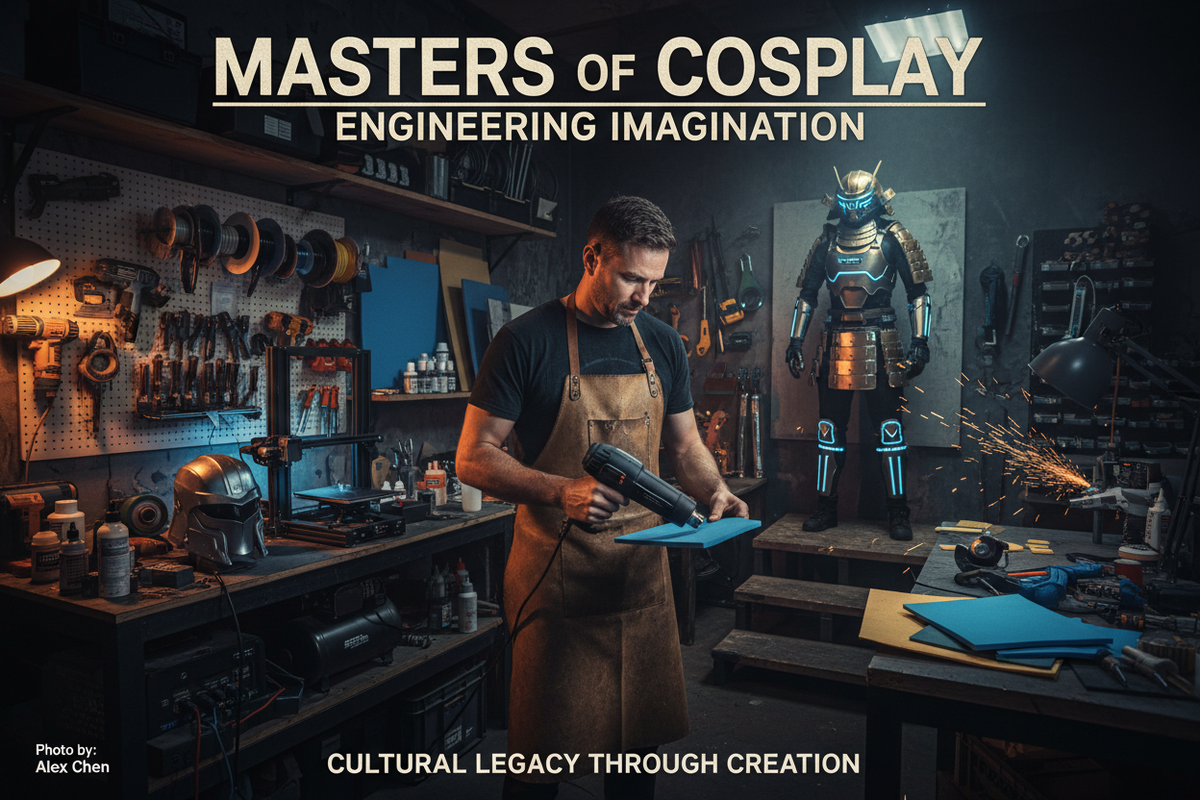
For decades, crafting costumes and props was often dismissed by mainstream media as a eccentric niche hobby. However, over the past fifteen years, high-profile engineers, science communicators, and special effects veterans have bridged the gap between maker culture and pop-culture conventions. Understanding how Adam Savage cosplay appearances shifted public perception requires analyzing the engineering, storytelling, and media validation behind the modern maker movement.
Prerequisite Context & Key Influences
-
Public Figure Impact: Adam Savage (co-host of MythBusters, special effects designer, and founder of Tested).
-
Cultural Shift: Transition from "kids' dress-up" stereotypes to recognized cosplay craftsmanship.
-
Core Elements: Incognito Comic-Con walkthroughs, detailed build logs, foam/3D printing engineering, and cross-industry artist recognition.
Table of Contents
-
Step 1: Analyze the Shift from "Dress-Up" to Engineering Excellence
-
Step 2: Examine Adam Savage's "Incognito" Convention Tradition
-
Step 3: Identify How Other Public Figures Broadened Cultural Acceptance
-
Troubleshooting Common Misconceptions About Cosplay Validation
Step 1: Analyze the Shift from "Dress-Up" to Engineering Excellence
The first step in understanding cosplay’s cultural legitimization is tracking how mainstream figures reframed the narrative around prop building and costume design.
                    [ EVOLUTION OF PUBLIC COSPLAY PERCEPTION ]
                                        │
     ┌──────────────────────────────────┴──────────────────────────────────┐
     ▼                                                                     ▼
Early Media Stereotypes (Pre-2010s)                       Modern Maker Era (Post-2010s)
- Dismissed as "childish dress-up"                        - Validated as applied engineering & artistry
- Focused on superficial fan outfits                      - Celebrated for 3D printing, foam smithing & LEDs
- Isolated within niche fan circles                       - Promoted by mainstream scientists & TV hosts
When Adam Savage began sharing meticulous build logs on platforms like Tested, he brought the rigor of industrial design and movie special effects to consumer-level crafting. By showcasing techniques like weathered painting, vacuum forming, heat-shaping EVA foam, and Arduino programming, he demonstrated that building a movie-accurate suit requires the same problem-solving skills as engineering, sculpture, and textile design. This technical reframing forced mainstream media to treat costume makers as skilled artisans rather than casual hobbyists.
Step 2: Examine Adam Savage's "Incognito" Convention Tradition
To evaluate the direct cultural crossover, look at how public figures participate anonymously within fan spaces to highlight the art form itself.
                     [ THE "INCOGNITO" LEGITIMIZATION MODEL ]
                                        │
 ┌──────────────────────────────────────┼──────────────────────────────────────┐
 ▼                                      ▼                                      ▼
Complex Build Selection               Anonymous Convention Floor Floorwalk     The Reveal & Community Validation
- E.g., Totoro, No-Face,              - Blends in purely as an artist          - Shifts focus from celebrity status
  Space Suit, Bear Suit                 among fellow makers                      directly onto craftsmanship quality
Savage’s annual tradition of wearing complex, floor-length, or fully enclosed cosplays on the San Diego Comic-Con floor without revealing his identity created a powerful cultural statement:
-
Craftsmanship Over Celebrity: On the floor, a suit is judged purely on its proportions, movement, and visual accuracy—not the fame of the wearer.
-
Community Inclusion: By walking among thousands of attendees as an anonymous cosplayer, he placed Hollywood-level practical effects artists on the exact same plane as fan creators.
-
Praising Niche Artistry: His post-convention build videos break down the immense physical effort, heat management, and balance required to wear large-scale creature costumes, fostering widespread empathy for maker endurance.
Step 3: Identify How Other Public Figures Broadened Cultural Acceptance
The third step is recognizing that this validation isn't isolated to science communication—it spans professional sports, mainstream Hollywood, and performing arts.
Public figures from radically different industries have embraced cosplay identity, permanently dismantling old stereotypes:
-
Professional Wrestling Crossover: Athletes like Xavier Woods, Mercedes Moné (Sasha Banks), and Kenny Omega frequently enter championship matches wearing custom anime armor and video game outfits. (Explore our detailed analysis on pro wrestlers embracing cosplay culture).
-
Hollywood & Music Pioneers: Actresses like Jamie Lee Curtis attend premieres in full Warcraft and One Piece cosplay, while musicians like Megan Thee Stallion perform at major festivals in screen-accurate anime attire.
-
Mainstream Engineering Integration: Universities and STEM programs now use cosplay prop making and wearable technology tutorials to teach practical CAD design, 3D printing, and circuit assembly to young students.
Troubleshooting Common Misconceptions About Cosplay Validation
| Common Misconception | The Reality of Modern Cosplay Culture | How Mainstream Figures Impact It |
| "Cosplay is only for professional costume shops." | Over 80% of convention attendees craft, modify, or assemble their outfits using accessible consumer materials. | Tutorials by figures like Savage highlight accessible tools like heat guns, contact cement, and basic airbrushes. |
| "Public figures only do it as a publicity stunt." | Most crossover icons spent years crafting in private before publicly celebrating their builds. | Documented multi-month build logs prove authentic passion and dedication to the craft. |
| "Stage costumes lack industrial utility." | Techniques developed by cosplayers (e.g., lightweight foam fabrication) are now used in theater and film productions. | Hollywood practical effects departments actively hire talent directly from the convention maker community. |
Next Steps & Further Reading
As mainstream figures continue to champion practical crafting, the line between fan art and professional trade continues to blur. Recognizing the engineering and discipline behind costume creation elevates the entire maker community.
Related Cultural & Craftsmanship Analyses:
-
Pro Wrestlers Embracing Cosplay Culture: How ring gear and pop-culture fandom intersect on global television.
-
Professional Cosplay Craftsmanship Collection: Advanced thermoplastics, high-density foam, and precision weathering tools for serious builders.
![4 Key Pillars Defining Disability Representation in Cosplay Culture [2026]](http://www.cosplayreal.com/cdn/shop/articles/cover-disability-representation.png?v=1789148106&width=1248)

Dejar un comentario
Este sitio está protegido por hCaptcha y se aplican la Política de privacidad de hCaptcha y los Términos del servicio.