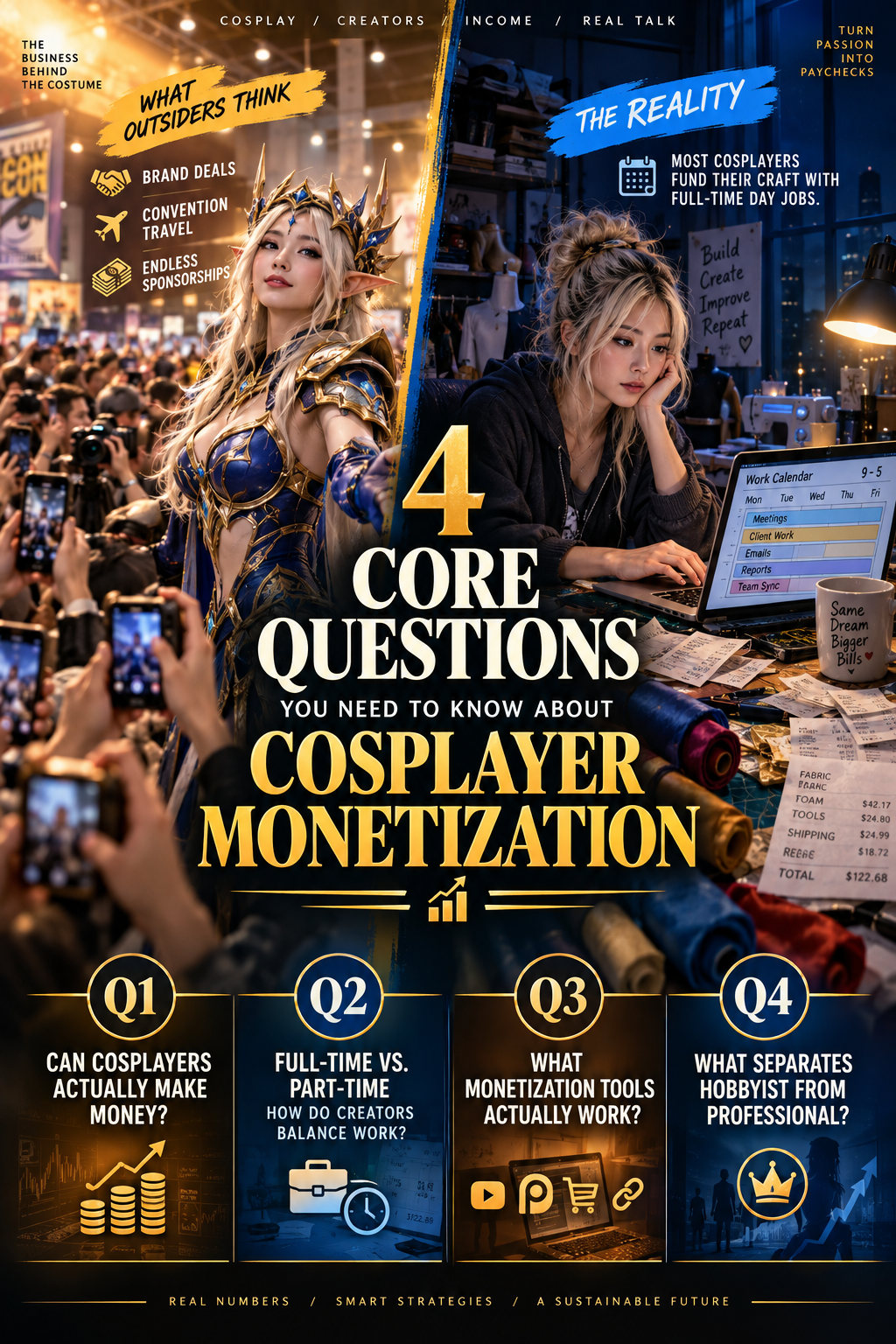
When content creator @anjeezyalmighty posted a viral video asserting that cosplayers can easily make money, it sparked a passionate debate across the creator economy. While external observers often assume cosplayers enjoy endless sponsorship revenue and glamorous convention travel, the comment section revealed a far relatable reality: "People think cosplayers are rich, but most of us work full-time 9-to-5 jobs just to fund our craft."
Understanding cosplayer monetization requires navigating the balance between passion, income generation, and career sustainability. Below are the four essential questions every creator and fan needs to understand about the financial realities of modern costuming.
Question 1: Can cosplayers make money, or is costuming strictly an expensive hobby?
Direct Answer
Yes, creators can cosplayers make money through print sales, fan subscriptions, brand partnerships, and prop commissions. However, for over 90% of creators, cosplay creator income functions as a supplementary income stream or hobby offset rather than a sole source of living revenue.
The Reality Behind Cosplay Creator Economics
While top-tier creators generate substantial revenue, entering the cosplay creator economy requires upfront capital for materials, wigs, photography, and convention travel.
Unlike conventional digital content, physical costume creation incurs high marginal costs per project. As a result, gross revenue rarely translates to pure profit until a creator scales their personal brand and diversifies revenue streams across physical and digital formats.
Question 2: How do full-time vs part-time cosplayers balance work and cosplay?
Direct Answer
Most creators operate as a cosplayer side hustle operator, using 9-to-5 corporate jobs to maintain financial stability. Learning how cosplayers balance work and cosplay involves strict schedule batching, weekend photo shoots, and treating content creation as a secondary structured workflow.
Navigating Full-Time vs Part-Time Realities
The decision between becoming a full-time vs part-time cosplayer often comes down to healthcare, steady cash flow, and mental burnout prevention:
                      [ COSPLAYER TIME ALLOCATION MODEL ]

  +-----------------------------------------------------------------------+
  |  Primary Career (40 hrs/wk)   -->  Guaranteed Income & Healthcare    |
  |  Cosplay Crafting (15 hrs/wk) -->  Prop Build, Sewing, Wig Styling   |
  |  Content & Sales (10 hrs/wk)  -->  Shoots, Prints, Patreon, Socials  |
  +-----------------------------------------------------------------------+
Maintaining a non-cosplay career offers financial backing without forcing creators to accept undesirable sponsorship deals or burn out under relentless algorithm demands.
Question 3: What are the essential cosplay creator monetization tools to start earning?
Direct Answer
The most effective cosplay creator monetization tools combine recurring fan support platforms (Patreon, Ko-fi) with digital file sales (Etsy, Gumroad) and print-on-demand fulfillment services (Fourthwall, Printify) to automate order delivery while keeping overhead low.
Building a Multi-Tiered Revenue Pipeline
To build a sustainable monetization framework, learning how to make money as a cosplayer involves setting up scalable digital assets:
-
Digital Crafting Assets: Sell 3D print
.STLfiles, PDF sewing patterns, or wig styling video tutorials. Digital goods feature 100% profit margins after initial development. -
Subscription Fan Clubs: Offer exclusive behind-the-scenes build logs, early photo set access, and physical postcard tiers on Ko-fi or Patreon.
-
Affiliate Marketing: Partner with wig suppliers, contacts companies, and crafting supply outlets using custom discount codes.
Question 4: What separates a hobbyist from a professional cosplayer?
Direct Answer
A professional cosplayer operates their brand like a business entity. They track profit margins, hold formal business licenses, manage commercial licensing agreements with gaming studios, and utilize consistent content distribution schedules across multiple social media platforms.
Strategic Steps to Turn Your Side Hustle Professional
-
Formalize Business Accounting: Track every material receipt, studio booking fee, and travel expenditure for tax deductions.
-
Diversify Beyond Social Platforms: Build an independent website or mailing list to maintain direct communication with supporters independent of algorithm shifts.
-
Negotiate Commercial Contracts: Know your worth when working with gaming companies for official booth representation, ensuring travel, per diem, and costume production hours are fully compensated.
Summary & Next Steps
The viral debate surrounding cosplayer income highlights a healthy shift toward transparency in subculture economies. Whether operating as a passion project or an emerging business, understanding how to monetize efficiently empowers creators to support their artistic journey without sacrificing financial security.



Dejar un comentario
Este sitio está protegido por hCaptcha y se aplican la Política de privacidad de hCaptcha y los Términos del servicio.