 Cosplay is built around creativity, transformation, and the freedom to express admiration for characters, stories, and different visual identities. However, not every costume communicates what its creator intends. A design that seems humorous or harmless to one person may reinforce stereotypes, trivialize real-life hardship, or make another community feel disrespected.
The debate surrounding Martha Stewart's 2026 Halloween costume offers a timely example of this distinction. On October 31, Stewart shared a now-deleted Instagram image depicting her as a person experiencing homelessness. The image showed distressed clothing, makeup resembling dirt, and a sign asking for help. The post also promoted her QVC candle collection.
Stewart initially explained that the costume was intended to raise awareness of homelessness. Following criticism, she issued a second statement acknowledging that the outfit was insensitive and not funny, and apologized.
The controversy raises an important question for the cosplay community: If a costume is created with good intentions, does that automatically make its representation respectful?
The answer is no. Intent matters, but it does not erase the potential impact of a creative decision.
For cosplayers, costume designers, convention attendees, and Halloween enthusiasts, understanding this distinction is essential. This guide explores seven practical questions about cosplay cultural sensitivity, cultural appropriation, representation, and how to make costume choices that respect the people and communities behind them.
1. Why Can a Halloween Costume Become Offensive Even When the Creator Has Good Intentions?
Direct Answer: A costume can become offensive when its visual presentation turns another person's hardship, identity, or lived experience into entertainment. Good intentions do not automatically prevent harmful stereotypes or unintended consequences.
The distinction between intention and impact is central to understanding costume controversies.
When someone creates a costume, they usually evaluate it from their own perspective. They might consider whether it is funny, recognizable, visually convincing, or likely to attract attention. However, the people represented by that costume may interpret its message differently.
Martha Stewart's Halloween controversy illustrates this difference.
According to reporting by NBC News and the Los Angeles Times, Stewart initially explained that her costume was intended to raise awareness about homelessness. Her image nevertheless attracted criticism because it presented homelessness through recognizable visual stereotypes: distressed clothing, simulated dirt, and a sign asking strangers for food or assistance.
Critics questioned whether an experience involving housing insecurity, economic hardship, and social exclusion should be transformed into a temporary Halloween identity.
The important issue was not simply whether the outfit resembled a particular appearance. It was how the overall presentation framed the people it represented.
What Does Academic Research Say About the Impact of Representation?
A 2024 scoping review published in Health & Social Care in the Community, titled A Scoping Review of the Experiences and Outcomes of Stigma and Discrimination towards Persons Experiencing Homelessness, examined 205 studies.
The researchers identified stigma and discrimination as significant issues affecting people experiencing homelessness. Their findings included experiences of humiliation, disrespect, dehumanization, and discrimination across different social settings.
This matters when evaluating costume design.
If a costume relies on visual cues associated with a marginalized group, the creator should consider whether those cues reproduce the same stereotypes that contribute to social exclusion.
A further study published in the Journal of Community & Applied Social Psychology in 2025, The Communicative Architecture of Stigma: Examining the Everyday Language on Homelessness, analyzed stigmatizing social media discussions from the United Kingdom.
The researchers identified recurring associations involving appearance, hygiene, perceived social status, personal deficiency, and dehumanization.
One particularly relevant finding was that stereotypes can be reinforced through jokes, comparisons, and casual visual or verbal references, even when homelessness is not the main subject being discussed.
This provides a useful lesson for costume creators: a representation does not need to contain an explicit insult to reinforce a harmful stereotype.
Intent vs. Impact: What Should Cosplayers Understand?
Consider two different creative approaches:
-
Character-inspired representation: Recreating a fictional character's established clothing, hairstyle, accessories, and recognizable visual identity.
-
Identity-based caricature: Using the appearance or hardship of a real-world marginalized population as a visual shortcut for humor, shock, or entertainment.
These approaches are not equivalent.
The first can be an expression of appreciation for a fictional work. The second requires much greater scrutiny because it may turn a real person's circumstances into a performance.
A responsible cosplayer should ask not only, "What am I trying to communicate?" but also, "What message could someone reasonably receive from this costume?"
2. What Is the Difference Between Cultural Appreciation and Cultural Appropriation in Cosplay?
Direct Answer: Cultural appreciation involves learning about and respecting the meaning of cultural elements, while cultural appropriation can involve using those elements without adequate understanding, recognition, or consideration of historical power differences.
Cultural exchange is a normal part of art, fashion, entertainment, and cosplay. Characters often combine visual influences from different historical periods, regions, and cultural traditions.
However, borrowing a visual element does not automatically make every costume respectful.
The context surrounding that element matters.
Understanding Cultural Appropriation Through Academic Research
A useful academic reference is Rina Arya's 2021 article, Cultural Appropriation: What It Is and Why It Matters?, published in Sociology Compass.
Arya explains that cultural appropriation is a complex and contested subject involving different forms of cultural use and consequences. It should be evaluated case by case rather than treated as a single universal category.
A more recent paper by Ariel J. Mosley, published in Social Issues and Policy Review in 2025, is also relevant: Investigating Cultural Appropriation: An Introduction, Policy Implications, and Legal Recommendations.
The paper proposes a multidimensional understanding of cultural appropriation, including cultural exploitation and cultural dominance. It examines how the relationship between social status and the use of cultural practices can influence the ethical implications of appropriation.
For cosplay, this means that the same visual element may carry different meanings depending on its origin, significance, context, and the way it is presented.
Examples of Costume Choices That Deserve More Consideration
| Costume element | Potential concern | More respectful approach |
|---|---|---|
| Sacred ceremonial clothing | Turning religious or sacred objects into decorative props | Research the garment's meaning and restrictions |
| Traditional cultural dress | Treating a culturally significant outfit as an interchangeable fantasy costume | Learn its historical and cultural context |
| Racialized makeup or exaggerated features | Reproducing harmful historical caricatures | Use character-specific makeup without imitating racial stereotypes |
| Traditional hairstyles | Ignoring their cultural significance or social context | Understand the hairstyle before incorporating it |
| Poverty or homelessness aesthetics | Reducing a complex social experience to a visual joke | Choose fictional character designs rather than imitating vulnerable populations |
The goal is not to prevent people from exploring different cultures through creative work.
Instead, it is to distinguish meaningful cultural engagement from superficial imitation.
Does This Mean Cosplayers Should Avoid Every Costume From Another Culture?
No.
That would be an overly simplistic interpretation of cultural sensitivity.
Cosplay regularly involves international fandoms, historical references, fantasy clothing, and fictional worlds influenced by different cultural traditions.
A person can appreciate a character from a different cultural background without claiming to represent that culture.
What matters is whether the creator understands the visual references, avoids degrading stereotypes, and respects the significance of the elements being reproduced.
3. Why Is Dressing as a Marginalized Group Different From Cosplaying a Fictional Character?
Direct Answer: Fictional characters are created identities within stories, whereas marginalized groups consist of real people whose circumstances may involve discrimination, economic hardship, or historical exclusion. Treating those circumstances as costumes can trivialize lived experiences.
This distinction is particularly important for Halloween and cosplay events.
A fictional character may have a distinctive outfit, personality, backstory, and recognizable design. Fans recreate these elements because they admire the character or the fictional world.
By contrast, dressing as a person experiencing homelessness, poverty, or another vulnerable social condition does not necessarily celebrate an established creative identity.
It can turn a complex human experience into a collection of visual stereotypes.
Why Representation Matters Beyond Appearance
The 2024 scoping review on homelessness stigma offers an important perspective.
Its examination of 205 studies demonstrates that discrimination is not limited to isolated negative interactions. It can also be reproduced through institutions, public attitudes, and repeated assumptions about people experiencing homelessness.
Costume design cannot solve these structural problems. However, creators can avoid contributing to the stereotypes that make them worse.
For example, consider the difference between:
-
Recreating a fictional character who happens to experience poverty as part of a carefully developed storyline.
-
Creating a generic costume intended to resemble a homeless person through exaggerated dirt, torn clothing, and stereotypical signs.
The first represents a character with an individual identity and narrative. The second risks reducing an entire population to a recognizable visual category.
This is why the distinction between character representation and group caricature deserves attention.
A Practical Question for Character Designers
Before creating a costume, ask:
Am I recreating an individual character, or am I using the appearance of a real-world group as a shortcut to communicate a social stereotype?
If the answer is the latter, reconsider the concept.
4. How Can Cosplayers Avoid Offensive Halloween Costumes?
Direct Answer: Research the costume's references, identify potentially harmful stereotypes, avoid caricaturing marginalized identities, and evaluate the design from the perspective of the people it represents.
A costume does not become respectful simply because it is handmade, expensive, historically accurate, or popular online.
A better approach is to evaluate the design before sharing it publicly.
The following checklist can help.
The Respectful Cosplay Checklist
1. Research the original character or cultural reference.
Understand the character's background, clothing, symbols, and visual references. Do not rely entirely on random images from social media.
2. Identify potentially harmful stereotypes.
Check whether the costume exaggerates physical characteristics, poverty, disability, race, religion, or other aspects of a real person's identity.
3. Understand the meaning of important symbols.
Some clothing, accessories, hairstyles, and ceremonial objects carry meanings beyond their appearance.
4. Avoid using hardship as entertainment.
Poverty, homelessness, trauma, and other difficult experiences should not automatically become visual themes for humor or shock.
5. Consider the audience and event environment.
A private creative project and a public convention have different audiences. Public presentation increases the importance of context and interpretation.
6. Listen to people with relevant lived experience.
When a costume represents a particular community, seek credible perspectives from people who understand that experience. Do not assume that one person's opinion represents everyone.
7. Be willing to revise the design.
If credible criticism identifies a problem, consider changing the costume instead of defending every creative decision.
A Simple Three-Question Test
Before publishing costume photographs, ask yourself:
-
Does this costume celebrate a character, or does it turn a real group into a caricature?
-
Would the visual message still make sense without relying on a stereotype?
-
Am I prepared to listen if someone from the represented community explains why the design is harmful?
If the answers raise concerns, take another look at the design.
5. What Should Cosplayers Do When Their Costume Receives Criticism?
Direct Answer: Listen carefully, understand the specific concern, distinguish constructive criticism from harassment, and make meaningful changes when the criticism identifies a genuine representational problem.
Not every disagreement means a costume is offensive. Creative interpretation naturally produces different opinions.
However, dismissing every criticism as oversensitivity can prevent creators from understanding the impact of their work.
Martha Stewart's response provides a useful example of why acknowledging impact matters.
According to the Los Angeles Times' November 2 report, Stewart initially explained that her costume was intended to raise awareness of homelessness. She later acknowledged that her first statement did not go far enough and described the costume as insensitive and not funny.
The broader lesson for creators is that explaining an intention and acknowledging an impact are two different things.
A constructive response to criticism should include three steps:
First: Understand the criticism.
Identify what specifically caused concern. Was it the costume's visual design, the context in which it was shared, the use of a cultural symbol, or the way a group was portrayed?
Second: Evaluate the feedback.
Look for credible explanations, especially from people with relevant cultural knowledge or lived experience. Avoid treating every social media comment as equally authoritative.
Third: Take appropriate action.
Depending on the situation, this could mean revising the design, removing a harmful element, providing context, or issuing an apology.
An apology is most meaningful when it demonstrates an understanding of the problem rather than simply expressing disappointment about negative reactions.
Creators should also remember that online criticism does not justify harassment, threats, or personal attacks. Respectful discussion and personal safety should remain separate considerations.
6. How Can Cosplay Communities Encourage More Inclusive Representation?
Direct Answer: Cosplay communities can encourage inclusion through clear event guidelines, respectful feedback, accessible participation, diverse character representation, and a willingness to address harmful behavior.
Individual creators have an important role, but community standards matter too.
Conventions, online cosplay groups, photography communities, and costume competitions all influence what types of representation become normalized.
A welcoming environment should allow people to enjoy fictional characters without feeling that their identities or lived experiences are being treated as jokes.
What Can Convention Organizers Do?
Event organizers can establish practical standards covering:
-
Costume-related harassment and discriminatory behavior.
-
Photography consent and respectful interactions.
-
The use of culturally sensitive or potentially offensive costume elements.
-
Clear reporting procedures for attendees who experience harassment.
-
Staff training for handling complaints consistently.
These policies should be communicated before events, not introduced only after a controversy occurs.
What Can Online Cosplay Communities Do?
Online communities can also make a difference.
Moderators and community members can encourage discussions that focus on design decisions rather than personal attacks.
For example, instead of commenting that a creator is a bad person, explain which visual element creates a problem and why.
This makes criticism more useful and gives creators an opportunity to learn.
Why Inclusive Representation Benefits Cosplay
Cosplay is a creative activity with many ways to participate.
People can recreate established characters, interpret alternate designs, experiment with genderbend concepts, develop original outfits, or create character-inspired looks.
A more inclusive environment gives creators greater freedom to explore these possibilities without relying on stereotypes.
It also helps conventions and online communities remain welcoming to a broader range of participants.
7. What Is the Best Way to Create a Respectful Cosplay Costume Without Losing Creativity?
Direct Answer: Focus on character identity, design details, craftsmanship, and creative interpretation rather than using another group's hardship or identity as a visual shortcut.
Cultural sensitivity does not mean removing imagination from costume design.
In fact, it can encourage more thoughtful creative decisions.
Instead of relying on exaggerated stereotypes, designers can explore:
-
Original color combinations inspired by fictional characters.
-
Detailed tailoring and fabric construction.
-
Character-specific accessories and recognizable design elements.
-
Alternate-universe interpretations.
-
Fantasy-inspired silhouettes and original styling.
-
Creative makeup that reflects a character's fictional identity without imitating racial or cultural caricatures.
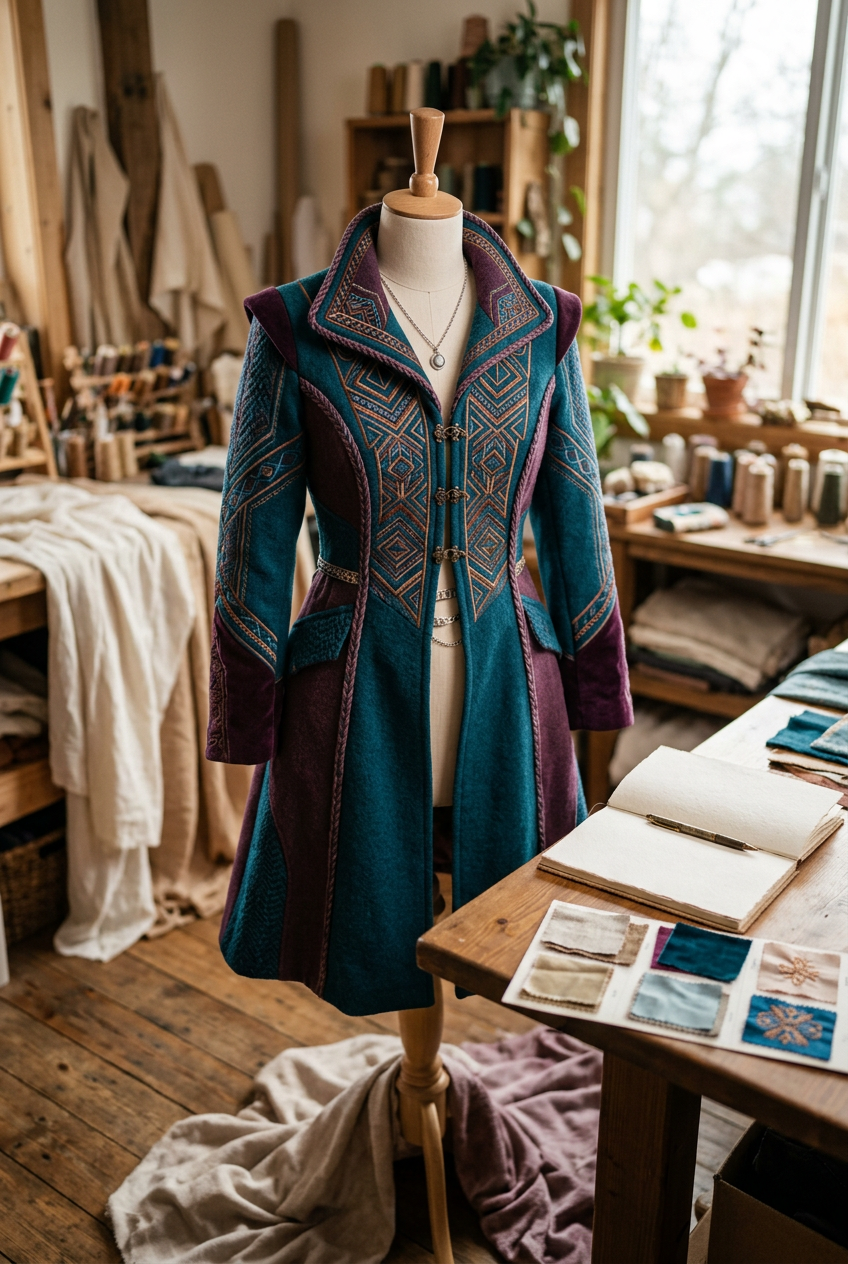
For example, a fantasy-inspired outfit can incorporate elaborate embroidery, layered fabrics, distinctive accessories, and original decorative elements without reproducing sacred objects or misrepresenting a real community.
Likewise, a character-inspired costume can retain the character's recognizable visual identity while allowing the creator to develop a personal interpretation.
For creators who want to explore new character designs, inclusive cosplay costumes and character-inspired accessories offer a practical way to experiment with different visual styles while keeping the focus on fictional characters and creative expression.
The central principle is simple: creativity should expand possibilities rather than reduce real people to stereotypes.
Conclusion: Respect Is Part of the Craft
The Martha Stewart Halloween controversy demonstrates why costume design involves more than appearance, humor, or creative intention.
A costume communicates something to its audience. Sometimes that message is admiration for a fictional character. Sometimes it is a celebration of cultural creativity. In other situations, it may unintentionally reinforce stereotypes or trivialize the experiences of marginalized people.
For the cosplay community, the most useful lesson is not to avoid every controversial subject or restrict creative expression.
It is to approach representation with curiosity, research, and respect.
A thoughtful cosplayer considers the character, the cultural context, the audience, and the people who may be represented by the final design.
Ultimately, a great costume is not defined only by how accurately it recreates an appearance. It is also defined by the care, craftsmanship, and understanding behind it.
The best cosplay celebrates creativity without making someone else's identity or hardship the punchline.

Dejar un comentario
Este sitio está protegido por hCaptcha y se aplican la Política de privacidad de hCaptcha y los Términos del servicio.