💡 Executive Abstract:
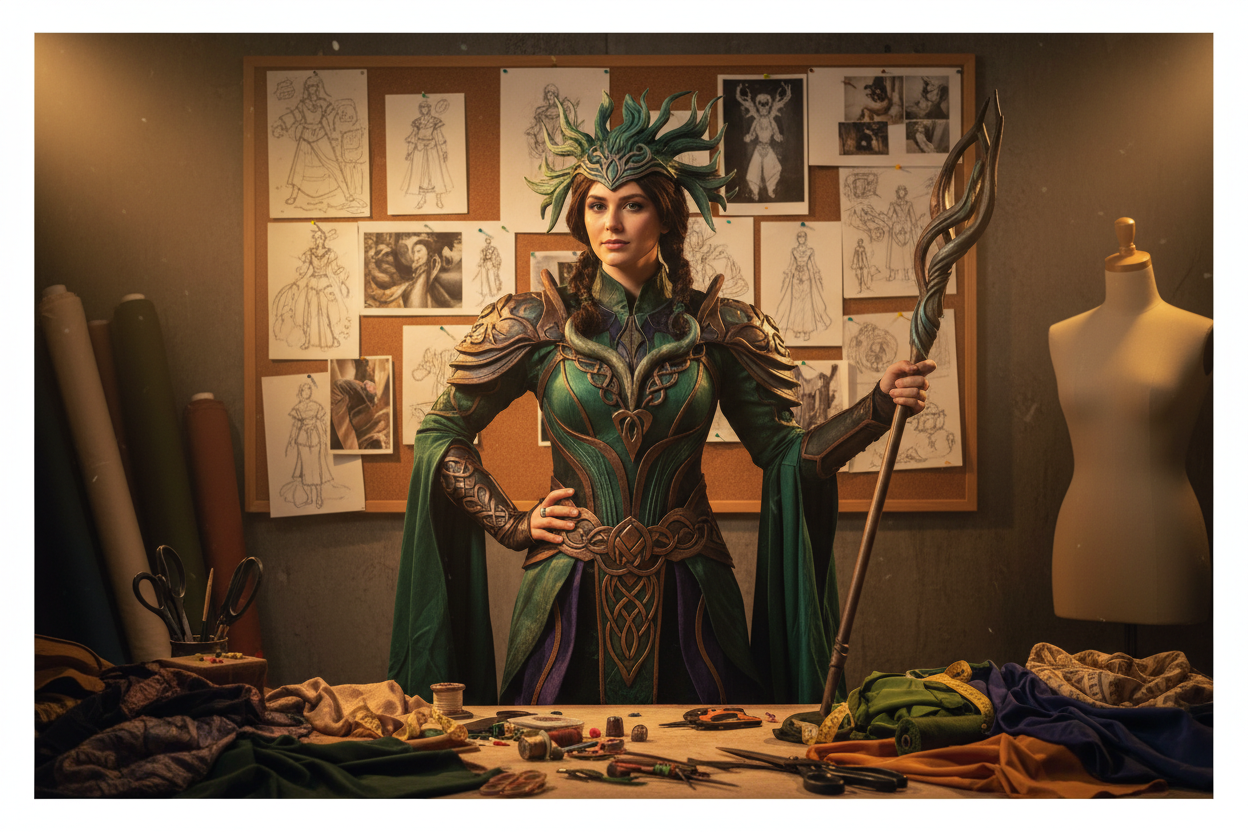
For over a decade, the global cosplay community operated under an implicit gold standard: pixel-perfect accuracy. The goal was literal replication—matching every vector, hair strand, and fabric sheen to the official 3D game model or 2D animation cell. However, a major philosophical shift is occurring across global creator networks, heavily discussed on platforms like Reddit and TikTok. The community is moving away from purely replicating a design and moving toward Character Interpretation. Creators are treating cosplay as a legitimate form of Theatrical Adaptation and Personal Expression. Rather than functioning as human copy machines, advanced makers are injecting personal style, historical garment construction, and emotional subtext into their work. This comprehensive analysis explores how this evolution is redefining production standards, material selection, and structural tailoring for high-end creators.
📉 1. The Analytical Shift: From Literal Replication to Subcultural Interpretation
To understand why character interpretation has become a dominant topic in creative circles, we must examine the limitations of literal replication. Standard digital rendering engines and 2D animation art are optimized for screens, not physical human movement.
+-----------------------------------------------------------------------------------------+
|                        THE CHARACTER INTERPRETATION PARADIGM                            |
+-----------------------------------------------------------------------------------------+
|  [Official 3D/2D Asset] ---> [Deconstruction of Character Subtext] ---> [Textile Adaptation] |
|                                                                                |        |
|  [Artistic Interpretative Masterpiece] <--- [Theatrical Silhouette Tailoring] <--------+        |
+-----------------------------------------------------------------------------------------+
This evolution toward interpretative design is driven by four sophisticated subcultural factors:
-
The Screen-to-Reality Material Deficit: Digital models often feature impossible textures—fabrics that possess no grain, weight, or weave, yet shine like polished metal. Literal replication often results in stiff, unwearable plastic garments. Interpretative making solves this by selecting real-world textiles that capture the character's intended social status and environment.
-
The Shift Toward Theatrical Realism: Influenced by professional costume design in film and theater, modern makers increasingly view characters through a historical or realistic lens, asking: "If this character existed in a specific historical era or harsh ecosystem, what would their clothes actually be made of?"
-
Algorithmic Homogeneity Fatigue: With mass-produced, identical costumes widely available online, creators face a sea of visual sameness at major conventions. Incorporating custom textures and unique styling allows makers to stand out and express their individual craftsmanship.
-
Narrative and Psychological Subtext: Creators frequently adjust color saturation, fabric weight, and distressing to reflect a character's internal emotional journey, transforming a costume into a piece of visual storytelling.
📂 2. Deep Case Studies: Fabric Semiotics & Character Deconstruction
This debate between literal replication and personal interpretation changes how individual outfits are constructed. By looking closely at three complex properties, we can see how advanced textile choices bring these different interpretations to life.
🤖 NieR: Automata — 2B: Video Game Asset vs. Avant-Garde Haute Couture
-
The Accuracy Debate: The literal replication camp uses flat, uniform synthetic velvet and standard lace trims to match 2B's clean, digital character model exactly as it appears in the game's rendering engine.
-
The Interpretative Breakthrough: Advanced makers recognize that 2B’s design is deeply rooted in high-end, melancholic Gothic architecture and avant-garde haute couture. Instead of basic fabrics, they opt for heavy-weight, non-stretch silk-blend velvet that naturally absorbs light, creating rich, deep shadows on camera. The delicate chest panel cutout is re-imagined using custom, vintage-patterned embroidery, and the skirt hem is finished with layered, structurally sound ostrich feather trim to enhance her elegant movement.
-
Professional Sourcing Application: Building a premium 2B cosplay costume for an interpretative maker requires prioritizing fabric weight and depth over flat color matching. Using a heavy lining within the skirt ensures it maintains a clean, architectural bell shape without needing cheap, bulky tulle petticoats, allowing the garment to look like a piece of high-fashion design.
2B Structural Engineering Matrix:
[Heavy Silk-Blend Velvet Base] ---> [Custom Structural Interlining] ---> [High-Fashion Layered Hem]
🌀 Genshin Impact — Furina: 2D Cell Shading vs. Eighteenth-Century Opera Realism
-
The Accuracy Debate: Pure replication involves flat digital printing onto medium-weight polyester twill to perfectly match Furina's in-game color values and distinct, clean lines.
-
The Interpretative Breakthrough: As the dramatic, theatrical center of Fontanian culture, Furina’s aesthetic draws heavily from 18th-century French court dress and classic opera costume design. Interpretative creators lean into this historical connection, replacing flat printed graphics with rich, multi-toned custom silk jacquards that catch the light beautifully on stage. They replace flat collars with layered, historical linen ruffs and utilize authentic metal filigree buttons instead of flat, molded plastic accents.
-
Professional Sourcing Application: When crafting a high-end Furina cosplay costume, the focus shifts to traditional tailoring techniques. The back tails of her jacket are cut using classic European frock coat patterns, utilizing a structured internal canvas chest piece. This ensures the jacket maintains a sharp, regal silhouette on stage, bridging the gap between digital animation and real-world tailoring.
Furina Tailoring Architecture:
[Historical European Frock Pattern] ---> [Internal Canvas Chest Piece] ---> [Custom Multi-Tonal Jacquard]
🔴 Neon Genesis Evangelion — Asuka: Sci-Fi Plastic vs. Tactical Neoprene Realism
-
The Accuracy Debate: The traditional approach requires a single-piece, high-gloss spandex or thin PVC bodysuits to mimic the seamless, painted look of Asuka’s animated pilot plugsuit.
-
The Interpretative Breakthrough: Long-time fans of Evangelion often debate the reality of piloting an advanced biomechanical weapon. Interpretative makers frequently move away from thin, unbreathable plastics in favor of a more tactical, realistic aesthetic. They assemble the suit using multi-panel matte neoprene and reinforced breathable mesh inserts, styling it like high-performance athletic gear or military flight suits, often adding realistic battle damage and weathered scuffs.
-
Professional Sourcing Application: To achieve a realistic look for an Asuka cosplay costume, the design moves away from cheap, single-layer sublimated prints. Instead, the suit is built using ergonomic, multi-panel construction with heavy-duty coverstitched seams. This approach shapes the body naturally while providing comfort and durability for long days at conventions, offering a mature, grounded take on a classic anime design.
Asuka Tactical Assembly:
[Ergonomic Multi-Panel Neoprene] ---> [Reinforced Mesh Ventilation] ---> [Heavy-Duty Coverstitched Seams]
⚖️ 3. The Technical Matrix: Accuracy vs. Interpretation Manufacturing Standards
The structural differences between building for simple replication and crafting for deep character interpretation require entirely different production workflows:
| Technical Vector | Literal Replication Standard | Interpretative & Theatrical Standard |
| Pattern Drafting Methodology | Direct 2D flattening of 3D game models; often ignores real human proportions. | Traditional 3D draping on a dress form; uses historical tailoring to flatter the human body. |
| Fabric Sourcing & Composition | Lightweight polyester, basic poly-satin, and heat-transfer printed fabrics. | Heavy silk jacquards, high-grade matte velvets, custom worsted wool, and natural linens. |
| Surface Ornamentation | Flat sublimation printing or heat-bonded vinyl stickers. | Dimensional machine embroidery, custom metallic applique, and hand-beaded accents. |
| Internal Structural Integrity | Unlined interiors with exposed raw edges; relies on elastic bands for fit. | Fully lined interiors with clean bias-bound edges; utilizes canvas interlinings and steel boning. |
| Hardware & Fasteners | Cheap nylon zippers and lightweight plastic snaps. | Heavy-duty YKK hidden zippers, functional cast-brass buttons, and reinforced steel eyelets. |
🛠️ 4. Textile Structural Engineering for Advanced Artistic Adaptation
To support creators who view cosplay as an art form, garment construction must balance durability with creative flexibility. Our production processes focus on high-end engineering to ensure costumes serve as an excellent canvas for personal expression:
-
Advanced Grainline & Weave Manipulation:
When working with rich fabrics like those in the 2B cosplay costume, cutting the velvet panels with the nap facing upward darkens the black hue, allowing it to absorb light more effectively. This creates a striking, dramatic look on camera that enhances the costume's dark, gothic feel without relying on artificial filters.
-
Historical Interlining Systems:
To capture the elegant, structured look of designs like the Furina cosplay costume, we avoid using flimsy fabrics. Instead, we insert specialized woven horsehair interlinings into the jacket cuffs and coat tails. This internal support ensures the garment holds its crisp, dramatic shape during performances while remaining comfortable and flexible.
-
Ergonomic Seam Engineering:
For form-fitting designs like the tactical Asuka cosplay costume, using standard straight seams can cause the fabric to bunch or pull uncomfortably. Implementing four-needle, six-thread flatlock stitching ensures smooth, flat seams that minimize friction against the skin, offering excellent durability and clean lines for active wear.
❓ 5. Frequently Asked Questions (FAQ)
-
Q: Will judging panels at major cosplay competitions penalize me for prioritizing character interpretation over literal accuracy?
-
A: Modern judging panels have evolved significantly. While accuracy to reference images is still valued, elite competitions feature separate scores for craftsmanship, choice of materials, and design ingenuity. Presenting a well-documented build book that explains why you substituted an impossible digital texture with a high-end, historically appropriate textile often earns higher marks than a literal interpretation made from cheap, inaccurate materials.
-
-
Q: Why is high-weight matte velvet preferred over standard crushed velvet for Gothic designs?
-
A: Crushed velvet features uneven textures that reflect light in random directions, which can appear shiny or inexpensive on camera. High-weight matte velvet is woven with a dense, uniform pile that absorbs light evenly, creating rich, deep shadows and smooth highlights. This gives the garment a timeless, high-fashion quality that perfectly suits complex, atmospheric characters.
-
-
Q: How do internal interlinings improve the overall look of a costume?
-
A: Most digital character designs feature clean, structured clothing that never sags or wrinkles. In the real world, lightweight fabrics naturally fold and wrinkle with movement. Internal interlinings—such as woven canvas or specialized fusibles—add structural body to the fabric, allowing coats, collars, and cuffs to hold their intended shape and look pristine throughout long convention days.
-
🎯 Conclusion: Reclaiming the Creative Freedom of Cosplay
The lively debate surrounding Character Interpretation is a clear sign of a growing, mature community. It shows that creators are embracing their role as true artists, designers, and performers.
+-------------------------------------------------------------------------------+
|                       THE ARTISTIC INTERPRETATION PRINCIPLES                  |
|                                                                               |
|  1. Textile Intentionality    --> Replace impossible textures with high-end fabrics.|
|  2. Silhouette Craftsmanship --> Use proper tailoring to build sharp shapes.  |
|  3. Narrative Expression      --> Let your material choices tell the story.  |
+-------------------------------------------------------------------------------+
Whether you are bringing to life the rich, gothic textures of a beautifully tailored 2B cosplay costume, exploring the dramatic, historical elegance of a Furina cosplay costume, or crafting a grounded, tactical take on an Asuka cosplay costume, true artistry lies in your personal connection to the character. By prioritizing high-end materials, thoughtful tailoring, and independent creative expression, we elevate the entire community—ensuring that every project is not just a copy of a screen asset, but a beautiful, lasting piece of wearable art.

Dejar un comentario
Este sitio está protegido por hCaptcha y se aplican la Política de privacidad de hCaptcha y los Términos del servicio.