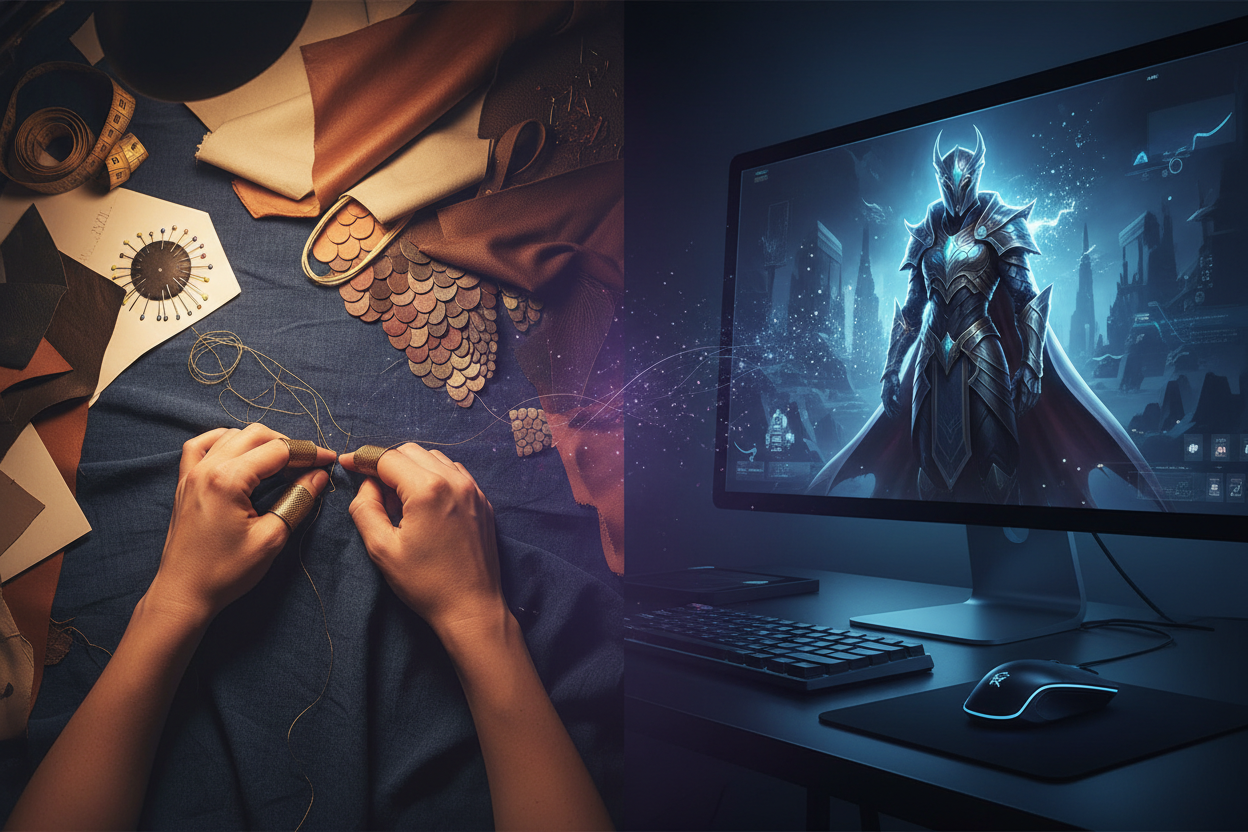
Cosplay's biggest controversy in 2026 isn't about a costume at all — it's about whether a photo counts as cosplay once artificial intelligence touches it. Between major convention policy changes, a public artist walkout, and recurring community fights over "is this AI or just heavy editing," this argument has moved from niche Discord servers into the mainstream fan press. Here's what actually happened, what each side is arguing, and where the line currently sits — without picking a winner, because the community itself hasn't picked one either.
This piece is based on direct reporting from convention organizers, tech and culture outlets, and real community threads where cosplayers debated specific, named cases. We've linked and summarized the actual events below rather than guessing at community sentiment.
What Actually Happened in 2026
San Diego Comic-Con banned AI art outright. As of 2026, SDCC's official rules state that material created by artificial intelligence — whether in part or in full — is not permitted in the art show, full stop. This is a hard reversal from the convention's previous policy, which allowed AI art as long as it was labeled and not sold. According to CNET, the change followed sustained pushback from working artists in the community.
DragonCon physically removed a vendor over AI art. Just before this, an exhibitor at Atlanta's DragonCon was escorted off the show floor by security for selling AI-generated prints in Artist Alley, after other vendors and attendees flagged the booth to organizers. Coverage of the incident described it as the most visible example yet of fan conventions actively enforcing anti-AI policies rather than just writing them down.
The debate isn't new to cosplay specifically — it's been simmering for years. A widely discussed Reddit thread centered on a single cosplayer's Loba costume (from Apex Legends), where commenters split into camps over whether the final images were AI-generated, heavily Photoshopped, or simply well-lit and well-posed. The disagreement wasn't really about that one photo — it became a stand-in for a much bigger question: how much digital enhancement is acceptable before a "cosplay photo" stops being a photo of a cosplay.
Fan-art competitions have already been burned by this exact issue. Separately, a major game studio's official fan-art contest disqualified multiple contest winners after community members demonstrated that several entries were traced or AI-generated rather than original work — a scandal that spread quickly once side-by-side image comparisons started circulating.
The Case Against AI in Cosplay
The strongest version of this argument isn't really about the technology — it's about labor and craft recognition.
- Cosplay has historically been a skills-based hobby. Sewing, prop-making, wig styling, and makeup are all learned, time-consuming skills. Critics argue that AI-generated or AI-heavy "cosplay" content erases the visible evidence of that labor, making it indistinguishable from someone who put in zero physical construction work.
- It undermines trust in what's actually being shown. When a costume photo goes viral, part of the appreciation is implicitly about the craftsmanship. If viewers can't tell whether a garment, prop, or even the person exists in physical form, that appreciation is arguably being given under false pretenses.
- It creates unfair competition in contests and commissions. The disqualified game-studio fan-art contest is the clearest example: entrants who traced or generated their work were competing directly against artists who built everything from scratch, for the same prize.
- Convention organizers are responding to working artists, not just online outrage. The SDCC and DragonCon policy changes weren't abstract; they followed direct pressure from artists who sell their work at these events and see AI-generated content as undercutting their livelihood.
The Case for AI as a Tool, Not a Replacement
The counter-argument generally doesn't defend "fake" cosplay — it defends a specific, narrower use of AI as one tool among many.
- Reference and planning use is different from final output. Some cosplayers use AI image generation the way others use Pinterest boards or fan art — as a mood board or starting point for a design they still physically build themselves.
- Photo editing has always existed on a spectrum. Lighting correction, color grading, and background cleanup were considered normal "post" work long before generative AI existed. Part of the community disagreement is genuinely about where basic editing ends and AI generation begins — not everyone agrees on that line, including in the Loba cosplay thread above.
- Some see it as a craftsmanship multiplier, not a shortcut. A minority view within the community frames AI as a way to speed up pattern-drafting or concept iteration, freeing up time for the parts of the build that still have to be done by hand — armor assembly, sewing, wig styling — rather than replacing them.
- Not every AI use case is the deceptive kind. There's a meaningful difference between labeling AI-assisted content honestly and passing it off as a fully hand-built costume; several community discussions distinguish between the two rather than treating all AI involvement as equally bad.
Character Spotlight: When the Character Is Already Virtual
The AI-cosplay debate gets genuinely more complicated — and more interesting — once you look at characters who are digital by design rather than adapted from a live-action or hand-drawn source. These three examples show why "is AI involved" isn't always a simple yes/no question.
Hatsune Miku: The Original "Virtual Idol"
Hatsune Miku predates this entire debate by nearly two decades. Launched in 2007 as a voice synthesis character built on Yamaha's Vocaloid engine, she was never a "real" performer to begin with — she's a collaboratively built, fan-extended digital persona, with her design philosophy explicitly built around letting fans create her songs, art, and outfits themselves. In 2024, her creators announced an updated "Hatsune Miku V6 AI" voicebank, and her visual design was refreshed again in 2026.
This matters for the cosplay debate because Miku cosplay has never claimed to represent a real human performer — the character is virtual at the source. A cosplayer building a physical, hand-crafted Miku costume (twin-tail wig, teal-toned lens, pleated skirt) is arguably doing something more clearly "traditional" than a photo-editing debate about a live-action character, precisely because there's no ambiguity about what's real: the character was always digital, and the craft is in bringing her into physical form.
Huntrix (KPop Demon Hunters): A Fictional Group Built From Real Performers
Huntrix, the fictional K-pop girl group at the center of Netflix's animated hit "KPop Demon Hunters," sits in an interesting middle position: the characters are animated and fictional, but their singing voices belong to real vocalists (Ejae, Audrey Nuna, and Rei Ami), and the choreography from songs like "Golden" and "Your Idol" was turned into real dance covers across social media.
Huntrix cosplay became one of the biggest costume trends of the past year — including as a top Halloween costume choice — precisely because fans are recreating a fictional idol group using entirely real, physical craft: refashioned jackets, hand-braided colored hair extensions, and DIY makeup. Separately, the fandom has had its own authenticity debate — over cultural specificity rather than AI, with discussion around costume choices that blended different East Asian cultural elements rather than accurately reflecting the Korean setting of the source material. It's a useful reminder that "authenticity" arguments in cosplay aren't only about AI — they show up any time a costume claims to represent something specific.
Cyberpunk Edgerunners' Lucy: A Character Who Is Literally About Digital Identity
Lucy Kushinada's entire arc in Cyberpunk Edgerunners revolves around a human mind and a digital/cyberspace identity blurring together — which makes her one of the more thematically loaded characters to bring up in an AI-authenticity debate. She remains a consistently popular, long-running cosplay choice years after the show's release, with a steady stream of physical builds (the signature bodysuit, jacket, and boots) as well as detailed makeup and temporary tattoo work showing up across TikTok and Etsy listings.
The irony worth noting: Lucy cosplay is almost entirely a physical-craft category — wigs, tattoos, custom boots — even though the character herself is fiction about digital consciousness. If anything, her popularity shows that fans specifically want the physical, hands-on version of a "digital" character, which cuts against the idea that audiences are becoming indifferent to whether something was actually built by hand.
The takeaway from all three: the more "virtual" or "fictional" a character already is, the more fans seem to want the human craftsmanship to be real and visible. AI ambiguity is a bigger flashpoint for characters that are supposed to represent real-feeling people or real construction — not for characters that were digital from the start.
Where Major Conventions Currently Stand
| Convention | AI Art Policy (2026) | Enforcement |
|---|---|---|
| San Diego Comic-Con | Full ban — AI-created material (partial or whole) not allowed in the art show | Art Show Coordinator has final judgment on acceptability |
| DragonCon | AI-generated work for sale is against Artist Alley policy | Actively enforced — a vendor was removed from the show floor in 2025 |
| Local/regional cosplay contests | Varies widely; many still lack a written AI policy | Inconsistent — often decided case-by-case by contest judges |
| Online cosplay communities (e.g., Reddit) | No formal policy; norms enforced through community debate and downvotes | Reactive — disputes typically emerge after a photo goes viral |
The pattern so far: large, artist-driven conventions are moving toward hard bans, while photography-based cosplay communities are still working this out informally, thread by thread.
What This Means If You're Building or Buying a Costume
Regardless of where you land on the debate, a few practical takeaways hold up either way:
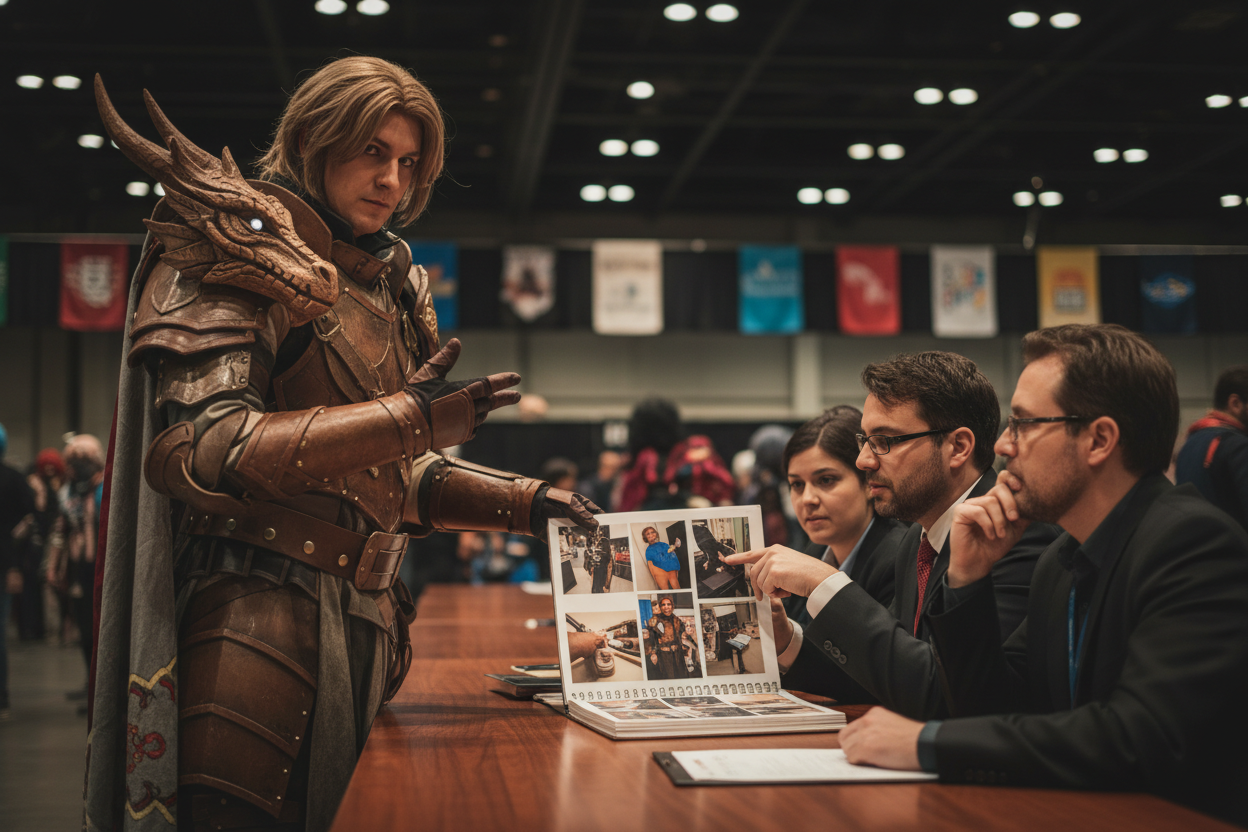
- Judged competitions increasingly expect you to be able to explain your build. If you're entering a craftsmanship contest, expect questions about materials, construction steps, and process — not just a finished photo.
- Labeling matters more than the tool itself. Most of the backlash in these cases wasn't "you used a digital tool" — it was "you didn't disclose it." Being upfront about editing or AI-assisted planning tends to avoid the worst of the community pushback.
- Physical costume quality is becoming a bigger differentiator, not a smaller one. As AI-generated images get harder to instantly spot, in-person conventions — where the actual garment, prop, and construction are visible up close — are arguably becoming more valuable proof of craft, not less.
Frequently Asked Questions
Did San Diego Comic-Con ban AI-generated cosplay costumes, or just AI art? The 2026 policy specifically targets the art show — meaning traditional 2D/3D artwork submissions — not cosplay costumes themselves. However, the same debate about authenticity and disclosure has extended informally into cosplay photography and contests, even without a formal costume-specific rule.
Is using AI for reference images considered "cheating" in cosplay? There's no universal community consensus. Many cosplayers distinguish between using AI as a mood-board or planning tool (generally tolerated) versus presenting AI-generated final images as a finished, hand-built costume (widely criticized).
Why did DragonCon remove a vendor over AI art? According to reporting on the incident, the vendor was selling AI-generated prints in Artist Alley, a section of the convention reserved for original creator work, and other exhibitors and attendees reported the booth to organizers for violating that policy.
How can I tell if a cosplay photo is AI-generated or just heavily edited? There's no foolproof method, which is exactly why this keeps causing community disputes. Common red flags people point to include inconsistent lighting between subject and background, anatomically odd details (hands, fabric physics), and a level of finish that doesn't match the photographer's or cosplayer's known skill level or portfolio history.
Conclusion
The AI-in-cosplay debate isn't settled, and it's unlikely to be settled cleanly — it's really two overlapping arguments (artist labor rights, and photo/content authenticity) that happen to intersect at the same moment. What is clear is the direction major conventions are moving: toward disclosure requirements and, in some cases, outright bans, driven by working artists rather than abstract policy concern. For cosplayers, the safest position right now isn't "never touch AI" or "use it freely" — it's simply "be transparent about what's hand-built and what isn't," since almost every backlash case so far has been about concealment, not the tool itself.

Dejar un comentario
Este sitio está protegido por hCaptcha y se aplican la Política de privacidad de hCaptcha y los Términos del servicio.