Introduction
"I can't believe my Tron cosplay BROKE" — but she still pulled together a modified version in time for LA Comic Con the very next day.
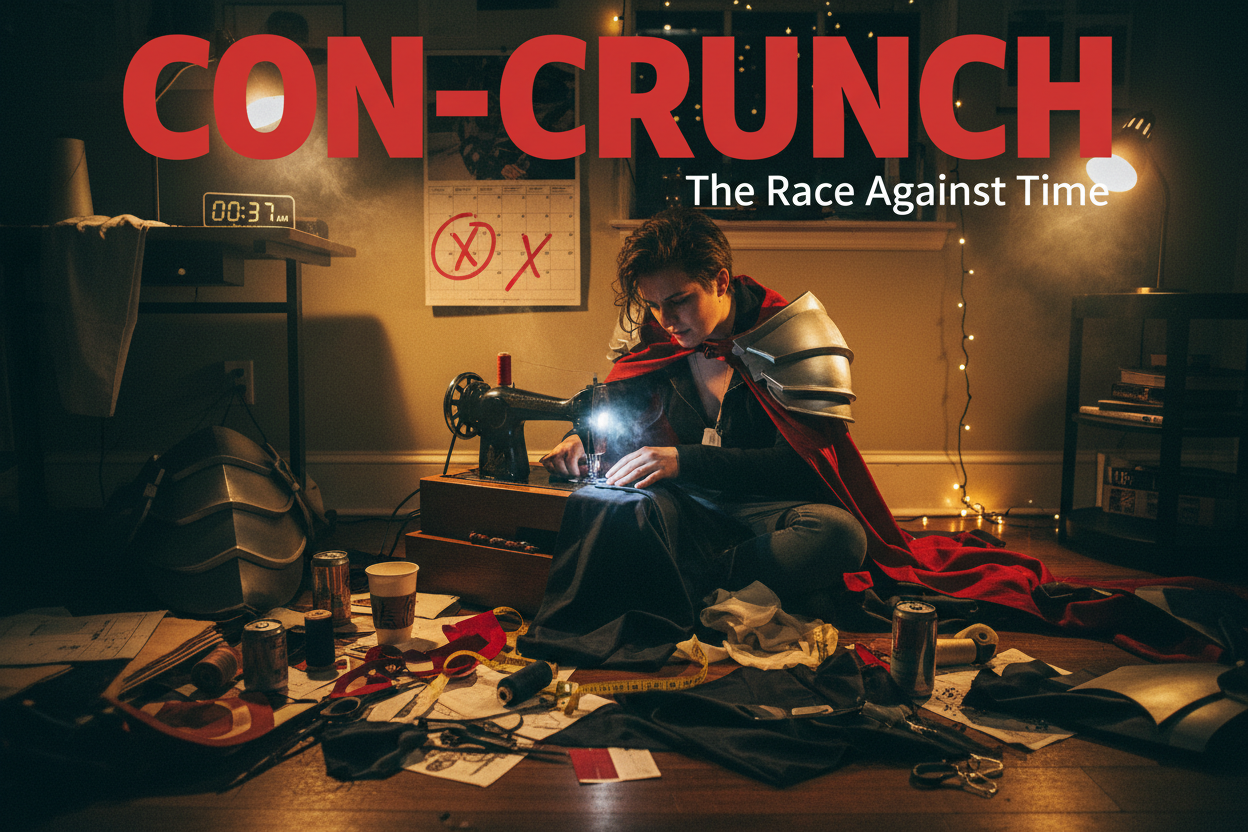
That real, tagged TikTok post captures a phenomenon the cosplay community has its own dedicated shorthand for: con-crunch. Tagged directly with #cosplaysewing and #concrunch, there is a steady stream of similar content showcasing cosplayers documenting one-day sewing rushes, last-minute alterations, and the particular kind of frantic, hyper-focused energy that shows up the night before a convention.
In this guide, we'll break down why con-crunch happens even to experienced, well-prepared cosplayers, what it actually costs beyond just stress, and how a smart mix of DIY work and ready-made cosplay costumes can build a genuine safety net against it.
What Con-Crunch Actually Looks Like
The real content behind this tag tells you more than the term alone does. One cosplayer's Tron build physically failed with only a day of runway before LA Comic Con, forcing a full redesign under real time pressure rather than by choice. Another post documents a full day spent making alterations while noting they "didn't know I was capable of that kind of focus anymore."
That specific detail matters: con-crunch isn't usually casual procrastination. It's often a genuinely intense, high-stakes problem-solving sprint under real constraints. The community's tone around it — equal parts stressed and a little proud of pulling it off — reflects that it's taken seriously as a shared experience, not just a punchline.
Why Con-Crunch Happens to Even Experienced Cosplayers
It's worth pushing back on the assumption that con-crunch is purely a beginner or poor-planning problem. Elaborate costume builds are genuinely long projects competing against jobs, school, and everyday life, leaving little margin for anything to go wrong.
And things do go wrong: fabric ships late, a seam fails under first wear, a prop breaks during transport, or a finished costume simply fails structurally days before the event with no warning at all.
Scope is another quiet contributor. Cosplayers ambitious enough to attempt highly detailed builds are taking on projects with more individual points of potential failure. That's not poor planning — it's the direct tradeoff of pursuing impressive work, leaving even skilled builders exposed to late-stage surprises.
The Real Cost of Con-Crunch
Beyond obvious stress, con-crunch carries costs that are easy to underestimate:
-
Sleep Deprivation: Arriving at a convention exhausted from an all-night build session affects the entire event experience.
-
Quality Sacrifices: Rushed construction under time pressure produces visibly different results. There's no room left to fix small mistakes or let materials (glue, paint, fabric treatments) properly cure.
-
Financial Risk: A costume that breaks days before an event forces last-minute, premium-priced purchases or expensive rush-shipping just to salvage a build.
Building a Con-Crunch Safety Net: Where Ready-Made Costumes Fit In
This is exactly the scenario where ready-made costumes earn a legitimate place in a dedicated DIY cosplayer's planning — not as a replacement for custom builds, but as genuine insurance against structural failures.
There are two distinct ways ready-made costumes function as a safety net:
-
As an Active Backup Plan: Keeping a reliable ready-made costume on hand means if your primary build fails late, you aren't forced to choose between an unfinished costume and no costume at all.
-
As a Scope-Reduction Tool: Using a ready-made base piece for one part of a larger build (a base garment, a wig, an accessory) reduces the total number of components that could fail. This concentrates your limited crunch-time energy on the custom elements that matter most.
Common Con-Crunch Triggers vs. Mitigation Strategies
| Trigger | Why It Happens | Mitigation Strategy |
| Costume fails structurally days before the event | Materials degrade, seams fail under first real wear, transport damage. | Keep a reliable ready-made costume as an active backup option. |
| Fabric or materials ship late | Supply chain delays, underestimating lead time. | Order well ahead; use ready-made base pieces for less critical components. |
| Scope creep on a highly detailed build | Ambition outpaces available time as small details compound. | Reserve ready-made pieces for secondary elements; focus custom work on your priority details. |
| Competing real-life obligations | Work, school, and daily life don't pause for a build timeline. | Build in buffer time deliberately; treat ready-made options as time-savers. |
| Underestimating drying/curing time | Rushed final stages don't account for materials needing time to set. | Schedule finishing work well before your deadline, not on the final day. |
Building Your Own Con-Crunch Contingency Plan
-
Identify your build's highest-risk components early. Address parts most likely to fail or require long shipping times first while you still have buffer time.
-
Keep one reliable, ready-made costume in your closet. It doesn't have to relate to your current build — just something wearable and presentable to grab if your primary plan falls apart. We rely on real, self-taken showroom photographs so you know exactly how reliable your backup will look and feel.
-
Don't schedule finishing work for the final day. Paint, glue, and fabric treatments need real time to cure properly.
-
Use ready-made pieces strategically. Buying a solid base costume frees up your crunch-time energy for the custom details you actually care about getting right.
Frequently Asked Questions
Is con-crunch just a sign of poor planning?
Not necessarily. Even well-planned, experienced cosplayers face con-crunch when materials fail, ship late, or a finished costume breaks unexpectedly close to an event.
Does buying a ready-made costume mean I'm not a "real" DIY cosplayer?
No — using ready-made pieces strategically, especially as a backup plan or for lower-priority components, is a practical risk-management choice, not a compromise of your DIY skills.
What's the biggest mistake that leads to con-crunch?
Scheduling all finishing work (paint, glue, final assembly) for the days immediately before an event, leaving no buffer time if something goes wrong.
Conclusion
Con-crunch isn't a character flaw or a planning failure — it's a predictable structural risk that comes with elaborate, ambitious cosplay builds. The real solution isn't trying to eliminate every possible point of failure; it's building genuine contingency into your process. Whether that's scheduling real buffer time, using ready-made pieces strategically for base components, or keeping a reliable backup costume on hand, having a Plan B ensures you make it to the convention floor stress-free. If you're ready to build your own con-crunch safety net, check our ready-made costume collection before your next deadline.

Dejar un comentario
Este sitio está protegido por hCaptcha y se aplican la Política de privacidad de hCaptcha y los Términos del servicio.