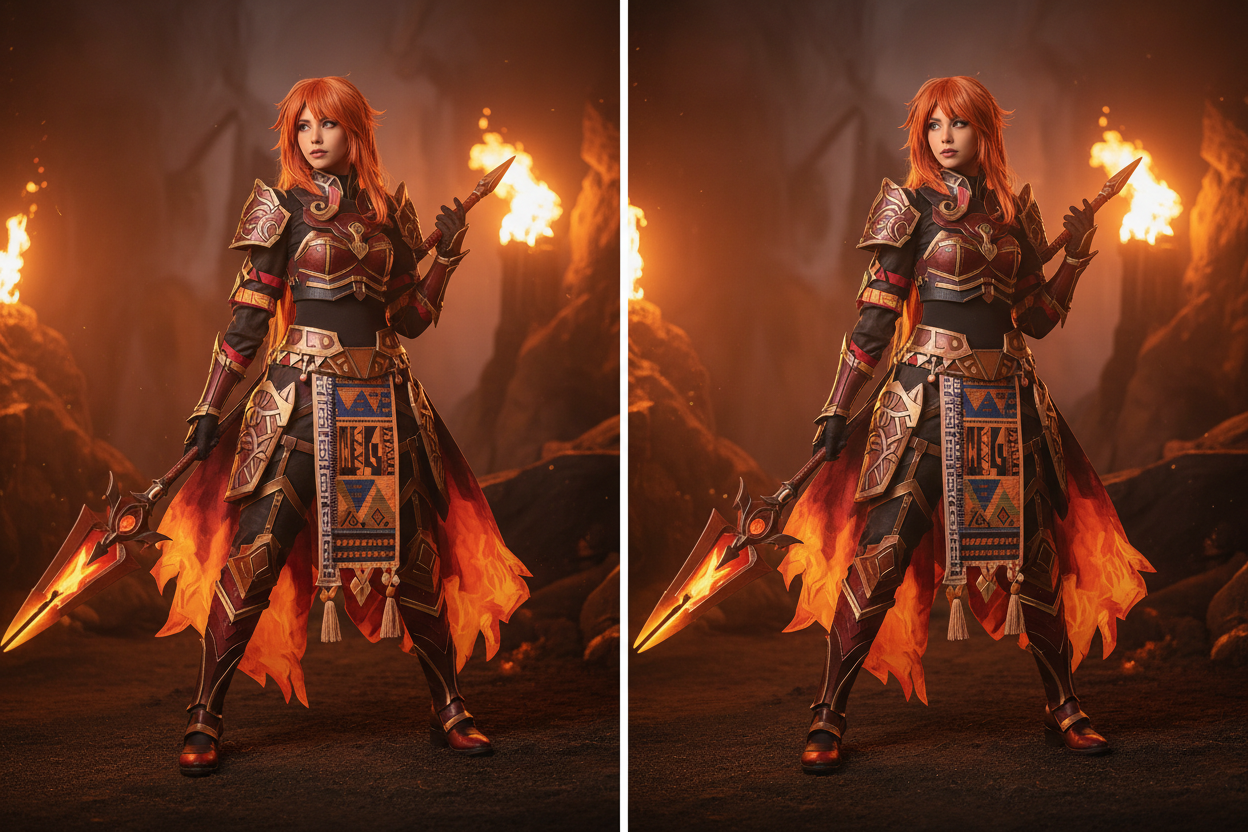
Quick verdict: If your priority is screen-accuracy, competition eligibility, or instant recognizability at a con, a canon-accurate costume matching HoYoverse's official character art is the safer, more broadly understood choice. If you're building a look that reflects the cultural inspiration behind these characters, want your cosplay to better represent your own identity, or want to take a clear creative stance in an ongoing community conversation, a thoughtfully reimagined costume can be a meaningful and increasingly common choice — just go in aware that it will read as a statement, not a neutral styling decision.
Before comparing the two options directly, it's worth being accurate about where this debate actually comes from, since it's more than just an online argument about "artistic freedom."
When HoYoverse revealed Genshin Impact's Natlan region, several new characters carried names drawn directly from real-world deities tied to cultures of color — Mavuika from the Māori fire goddess Mahuika, and Ororon from Ọlọrun, the supreme deity in the Yoruba religion — yet both characters, along with several others in the region, were designed with light or pale skin despite Natlan's stated inspiration from West African, Mesoamerican, and Polynesian cultures. This drew substantial, well-documented criticism, including a petition that gathered tens of thousands of signatures, a #BoycottHYV hashtag, and public statements from the game's own English voice actors, including Sucrose's Valeria Rodriguez, calling on HoYoverse to better respect the cultures it draws inspiration from.

In response, a number of cosplayers and fan artists began producing redesigns — adjusting skin tone, and sometimes costume details, to better reflect the specific cultural inspirations behind these characters — while another part of the fandom pushed back hard against those redesigns, arguing that a character's official, canon design should be treated as fixed once released, regardless of the surrounding controversy. Both camps include people acting in good faith for different reasons: some canon-purists are responding specifically to the redesign trend rather than the underlying representation critique, while some redesign cosplayers are directly motivated by the same concerns raised in the original backlash. This guide isn't here to settle that argument — it's here to help you decide, practically, which approach fits what you're trying to accomplish with your own costume.
Core Comparison Table
| Feature / Dimension | Canon-Accurate Costume | Culturally-Reimagined Costume |
| Matches official game art | Yes, exactly | No — deliberately adjusted |
| Instant recognizability | Very high, even to casual fans | Depends on costume/prop details carrying the recognition |
| Competition/contest eligibility | Accepted at virtually all cosplay competitions | May be judged separately or questioned at strict "accuracy" competitions — check rules in advance |
| Availability of pre-made options | Wide — many sellers produce screen-accurate versions | Limited — often requires custom commission or DIY modification |
| Community reception | Broadly accepted, low controversy risk | Mixed — strong support from some communities, pushback from others |
| Personal/cultural expression | Limited to the official design as-is | High — lets you reflect specific cultural details or your own identity |
| Best suited for | Cons, general photos, competitions, first-time cosplayers of the character | Personal projects, representation-focused content, statement pieces |
Dimension One: Practicality and Ease of Execution
A canon-accurate Mavuika Cosplay Costume or Ororon Cosplay Costume has a real practical advantage: because it matches official reference art directly, there's an established visual target to build or buy toward, and it requires no additional creative decision-making about skin tone, makeup, or costume adjustment beyond standard cosplay techniques. This makes it the more straightforward option for cosplayers newer to the character, or for anyone who wants to focus their creative energy on construction quality rather than redesign choices.
A culturally-reimagined costume takes more deliberate planning. Beyond the costume itself, you're making creative decisions about which elements to adjust — skin tone, specific pattern or textile choices that might better reflect Yoruba or Māori visual traditions, hairstyling — and ideally doing some research into the actual cultural references being drawn from, rather than adjusting the design without that context. Cosplayers who've done this well tend to treat it as a research-informed reinterpretation rather than a purely aesthetic tweak, which takes more upfront thought than working directly from official art.
Dimension Two: Price and Availability
Canon-accurate costumes benefit from being a known quantity in the cosplay commerce market — because the official designs are fixed and widely referenced, more sellers offer ready-made or made-to-order versions, giving you a wider range of price points and faster turnaround than a custom project would require.
Culturally-reimagined costumes are, almost by definition, harder to buy off the shelf, since they reflect an individual cosplayer's specific creative choices rather than a single fixed reference. This usually means either commissioning custom work (which raises cost and turnaround time similarly to any commission, as covered in our custom-vs-ready-to-wear comparison guide or starting from a canon-accurate base costume and modifying makeup, styling, and select costume details yourself. Budget accordingly — this route is rarely the cheaper or faster option.
Dimension Three: Community Reception and Support
This is the dimension where the two options genuinely diverge the most, and it's worth going in with realistic expectations either way. A canon-accurate costume is close to universally accepted — it won't spark debate, and it's the safer choice if you specifically want to avoid wading into the controversy at all. That said, it's worth knowing that some corners of the fandom now associate strict canon-accuracy on these specific characters with taking an implicit side in the debate, given how politically charged the original design controversy became — so even a "neutral" choice may occasionally get read as a statement by some.
A culturally-reimagined costume will generally draw more engaged, and more polarized, reactions. Many fans — including plenty who were vocal in the original criticism of HoYoverse's designs — genuinely appreciate and support these redesigns as a meaningful response to a real critique. At the same time, expect pushback from cosplayers who feel strongly that modifying a canon design is disrespectful to the source material regardless of the underlying reasoning, and be prepared for your work to become part of the broader online debate rather than existing outside it. Neither reaction reflects on the quality of your craftsmanship — it reflects the reality that this is currently a genuinely unresolved conversation within the fandom.
When Should You Choose a Canon-Accurate Costume?
Choose canon-accuracy if you're cosplaying Mavuika or Ororon for a costume competition with strict accuracy judging criteria, if you want the character to be instantly recognizable without needing to explain your creative choices, if you're newer to cosplay and want to focus your effort on construction rather than redesign research, or if you'd simply rather not engage with the surrounding controversy at all and want a straightforward, widely accepted version of the character.
When Should You Choose a Culturally-Reimagined Costume?
Choose a reimagined design if you want your cosplay to reflect the real-world cultural inspirations behind these characters more directly than the official art currently does, if representation is personally important to you and you want your work to be part of that ongoing conversation, if you're cosplaying the character in a way that better reflects your own identity, or if you're an experienced cosplayer looking for a more research-driven, creatively ambitious project than a straightforward recreation offers.
Summary and Next Steps
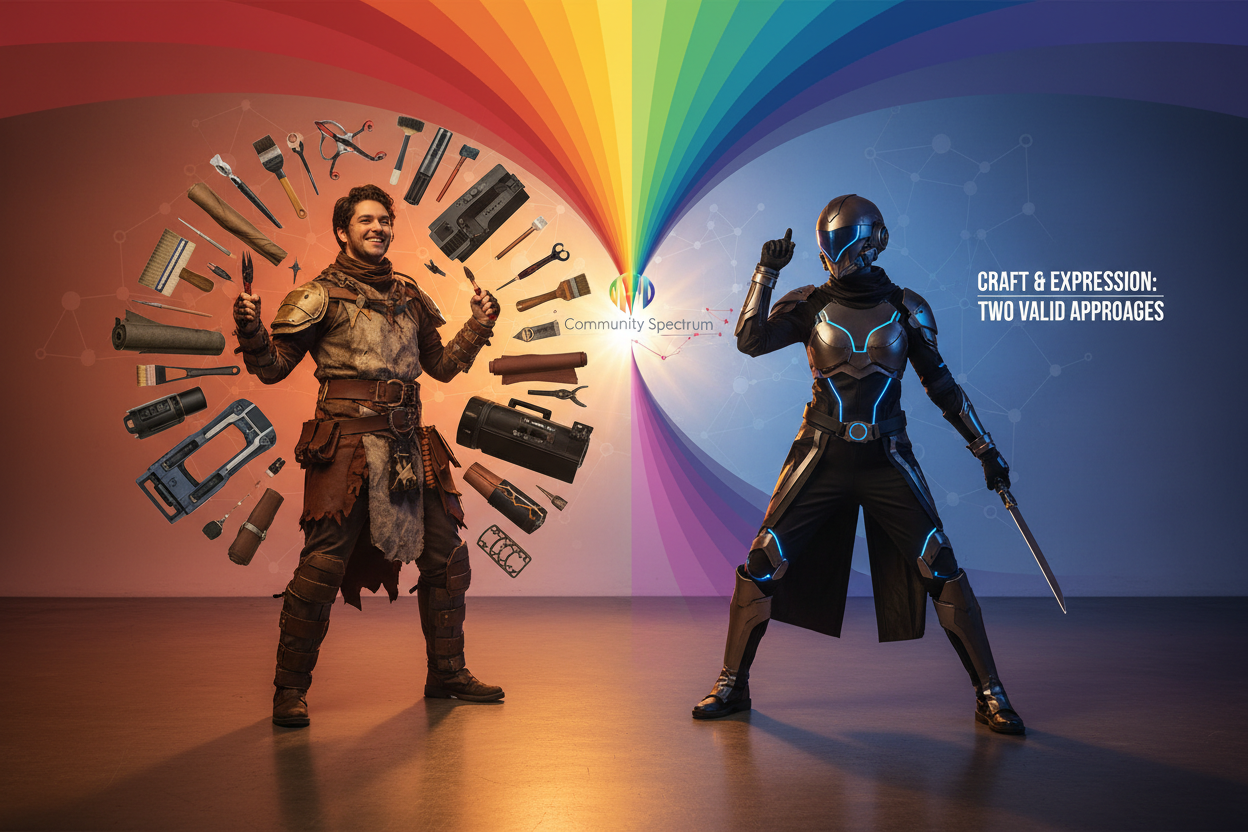
Both approaches are legitimate ways to cosplay these characters, and the "right" choice genuinely depends on what you're trying to get out of the project — accuracy and broad acceptance on one hand, or personal and cultural expression within an active, still-unresolved community conversation on the other. Whichever direction you choose, go in with a clear sense of why you're making that choice, since it will likely come up in comments either way.
Browse our canon-accurate Natlan costume pieces if you're building toward official reference art, or reach out about custom commission options if you're planning a reimagined design and want help bringing specific research-informed details to life.

Dejar un comentario
Este sitio está protegido por hCaptcha y se aplican la Política de privacidad de hCaptcha y los Términos del servicio.