Table of Contents
-
Chapter 1: The Basics — Why Natlan Cosplay Is Blowing Up Right Now
-
Chapter 2: Core Strategy — Choosing Between Mizi, Kinich & Iansan
-
Chapter 3: Advanced Techniques — Recreating Tribal Armor Without Real Leather or Metal
Chapter 1: The Basics — Why Natlan Cosplay Is Blowing Up Right Now
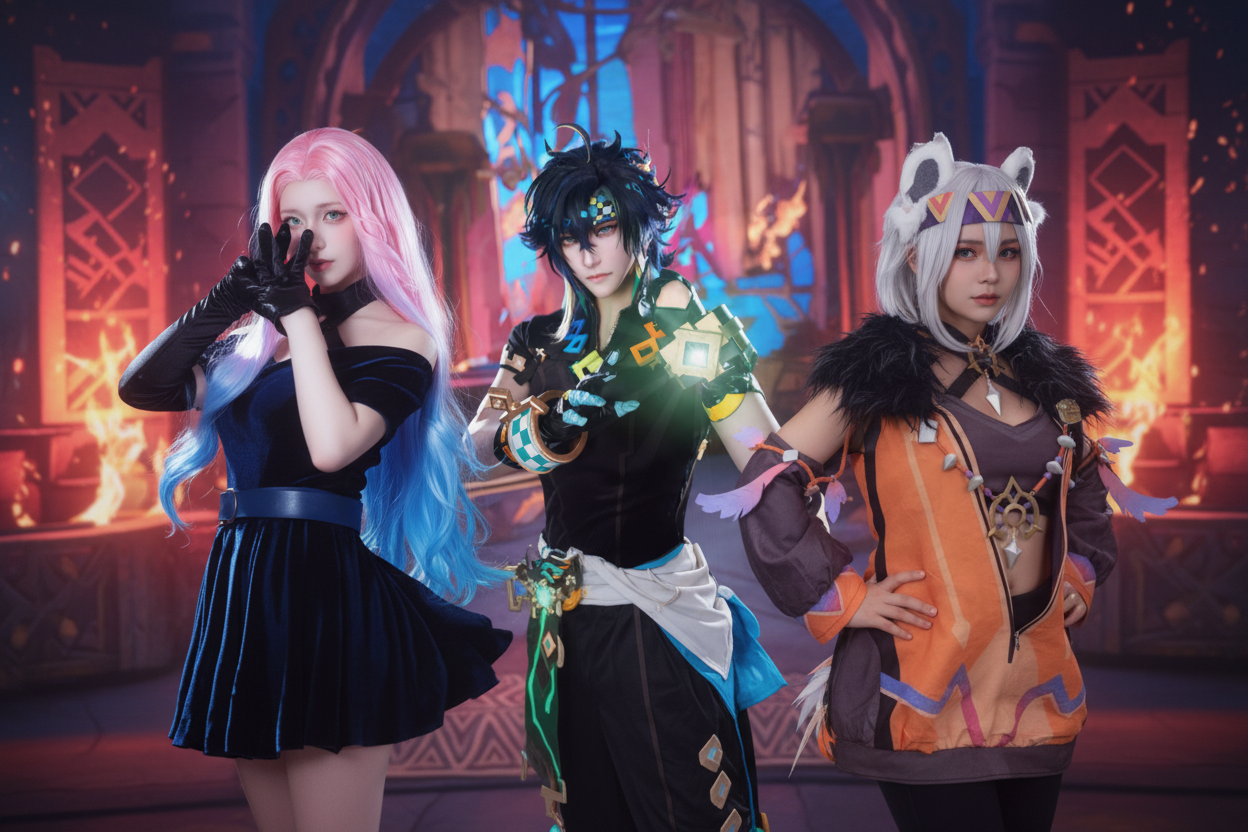
If you've scrolled TikTok recently, chances are you've already run into content under #genshinimpactcosplay #natlan #mizicosplay #kinichcosplay — especially the "Richman Trend" built around Mizi, which gets a fresh wave of recreations paired with CapCut transitions almost daily. Even earlier characters like #arlecchinocosplay and #lyneycosplay remain extremely high-volume long-tail search terms, which tells you Natlan hasn't just had one spike of hype — it's been consistently fueling the cosplay community since launch.
So why is Natlan specifically hitting this hard? There are three main reasons.
-
Extremely high visual recognizability that's built for short-form video. Natlan's character designs lean heavily on saturated tribal color palettes and unusual accessories — horns, feathers, tribal patterning — the kind of design that reads instantly, even in a six-second clip. Viewers don't need any context to recognize the character, which is exactly the condition that makes transition-style transformation videos go viral in the first place.
-
New character banners create a natural traffic pulse. Every time a new banner drops, retweets and shares of cosplay recreations spike sharply that same week on X/Twitter, and a lot of cosplay accounts specifically post WIP (work-in-progress) shots to ride that wave and grow their following. That means the earlier you plan a Natlan build — ideally around a banner's release window — the bigger the traffic payoff.
-
The difficulty itself has become part of the appeal. Top-voted Reddit threads on r/cosplay about Natlan are frequently titled something like "this costume structure is way more complicated than it looks, where do I even start" or "how do people even build Kinich's dinosaur companion." In other words, the sheer complexity of these builds has become its own talking point — the "puzzle-solving" nature of figuring out how to construct these pieces keeps Reddit threads and comment sections active long after a typical trend would have cooled off.
For beginners, understanding these three points matters. You're not chasing a fading trend — you're stepping into a niche that's already built a stable, recurring content ecosystem. That's also exactly why deciding which character to start with deserves real planning before you pick up a single tool — jumping straight into your favorite character without checking the accessory workload is the single most common way beginners get stuck.
Chapter 2: Core Strategy — Choosing Between Mizi, Kinich & Iansan
The three most-discussed entry-level Natlan characters right now are Mizi, Kinich, and Iansan, but their build difficulty varies enormously. The most common mistake beginners make is picking based on which character they like most, rather than matching the character to their own actual skill level.
Mizi — The Best Starting Point for True Beginners
Mizi's costume structure is relatively simple, with most of the visual weight carried by her hairstyle and color palette rather than complex construction — her overall silhouette leans closer to a stylized everyday outfit. That's part of why the "Richman Trend" has been able to generate so much fan content around her so quickly: there's no heavy build required, so most of the effort can go into wig styling and makeup instead of structural work. If this is your first attempt at a Natlan cosplay, Mizi is the lowest-pressure entry point on this list.
Kinich — Medium Difficulty, Bottlenecked by the Plush Companion
Kinich's base outfit isn't especially complicated, but his signature dinosaur companion/plush accessory is the single most-mentioned sticking point on Reddit. It doesn't fall neatly into either "armor prop" or "simple sewing" — it sits somewhere between soft sculpture and plush crafting, and beginners frequently get stuck simply because they can't find the right materials or tutorials for this specific category of build. If you're willing to invest time learning soft-prop construction, Kinich makes for a genuinely rewarding mid-tier project. If your time is limited, buying a ready-made set is the more efficient path — which is exactly the gap a Kinich cosplay costume set fills: it skips the trial-and-error of building every accessory from scratch and gets you photo-ready faster.
Iansan — The Hardest Build, Loaded with Tribal-Style Accessories
Iansan's design incorporates a heavy amount of tribal patterning, feather ornamentation, and accessories meant to mimic metal or leather textures, making her the most technically demanding build of the three. The question beginners run into most often is "what material actually replicates that leather-and-metal look without the weight and cost" — we'll break that down fully in Chapter 3. If this is your first-ever cosplay, Iansan isn't the character to start with. But if you've already got one or two full builds under your belt, she's a genuinely satisfying next-level challenge.
How to Actually Decide Between the Three
Rather than agonizing over which character looks best, ask yourself three practical questions:
-
How much time am I actually willing to spend on accessory construction? (Mizi: minimal / Kinich: moderate / Iansan: substantial)
-
What's my realistic budget ceiling? (The main cost difference between these three isn't the base garment — it's the accessories and materials.)
-
Am I building toward a specific convention deadline, or do I have flexible time to work at my own pace?
If time and budget are both tight, Mizi is close to the only sensible choice. If you want a project with real challenge but not enough to be discouraging, Kinich hits the sweet spot. Save Iansan for after you've built up some hands-on construction experience.
Chapter 3: Advanced Techniques — Recreating Tribal Armor Without Real Leather or Metal
This is the most technical section of the guide, and it directly addresses the biggest pain point beginners run into: what material actually replicates Natlan's horns, feathers, and tribal patterning without needing real leather or metal — while staying affordable and still looking sharp.
Why Real Leather or Metal Isn't the Right Call for Beginners
Real leather and metal do get you the closest possible texture match to the original character art, but they come with two serious downsides for anyone new to prop-making. First, they have a steep fabrication learning curve — shaping either material well genuinely requires specialized tools most beginners don't own yet. Second, finished pieces tend to be heavy, which makes a full day of convention wear exhausting and makes transport far riskier, since rigid metal or leather pieces are much more prone to damage from bumps and pressure in transit.
Budget-Friendly Option 1: EVA Foam + Heat Shaping
EVA foam is the go-to material across the cosplay community for prop construction, valued for being lightweight, easy to cut, and moldable with a heat gun — all at a fraction of the cost of real leather or metal. To get raised tribal-pattern texture out of foam, the typical process is shaping the base form first, then carving or pressing detail lines with a wood-burning tool or craft knife, and finishing with primer and paint to fake either a metallic or leather-like finish. The end result weighs only a fraction of what an equivalent metal piece would, which matters a lot for anything you'll be wearing for a full day at a convention.
Budget-Friendly Option 2: Thermoplastic Sheeting (Worbla-Type Materials)
If your budget allows it, thermoplastic sheeting holds crisper, more rigid shapes than foam alone, which is especially useful for tribal-pattern accessories that need clean, defined edges. The working process is similar to foam (heat-shape it into form), but the finished texture reads more like a hard shell, which works especially well for pieces that need to show off sharp geometric patterning.
Budget-Friendly Option 3: Attached Feather & Pattern Accents
The heavy feather ornamentation common across Natlan designs doesn't require hand-crafting every single feather from scratch — pre-made decorative feathers are widely available and can simply be grouped and secured in clusters. The priority here is matching color and controlling density to approximate the original design, not obsessing over the accuracy of any single feather.
If You'd Rather Not Build These Yourself
All three methods above take real time investment and come with a learning curve. If efficiency matters more to you right now, or you don't yet feel confident tackling this kind of accessory work solo, going straight to a ready-made faux leather tribal props kit is the more reliable route. These kits typically already have the base patterning and texture work done, leaving you to just fine-tune the color match and fit for your specific character — which cuts down dramatically on the time between "deciding to build a Natlan cosplay" and actually shooting photos in it.
Chapter 4: Essential Tools & Resources
Your wig is the single most recognizable element — prioritize it first. Natlan characters tend to have highly saturated, distinctive hair colors (Mizi's gradient palette being a great example), and an accurately colored, well-styled wig is often what gets a character recognized in a photo before anyone even registers the costume details. Even if you haven't decided whether you're building every accessory yourself, start with the wig — browsing a dedicated shop Genshin Impact wig collection makes it easy to compare styles and difficulty across characters before you commit, so you're not left redoing work because of a mismatched color or cut.
Basic toolkit for foam/thermoplastic builds:
-
Heat gun: For shaping foam or thermoplastic — far more controlled and efficient than a regular hair dryer.
-
Craft knife + wood-burning/scoring tool: For cutting and pressing in pattern detail.
-
Contact cement: Foam-specific adhesive that won't peel the way general-purpose glue does.
-
Primer + acrylic paint: For building up a convincing metallic or leather-style finish.
-
Pre-made decorative feathers and tribal accent pieces: To cut down on hand-crafted work.
Where to find good reference material: Beyond official character art, it's worth following other cosplayers' WIP posts within the community — these usually show the actual construction steps and material choices in a way finished photos never do, and they're a big part of why Natlan cosplay content keeps generating engagement on X/Twitter well after a character's initial release.
FAQ
How much should a beginner budget for their first Natlan cosplay? If you go with a structurally simple character like Mizi, a wig plus basic accessories can absolutely be done on a modest budget. If you're tackling Iansan, with all her tribal accessories, expect a noticeably higher budget — especially for the one-time cost of tools and materials. It's worth starting with a lower-budget character first so your tool investment is already made by the time you take on a more demanding build.
Do I really need to build Kinich's plush companion myself? Not necessarily. If your priority is getting photo-ready quickly for an upcoming event, buying a ready-made set is the more efficient choice. If you genuinely enjoy the hands-on process and aren't racing a deadline, building it yourself is more rewarding — and it's also a great source of WIP content to share along the way.
Should I use EVA foam or thermoplastic sheeting? If your accessories are mostly curved and lightweight (like tribal accents that need to sit close to the body), foam is the better call. If you need crisp geometric edges and stronger structural support (like a dramatic tribal headpiece), thermoplastic performs better. If you're not sure yet, start with foam to build up your shaping skills before moving on to thermoplastic.
When's the best time to start prepping for a new Natlan character? Based on the community traffic patterns discussed in Chapter 1, engagement spikes sharply the week a new banner drops. If you want to catch that wave, start gathering materials and practicing construction roughly one to two weeks before the banner releases, so you already have a partial or finished build ready to post the moment the character launches — that timing noticeably improves your odds of catching peak visibility.
Summary & Related Reading
Natlan cosplay has stayed relevant for so long largely because of two overlapping factors: extremely high character recognizability, and the inherent talking-point value of the construction difficulty itself. The practical takeaway for beginners is simple — don't pick your favorite character, pick the character that matches your current skill level. Mizi is the right entry point if you're starting from zero, Kinich is a genuinely rewarding mid-tier project, and Iansan is best saved for once you've got some build experience behind you.
On the materials side, EVA foam and thermoplastic sheeting are currently the best value substitutes for real leather and metal tribal accessories — they cut both cost and wearer fatigue dramatically while still holding up visually. And if time is tight, going with a ready-made costume set or prop kit is a completely legitimate path; there's no requirement that everything be hand-built to count as a "real" cosplay.
Suggested further reading:
-
A wig care and anti-tangle guide to keep your Natlan wig looking sharp across repeated wears
-
A convention-day survival guide, especially useful for accessory-heavy characters like Iansan
-
A beginner's guide to budget cosplay photography, ideal if you're still deciding how much to invest before committing further

Dejar un comentario
Este sitio está protegido por hCaptcha y se aplican la Política de privacidad de hCaptcha y los Términos del servicio.