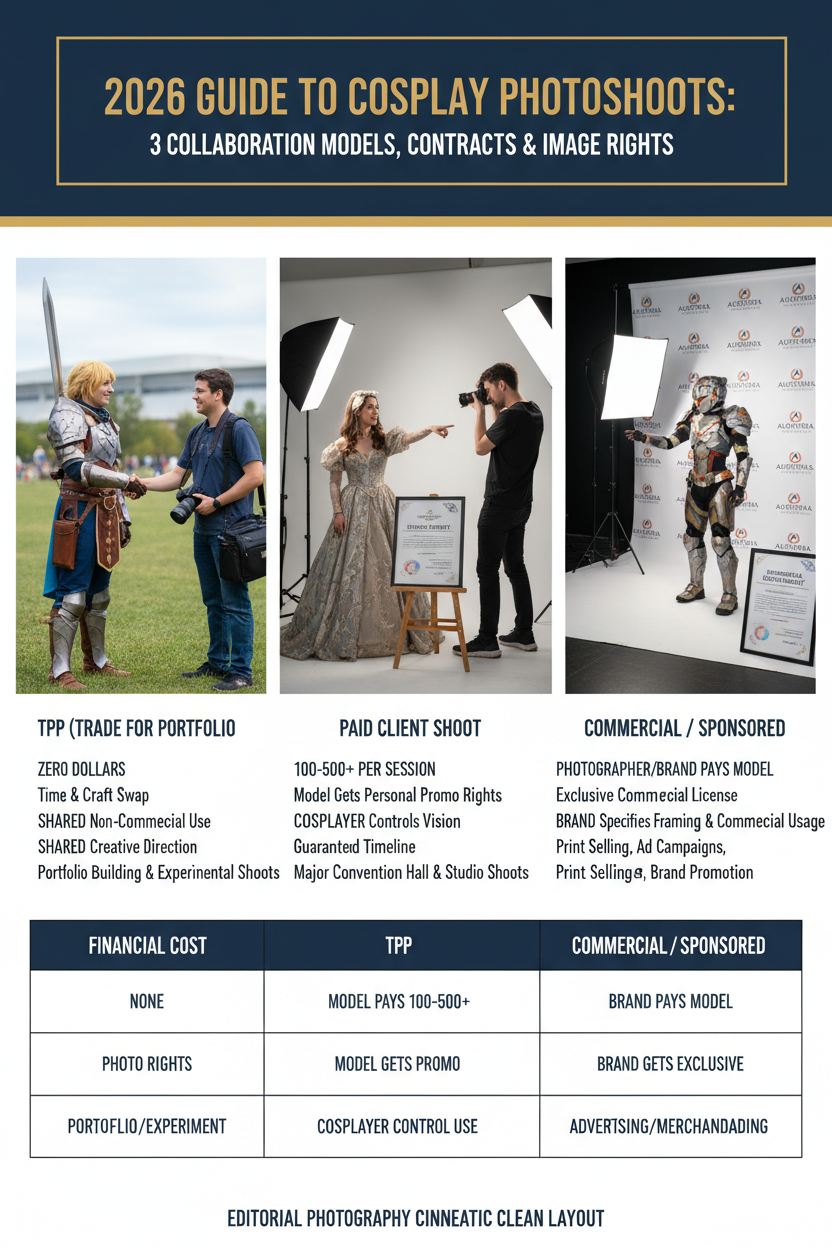
Navigating photographer collaborations requires balancing creative control with personal safety and legal protection. Whether scheduling a mutual cosplay TFP photoshoot or hiring a high-end studio, defining model rights, photo delivery schedules, and commercial licensing upfront prevents disputes. This guide breaks down evaluation criteria across contract protection, financial investment, and copyright ownership for cosplayers and creative artists.
Quick Comparison Matrix: Cosplay Collaboration Models
| Collaboration Model | Financial Cost | Cosplay Photo Rights | Delivery & Control | Primary Use Case |
| 1. TFP (Trade for Portfolio) | $0 (Time & Craft Swap) | Shared non-commercial use | Shared creative direction; variable turnaround | Portfolio building & experimental shoots |
| 2. Paid Client Shoot | $100 – $500+ (Per Session) | Model gets personal promo rights | Cosplayer controls vision & guaranteed timeline | Major convention hall & studio shoots |
| 3. Commercial / Sponsored | Photographer/Brand Pays Model | Exclusive commercial license | Brand specifies exact framing & commercial usage | Print selling, ad campaigns & brand promo |
1. TFP (Trade for Portfolio) Photoshoots — Equal Collaboration Without Cash Exchange
A Trade for Portfolio (TFP) shoot—sometimes called Trade for Print—is a non-monetary arrangement where both cosplayer and photographer exchange time, skill, and labor to expand their creative portfolios.
                    [ TFP WORKFLOW & BALANCE ]
                                 │
     ┌───────────────────────────┴───────────────────────────┐
     ▼                                                       ▼
Cosplayer Provides                               Photographer Provides
- Handcrafted/tailored costume                   - High-end camera gear & lighting
- Styling, wig sculpting & makeup                - On-site direction & post-editing
- Travel & staging prep                          - High-resolution color-graded edits
-
Core Features: No money changes hands between creator and photographer. Both parties split location permits or studio fees equally if applicable.
-
Pros:
-
Zero out-of-pocket editing costs for cosplayers.
-
Excellent for trying risky creative lighting, complex SFX, or dynamic action poses.
-
Builds valuable networking connections within local convention scenes.
-
-
Cons:
-
Slower photo delivery timelines (photographers prioritize paying clients first).
-
Creative control is split 50/50, meaning photo selections require mutual agreement.
-
Higher risk of ghosting or unfulfilled photo deliveries without a written agreement.
-
-
Target Audience: Beginner to mid-level cosplayers looking to build professional portfolios, and photographers seeking skilled models to practice character lighting techniques.
2. Standard Paid Cosplay Photoshoots — Direct Service for Guaranteed Delivery
In a paid client shoot, the cosplayer hires a professional photographer for a set hourly rate or package price, establishing a clear service-provider relationship.
-
Core Features: Paid via hourly rate or package deal. Includes guaranteed edit turnarounds (e.g., 10 edited images in 14 days) and raw photo review privileges.
-
Pros:
-
Total creative direction stays with the cosplayer (pose choices, lighting style, location selection).
-
Enforceable delivery deadlines backed by a service contract.
-
Priority retouching and consistent color-grading quality.
-
-
Cons:
-
Significant financial investment ($100–$500+ per session).
-
Standard personal-use contracts usually prohibit selling prints without paying additional commercial licensing fees.
-
-
Target Audience: Established creators showcasing detailed craftsmanship, convention hall attendees needing guaranteed hall shots, and cosplayers entering costume contests.
3. Commercial & Brand-Sponsored Shoots — Paid Modeling & Copyright Licensing
Commercial shoots occur when a costume manufacturer, prop maker, or media platform hires a cosplayer to showcase products for promotional campaigns, store listings, or merchandise sales.
-
Core Features: The creator is paid a modeling fee or receiving high-value gear in exchange for commercial usage rights granted to the brand or photographer.
-
Pros:
-
Direct monetary income and brand visibility.
-
Access to professional studio sets, hair/makeup artists, and high-production lighting setups.
-
-
Cons:
-
Minimal creative input; models must follow strict brand style guides and shot lists.
-
Complex contract terms covering NDA non-disclosure, image modification restrictions, and duration limits on ad usage.
-
-
Target Audience: Professional cosplay models, sponsored creators, and brand ambassadors working with commercial manufacturers.
How to Choose the Best Cosplay Photoshoot Model for You?
Selecting the right photoshoot structure depends on your budget, timeline, and intended use for the final images:
-
Choose TFP when your primary goal is creative experimentation, social media sharing, or building initial portfolio shots without financial pressure. Always sign a simple written agreement outlining delivery dates and image limits.
-
Choose Paid Shoots when preparing entries for costume contests, attending high-profile conventions, or when you require exact delivery deadlines for time-sensitive social media schedules. Ensure you use a formal cosplay photographer contract.
-
Establish Safety & Boundary Rules:
-
Chaperone Clause: Always reserve the right to bring a handler, friend, or chaperone to any shoot location.
-
Watermarking & Tagging: Ensure the contract specifies mandatory social media tagging (@photographer and @cosplayer) on all posted edits.
-
Raw Photo Clause: Clarify upfront whether unedited RAW files will be released; most photographers restrict unedited RAW releases to protect their branding.
-
Review our complete cosplay photoshoot safety guide to download free contract templates, safety checklists, and convention gear guides before your next session.
Summary & Related Internal Reading
Establishing clear boundaries between TFP and paid photography protects both your personal safety and your creative intellectual property. By using written model releases and setting delivery expectations early, you build healthy, long-term creative partnerships across the cosplay community.
Related Guides & Safety Resources:
-
5 Common Cosplay Beginner Mistakes to Avoid: Key tips on convention navigation, wig prep, and safety boundaries.
-
How to Handle a Cosplay Malfunction Gracefully: On-set emergency fixes and stage performance survival tactics.
-
Cosplay Photography & Costume Essentials: Portable ring lights, emergency repair kits, and photo-ready props.


Hinterlasse einen Kommentar
Diese Website ist durch hCaptcha geschützt und es gelten die allgemeinen Geschäftsbedingungen und Datenschutzbestimmungen von hCaptcha.