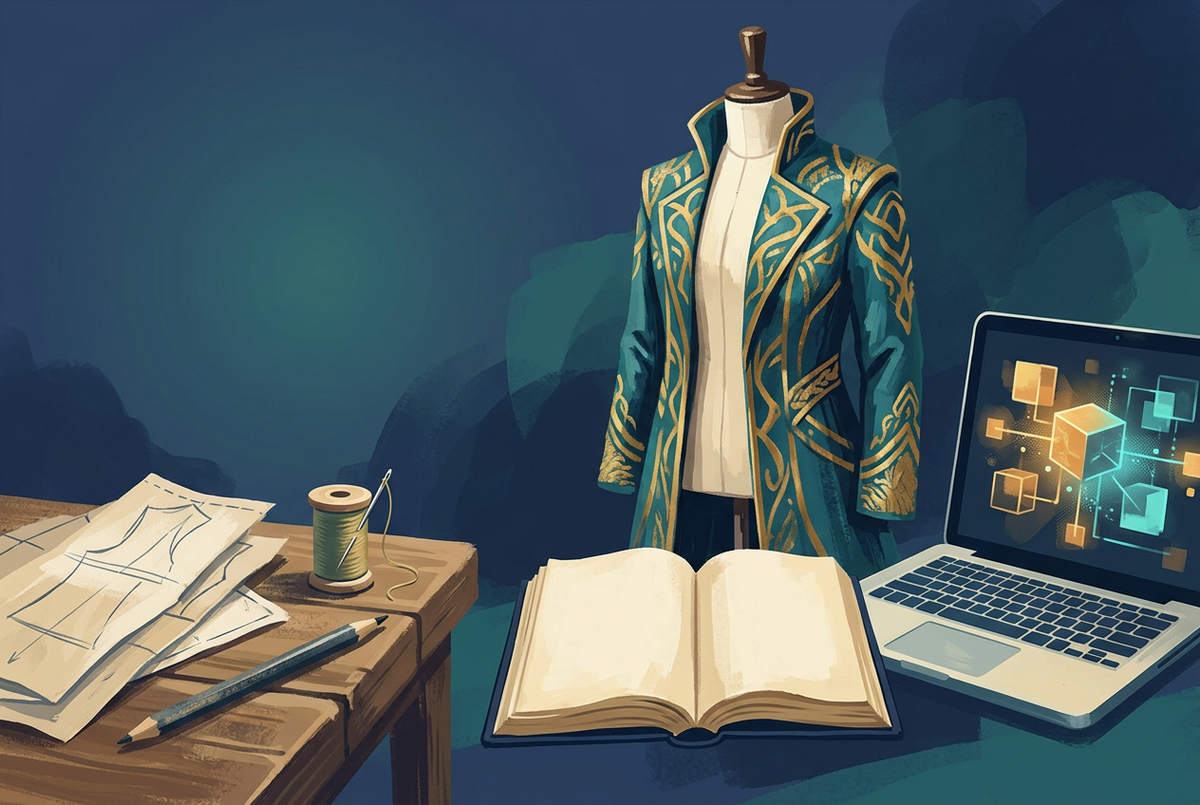
Introduction / TL;DR
Can you use generative AI in a cosplay contest? At Youmacon 2026, the answer is no: its official cosplay rules strictly prohibit generative AI in contest entries, including AI-generated build books, character art, 3D-print files, sewing patterns, performance scripts, and audio or video assets.
However, this is an event-specific rule, not a universal policy across all conventions. Youmacon also asks competitors to email its Cosplay Department if they are unsure whether a particular tool qualifies as generative AI.
Why Is Generative AI Becoming a Question for Cosplay Competitions?
Cosplay has always involved more than putting on a costume. It combines character interpretation, material selection, sewing, prop construction, visual design, and sometimes live performance.
For many makers, the process is an important part of the experience. A costume is not simply a finished image: it is the result of decisions, experiments, mistakes, technical skills, and personal interpretation.
This is why generative AI creates a particularly interesting question for cosplay competitions.
A tool that generates a character illustration, creates a sewing pattern, writes a performance script, or produces a 3D-print file may contribute directly to the work that judges evaluate. If a competition is intended to recognize the entrant's creative and technical contribution, organizers need to decide how much assistance is acceptable.
Youmacon has addressed this question through an explicit rule in its 2026 cosplay regulations.
What Does Youmacon's AI Rule Actually Say?
Youmacon's official 2026 cosplay rules state:
"The use of Generative AI in contest entries is strictly prohibited."
The policy then lists examples of prohibited AI-generated materials, including:
-
AI-generated build books
-
Performance audio and video assets
-
Character artwork
-
3D-print files
-
Performance scripts
-
Sewing patterns
The list is introduced as examples rather than an exhaustive definition. The organizer also provides a direct contact address for clarification: cosplay@youmacon.com.
This is an important detail. Youmacon has not published a complete technical definition covering every software product, automated feature, or AI-assisted workflow. Instead, it establishes a broad prohibition and asks competitors to contact the Cosplay Department when they are uncertain about a specific tool.
The rule applies to contest entries. It should not be misrepresented as a general prohibition on attendees using AI outside the competition.
It is also important to distinguish this policy from debates about AI-generated cosplayer accounts or AI-generated cosplay photographs on social media. Youmacon's rule concerns the materials submitted for a competition, including the work used to demonstrate craftsmanship and prepare a stage performance.
What Does the AI Ban Mean for Handmade Cosplay?
The central issue is not simply whether a cosplayer uses technology. Modern costume making already involves digital tools, computer-aided design, 3D printing, digital references, and specialized production software.
The more important question is where the creative contribution comes from and whether the competition permits the tool used to produce it.
1. AI-Generated Character Art and Costume Design
Character artwork can help competitors understand a design before construction begins.
For example, a maker may need to study:
-
Costume silhouettes
-
Decorative details
-
Armor proportions
-
Fabric textures
-
Color placement
-
Character accessories
Youmacon's rules explicitly prohibit AI-generated character art in contest entries.
This matters because generated artwork could become part of a competitor's visual development process or build documentation. The policy makes clear that entrants cannot assume that AI-generated reference or design materials are acceptable simply because the final costume is physically handmade.
There is an important distinction between using an official character reference and submitting AI-generated character artwork. The former is a source image for understanding the original design; the latter is an AI-generated creative asset covered by the stated prohibition.
2. AI-Generated Sewing Patterns
A sewing pattern is not merely a decorative reference. It can directly determine the shape, measurements, construction, and fit of a costume.
Youmacon specifically includes AI-generated sewing patterns among its prohibited examples.
For makers, this creates a practical reason to preserve the origin of their pattern files. If a pattern was drafted manually, adapted from a legitimate commercial source, or created through a conventional design workflow, keeping the original working files and notes can help explain the process if questions arise.
However, the published rule does not provide a complete classification of every pattern-making application. A tool may combine conventional pattern drafting with generative features, and its eligibility should not be guessed.
If a competitor is unsure, the official instruction is to ask Youmacon's Cosplay Department.
For guidance on which components may be purchased versus those that must be crafted by you, please refer to our compiled resource: "Cosplay Competition Rules: What Constitutes a Competition-Compliant Costume."
3. AI-Generated 3D Printing Files
Digital fabrication has become a useful part of modern cosplay construction. Makers can use 3D modeling software to create armor components, accessories, mechanical details, and decorative objects.
But Youmacon's rule specifically names AI-generated 3D-print files.
The distinction is important: the policy does not say that all 3D printing is prohibited. It identifies AI-generated files as prohibited materials in contest entries.
A competitor should therefore distinguish between manually created digital models, conventional CAD workflows, purchased model files, and files generated through AI systems. These are not automatically the same thing.
If a software tool includes generative features, ask the organizer before relying on its output in a competition entry.
To understand the practical limits of using 3D-printed components in competitions, you can refer to "Scoring Logic and Considerations for 3D-Printed Parts in Cosplay Competitions."
4. AI-Generated Build Books and Performance Materials
The rule goes beyond the physical costume.
A build book documents how a costume was developed. It may include reference images, construction photographs, material choices, progress records, and explanations of techniques.
Youmacon specifically prohibits AI-generated build books.
It also lists performance scripts and audio/video assets. This matters because a cosplay competition may evaluate not only craftsmanship but also a contestant's stage presentation.
For competitors, the safest preparation method is to create and document these materials through an eligible process, retain original files, and avoid introducing AI-generated content into submitted competition assets.
Handmade vs. AI Cosplay: What Is the Difference?
The discussion around handmade versus AI cosplay is often simplified into two opposing positions: traditional craftsmanship versus new technology.
In practice, the distinction is more complicated.
A cosplayer may use a sewing machine, digital measuring tools, conventional 3D modeling software, or a commercial pattern while still making substantial creative and technical decisions themselves.
Generative AI introduces another layer because it can produce images, text, code, and design files from prompts. This can shift part of the creative work from the maker to an automated system.
Academic research offers useful ways to understand this difference.
Cosplay as Creative Interpretation and Personal Expression
Nicolle Lamerichs's peer-reviewed article, Stranger than Fiction: Fan Identity in Cosplay, examines cosplay as a creative practice in which fans transform existing fictional stories into costumes and performances.
The research emphasizes the connection between costume creation, personal identity, and fan culture. Cosplay is not simply copying an image; it involves interpreting a character and bringing that interpretation into the physical world.
This helps explain why some competitions place importance on the maker's own work. Construction choices, material handling, and performance can all express how a participant understands the character.
Lamerichs's research does not argue that AI should be prohibited. Rather, it provides a cultural framework for understanding why the process of making and performing can matter as much as the finished appearance.
Who Deserves Credit for AI-Assisted Creative Work?
Khosrowi, Finn, and Clark's 2025 article, Engaging the Many-Hands Problem of Generative-AI Outputs: A Framework for Attributing Credit, examines the question of who should receive creative credit when generative AI is involved.
The authors propose a collective-centered creation framework. Their analysis suggests that AI-generated outputs can involve several contributors, including the user, the AI system, its developers, and the creators of training data.
This is relevant to cosplay competitions because judging often requires organizers to identify what work was completed by the entrant.
If an entrant submits a costume design, sewing pattern, or 3D model, judges may want to understand the origin of that material and the contestant's own contribution.
The academic discussion does not establish that every AI-assisted output lacks human creativity. Instead, it demonstrates why attribution and disclosure can become complicated when several contributors participate in producing a creative result.
For information on how to systematically document the creation process and prepare a "Build Book," please refer to the "Guide to Documenting the Cosplay Creation Process and Preparing a Build Book."
How Does AI Change the Meaning of Artistic Authorship?
Chen and He's 2026 article, Ethical Dilemmas in Artificial Intelligence-Generated Art: Authorship, Ownership, and the Blurring of Creative Boundaries, examines authorship and ownership in AI-generated visual art.
Their theoretical analysis reviews 43 peer-reviewed sources and discusses how creative authorship can become distributed between human users and AI systems.
The study is not about cosplay competitions, but it helps explain the broader cultural question behind rules like Youmacon's: when a digital system generates part of a creative entry, how should the human maker's contribution be understood?
For a craftsmanship competition, this is more than an abstract philosophical question. It can affect how organizers evaluate originality, technical skill, and the work submitted by each competitor.
What Should Cosplayers Do Before Entering a Competition?
Youmacon's policy offers a practical lesson: do not wait until the judging appointment to discover that a tool or file may violate the rules.
If you are preparing a contest entry, consider the following steps.
1. Read the Rules Before Starting Your Project
Check the competition's current rules before choosing design software, generating reference materials, or creating digital files.
Do not assume that a rule from one convention applies to another.
Some competitions may have detailed AI policies, while others may not mention generative AI at all. The absence of a published prohibition should not be interpreted as an automatic endorsement of every possible AI workflow.
Before you begin crafting, it is recommended to gain a systematic understanding of the requirements—regarding the proportion of the costume made by the creator and the sourcing of materials—for different competitions. You may refer to "Cosplay Contest Rules: What Makes a Costume Contest-Ready?"
2. Keep Original Design and Construction Records
Maintain a clear record of your creative process.
Useful materials include:
-
Original reference images
-
Hand-drawn sketches
-
Pattern drafts
-
Material selection notes
-
Progress photographs
-
3D modeling source files
-
Construction and fitting records
-
Final assembly photographs
These records can help demonstrate how your costume developed and which tasks you completed.
3. Ask Before Using an Unclear Tool
If an application contains AI-assisted features, do not rely on assumptions about whether a particular function is allowed.
For Youmacon, the official instruction is to email cosplay@youmacon.com if you need clarification about whether a specific tool is considered generative AI.
When contacting the organizer, describe the actual feature you intend to use rather than simply naming the software. A program may offer several different functions, and the relevant question is which function will contribute to the contest entry.
4. Separate Personal Experiments From Competition Submissions
Cosplayers may experiment with digital tools for learning, brainstorming, or personal projects.
However, an activity that is acceptable for personal exploration is not automatically permitted in a competition.
If a contest has a generative AI prohibition, make sure that prohibited outputs do not become part of the submitted costume, documentation, or performance materials.
5. Choose Materials and Patterns You Can Explain
If you want to emphasize your own craftsmanship, choose construction methods that you can explain and document.
Traditional sewing patterns, legitimate commercial templates, original sketches, and manually developed models may all be useful resources, subject to the event's rules.
For more practical preparation, explore cosplay guides and costume-making resources to develop your sewing, fitting, and construction skills.
For more practical preparation, explore our cosplay prop-building and crafting guides
Common Misconceptions About Generative AI Cosplay Rules
Misconception 1: All Conventions Ban Generative AI
There is no basis for that conclusion from the evidence discussed here.
Youmacon has an explicit prohibition in its 2026 cosplay rules. That does not establish that every convention, masquerade, or craftsmanship contest follows the same policy.
Always consult the organizer responsible for the specific competition.
Misconception 2: Youmacon Only Prohibits AI-Generated Costume Images
The published rule is broader.
It explicitly includes build books, performance audio and video assets, character art, 3D-print files, performance scripts, and sewing patterns.
The examples cover several stages of competition preparation, not just the final costume image.
Misconception 3: Every Digital Tool Is Generative AI
Not necessarily.
Digital pattern drafting, conventional 3D modeling, image editing, and automated manufacturing are not automatically equivalent to generative AI.
However, the official rule does not provide a complete technical definition of every tool or feature. Competitors should contact the organizer when uncertain instead of making their own eligibility decisions.
Misconception 4: Handmade Cosplay Means Technology Cannot Be Used
Modern costume construction can involve many technologies.
The important distinction is whether the competition permits the particular tool and whether the entrant's contribution meets its craftsmanship requirements.
Youmacon's published prohibition concerns generative AI in contest entries. It should not be expanded into a claim that all digital production methods are forbidden.
Conclusion: The AI Debate Is Also a Question About Creative Credit
Youmacon's 2026 generative AI rule makes one thing clear: for this competition, AI-generated materials are not permitted in contest entries.
The policy covers more than character artwork. It includes build books, sewing patterns, 3D-print files, performance scripts, and audio or video assets. Competitors who are unsure whether a specific tool falls under the prohibition are instructed to contact the Cosplay Department directly.
The wider cultural question is more complicated. Academic research shows that cosplay connects creative construction with identity and fan participation, while research on generative AI highlights the difficulty of assigning creative credit when human and machine contributions overlap.
These discussions do not mean that every cosplay community must adopt the same policy. They do show why competition organizers may want clear rules about authorship, originality, and the work submitted for judging.
For cosplayers, the most reliable approach is straightforward: understand the rules before building, keep evidence of your creative process, and ask organizers when a tool's status is unclear.
The future of cosplay craftsmanship does not need to be reduced to a simple handmade-versus-AI argument. What matters is that competitors understand what their chosen event considers eligible creative work.
If you are planning an end-to-end competition preparation process, you may also want to refer to our guide: "A Complete Preparation Workflow—From Creation to Competition Entry."

Hinterlasse einen Kommentar
Diese Website ist durch hCaptcha geschützt und es gelten die allgemeinen Geschäftsbedingungen und Datenschutzbestimmungen von hCaptcha.