Introduction
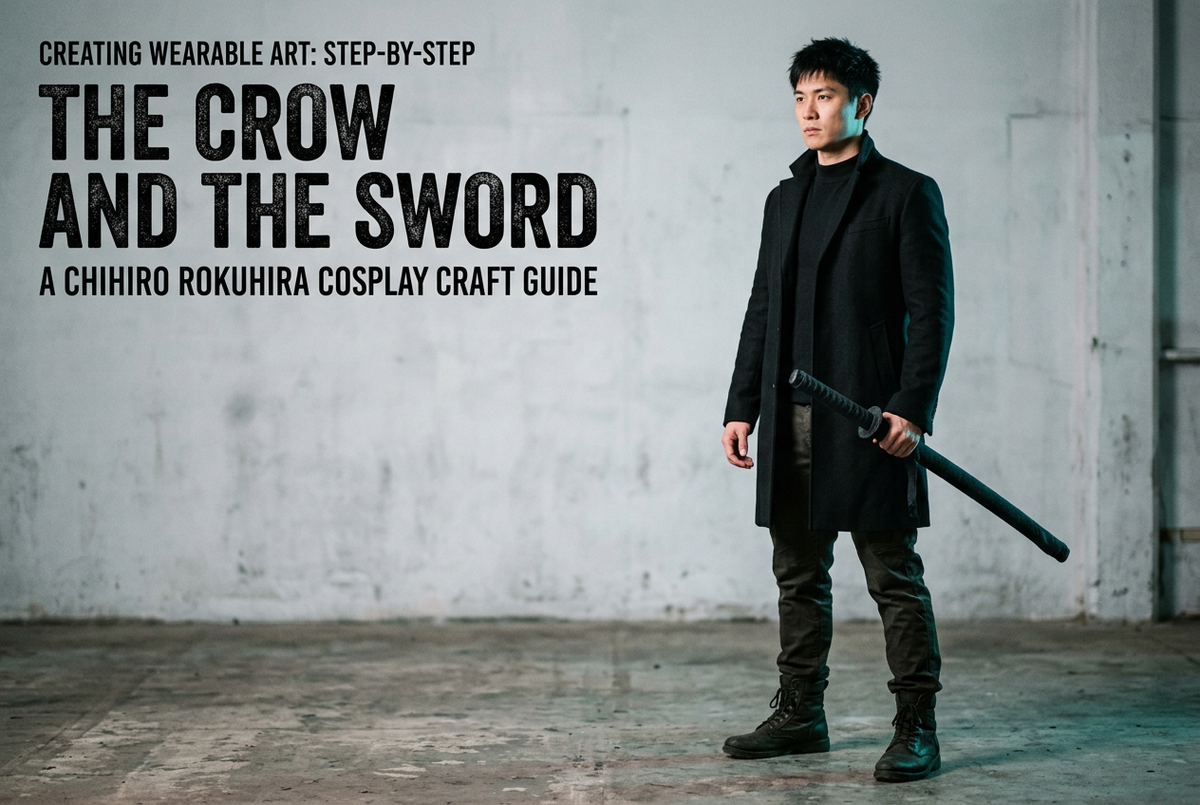
With the Kagurabachi anime scheduled to premiere in April 2027, this is a good time for fans to begin planning a Chihiro Rokuhira cosplay. Instead of waiting until the anime starts airing, you can use the months before its release to research the character design, prepare the black coat, style the wig, and build a convention-safe Enten prop.
The official anime announcement confirms that the adaptation is produced by Cypic, directed by Tetsuya Takeuchi, and features Taihi Kimura as Chihiro Rokuhira. The official character introduction describes Chihiro as a quiet young man who takes up Enten, the seventh Enchanted Blade left behind by his father, Kunishige.
The manga has also surpassed 4.5 million copies in cumulative circulation, including digital editions, according to the October 2026 announcement. This demonstrates the series' growing publishing reach, although it should not be confused with independently measured cosplay popularity.
This guide uses a practical four-week preparation plan. You do not need to finish everything in one weekend. By dividing the project into manageable stages, you can build a recognizable Chihiro outfit while leaving enough time for fitting, prop checks, and final adjustments.
What You Will Prepare
| Component | Materials and tools | Main objective |
|---|---|---|
| Black coat | Black fabric, sewing machine or needle, thread, measuring tape | Recreate Chihiro's recognizable silhouette |
| Inner clothing | Black top, black trousers, suitable footwear | Maintain a consistent dark outfit |
| Wig | Black wig, wig cap, comb, styling products, scissors | Create Chihiro's hairstyle |
| Facial details | Skin-safe makeup, reference images, makeup brushes | Reproduce the character's visible facial details |
| Enten prop | EVA foam, cardboard or other lightweight materials, adhesive, paint | Build a lightweight, non-functional convention prop |
| Final preparation | Full-length mirror, camera, repair kit, convention rules | Check appearance, comfort, and safety |
The most important principle is to prioritize the coat and overall silhouette before spending too much time on small decorative details. These are the elements that make the character recognizable from a distance.
Step 1: Study Chihiro Rokuhira's Official Character Design
Before buying materials, collect several reference images.
Do not rely on a single promotional image. Different illustrations, manga panels, and anime visuals may show different poses, lighting conditions, and levels of costume detail.
Start with these sources:
-
The official Chihiro character visual and trailer.
-
The official Kagurabachi manga website.
-
Licensed manga volumes and promotional illustrations.
The official anime character description identifies Chihiro's black coat as a defining part of his appearance. His weapon, Enten, is the seventh Enchanted Blade inherited from his father.
1.1 Identify the Essential Costume Elements
For a recognizable Chihiro Rokuhira cosplay, concentrate on four main areas.
The black coat
The long, dark outerwear is one of the most recognizable parts of Chihiro's anime appearance. Pay attention to its overall length, collar, sleeve shape, and how the garment hangs when he moves.
Avoid choosing a coat simply because it is black. A short jacket or a tightly fitted fashion coat may create a very different silhouette.
The inner outfit
Use dark inner clothing to maintain the character's overall visual consistency. A black high-neck or similarly understated top can work as a practical starting point, depending on the reference image you choose.
The hairstyle
Chihiro's dark hair contributes significantly to his character silhouette. The wig should look natural rather than excessively voluminous or overly styled.
Enten
The sword is an important visual component. Its shape, handle, guard, and scabbard should be studied separately from the clothing so that you can plan the prop accurately.
1.2 Choose One Reference Version Before You Start
One common mistake is combining details from different manga illustrations, anime promotional visuals, and fan interpretations.
Instead, choose one primary reference image and use it consistently.
Create a small reference folder containing:
-
A front-facing character image.
-
A side or three-quarter view.
-
A full-body image.
-
A close-up of the face and hair.
-
A clear image of Enten.
This makes it easier to compare your finished costume with the intended design.
Practical tip: If you cannot clearly identify a costume detail from an official image, do not treat a fan-made interpretation as an officially confirmed design feature.
Step 2: Make Chihiro's Black Coat and Prepare the Outfit
The coat is the foundation of this cosplay. It should be recognizable, comfortable, and practical enough to wear for several hours.
2.1 Choose the Right Fabric
For a first-time costume project, consider these options:
| Fabric | Advantages | Considerations |
|---|---|---|
| Cotton twill | Relatively easy to sew and maintain | Can feel heavier depending on thickness |
| Polyester suiting | Often provides a clean, structured appearance | Quality and drape vary |
| Lightweight wool blend | Can create a refined coat silhouette | May be more expensive and require careful care |
| Cotton-polyester blend | Practical balance of structure and maintenance | Check the fabric weight before purchasing |
For a convention costume, comfort matters as much as appearance.
A thick winter coat fabric may look convincing in photographs but become uncomfortable in a crowded indoor venue. A lighter fabric can be easier to wear, especially if you plan to attend a convention for an entire day.
2.2 Measure Before Cutting
Before making the coat, take accurate measurements.
You should record:
-
Shoulder width.
-
Chest circumference.
-
Waist circumference.
-
Sleeve length.
-
Coat length.
-
Neck circumference.
-
Desired fit over the inner clothing.
If you already own a coat with a similar silhouette, use it as a reference for basic proportions.
Do not cut the final fabric immediately. Make a paper pattern or inexpensive test version first. This helps you check the shoulder position, sleeve movement, and overall length without wasting your main material.
2.3 Build the Coat in a Practical Order
A useful construction sequence is:
-
Prepare the front and back body panels.
-
Check the shoulder and side seams.
-
Attach the sleeves.
-
Construct and attach the collar.
-
Complete the front opening and finishing details.
-
Test the coat with the rest of the outfit.
-
Adjust the length and fit if necessary.
Try the coat on before finishing every seam. A costume that looks good on a hanger may behave differently when you walk, sit, or raise your arms.
Pay particular attention to the shoulder area. If the shoulders are too narrow, the coat may restrict movement. If they are too wide, the entire silhouette can look oversized.
2.4 Complete the Inner Outfit
Once the coat is finished, prepare the rest of the clothing.
Keep the color palette consistent. Avoid introducing unnecessary accessories or decorative elements that are not visible in your selected reference.
The goal is not to create the most complicated costume possible. It is to reproduce the character's recognizable visual language.
👉 Explore Character-Inspired Cosplay Costumes
Step 3: Style the Wig, Recreate Facial Details, and Build a Safe Enten Prop
This stage brings the costume together. The wig, facial details, and Enten prop help distinguish Chihiro from a generic black-clad anime character.
3.1 Choose and Style a Black Wig
A suitable wig should have enough length and density to reproduce the character's hairstyle without looking excessively bulky.
Before styling:
-
Put on a wig cap and check the hairline.
-
Place the wig on a stable wig stand.
-
Compare its length and general shape with your reference images.
-
Separate the hair into manageable sections.
-
Trim gradually rather than removing too much hair at once.
-
Test the finished shape from the front, side, and back.
Use heat only if the wig's fiber type is heat-resistant and the manufacturer permits it.
Do not assume every synthetic wig can tolerate a hot styling tool. Excessive heat can permanently damage synthetic fibers.
For beginners, a layered approach is safer than trying to reproduce every strand individually. Concentrate on the overall outline and the way the hair frames the face.
3.2 Recreate Chihiro's Facial Details
Facial details should be based on the specific official image you have selected.
If your chosen reference includes visible facial scars, use skin-safe makeup to reproduce their appearance.
A simple approach is:
-
Clean and moisturize the skin.
-
Apply a small amount of suitable base makeup if needed.
-
Sketch the scar placement with a fine makeup pencil.
-
Build the color gradually using skin-safe products.
-
Blend the edges so the mark does not look like a thick painted line.
-
Check the result under natural and indoor lighting.
Avoid using craft paint, permanent markers, or industrial adhesives on your skin.
You should also test makeup products on a small area first, particularly if you have sensitive skin or have not used the product before.
3.3 Plan the Enten Sword Prop
Enten is one of the most important visual elements in Chihiro's design. However, a convention cosplay prop should prioritize safety and event compliance over realism.
A practical beginner approach is to build a lightweight, non-functional replica using EVA foam or other materials permitted by your event.
Suggested materials:
-
EVA foam sheets.
-
Lightweight cardboard for pattern testing.
-
Foam-safe adhesive.
-
Craft knife and cutting mat.
-
Sandpaper suitable for foam.
-
Acrylic paint.
-
Paint brushes.
-
Lightweight foam or plastic materials for the handle and guard.
-
A suitable protective finish.
The exact materials and dimensions depend on the reference image and the convention's prop rules.
A basic foam prop workflow
Stage 1: Create a template
Draw the general sword silhouette on paper or cardboard first. Compare the proportions with your reference image.
Do not begin with a complicated three-dimensional design. A clean outline is more important for a recognizable first version.
Stage 2: Transfer the template to foam
Use the paper pattern to mark the foam. Cut the pieces carefully on a suitable cutting mat, following the manufacturer's safety instructions for your tools.
Stage 3: Assemble the lightweight structure
Use an adhesive suitable for the materials. Allow the assembly to dry according to the manufacturer's instructions.
The prop should remain lightweight and non-functional. Avoid metal blades, sharpened edges, or any construction that could cause injury.
Stage 4: Add the handle and guard details
Use reference images to reproduce the general visual proportions of Enten. Keep the design simple enough to remain durable during transport.
Stage 5: Paint and finish
Apply a suitable primer or surface preparation product for the foam material. Add the main colors gradually and allow each layer to dry fully.
Inspect the finished prop for loose parts, sharp edges, exposed hard components, and anything that could detach during movement.
3.4 Check Convention Weapon Policies Before Bringing Enten
This is an essential part of the project.
A foam sword is not automatically allowed at every convention. Each event has its own rules, screening process, and venue requirements.
For example:
-
Los Angeles Comic Con's prop policy allows swords made from lightweight foam, plastic, or cardboard, while prohibiting metal and wood swords and other sharp-edged weapons.
-
San Japan's cosplay rules require prop checks and prohibit metal blades, including dull metal blades.
-
Origins Game Fair's security policy describes inspection and peace-bonding requirements for cosplay weapons.
These are examples of different event policies, not universal rules.
Before attending, check the specific convention's official prop policy. Confirm whether the prop must be inspected, tagged, peace-bonded, or transported in a particular way.
Never assume that a prop approved at one convention will automatically be accepted at another.
Step 4: Test the Complete Cosplay and Prepare for the Convention
A costume is not finished simply because every individual component looks correct.
You need to test the complete outfit together.
4.1 Perform a Full Costume Fitting
Wear the coat, inner clothing, wig, footwear, and prop together.
Check the following:
-
Can you walk comfortably?
-
Can you raise your arms without pulling the coat?
-
Does the coat stay in place when you move?
-
Does the wig remain secure?
-
Can you see clearly with the wig and makeup?
-
Is the prop comfortable to carry?
-
Are there loose seams or detachable components?
Take photographs from the front, side, and back.
Photographs are useful because they reveal proportion problems that may not be obvious when you look in a mirror.
4.2 Test the Costume in Different Lighting
Black clothing can lose visible detail in poorly lit environments.
Take photographs in at least two lighting conditions:
-
Natural daylight.
-
Indoor lighting similar to a convention hall.
Check whether the coat's shape, seams, and fabric texture remain visible.
If the outfit appears as one completely black shape in photographs, consider adjusting the lighting or choosing fabric with a slightly more visible texture.
4.3 Prepare a Small Repair Kit
Bring a compact repair kit if you plan to wear the costume at a convention.
Useful items include:
-
Safety pins.
-
A small sewing kit.
-
Double-sided fashion tape.
-
Spare wig pins.
-
Makeup touch-up products.
-
Small cleaning cloth.
-
Spare fasteners.
-
A lightweight bag for personal items.
For the Enten prop, check the convention's transportation rules before deciding how to carry it.
4.4 Use a Four-Week Preparation Schedule
If you want to finish your cosplay before the anime premiere or a convention, divide the work into four stages.
| Week | Main task | Completion target |
|---|---|---|
| Week 1 | Research character references and measure clothing | Finalize the design and materials list |
| Week 2 | Construct the black coat and prepare inner clothing | Complete the main outfit |
| Week 3 | Style the wig, prepare makeup, and build Enten | Finish the main character details |
| Week 4 | Full fitting, photography, repairs, and prop-policy check | Complete a convention-ready costume |
This is a planning framework, not a guaranteed construction time. Beginners may need additional time for sewing, wig styling, or prop finishing.
If you have limited time, prioritize the coat and wig first. A recognizable outfit without an elaborate prop is better than an unfinished costume with a complicated sword.
Troubleshooting: Common Kagurabachi Cosplay Mistakes
Problem 1: The Coat Looks Like an Ordinary Black Jacket
Possible cause: The coat is too short, too fitted, or has a different silhouette from the reference.
How to fix it:
-
Recheck the full-body reference image.
-
Compare the shoulder and sleeve proportions.
-
Adjust the coat length if necessary.
-
Avoid adding decorative details that are not present in your chosen version.
Problem 2: The Wig Looks Too Thick or Artificial
Possible cause: The wig has excessive volume or has not been shaped to match the character.
How to fix it:
-
Separate the hair into smaller sections.
-
Remove excess volume gradually.
-
Check the hairstyle from multiple angles.
-
Use styling products suitable for the wig fiber.
Problem 3: The Facial Scar Looks Too Dark
Possible cause: The makeup line is too thick or the color is too intense.
How to fix it:
-
Start with a lighter base color.
-
Build the shade gradually.
-
Blend the edges.
-
Check the result under natural lighting.
Problem 4: Enten Is Too Heavy or Difficult to Carry
Possible cause: The prop uses unnecessarily dense materials or has an oversized structure.
How to fix it:
-
Reconsider the use of lightweight foam materials.
-
Remove unnecessary internal weight.
-
Check the prop's balance and carrying comfort.
-
Follow the event's size and weight restrictions.
Do not sacrifice safety to make the prop look more realistic.
Problem 5: The Convention Does Not Allow Your Enten Prop
Possible cause: The prop does not meet the venue's material, shape, inspection, or transportation requirements.
How to fix it:
-
Read the official event policy before traveling.
-
Contact the convention's prop-check team if the rules are unclear.
-
Prepare a simpler permitted alternative.
-
Do not attempt to bypass inspection or conceal prohibited materials.
Conclusion: Start Your Kagurabachi Cosplay Before April 2027
The upcoming Kagurabachi anime gives fans a clear milestone for planning a Chihiro Rokuhira cosplay. With the April 2027 premiere approaching, you have an opportunity to prepare the costume gradually rather than rushing through the entire project at the last minute.
Start with the black coat and the overall silhouette. Then work on the wig, facial details, and Enten prop. Finally, test the complete outfit and check the specific convention's prop policy before attending.
There is no need to reproduce every tiny detail in your first attempt. A well-fitted coat, a carefully styled wig, and a lightweight, recognizable Enten prop can already create a strong character-inspired look.
Most importantly, treat cosplay as both a creative project and a practical craft. Research, construction, fitting, and collaboration are all part of the process.
If you are preparing for the anime's release, start collecting reference images now, choose your preferred Chihiro design, and give yourself enough time to make adjustments.

Hinterlasse einen Kommentar
Diese Website ist durch hCaptcha geschützt und es gelten die allgemeinen Geschäftsbedingungen und Datenschutzbestimmungen von hCaptcha.