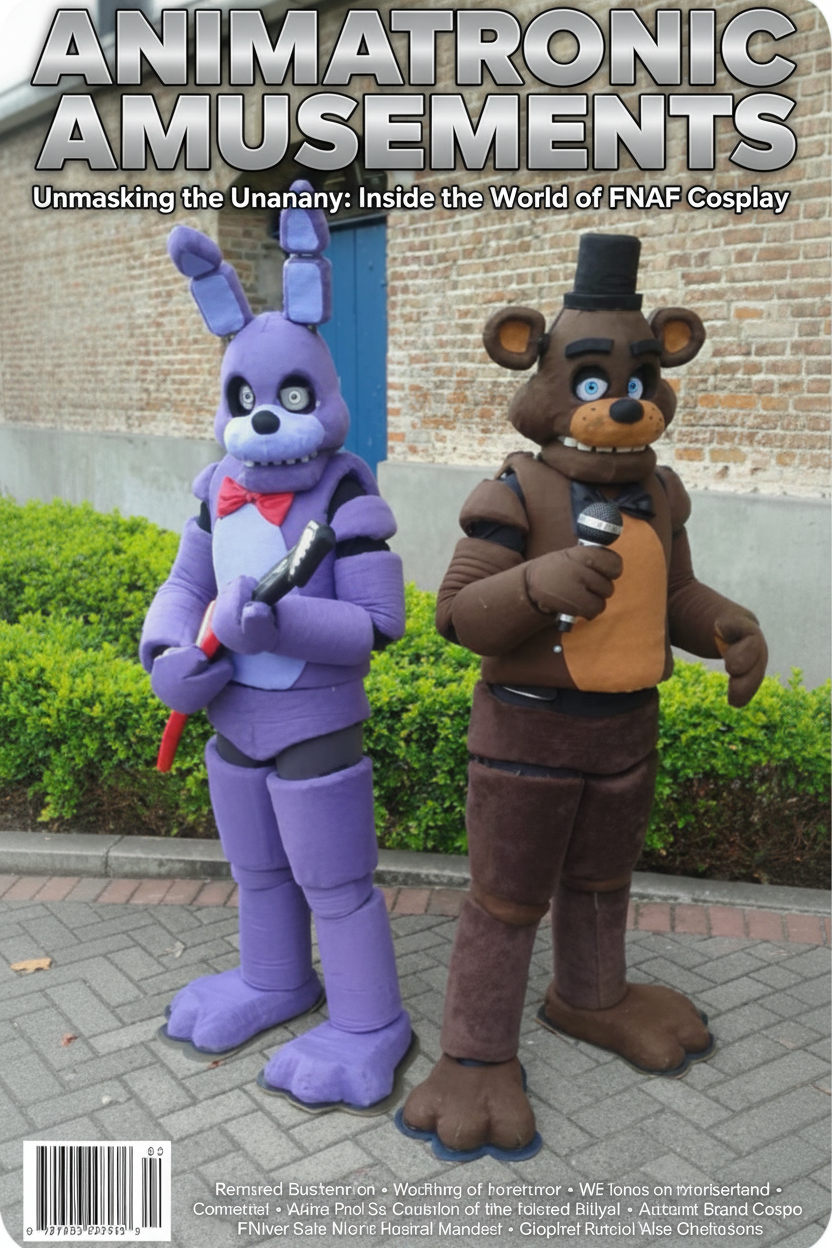
FNAF cosplay occupies a genuinely different corner of the hobby than most character builds — under tags like #manglefnaf and #springtrapcosplay, this fandom has built a steady stream of content around a completely different core skill set: exposed mechanical structure, damaged plush texturing, and uncanny, not-quite-human silhouettes. With the franchise's continued output across both games and its film series, Five Nights at Freddy's cosplay isn't a one-off trend — it's a durable niche with its own techniques worth learning properly.
This roundup ranks five of the most iconic animatronics by realistic build difficulty, so you can pick a starting point that matches your current skill level rather than jumping straight into the most technically demanding builds this fandom has to offer.
How these picks were selected: each animatronic was evaluated on how well it teaches the core FNAF-specific skills (weathering, exposed mechanical detail, damaged texture work), how achievable it is without professional prop-building experience, and how strong its individual fan recognition is within the current wave of FNAF animatronic cosplay content.
Quick Comparison
| Animatronic | Core Aesthetic | Difficulty | Est. Price Range |
|---|---|---|---|
| Freddy Fazbear (Classic) | Clean mascot-suit silhouette | Low | $$ |
| Foxy the Pirate | Torn, damaged plush exterior | Low–Medium | $$ |
| Mangle | Exposed mechanical structure, disassembled chaos | High | $$$ |
| Springtrap | Decayed suit-within-suit horror | High | $$$ |
| Circus Baby | Bright colors, eerie mechanical face detail | Medium–High | $$$ |
1. Freddy Fazbear (Classic) — The Best Entry Point
Core features: The franchise's mascot character has a relatively clean, contained silhouette compared to the more damaged or chaotic designs later characters embrace — a structured mascot-suit shape, brown plush texturing, and simple accessory elements (top hat, bow tie). This makes him the most approachable starting point for anyone new to horror cosplay in general, not just this specific fandom.
Pros:
- Simplest silhouette on this list, with no exposed mechanical elements to fabricate
- A great entry point for learning basic plush-texture costume construction before attempting damage or weathering work
- Widely recognizable even to viewers with only casual FNAF familiarity
Cons:
- Lower novelty factor compared to the more elaborate damaged-animatronic builds currently trending
- Doesn't teach the weathering and exposed-mechanics skills that define this fandom's more advanced builds
Best for: First-time FNAF cosplayers, or anyone using this build specifically to practice plush-texture costume basics before moving on to more damage-heavy characters later on this list.
2. Foxy the Pirate — Introducing Damage and Wear Techniques
Core features: Foxy's design introduces the torn, damaged plush exterior that becomes central to the franchise's more advanced characters, without yet requiring exposed mechanical structure work. Ragged fabric edges, a hook accessory, and a weathered pirate aesthetic make this a natural second step after a cleaner build like classic Freddy.
Pros:
- Teaches genuine damage and distressing technique on fabric without the added complexity of mechanical exposure
- Strong, distinctive silhouette that reads clearly even in fast-cut video content
- A good bridge build between beginner mascot-style costumes and the more advanced animatronic aesthetics later on this list
Cons:
- Getting torn fabric edges to look intentionally damaged rather than simply poorly finished takes some practice
- The hook prop and eye patch detail need to be secure and comfortable for extended wear, which requires more planning than a simpler accessory set
Best for: Cosplayers who've completed a basic build and are ready to start practicing distressing and weathering technique on fabric, before attempting full mechanical exposure.
3. Mangle — The Chaotic, Disassembled Advanced Build
Core features: Mangle represents one of the most structurally demanding builds in the franchise — a design built around exposed wiring, visible mechanical framework, and a deliberately disassembled, chaotic silhouette rather than a cohesive costume shape. This is exactly the kind of build referenced in high-engagement content like "SHAKING MY BABY"-style Mangle videos, where the character's unsettling, broken-apart aesthetic is the whole point.
Pros:
- Extremely high novelty and recognition value within the current wave of FNAF content
- Teaches genuinely transferable skills — exposed mechanical structure work applies to other robotic or cyborg-style character builds beyond this fandom
- The chaotic design is actually somewhat forgiving of asymmetry, since the character's whole aesthetic embraces disorder rather than requiring precise symmetry
Cons:
- Structurally the most demanding build on this list — exposed wire and mechanical framework require real prop-building skill
- Wearability and mobility need careful planning, since a design built around visible structure can easily become uncomfortable or restrictive if not engineered thoughtfully
Best for: Cosplayers with prior prop-building experience who want to tackle the fandom's signature "exposed mechanics" aesthetic. A curated animatronic & horror cosplay props collection is worth browsing before attempting this build from scratch, since sourcing pre-made mechanical-look components can save significant construction time over fabricating every exposed element yourself.
4. Springtrap — The Decayed Suit-Within-Suit Horror Build
Core features: Springtrap's design centers on a completely different kind of horror than Mangle's chaotic exposure — a decayed, rotting suit exterior with unsettling hints of something underneath, built around heavy weathering and decay texture rather than visible mechanical framework. This is the build referenced in "His passion is building costumes!" style content, where the construction process itself — layering, aging, and distressing the suit's exterior — is as much a part of the appeal as the finished result.
Pros:
- One of the most atmospheric, genuinely unsettling builds achievable in cosplay, which performs extremely well in horror-focused content
- Weathering and decay techniques learned here transfer directly to a wide range of other horror and post-apocalyptic character builds
- Doesn't require the same level of exposed mechanical engineering that Mangle does — the difficulty here is primarily in texture and layering work rather than structural fabrication
Cons:
- Achieving convincing decay and rot texture takes real practice with weathering techniques — a rushed attempt can look more like dirty fabric than intentional decay
- Layering multiple suit textures (the outer decayed layer plus any implied layers beneath) adds real construction time
Best for: Cosplayers more interested in texture, weathering, and atmosphere than in mechanical prop-building — this is the advanced build for someone whose strength lies in painting and material aging rather than structural fabrication. A proper weathering & damage effect paint kit is essential for this build specifically, since convincing decay depends heavily on layered paint and aging technique rather than fabric choice alone.
5. Circus Baby — Bright Color, Unsettling Detail
Core features: Circus Baby breaks from the darker, more muted palette of the rest of this list — bright, saturated colors paired with an eerie, mechanically detailed face that creates dissonance between "cheerful children's entertainer" and "unsettling animatronic," which is exactly the tension her design is built around.
Pros:
- Stands out visually against the darker, more muted builds elsewhere in the fandom, giving strong contrast in group or comparison content
- The bright color palette makes this build more approachable from a fabric-sourcing standpoint than the weathered, muted tones Springtrap and Mangle require
- Strong facial/mechanical detail work is a highly transferable skill for future character builds involving robotic or doll-like faces
Cons:
- The face mechanism detail is genuinely intricate and takes real planning to execute convincingly
- Balancing "bright and cheerful" with "unsettling" in makeup and styling is a more nuanced creative challenge than straightforwardly horror-coded characters
Best for: Cosplayers who want a build that stands out from the darker aesthetic dominating most of this fandom's content, and who are comfortable with detailed facial or mask-style prop work.
How to Choose the Right Animatronic for You
If you're completely new to FNAF animatronic cosplay, start with classic Freddy to build foundational plush-costume skills, then move to Foxy to practice damage and distressing technique before attempting anything with exposed mechanics. Once you're comfortable with basic weathering, the choice between Mangle and Springtrap really comes down to which skill you'd rather develop further: Mangle rewards cosplayers who enjoy structural prop-building and exposed mechanical detail, while Springtrap rewards cosplayers whose strength is in paint, texture, and atmospheric weathering. Circus Baby is worth considering if you want your build to stand out visually from the darker, more muted aesthetic that dominates most of this fandom's current content.
Whichever character you choose, budget real time for the weathering and damage-effect work specifically — this is the skill that separates a convincing FNAF cosplay guide-level build from one that simply looks like a costume in the wrong colors. It's worth treating as its own dedicated practice step rather than an afterthought layered on at the end.
Summary
FNAF cosplay asks for a genuinely different skill set than most character fandoms — exposed mechanical structure, convincing decay and weathering, and embracing asymmetry and damage rather than clean construction. Starting with a simpler build like classic Freddy or Foxy before attempting Mangle, Springtrap, or Circus Baby gives you a realistic skill progression rather than a frustrating jump straight into the fandom's most demanding builds. Whichever animatronic you pick, the weathering and damage-effect techniques you develop here carry over directly into future horror-genre builds, making this one of the more transferable skill investments in the hobby.

Hinterlasse einen Kommentar
Diese Website ist durch hCaptcha geschützt und es gelten die allgemeinen Geschäftsbedingungen und Datenschutzbestimmungen von hCaptcha.