Introduction
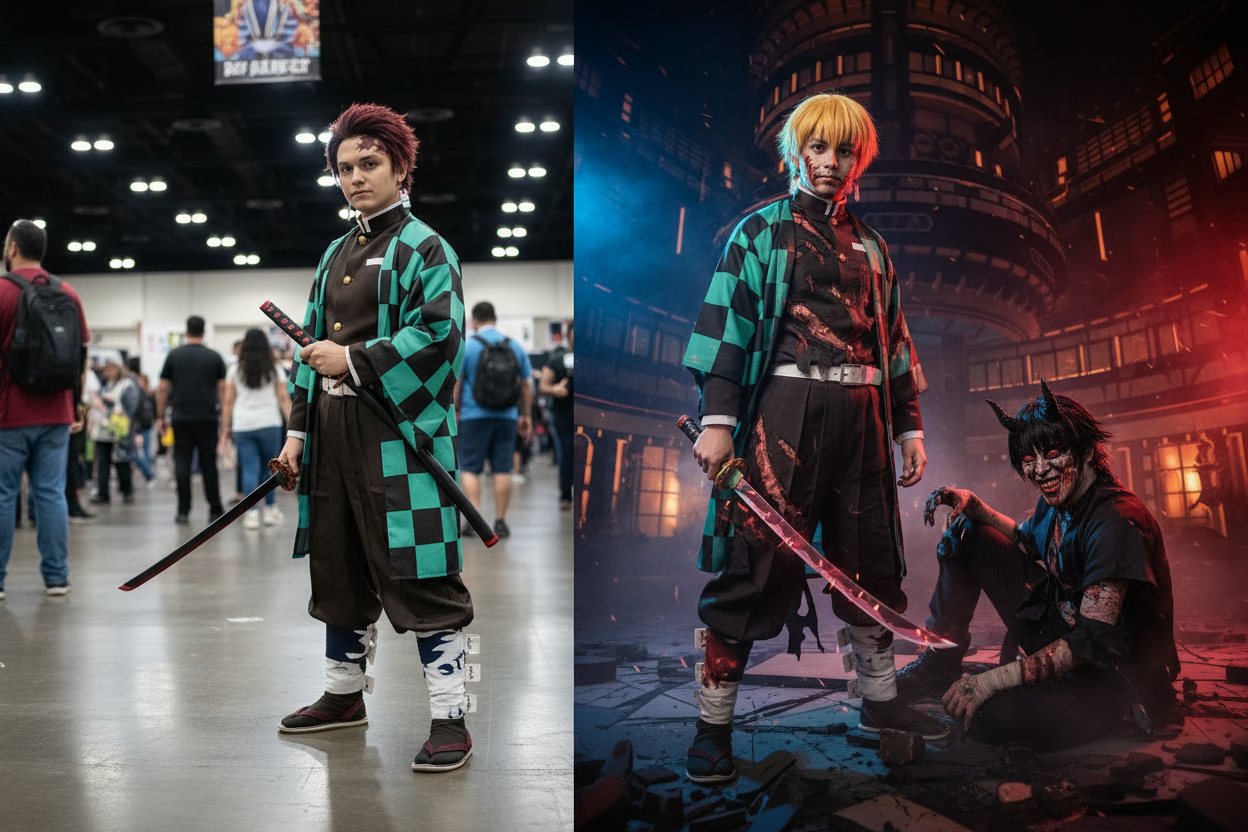
A well-fitted Nichirin sword and an accurate uniform used to be enough to make a convincing Demon Slayer costume. That standard is shifting fast. As Infinity Castle arc content has rolled out, the Demon Slayer cosplay community has openly started talking about "material integrity" instead of just accuracy — a shift toward battle-damaged fabric, demon transformation makeup, and weathering effects that read as genuinely lived-in rather than freshly pressed. In this guide, we'll break down exactly what's changing, why Infinity Castle specifically is driving it, and how to bring these techniques into your own Demon Slayer cosplay costume build.
From "Just the Outfit" to "Material Integrity": How the Community Raised Its Own Bar
Cosplay outlets tracking the Demon Slayer community directly have described this shift in explicit terms: it's no longer about simply owning the outfit — it's about material integrity, meaning the costume needs to hold up to close inspection the same way a character's on-screen presence does. That distinction matters because it reframes what "accuracy" means for this specific fandom. A clean, uniform-correct Tanjiro costume was the bar a few years ago. Now, whether a cosplayer is building a Hashira or a demon antagonist, the expectation is that the "transformation is only as good as your foundation" — construction quality, fabric weathering, and makeup work all need to support the character's on-screen intensity, not just their silhouette.
This isn't a coincidence tied to a single costume trend — it's a direct response to what Infinity Castle put on screen. The arc's visual language leans heavily into brutal, high-stakes combat with visible physical toll, and cosplayers building toward that same intensity have had to raise their own production values to match.
Why Demon Makeup and Battle Damage Are Becoming Core to Infinity Castle Cosplay
The clearest evidence of this shift shows up in which characters are climbing cosplay popularity rankings and why. Kokushibo, one of the series' most powerful antagonists, has entered the ranks of the most-attempted Demon Slayer cosplays specifically as "Final Boss" hype builds around Infinity Castle — and cosplay guides tracking his build specifically flag his six-eyed prosthetic makeup as the single hardest technical element to pull off, alongside his long, spiked ponytail styling. A character climbing the popularity rankings primarily because of how demanding his SFX makeup is says a lot about where the community's priorities have shifted.
That same pattern shows up across individual creator content, not just character rankings. Cosplay creators posting demon transformation compilations — full makeup work turning themselves into Upper Moon demons like Hantengu — are pulling well over 100,000 likes on single TikTok posts, and dedicated "Infinity Castle makeup look" tutorials built specifically around characters like Akaza have become their own recognizable content category on Instagram. Makeup isn't a finishing touch anymore in this corner of cosplay — for demon characters specifically, it's becoming the main technical challenge the build is judged on.
Battle-Damaged Costume Aging: The New Standard for Hashira and Demon Cosplay
Alongside makeup, costume condition itself has become part of what separates a strong Infinity Castle-era build from a merely accurate one. Because the arc's combat sequences involve visible damage — torn fabric, blood, scorching, structural wear on armor and clothing — a pristine, factory-fresh uniform increasingly reads as incomplete rather than simply "clean." Weathering techniques that used to be optional flourishes (selective distressing, blood effects, controlled fraying at stress points) are becoming close to expected for cosplayers building toward specific Infinity Castle combat moments rather than a character's default appearance.
This creates a genuinely different build process than earlier Demon Slayer cosplay waves. Instead of finishing a costume and considering it complete, cosplayers building toward this arc are increasingly treating a "clean" version and a "battle-damaged" version as two distinct, intentional variants of the same costume — planning weathering as its own deliberate design phase rather than an accident of wear. If you are preparing for this double-build approach, exploring our durable Hashira uniform sets is the perfect place to start your foundation.
Classic Demon Slayer Cosplay vs. Infinity Castle-Era Cosplay
| Element | Classic / Early-Series Cosplay | Infinity Castle-Era Cosplay |
| Costume condition | Clean, screen-accurate to default appearance | Intentionally weathered — torn fabric, blood effects, scorch detailing for combat scenes |
| Makeup emphasis | Minimal, mostly for demon characters' basic skin tone/features | Central technical challenge, especially for six-eyed and Upper Moon demon designs |
| Prop condition | Clean, presentation-ready Nichirin swords and accessories | Weathering and damage effects sometimes applied to match specific battle moments |
| Community standard | "Do you have the outfit" | "Material integrity" — construction and finish under scrutiny |
| Best for | Beginners, first-time Demon Slayer cosplayers, general con appearances | Experienced cosplayers building toward specific Infinity Castle scenes or contest submissions |
Bringing Battle-Damaged Techniques Into Your Own Build
If you're planning a Demon Slayer costume with this newer aesthetic in mind, a few practical starting points:
-
Decide on "clean" or "battle-damaged" before you buy fabric. Weathering effects are far easier to plan for and apply intentionally on a base costume than to add convincingly after the fact — decide which version you're building toward before construction starts.
-
Treat demon makeup as a build phase, not an afterthought. If you're building a demon character like Kokushibo or Akaza, budget real practice time for prosthetic or paint work specifically — it's now one of the most scrutinized parts of these builds, not a last-minute addition.
-
Weathering should follow the character's actual damage, not be random distressing. The most convincing battle-damaged builds reference specific combat moments — tears and scorch marks placed where a character was actually struck read as intentional, while generic all-over distressing tends to look more like normal wear and tear than battle damage.
-
Premium base fabric still matters, arguably more than before. Weathering and distressing techniques show up more convincingly on a well-constructed, properly tailored base garment than on a low-quality one — which is exactly why our premium Demon Slayer uniforms are built with high-density fabrics and showcased with real showroom photography, ensuring your damage effects look intentional rather than sloppy.
Frequently Asked Questions
Do I need battle-damaged effects to cosplay Demon Slayer well?
No — a clean, screen-accurate costume remains a completely valid choice, especially for newer cosplayers or general convention appearances. Battle-damaged styling is becoming more popular specifically for builds referencing Infinity Castle combat scenes, not a universal requirement.
Why is Kokushibo's makeup considered so difficult?
His six-eyed design requires a multi-eye prosthetic application alongside long, structurally supported wig styling, making him one of the more technically demanding demon cosplays in the current lineup as "Final Boss" hype builds around his role in Infinity Castle.
Is this trend specific to demon characters, or does it affect Hashira cosplay too?
Both are affected, though differently — demon characters lean heavily into makeup and prosthetic work, while Hashira and other human characters are more likely to show the shift through costume weathering and combat-damage detailing on uniforms and armor.
What's the easiest way to start practicing battle-damaged techniques?
Start with controlled, localized distressing (small tears, subtle scorch marks at logical stress points) rather than heavy all-over weathering — it's easier to keep looking intentional and can be built up gradually as your confidence with the technique grows.
Does costume weathering reduce a costume's reusability for future events?
It can, which is why many cosplayers maintain a clean version alongside a dedicated battle-damaged variant rather than permanently altering a single costume they plan to wear repeatedly.
Conclusion
Choosing the right Demon Slayer costume in the Infinity Castle era means understanding that the bar has genuinely moved — from simply owning an accurate outfit to demonstrating real material integrity across fabric, makeup, and prop condition. Whether you're planning a clean, screen-accurate build or leaning into the battle-damaged aesthetic now closely associated with the arc's most intense combat moments, understanding this shift will help you build a costume that matches where the community's standards actually are right now. If you're ready to start your own Demon Slayer costume, check our fabric and weathering guide below before you order.


Hinterlasse einen Kommentar
Diese Website ist durch hCaptcha geschützt und es gelten die allgemeinen Geschäftsbedingungen und Datenschutzbestimmungen von hCaptcha.