Introduction
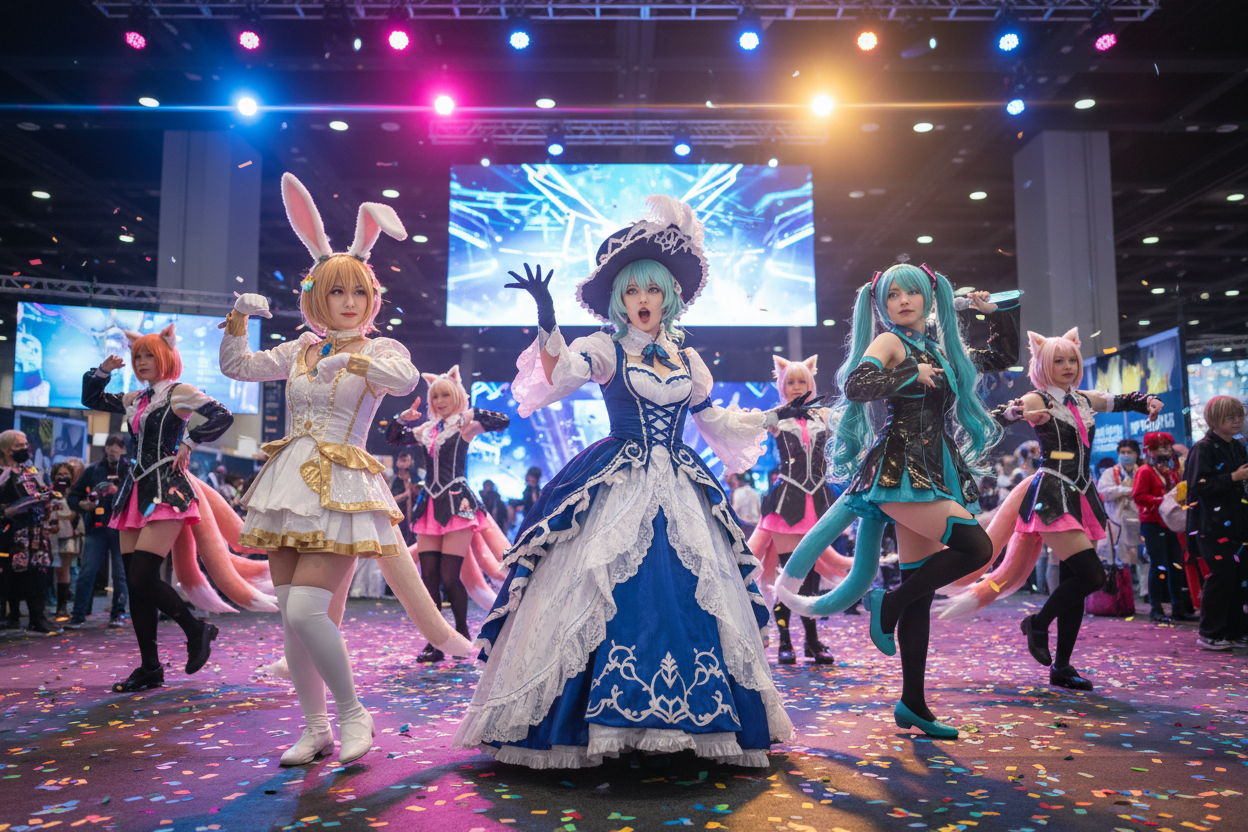
Walk past any convention meetup spot in 2026 and you'll likely catch someone filming a dance trend in full costume. A TikTok post tagged directly with #dokomi2026 shows a cosplayer joking about barely holding it together while filming a cosplay dance trend on the show floor — one small example of a content format that's become genuinely central to how conventions get documented online now. From Furina's "Sinner's Dance" to Rumi's viral "Golden" performances, dance content isn't a side activity anymore — it's shaping which characters get chosen and how their cosplay costumes actually get built. In this guide, we'll break down why this format took over, which characters are driving it, and what it means for your next build.
From Rumi to Ahri: Why K-Pop-Adjacent Characters Dominate Cosplay Dance Content
KPop Demon Hunters' Rumi has become one of the single biggest drivers of this trend, and the evidence is everywhere. TikTok creator @halcybella posted a Rumi cosplay video specifically framed around "quick tips for K-pop dance and outfits," racking up over 400,000 likes, while cosplay coverage site ErimeToday specifically highlighted performers like Lenie Aycardo-Alejandro and Stella Chuu for blending "sharp, powerful dance moves" into their Rumi builds — describing the format directly as cosplay "crossing over into performance art" rather than simple costume photography.
That crossover extends naturally into League of Legends' K/DA line, particularly Ahri, since both franchises share the same underlying premise: idol-style characters built around choreographed group performance. That connection isn't just thematic — it shows up in real convention content, including a full K/DA-and-Huntrix group performance at MAF 2026 featuring cosplayers portraying Evelynn, Ahri, Kai'Sa, Rumi, Mira, and Zoey together in a single coordinated routine. When a convention crowd is already primed to expect idol-group choreography from K/DA cosplay, it's a short leap for Rumi and the rest of the Huntrix lineup to slot into the exact same content format.
Why Hatsune Miku Was Built for This Trend Before It Existed
If any character was engineered for dance-based cosplay content, it's Miku — she's a virtual performer by design, not a character who happens to dance occasionally. That foundational fact shows up directly in how she's being cosplayed at 2026's biggest events: the same #dokomi2026-tagged content referenced earlier captures cosplayers performing dance trends specifically in Miku costume on the convention floor, while separate footage from Miku Only NYC 2026 and a Brazilian stage performance at NEC Con 2026 both center dance and performance as the actual point of the cosplay, not an afterthought layered on top of a finished costume.
This is worth taking seriously as a design distinction. A character like Miku doesn't just tolerate dance content — her entire cultural identity as a virtual idol means a static, pose-only cosplay arguably undersells what the character represents. That's part of why Miku cosplay dance content performs so consistently across platforms: it's not a stunt, it's the format the character was conceptually built for from the start.
Furina and the Rise of Meme-Dance Cosplay: When a Character's Personality Matches the Trend
Furina's dance-content popularity works through a slightly different mechanism than Miku's. Rather than being built around performance as her core identity, Furina's theatrical, dramatic personality as Fontaine's former Hydro Archon and self-styled "actress" makes exaggerated, performative dance content feel like a natural extension of who the character already is. Real tagged content backs this up directly — cosplayers performing Furina's "Sinner's Dance... at the HoYoverse Entrance," a "Furina Bunny Dance," and even a straightforward "rat dance" have all circulated as distinct, recurring content categories built specifically around her.
The lesson here is broader than just one character: dance-based cosplay content tends to cluster around characters whose personalities already lean theatrical or performative, since the format rewards exaggerated expression over subtle character work. A quieter, understated character can absolutely be cosplayed well without ever touching this trend — but characters like Furina, built around dramatic flair, slot into dance content almost automatically.
How This Content Format Is Reshaping Costume Construction Choices
Here's the practical shift that matters most for anyone actually building a costume: cosplay dance content places real, direct demands on construction that pose-only photography never did. A costume that looks flawless standing still can fall apart — literally — under repeated movement, and that's changed what experienced cosplayers prioritize during the build process itself.
-
Secure wig construction has become non-negotiable. Twin-tails, long styled wigs, and elaborate hair pieces (all common across Miku, Rumi, and Furina builds) need genuinely secure attachment points, not just enough hold for a photo pose. A wig that shifts during a dance sequence undermines the entire performance on camera.
-
Structural reinforcement at stress points matters more than surface detail. Seams at the shoulders, hips, and any point where fabric will stretch or flex during movement need real reinforcement, since a costume built purely for static photography often isn't tested against repeated motion. We always rely on real, self-taken showroom photographs to showcase the reinforced stitching on our activewear bases, ensuring you know exactly how the seams will hold up before you hit the dance floor.
-
Breathability has shifted from a comfort nicety to a functional requirement. A costume that overheats during a few minutes of dancing under convention lighting creates a genuinely different problem than a costume worn for a few minutes of standing photos.
-
Prop and accessory security needs its own planning pass. Detachable pieces, jewelry, and accessories that would stay put during a photo pose can work loose during dance movement. For example, safely securing the Demon Hunter Rumi's signature prop weapon during a high-energy routine requires robust attachment points, which means builders are increasingly planning secure attachment methods specifically for these elements rather than treating them as simple add-ons.
Character Comparison: Why Each One Drives Dance Content Differently
| Character | Franchise | Why Dance Content Fits | Construction Implication |
| Rumi | KPop Demon Hunters | Built around in-universe idol group choreography | Needs costume durability for group routines and coordinated movement with other performers |
| Ahri (K/DA) | League of Legends | Shares the idol-performance premise with Rumi | Fox-tail and accessory attachments need secure engineering for dynamic movement |
| Hatsune Miku | Vocaloid | Virtual idol identity makes performance the core concept | Twin-tail wig security and lightweight, breathable fabric are top priorities |
| Furina | Genshin Impact | Theatrical personality makes exaggerated dance fit perfectly | Flowing costume elements need to move well without losing structured silhouette |
Building a Dance-Ready Cosplay Costume: What to Prioritize
-
Test your costume in motion before the convention, not during it. Walk, turn, and run through a few basic movements at home to catch loose seams, shifting wigs, or restrictive fit before you're on camera at an event.
-
Choose fabric weight based on movement, not just accuracy. A heavier fabric might match a reference image more precisely, but a lighter, more flexible material often performs better and looks more natural in motion-based content.
-
Reinforce exactly where your character's signature movement happens. If you're building toward a character known for a specific dance or pose, look at what that movement actually stresses on the garment and reinforce those points specifically, rather than reinforcing evenly across the whole costume.
-
Plan wig security as its own build phase, especially for twin-tail or long-hair characters like Miku — secure wig caps, discreet pinning points, and properly fitted bases matter more here than for costumes built purely for photography.
Frequently Asked Questions
Do I need dance skills to participate in this cosplay trend?
Not necessarily — plenty of dance-based cosplay content leans into humor and imperfection rather than polished choreography, and some of the most popular posts specifically highlight the fun of not quite nailing the moves.
Why do idol-style characters like Rumi and Ahri crossover so easily in dance content?
Both are built around the same underlying premise of in-universe performance groups, which means fans already expect and enjoy seeing them treated as a coordinated ensemble rather than isolated individual cosplays.
Is dance-focused cosplay only relevant for female characters?
No — the trend spans characters regardless of gender, though characters explicitly built around performance or theatrical personality (as covered here) tend to generate the most dance-specific content.
What's the biggest costume failure risk specific to dance content?
Wig security and seam stress at movement points are the two most common failure areas, since costumes built and tested only for static photography often aren't reinforced for repeated motion.
Should I build two versions of a costume — one for photos and one for dancing?
Not usually necessary — building the movement-friendly reinforcements in from the start (secure wig attachment, reinforced stress points, breathable fabric) typically works well for both photography and dance content without needing a separate build.
Conclusion
Choosing a dance-ready cosplay costume means planning for a genuinely different set of demands than static photography ever required — real movement, real stress points, and real wig security under repeated motion. Whether you're drawn to Rumi and Ahri's idol-group energy, Miku's performance-first identity, or Furina's theatrical flair, this trend rewards costumes built with motion in mind from the very first construction decision. If you're ready to build your own dance-ready cosplay costume, check our fabric and wig security guide / dance-ready collection below before you order.

Hinterlasse einen Kommentar
Diese Website ist durch hCaptcha geschützt und es gelten die allgemeinen Geschäftsbedingungen und Datenschutzbestimmungen von hCaptcha.