
Quick verdict: If you're building a Seraphine or Akali cosplay specifically to compete in an official masquerade or craftsmanship contest, prioritize construction technique — leatherwork, LED integration, sewing precision — since that's what real, written judging rubrics actually score. If your priority is a photo that looks as close as possible to official character art regardless of contest standing, prioritizing fit, padding, and proportion-matching techniques will serve that specific goal better, even if it scores differently (or not at all) under formal craftsmanship rules.
This comparison exists because of a real, recurring argument that flares up after nearly every major cosplay competition result: when a plus-size cosplayer with exceptional technical skill wins over a competitor whose body proportions more closely match a character's official design, some online commentators call the result biased or "political," while judges and experienced makers push back, pointing out that construction technique has always been the primary scored category in these contests — not the competitor's body. Before comparing build strategies, it's worth being accurate about what official rules actually say, since this dispute is more resolvable by simply reading the rulebook than most of the online arguing suggests. Craftsmanship-focused competitions across a wide range of major conventions consistently score costumes primarily on construction quality, technique, and accuracy of the costume itself to reference material — commonly split close to evenly between construction quality and design accuracy, with specific handmade-percentage thresholds (often 60-80%) required just to qualify for judging at all. None of the publicly available judging rubrics from major conventions and championships include the cosplayer's own body type or proportions as a formally scored category. That's a meaningful fact, not just one side's opinion: under the rules as actually written, a technically superior build winning over a closer physical match to the character isn't a deviation from the scoring system — it's the scoring system working as designed.
Core Comparison Table
| Feature / Dimension | Craftsmanship-Focused Build | Screen-Accurate Likeness Build |
| Primary goal | Score well under official contest judging criteria | Match official character art as closely as possible in photos |
| What's prioritized | Construction technique, materials, technical difficulty | Silhouette, proportion, padding/shapewear, styling illusion |
| Contest eligibility | Directly aligned with how major masquerades actually score entries | Not a scored category at most craftsmanship competitions |
| Time investment | High — technique-heavy elements (LED wiring, leatherwork, armor) take significant build time | Moderate to high — fitting, padding, and illusion work has its own real skill curve |
| Cost | Moderate to high, depending on materials and technique | Moderate — shapewear, padding, and tailoring add cost but less than advanced fabrication |
| Best suited for | Cosplayers entering official masquerades or craftsmanship-judged competitions | Cosplayers prioritizing photo/portfolio accuracy over contest standing |
Dimension One: What Actually Gets Rewarded
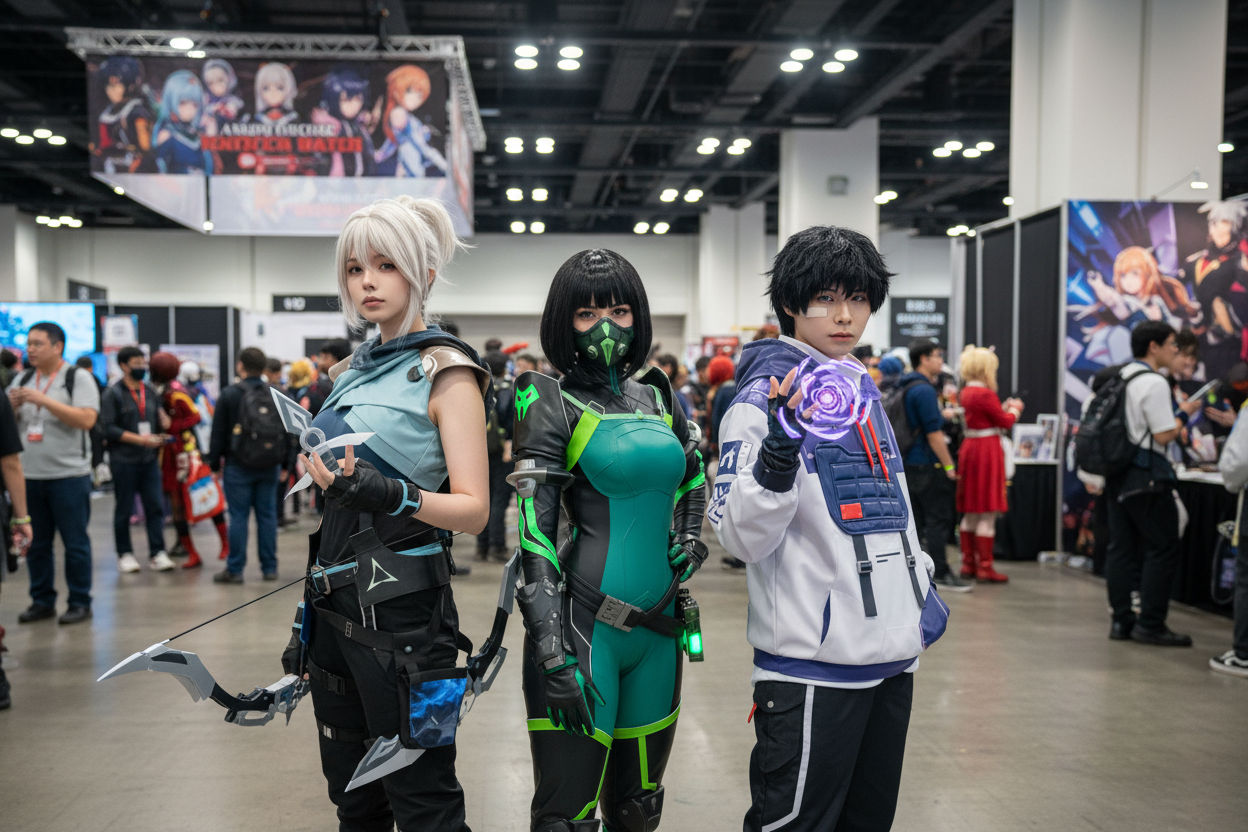
A craftsmanship-focused build is built around the categories real judges are trained to evaluate closely: seam quality, material choice, technical elements like LED integration or mechanized parts (both genuinely relevant for Seraphine's glowing microphone and stage-performer aesthetic, and Akali's more tactical, weapon-and-fabric-heavy design), and how accurately the costume's construction — not the wearer's body — matches reference material. This is the build strategy directly aligned with how the vast majority of real, published contest rubrics score entries, and it's worth noting that pre-judging sessions at most competitions specifically involve explaining your construction process to judges — a portfolio-and-conversation format that has nothing to do with how closely your body matches the character.
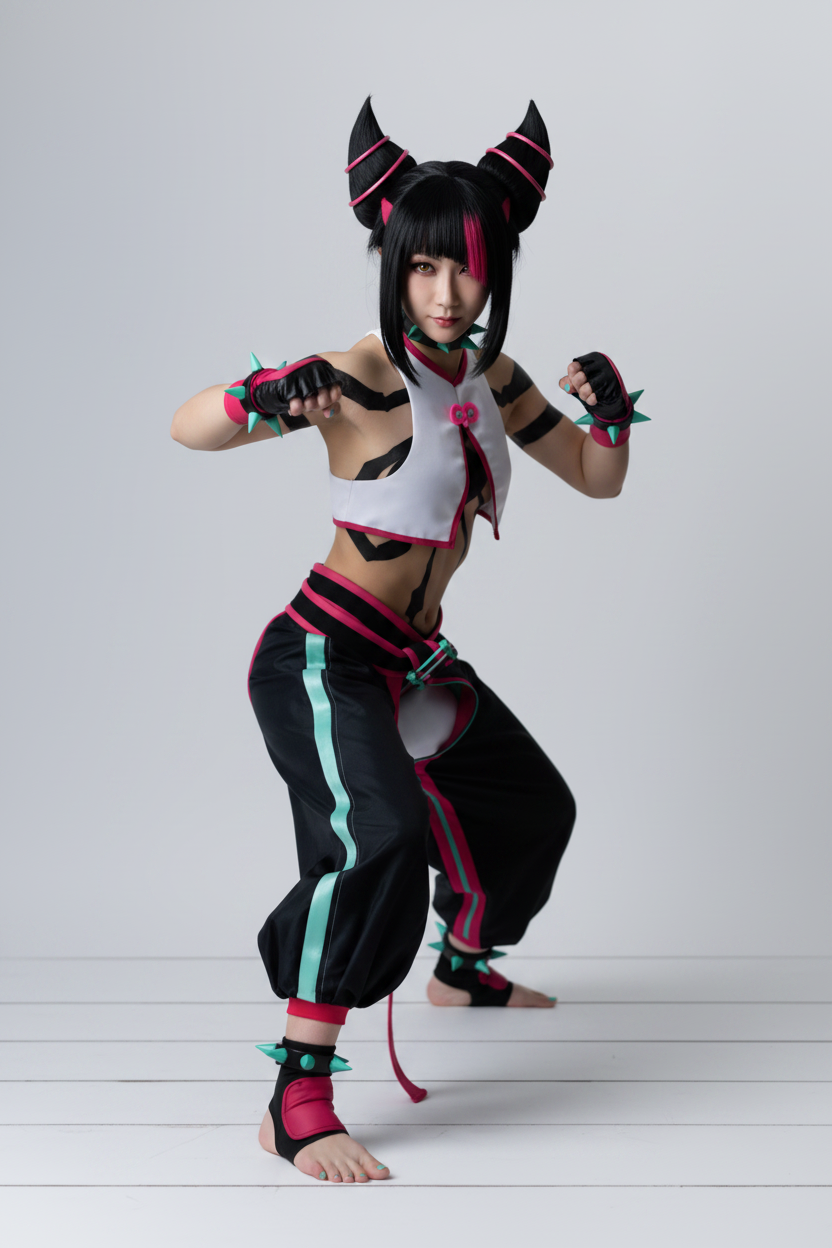
A screen-accurate likeness build takes a different, equally legitimate goal: getting a final photo that reads as close as possible to official character art, using padding, structured shapewear, tailoring, and styling techniques to shape silhouette and proportion. This is a real, skill-intensive craft in its own right — corsetry, padding sculpture, and fit tailoring all require genuine technique — but it's simply optimizing for a different outcome than a contest score, and it's worth being clear-eyed that most official rubrics don't have a category that rewards it directly, whatever an online audience's reaction might be.
Dimension Two: Cost and Time Investment
Craftsmanship-focused builds tend to concentrate cost and time into technical elements — quality leather or leather-alternative materials, LED components and wiring for a design like Seraphine's performance-inspired look, precision tailoring for structured pieces. This is a genuinely significant investment, but it's investment that maps directly onto what contest judges are evaluating, which means the time spent has a clear, direct payoff for anyone specifically pursuing competition standing.
Screen-accurate likeness builds redirect a meaningful portion of that investment toward fit and shaping instead — quality structured shapewear, padding sculpted and tested across multiple fittings, and tailoring adjustments to get proportions reading correctly in photos. This isn't necessarily cheaper, but it's a different allocation of the same budget, aimed at a different outcome than contest scoring.
Dimension Three: Reception and Support Ecosystem
This is genuinely where the real divide in this debate lives, and it's worth naming directly: judges and formal competition results consistently favor construction technique, as covered above, but broader online audience reaction doesn't always track the same priorities. A technically stunning build can still draw comment-section pushback focused on the cosplayer's body rather than their craftsmanship — and that reaction says more about how online audiences sometimes conflate "cosplay" with "photo accuracy" than it does about any actual bias in competition judging.
Conversely, a beautifully executed likeness-focused build using padding and shapewear techniques may get less recognition in a craftsmanship-judged setting specifically because those techniques, however skilled, aren't what that particular scoring rubric is built to evaluate — which isn't a knock on the skill involved, just a mismatch between the build's goal and the contest's criteria.
Understanding this distinction in advance helps you set realistic expectations either way: if you're building for a craftsmanship competition, judges are genuinely evaluating your technique, not your body, and results reflecting that shouldn't be surprising. If you're building primarily for online reception and photo accuracy, it's worth recognizing you're optimizing for a different, less formally structured kind of "judging" than a masquerade rubric — one where comment-section reactions unfortunately don't always stay focused on craftsmanship the way a real judging panel does.
When Should You Choose a Craftsmanship-Focused Build?
Choose this approach if you're entering an official masquerade, craftsmanship contest, or championship-track competition, since this is the build strategy directly aligned with how those events actually score entries. It's also the right call if your personal satisfaction comes primarily from technical mastery — solving construction problems, learning new fabrication skills — rather than from matching a specific silhouette exactly.
When Should You Choose a Screen-Accurate Likeness Build?
Choose this approach if your primary goal is a portfolio photo, personal satisfaction, or social content that reads as closely as possible to official character art, independent of any competition. It's also a reasonable choice if you're not planning to enter formal craftsmanship judging at all, and would rather direct your build time toward fit and silhouette work than toward the more technically demanding construction elements a competition rubric specifically rewards.
Summary and Next Steps
Both build philosophies represent real skill and real creative investment — they're just optimized for different outcomes, and a lot of the online heat in this debate comes from comparing results across those different goals as if they were the same contest. If competition standing matters to you, build toward what judges are actually trained to score, and trust that the rulebook — not your body — is doing the evaluating. If a specific photo or likeness matters more, invest in the padding, fit, and styling techniques that get you there, and don't let a scoring system built for a different goal define your success.
Browse our guides on LED and technical costume integration for competition-track builds, or our fit and padding techniques for silhouette-accurate cosplay, depending on which goal fits your next project.

Hinterlasse einen Kommentar
Diese Website ist durch hCaptcha geschützt und es gelten die allgemeinen Geschäftsbedingungen und Datenschutzbestimmungen von hCaptcha.