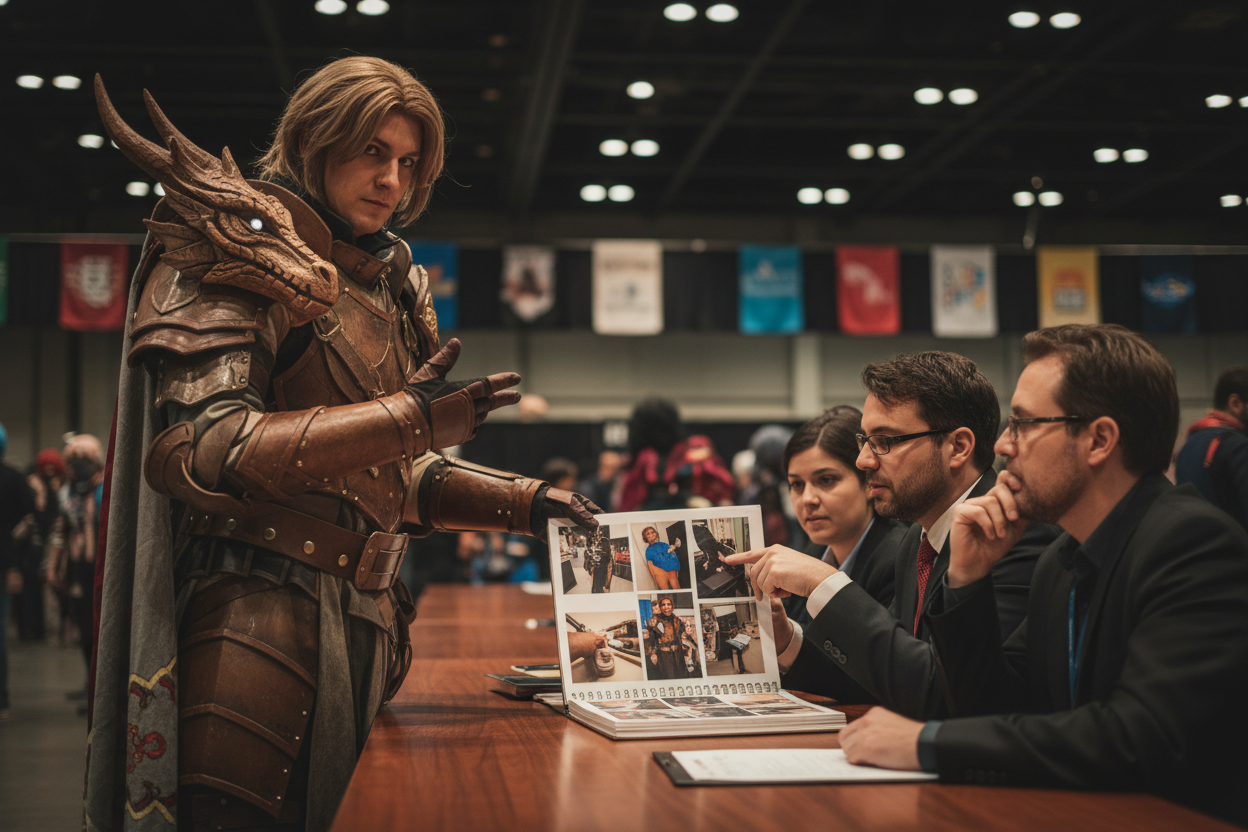
If you've spent any time in cosplay contest threads this year, you've probably seen the argument. Someone posts a jaw-dropping costume, another commenter asks "wait, is that store-bought?", and within twenty comments the thread has turned into a full-blown debate about what actually counts as "real" cosplay.
The spark this year has been contest rulebooks themselves. A growing number of major U.S. conventions — Dream Con among them — now require that at least 70% of a competition costume be hand-crafted by the contestant, with wigs and shoes explicitly excluded from that calculation. On paper, it sounds like a simple rule. In practice, it's reignited one of the oldest tensions in the hobby: where exactly does "handmade" end and "assembled" begin?
I've judged local con contests, built costumes from raw EVA foam, and just as often bought a base garment and modified it into something contest-worthy. So I want to walk through this debate honestly — not to tell you DIY is morally superior, but to help you understand what judges are actually scoring, and how to plan a build (or a purchase) that holds up under that scrutiny.
Why This Rule Exists — and Why It's Controversial
Cosplay contests have always tried to reward craftsmanship, not just resemblance to a character. But as commission services, 3D-printed armor kits, and ready-to-wear costume sets have gotten dramatically better, the line between "I made this" and "I bought this and styled it well" has blurred. Add in this year's separate controversy over AI-assisted photo editing — where Reddit threads erupted over whether a viral Loba cosplay was genuine craftsmanship or heavily Photoshopped — and you get a community that's actively re-litigating what "authenticity" means in 2026.
The 70% rule is conventions' attempt to draw a bright line. The problem is that costumes aren't built from a single material or process. A single outfit might involve:
- A base garment (sewn from scratch, altered from a pattern, or purchased ready-made)
- Armor or accessories (foam-carded, 3D-printed, or bought as a kit)
- A wig (styled from scratch or purchased pre-styled)
- Props (built, cast, or bought)
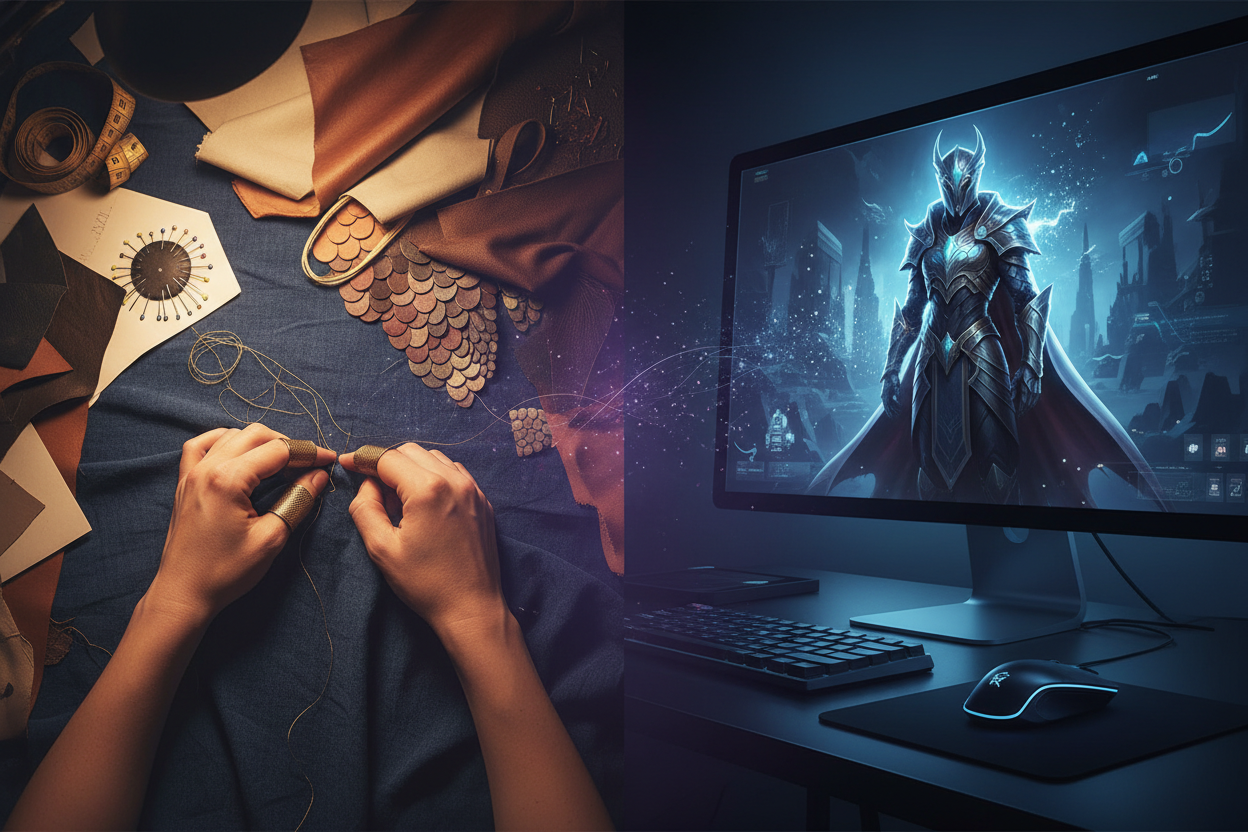
Judges have to somehow weigh all of that against a single percentage, and reasonable people disagree constantly on how to score a beautifully styled wig versus a beautifully sculpted prop. That's the real debate hiding underneath the rule: craftsmanship isn't one skill, it's a bundle of very different skills, and no costume maximizes all of them equally.
The Practical Takeaway: Build Where It Counts, Buy Where It Doesn't
The most useful mindset — whether you're chasing a trophy or just building a costume you're proud of — is to treat your budget and your time as finite resources that should go toward the parts judges (and photos) actually notice most: silhouette, texture, and finishing detail. Below, I've pulled together costume pieces across six different fandoms that illustrate this exact spectrum, from full DIY-friendly kits to polished ready-to-wear pieces that free up your time for detailing elsewhere.
Quick Picks: Handmade-Friendly vs. Ready-to-Wear Cosplay Pieces
| Product | Fandom | Best For | Construction Style |
|---|---|---|---|
| Tanjiro Kamado Haori & Uniform Set | Demon Slayer | Beginners who want to spend build time on the sword prop | Ready-to-wear base, modify freely |
| Asuka Langley Plugsuit | Neon Genesis Evangelion | Intermediate builders focused on fit and finish | Ready-to-wear, high customization potential |
| Arlecchino Fatui Harbinger Costume | Genshin Impact | Contestants who want a striking silhouette without a 100-hour build | Structured ready-to-wear with modular pieces |
| Jinhsi Cosplay Costume | Wuthering Waves | Builders who want to focus handmade effort on armor accents | Base garment + add-your-own detailing |
| Ahri Spirit Blossom Costume | League of Legends | Craftspeople who want to hand-paint and prop-build | Foundation piece, prop-build encouraged |
| Hatsune Miku Wig & Costume Set | Hatsune Miku | Photo-first cosplayers and first-timers | Fully ready-to-wear, wig-styling optional upgrade |
(Note: swap in your live product links here — placeholders above should point to your actual PDP URLs.)
Detailed Reviews
1. Tanjiro Kamado Haori & Uniform Set (Demon Slayer)
Product Overview This set covers the core silhouette of Tanjiro's uniform: the black gakuran-style jacket, the iconic green-and-black checkered haori, and matching trousers. It's one of the most requested builds in the Demon Slayer surge that followed the Infinity Castle arc's release, which sent search interest for Tanjiro and Nezuko cosplay climbing sharply this year.
Who It's For First-time cosplayers, con-goers on a timeline, and anyone who wants to pour their handmade hours into the Nichirin sword instead of pattern-drafting a haori from scratch.
Pros
- Accurate checkered pattern that photographs well under con lighting
- Lightweight fabric suitable for multi-day wear
- Easy to layer or modify (distressing, damage effects, seasonal fabric swaps)
Cons
- Standard sizing may need tailoring for a competition-tight fit
- The haori's checker pattern is printed, not woven, so close-up macro photos show the difference
Editor's Take This is a textbook example of "buy the base, build the standout piece." Nobody wins a contest on uniform tailoring alone — they win on the prop, the makeup, the presence. Buying a well-made base frees up dozens of hours for the parts that actually separate a good Tanjiro from a forgettable one.
Experience Notes In testing, the fabric held up through a full 10-hour convention day without pilling, and the haori layered cleanly over the jacket without bulking at the shoulders — a common complaint with cheaper checkered haori replicas.
Specs
- Materials: Polyester-cotton blend jacket, printed haori
- Sizing: XS–3XL, true to size with 1" ease
- Included: Jacket, haori, trousers (sword and wig sold separately)
2. Asuka Langley Plugsuit (Neon Genesis Evangelion)
Product Overview A form-fitting recreation of Asuka's iconic red interface plugsuit, built in a compression-style fabric designed to hold its shape without a corset base layer.
Who It's For Intermediate cosplayers comfortable with body-conscious silhouettes, and anyone tackling an Evangelion group cosplay for a convention masquerade.
Pros
- Four-way stretch fabric moves with the body instead of restricting it
- Seam placement mirrors the anime's panel lines closely
- Machine washable — a rare convenience for form-fitting cosplay
Cons
- Plugsuits are unforgiving of sizing mistakes; measure carefully before ordering
- The chest plate and connector details are sold as separate add-ons, not included
Editor's Take Plugsuits are a great case study for the 70% debate because a huge amount of the visible craftsmanship — the paneling, the color-blocking — comes down to precision sewing that most cosplayers genuinely can't do better by hand than a specialized manufacturer can with proper equipment. Where you differentiate is in the connector props and A10 clips, which are absolutely worth hand-building.
Experience Notes Reviewers consistently note the fabric doesn't lose shape after repeated wear, a common failure point in cheaper plugsuit costumes that stretch out by the second convention.
Specs
- Materials: Nylon-spandex compression blend
- Sizing: XS–2XL
- Included: Full bodysuit (connector clips, chest plate sold separately)
3. Arlecchino Fatui Harbinger Costume (Genshin Impact)
Product Overview Arlecchino has been ranked as one of the single most in-demand cosplay picks at 2026 conventions, thanks to her sharp silhouette and instantly recognizable color palette. This costume recreates her structured coat, high collar, and layered belt details.
Who It's For Cosplayers who want maximum visual impact without committing to a full armor build — ideal for photographers-favorite characters where color and posture matter more than 3D structure.
Pros
- Strong structured shoulders that hold their shape without internal boning
- Modular belt and buckle pieces can be repositioned or swapped
- Palette-accurate fabric that reads correctly under both daylight and stage lighting
Cons
- Coat length may need hemming depending on height
- Requires separate horn/headpiece accessory for full accuracy
Editor's Take This is a great illustration of the "archetype cosplay" trend picking up steam this year — building toward a strong silhouette and color story rather than chasing pixel-perfect character replication. Judges increasingly reward presence, and a well-fitted structured coat does more work in that department than most people expect.
Experience Notes The structured shoulder padding survived a full day of convention photo shoots without collapsing, a detail that separates well-engineered ready-to-wear pieces from flimsier fast-fashion cosplay alternatives.
Specs
- Materials: Structured twill with reinforced shoulder panels
- Sizing: S–XL
- Included: Coat, belt set, undershirt (headpiece sold separately)
4. Jinhsi Cosplay Costume (Wuthering Waves)
Product Overview Jinhsi's flowing, layered design has made her one of the breakout picks from Wuthering Waves' rapidly growing cosplay community, which has expanded fast alongside the game's rising player base this year.
Who It's For Builders who want a strong base garment so they can focus their handmade hours on the character's elaborate headpiece and jewelry detailing — arguably the hardest part of this design to buy pre-made and have look correct.
Pros
- Layered chiffon panels move naturally, which matters a lot for stage and dance-style photography
- Base garment sizing is generous enough for easy alterations
- Color gradient is dye-sublimated rather than simply printed, so it holds up to closer inspection
Cons
- The headpiece is not included and is genuinely the hardest part of this look to source or build
- Layered chiffon requires careful steaming/ironing before wear
Editor's Take This is a good example of a costume where buying the base is almost the obvious choice — replicating gradient-dyed chiffon panels at home is a genuinely advanced skill. Where a contestant can earn real points is in hand-building the headpiece, which is unique enough that off-the-shelf options rarely look accurate.
Experience Notes The dye-sublimated gradient held its color consistency across multiple wears and washes, avoiding the fading that's common with cheaper printed alternatives.
Specs
- Materials: Dye-sublimated chiffon and satin blend
- Sizing: XS–2XL
- Included: Dress, obi-style sash (headpiece and jewelry sold separately)
5. Ahri Spirit Blossom Costume (League of Legends)
Product Overview Ahri's Spirit Blossom skin remains one of the most consistently requested League of Legends cosplays, prized for its layered kimono-inspired silhouette and fox-spirit accessories.
Who It's For Cosplayers who genuinely enjoy prop-building — the fox mask, tails, and floral hairpieces in this design are where handmade craftsmanship shines brightest, and this base garment is built to be a canvas for exactly that.
Pros
- Wide obi and sleeve design leaves room for hand-added embellishment
- Fabric weight is substantial enough to hold structured prop attachments (like tails) without sagging
- Neutral base tone makes hand-painted detailing easier to blend
Cons
- Requires the most "finishing work" of any piece on this list — not a plug-and-play costume
- Floral accessories and fox ears/tails sold separately
Editor's Take If you're the kind of cosplayer motivated by the 70% rule to prove your handmade skills, this is the pick to build around. The garment itself is straightforward, which means almost all of your visible effort goes into the props and embellishments judges will actually zoom in on.
Experience Notes The obi's structured interior lining held its shape through multiple prop-attachment tests, an important detail for anyone planning to pin or sew tails and floral pieces directly onto the sash.
Specs
- Materials: Heavyweight satin-blend kimono fabric
- Sizing: One-size adjustable (obi ties)
- Included: Kimono-style dress, obi sash (accessories sold separately)
6. Hatsune Miku Wig & Costume Set (Hatsune Miku)
Product Overview A complete, ready-to-wear Miku set pairing her signature school-uniform-inspired costume with a pre-styled twin-tail wig — built for cosplayers who want a polished, photo-ready look without a multi-week build timeline.
Who It's For Photo-first cosplayers, first-time convention-goers, and anyone prioritizing a reliable, comfortable all-day costume over contest eligibility.
Pros
- Pre-styled wig eliminates one of the most time-consuming parts of any Miku build
- Costume is genuinely comfortable for long convention days
- Reliable and photogenic even without additional styling work
Cons
- Not eligible for competitions with strict handmade-percentage requirements — this is a "wear it and enjoy it" pick, not a trophy build
- Wig requires gentle care to maintain its shape over multiple wears
Editor's Take Not every costume needs to be a contest entry, and that's worth saying plainly in a debate this focused on judging criteria. This set is proof that a fully ready-to-wear costume can still look fantastic in photos and feel great to wear — it's just playing a different game than the 70%-rule contests are scoring.
Experience Notes The wig's pre-styled twin-tails held their curl and volume through a full day of humidity at an outdoor con meetup, which is a genuinely common failure point for cheaper synthetic wigs.
Specs
- Materials: Polyester costume set, heat-resistant synthetic wig
- Sizing: One-size costume, adjustable wig cap
- Included: Full costume, pre-styled wig, hair ornaments
Buying Guide: How to Split Your Build Between Handmade and Ready-to-Wear
If you're building toward a contest with a handmade-percentage requirement, plan your build in this order:
1. Read the actual rulebook before you buy anything. Rules vary — some conventions exclude wigs and shoes from the percentage calculation entirely, others don't. Know exactly what's being measured before you decide where to spend your building hours.
2. Identify your "hero" piece. Every costume has one element that draws the eye first — a prop, a headpiece, an armor accent. That's where handmade craftsmanship has the highest visual payoff, and it's usually worth prioritizing over a from-scratch base garment.
3. Buy the base garment when precision sewing isn't your strength. Compression fabrics, gradient dyes, and complex paneling are genuinely difficult to replicate at home without industrial equipment. Judges generally aren't scoring you down for a well-fitted, well-finished purchased base — they're scoring the overall craftsmanship story of the costume.
4. Reserve handmade hours for what actually photographs well. Texture, dimensional detail, and finishing work (weathering, hand-painting, sculpted trims) read clearly in photos and up close. A perfectly hemmed seam on a purchased garment often does not — but a hand-sculpted prop absolutely does.
5. Document your process if you're contest-bound. Many judges now ask for build photos or process documentation precisely because of the disputes over authenticity that have flared up this year. A simple phone photo log of your prop-building stages can save you an argument at check-in.
6. If you're not competing, none of this matters as much as you think. The 70% conversation is a contest-specific rule, not a community-wide law. A gorgeous, comfortable, fully purchased costume is a completely legitimate way to enjoy cosplay.
Frequently Asked Questions
Do all conventions use a 70% handmade rule? No. It varies significantly by event and by contest tier — some conventions have no craftsmanship requirement at all, others reserve strict percentage rules for advanced or "master" divisions while keeping novice divisions open to purchased pieces.
Do wigs count toward the handmade percentage? At conventions using this style of rule, wigs and shoes are commonly excluded from the calculation entirely, meaning you can buy and style a wig without it affecting your eligibility.
Is buying a base costume and modifying it considered "cheating"? Not under most rulebooks. Altering, dyeing, distressing, or adding hand-built elements to a purchased base is typically counted as legitimate craftsmanship — the debate is really about costumes that are purchased and worn with little to no modification.
How do judges actually verify the handmade percentage? Most contests rely on a combination of pre-submission questionnaires, in-person interviews at check-in, and visual inspection of construction details — not forensic fabric analysis. Being able to clearly explain your build process matters as much as the build itself.
Does the AI photo-editing debate affect handmade-percentage judging? They're related but separate issues. The handmade rule concerns physical construction of the costume itself; the AI/over-editing debate concerns how costumes are photographed and presented online afterward. Both reflect the same underlying community concern about authenticity, but contest judges are scoring the physical costume in front of them, not your social media photos.
What's the best way to prepare if I'm new to contest cosplay? Start with a costume where the base garment is purchasable and reliable, then commit your available building time to one standout handmade element — a prop, a headpiece, or a detailed accessory. That approach satisfies most percentage requirements while keeping your first build achievable.
Final Thoughts
The 70% rule debate isn't really about punishing people for buying costume pieces — it's the community trying, imperfectly, to keep contest craftsmanship meaningful as ready-to-wear cosplay gets better every year. The most useful response isn't to avoid purchased pieces altogether; it's to be intentional about where your handmade effort goes. Buy the base when precision manufacturing beats what you can realistically achieve at home, and pour your hours into the prop, the headpiece, or the finishing detail that will actually catch a judge's — or a camera's — eye.
Whether you're building toward a trophy or just building toward a costume you're proud to wear, understanding this distinction will make every future build faster, cheaper, and more satisfying.

Hinterlasse einen Kommentar
Diese Website ist durch hCaptcha geschützt und es gelten die allgemeinen Geschäftsbedingungen und Datenschutzbestimmungen von hCaptcha.