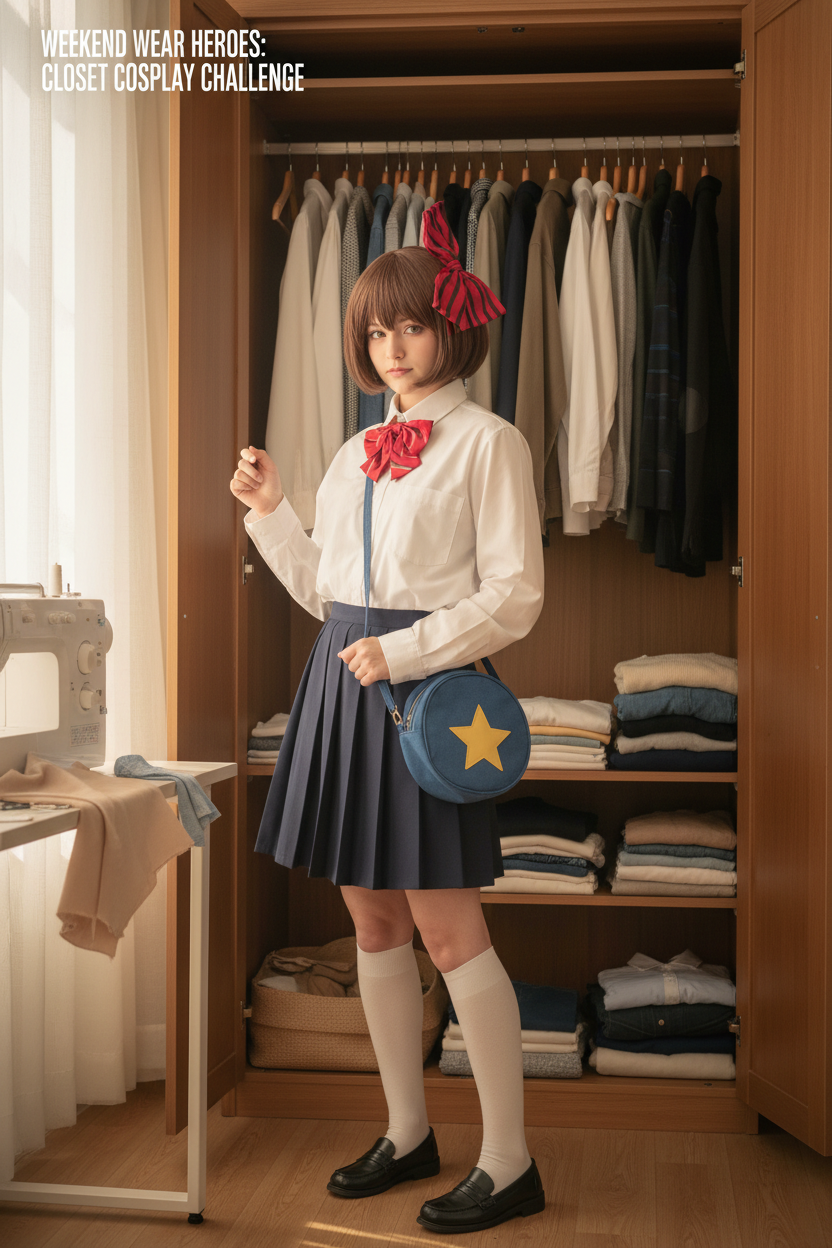
Most people assume cosplay means months of sewing, a pile of specialty fabric, and a budget that rivals a small wardrobe overhaul. It doesn't have to. "Closet cosplay" — building a costume almost entirely from clothes you already own, plus a handful of thrifted or purchased extras — is one of the most reliable ways to get a recognizable, photo-ready character look in a single weekend, without touching a sewing machine.
This guide walks through exactly how to do it, from picking the right character to knowing which one or two purchases will actually make the costume read as "that character" instead of just "someone in a graphic tee." If you've never cosplayed before, or you want a fast, low-stakes costume for an upcoming event, this is the most beginner-friendly starting point in the entire hobby.
What you'll need before you start:
-
Your existing wardrobe (yes, actually go look — most people underestimate what they already own)
-
A rough idea of 2–3 characters you'd be happy cosplaying (flexibility matters more than a single fixed choice)
-
A couple of hours for a thrift store trip, or an online marketplace open in a tab
-
A small budget set aside for accessories — this is where almost all of your spending should go, not on clothing
Step 1: Choose a Character Based on Silhouette, Not Just Fandom
The single biggest mistake beginners make is picking a character because they love them, without checking whether that character's outfit is realistically buildable from basic wardrobe pieces. Before you commit, ask one question: does this character wear normal clothes in an identifiable combination, or do they wear something structurally unique (armor, elaborate layered robes, a completely invented silhouette)?
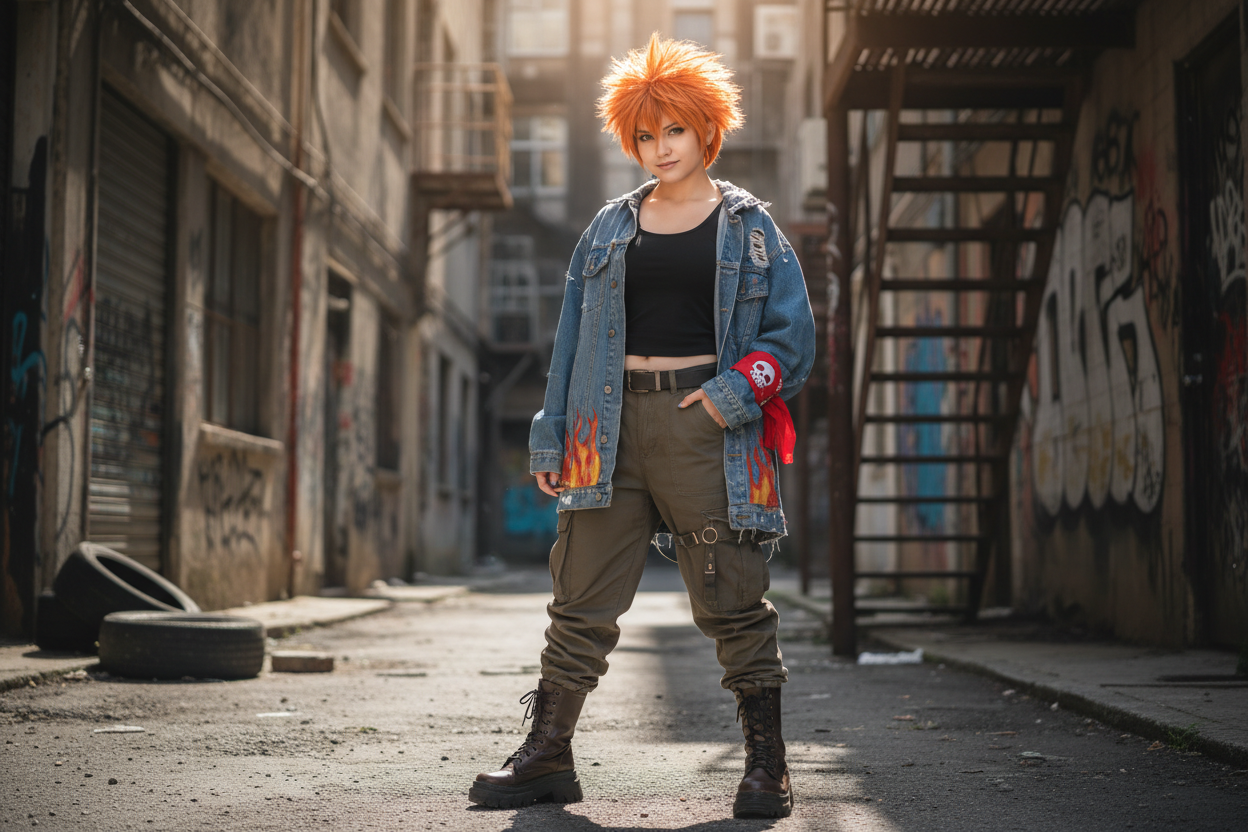
Characters who lean casual, school-uniform-adjacent, or "stylized streetwear" are almost always closet-cosplay-friendly. Characters in elaborate battle armor, ballgowns, or heavily engineered outfits are not — those need construction skills, not a wardrobe audit.
A quick way to test a character before you commit: search their name alongside "outfit reference" and look at the result with fresh eyes. If you can mentally map each piece to something you might already own — a plaid skirt, a specific jacket cut, a color-blocked hoodie — that's a strong closet cosplay candidate. If every piece requires custom construction, save that character for a future, more involved build.
It also helps to keep a short mental list of 2–3 backup characters rather than fixating on one. Thrift stores are unpredictable — you might strike out on the exact jacket color you needed for Character A, but stumble onto a near-perfect base piece for Character B in the same trip. Flexibility here saves you an entire extra shopping trip.
A useful mental shortcut when evaluating candidates: think in terms of "outfit categories" rather than specific characters. School-uniform types, casual streetwear types, business or professional-coded types, and simple monochrome types are the four broadest categories that tend to translate well from an existing wardrobe. If a character clearly falls into one of these categories, you're very likely looking at a workable closet cosplay. If they fall outside all four — heavy armor, elaborate fantasy layering, anything with a structurally unique shape like wings or a large attached cape — that's your signal to either save them for a more involved future build, or to plan for one or two purchased or DIY pieces to bridge the gap rather than expecting your closet to cover everything.
Step 2: Audit Your Closet Before You Buy Anything
Once you've picked a character, resist the urge to go shopping immediately. The next step is a full closet audit — and most people skip this, which is exactly why they end up overspending on pieces they technically already owned in a slightly different form.
Pull every item that's even loosely in the right color family or silhouette and lay it out together, rather than judging pieces one at a time while they're still on hangers. Costumes read very differently as a full outfit laid flat than as individual pieces buried in a closet — a plain white button-down you'd never have thought of might suddenly click once it's next to the right skirt or trousers.
Go beyond your "going out" clothes. Basics drawers, loungewear, even old uniform pieces from school or work are common sources of surprisingly accurate base pieces — a plain collared shirt, a pleated skirt, or a simple blazer shows up in more character designs than people expect. Don't overlook shoes and outerwear either; a character's silhouette is often defined as much by their jacket or footwear as by the "main" outfit.
By the end of this step, you should have a rough outline of what you already own that fits the look, and a short, specific list of exactly what's missing — not a vague "I need clothes" but concrete items like "a black pleated mini skirt" or "an oversized red zip-up." That specificity is what makes your next step fast instead of overwhelming.
One more thing worth doing at this stage: take a quick reference photo of yourself in whatever pieces you've gathered so far, even if the outfit is obviously incomplete. Comparing that photo side-by-side with your character reference — rather than relying on memory alone while you shop — makes it much easier to judge whether a thrifted item you find later is actually close enough, or whether you're talking yourself into a near-miss out of shopping fatigue.
Step 3: Fill the Missing 20% — Thrift Shopping and the Accessories That Actually Sell the Character
This is the step that determines whether your cosplay reads as "random outfit" or "clearly that character," and it splits into two parts: sourcing the last few clothing pieces, and adding the accessories that do most of the visual heavy lifting.
Thrift shopping with a plan, not a browse. Walking into a thrift store with only a character name in mind wastes time. Instead, go in with your specific missing-item list from Step 2, and search by garment type and color rather than by brand or style name — thrift store organization is almost always sorted by category (shirts, jackets, skirts) and sometimes by color, not by aesthetic. If you're shopping online secondhand marketplaces instead of in person, search using concrete terms like "oversized red bomber jacket" or "pleated navy skirt" rather than the character's name, since almost no secondhand listing will be tagged by fictional character.
The 20% rule. Here's the part most beginners underestimate: clothing alone usually only gets a closet cosplay about 80% of the way to being recognizable. The remaining 20% — the part that makes a stranger at a con actually recognize the character — almost always comes from accessories, not clothing. A specific hair accessory, a signature piece of jewelry, a bag in the right shape, or a single small prop frequently does more visual work than the entire base outfit combined.
This is exactly where it's worth spending the budget you saved by not buying a full costume. Instead of hunting endlessly for the "perfect" thrifted jacket, put that time and money toward the one or two accessories that are actually character-defining. Browsing a collection built specifically for this purpose — character-accurate cosplay accessories — is usually faster than combing through general accessory listings, since it's organized around exactly the kind of small, identity-defining pieces closet cosplay depends on.
If your character has a very specific hair color or style that nothing in your closet (or your actual hair) can replicate, a wig is typically the one item in a closet cosplay that's worth buying new rather than thrifting, both for hygiene reasons and because a well-fitted wig does more to sell a character than almost anything else in the outfit. A affordable cosplay wigs under $30 collection is a reasonable place to start if this is the only "real" costume purchase your build needs.
And if the character carries one small, recognizable prop — a specific bag, a pin, a handheld item — that single object is often worth sourcing directly rather than trying to improvise. A focused cosplay prop starter accessories selection covers exactly this kind of "just one more thing and it's complete" gap, without pushing you toward props sized for a full armor build you don't need.
To put the 20% rule into a concrete example: imagine a character who wears a plain white shirt, a dark pleated skirt, and knee-high socks — all things a huge number of people already own in some form. Worn alone, that outfit reads as "generic school uniform," not as a specific character. Add that character's signature ribbon color in the hair, their particular bag style, and one small pin or accessory, and the same base outfit suddenly becomes unmistakably identifiable. The clothing did the structural work; the accessories did the recognition work. That's the entire logic of the 20% rule in practice, and it's worth testing on your own build before you assume you need to keep hunting for more clothing pieces.
Troubleshooting: Common Closet Cosplay Pitfalls
-
"I have all the pieces but it still doesn't look like the character." This is almost always an accessories problem, not a clothing problem. Go back to Step 3 and check whether you've actually sourced the one or two character-defining details, or whether you stopped at "close enough" clothing and assumed that would be sufficient on its own. Photograph yourself in the full look and compare it side-by-side with a reference image — you'll usually spot the missing accessory immediately once it's in front of you.
-
"My colors are close but not exact, and it's bothering me." Slight color mismatches are extremely common in closet cosplay and are rarely as noticeable in photos as they feel in person, especially under convention lighting. If it's genuinely distracting, prioritize replacing the single largest color block first (usually a jacket or top) rather than trying to perfectly match every piece — one accurate anchor color reads as intentional even if smaller pieces are slightly off.
-
"I can't find the right item secondhand and I'm running out of time." Set a hard cutoff for thrift searching — a day or two before your event — and switch to buying new for that one remaining piece rather than continuing to gamble on secondhand availability. Closet cosplay is about minimizing cost and effort, not about being purist regarding where every piece came from; one purchased basic doesn't undo the savings from everything else you sourced for free or secondhand.
-
"The outfit looks right but doesn't feel durable for a full con day." Older thrifted pieces sometimes have weaker seams or worn elastic. Do a quick check — sit down, raise your arms, walk around — in anything thrifted before your event, and keep a small emergency kit (safety pins, a mini sewing kit, fabric tape) in your bag just in case. This is a five-minute precaution that prevents a genuinely stressful mid-con wardrobe malfunction.
-
"I don't know if my character choice was actually a good closet cosplay pick." If you're consistently struggling to find pieces after a couple of shopping attempts, it's worth honestly reassessing whether the character was a good fit for this method in the first place, rather than continuing to force it. Not every character is meant to be a closet cosplay, and switching to one of your backup picks from Step 1 is a completely normal part of the process, not a failure.
-
"Everything technically matches but the proportions feel off." Reference art often exaggerates proportions in ways real clothing can't fully replicate — a jacket drawn as slightly oversized might need to actually be a size or two up from what you'd normally wear to read correctly in photos. Don't be afraid to intentionally size up or down from your usual fit if it gets you closer to the character's silhouette; closet cosplay is about visual accuracy, not about wearing your regular everyday size.
Next Steps
Once you've built one closet cosplay and seen how far a thoughtful accessory choice can carry an otherwise ordinary outfit, the same process gets faster every time — you'll start recognizing closet-cosplay-friendly characters just from a glance at their reference art, and you'll build a better instinct for which accessories are actually worth buying versus which pieces you can safely improvise.
If you enjoyed the low-cost, low-pressure nature of this approach, it's worth bookmarking a running list of characters that are known to work well with this method, so you always have a next project queued up without having to research a new character from scratch each time. It's also worth keeping an eye on your accessories collection over time — a small, well-chosen set of wigs, hair pieces, and character-adjacent props can be mixed and reused across multiple future closet cosplays, which is where this approach really starts to pay off as a long-term, budget-friendly way to stay active in the hobby.


Hinterlasse einen Kommentar
Diese Website ist durch hCaptcha geschützt und es gelten die allgemeinen Geschäftsbedingungen und Datenschutzbestimmungen von hCaptcha.