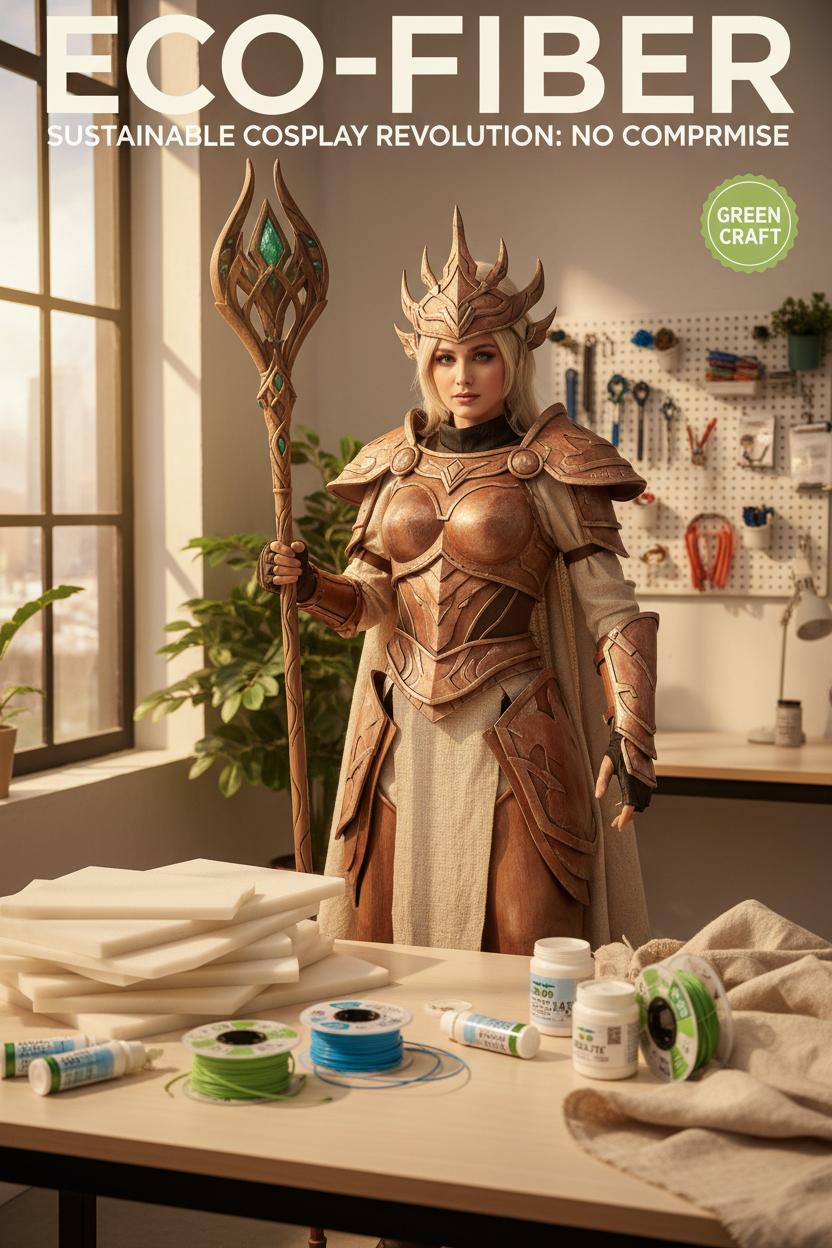
Making sustainable cosplay part of your fabrication workflow no longer means sacrificing structural integrity or screen accuracy. Historically, costume building relied heavily on single-use plastics, toxic solvent glues, and synthetic polyester fabrics that ended up in landfills. Today, makers are adopting eco-friendly cosplay materials that deliver high performance while drastically reducing environmental footprint.
Whether you build high-density armor, 3D-printed props, or tailored garments, this guide reviews the top sustainable cosplay supplies and techniques available to modern crafters.
| Material / Technique | Core Highlight | Pros | Cons | Best For |
| Bio-Based & Recycled EVA Foam | Plant-derived sugarcane ethanol or recycled production foam scraps. | Identical heat-forming and sanding to virgin EVA; lower carbon footprint. | Slightly higher cost per sheet; limited thickness options in retail stores. | Armor plating, prop weapons, and structural sub-frames. |
| Recycled PLA Filament (rPLA) | 100% post-industrial recycled filament; biodegradable under composting. | Zero virgin plastic waste; smooth layer adhesion on standard print profiles. | Slightly more sensitive to ambient storage humidity. | 3D-printed props, jewelry, helmet frames, and armor clips. |
| Upcycled Deadstock Textiles | Surplus factory fabrics and natural linen/cotton fibers. | Superior breathability; authentic drape; diverts textile waste from landfills. | Requires precise pattern drafting due to low stretch compared to spandex. | Capes, tunics, historical garments, and closet cosplay bases. |
| Water-Based Contact Adhesives | Non-toxic rubber bonding formulas replacing harsh solvent cements. | Low VOCs; safe for indoor studio drafting without heavy respirators. | Requires longer dry times before pressing seams together. | Indoor studio foam seam bonding and non-toxic priming. |
| Thrift-Flipped Base Outfits | Deconstructing pre-loved clothing into screen-accurate costumes. | Budget-friendly; zero new material production footprint; instant texture. | Dependent on secondhand sizing and local thrift availability. | Anime street-style outfits, casual builds, and sci-fi wear. |
1. Bio-Based & Recycled EVA Foam — Plant-Derived Armor Construction
Ethylene-vinyl acetate (EVA) foam remains the staple of armor building, but traditional production relies entirely on petrochemicals. Bio-based EVA foam incorporates ethanol derived from sugarcane or recycled foam remnants, offering a renewable alternative.
-
Core Features: Maintains the exact high density (70–100 kg/m³) needed for beveling, heat-shaping with a heat gun, and clean Dremel sanding.
-
Pros: Flexes seamlessly with movement, accepts acrylic paints after priming, and cuts down on fossil-fuel consumption.
-
Cons: Sourcing certified sugarcane EVA requires purchasing through specialty suppliers.
-
Target Audience: Armor smiths and prop makers seeking recycled cosplay materials without sacrificing edge-smoothness or structural rigidity.
2. Recycled PLA Filament (rPLA) — Zero-Waste 3D Printing
3D printing offers incredible prop detail, but failed test prints and support scaffolding generate significant plastic waste. Recycled PLA (rPLA) repurposes post-industrial filament waste back into high-grade spooling.
-
Core Features: Formulated from 100% recycled lactic acid polymers, delivering standard printing temperatures (200°C–215°C) and strong layer adhesion.
-
Pros: Fully biodegradable under industrial composting conditions while eliminating virgin plastic creation.
-
Cons: Stringing can occur if the filament absorbs room moisture before printing.
-
Target Audience: Prop builders, 3D printing enthusiasts, and makers designing intricate helmet or weapon components.
3. Upcycled Deadstock & Natural Fabrics — Breathable, Eco-Conscious Garments
Synthetic fabrics like polyester and nylon shed microplastics and lock in heat. Transitioning to deadstock (leftover designer yardage) or natural fibers like linen, hemp, and organic cotton creates durable eco-friendly cosplay garments.
                     [ TEXTILE SELECTION STRATEGY ]
                                   │
     ┌─────────────────────────────┴─────────────────────────────┐
     ▼                                                           ▼
Natural Fibers (Linen / Cotton)                             Upcycled Deadstock
- High breathability & authentic drape                      - Pre-existing synthetic/blend runs
- Biodegradable & machine washable                          - Zero new manufacturing demand
-
Core Features: Natural weaves provide a realistic, worn texture for fantasy or historical characters, while deadstock satin and wool repurpose existing textiles.
-
Pros: Highly breathable during long convention floor walks; holds dye and weathering washes effectively.
-
Cons: Natural fabrics lack the multi-directional stretch of synthetic Lycra or spandex.
-
Target Audience: Tailors, historical recreators, and makers sourcing high-grade upcycled cosplay fabric for long-term wardrobe wear.
To source sustainably produced textiles and low-impact studio supplies for your next build, explore our collection of eco-friendly cosplay materials.
4. Water-Based Adhesives & Non-Toxic Sealants — Low-VOC Studio Fabrication
Glues and solvent-based primers account for the highest chemical emissions in a cosplay workshop. Water-based contact adhesives and non-toxic acrylic primers provide strong structural bonding without toxic fumes.
-
Core Features: Solvent-free formulation that cleans up with soap and water before curing into a permanent, flexible rubber bond.
-
Pros: Eliminates hazardous VOC fumes, making it safe to work in small apartments or poorly ventilated rooms.
-
Cons: Tacky tack-time takes 15–20 minutes compared to 5 minutes for chemical contact cements.
-
Target Audience: Apartment makers, cosplayers with chemical sensitivities, and indoor workshop crafters.
5. Thrift-Flipped Base Outfits — Reclaiming Pre-Loved Garments
One of the most effective eco-friendly cosplay ideas is thrift-flipping—purchasing secondhand suits, jackets, or dresses and tailoring them to match a target reference.
-
Core Features: Uses pre-existing clothing structures (lapels, zippers, lining) as a base, reducing build time and textile consumption.
-
Pros: Drastically cuts fabrication costs while giving garments a second life outside landfills.
-
Cons: Finding the exact fabric color or size match requires patience when hunting through secondhand shops.
-
Target Audience: Casual builders, closet cosplayers, and makers who excel at tailoring and distressing existing garments.
How to Choose the Best Sustainable Cosplay Option for Your Build
Selecting the right eco-conscious material comes down to balancing build requirements against long-term durability:
-
For Armor & Weapons: Prioritize bio-EVA foam sheets and rPLA filaments to keep prop weight low while maintaining structural impact resistance.
-
For Soft Goods & Tailoring: Choose natural linen or deadstock woven fabrics for capes, coats, and tunics. If your build relies entirely on existing everyday wardrobe pieces, read our guide on Closet Cosplay: How to Build Accurate Costumes from Everyday Clothes for low-waste assembly strategies.
-
For Studio Safety: Replace solvent cements with water-based adhesives whenever you fabricate indoors without a commercial ventilation hood.
Summary & Next Steps in Sustainable Cosplay
Adopting sustainable cosplay costumes and construction methods isn't about compromising on quality—it's about making deliberate material choices that extend the life of your craft. By combining bio-based foams, recycled printing filaments, and upcycled fabrics, you can create stage-ready costumes that look incredible while respecting the environment.

Leave a comment
This site is protected by hCaptcha and the hCaptcha Privacy Policy and Terms of Service apply.